india
Auto Added by WPeMatico
Auto Added by WPeMatico

Mobile World Congress, the mobile industry’s annual shindig, is next week, but Xiaomi can’t wait to reveal its newest top-end phone. The Chinese company instead picked today to unveil the Mi 9.
Once again Xiaomi’s design ethic closely resembles Apple’s iPhone, with a minimal bezel and notch-like front-facing camera, but Xiaomi has gone hard on photography with a triple lens camera.
There are two models available, with the regular Mi 9 priced from RMB 2,999, or $445, and the Mi 9SE priced from RMB 1,999, or $300. A premium model, the Transparent Edition, includes beefed-up specs for RMB 3,999, or $595.
The phone runs on Qualcomm’s Snapdragon 855 chipset and the headline feature, or at least the part that Xiaomi is shouting about most, is the triple lens camera array on the back of the device. That trio combines a 48-megapixel main camera with a 16-megapixel ultra-wide-angle camera and a 12-megapixel telephoto camera, Xiaomi said. The benefits of that lineup are improved wide-angle shots, better-quality close-up photography and performance in low-light conditions, according to the company.
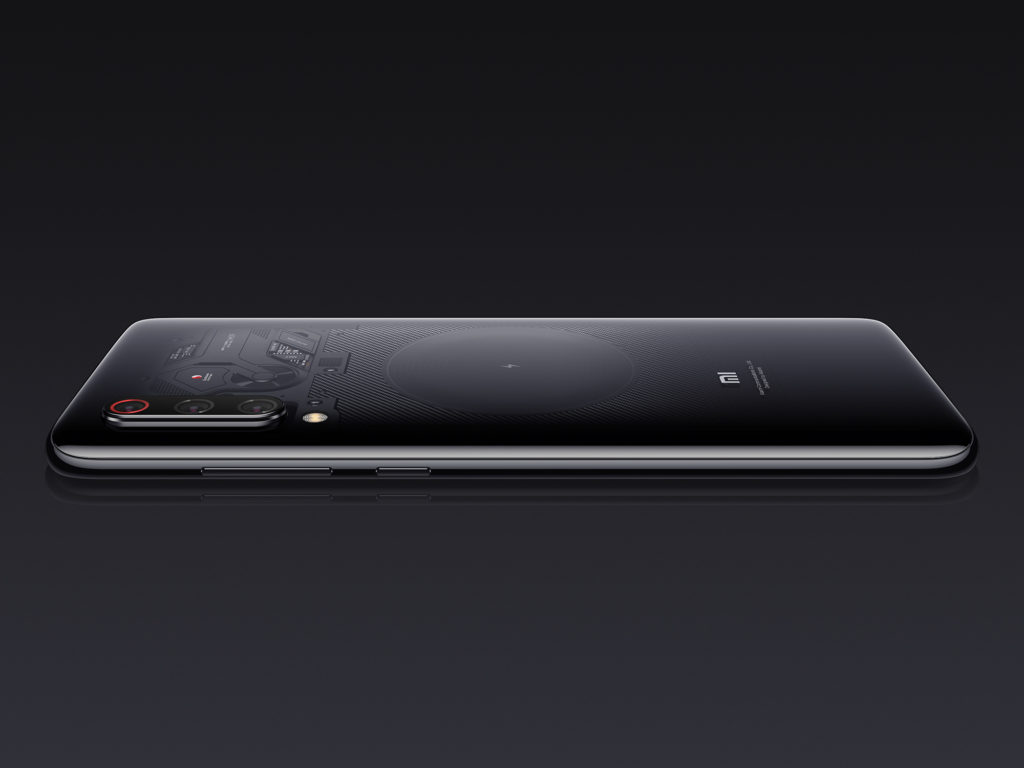
The premium Mi 9 model, the Transparent Edition, sports 12GB of RAM and 256GB internal storage and features a transparent back cover
There’s also a “supermoon” mode for taking shots of the moon and presumably other night-sky images, while Xiaomi touts an improved night mode and, on the video side, 960fps capture and advanced motion tracking. We haven’t had the chance to test these out, which is worth noting at this point.
Xiaomi also talked up the battery features of the Mi 9, which ships with an impressive 3,300mAh battery that features wireless charging support and Qi EPP certification, meaning it will work with third-party charging mats. Xiaomi claims that the Mi 9 can charge to 70 percent in 30 minutes, and reach 100 percent in an hour using 27W wired charging.
Alongside the Mi 9, it unveiled its three wireless charging products — a charging pad (RMB 99, $15), a car charger (RMB 169, $25) and a 10,000mAh wireless power bank (RMB 149, $22.)
Xiaomi, as ever, offers a range of different options for customers, as follows:
Notably, the Mi 9 goes on sale February 26 — pre-orders open this evening — with the SE version arriving on March 1. As expected, the launch market is China but you can imagine that India — where Xiaomi is among the top players — and other global launches will follow.
Xiaomi said it plans to announce more products on Sunday, the eve of Mobile World Congress. It recently teased a foldable phone, so it’ll be interesting to see if it will follow suit and join Samsung, which had its first foldable phone outed by a leak.
Note: The original version of this article was updated to correct the Transparent Edition price and specs.
Powered by WPeMatico
One of China’s top smartphone brands Vivo appears to have joined its fellows Oppo, Huawei and Xiaomi in setting up a new sub-brand as a softening market and heightened competition at home drive players to venture upon their original reach.
A new smartphone brand called iQoo made its debut on Weibo, China’s answer to Twitter, on Tuesday by greeting in English: “Hello, this is iQoo.” It also playfully encouraged people to guess how its name is pronounced, as the spelling doesn’t resonate with either Chinese or English speakers. Vivo immediately reposted iQoo’s message, calling iQoo a “new friend.”
Vivo has not further revealed its ties with iQoo, although the latter’s Weibo account is verified under Vivo’s corporate name. TechCrunch has contacted Vivo and will update the story when we have more information.
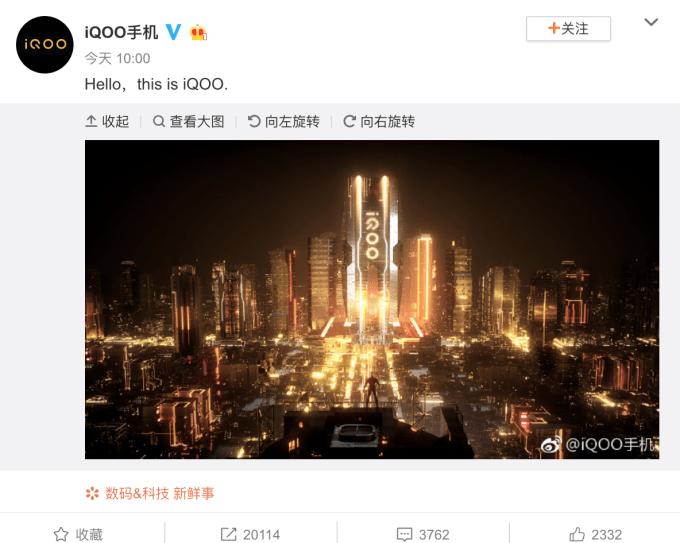
Screenshot of iQoo’s first Weibo post
Sub-brands have become a popular tactic for Chinese smartphone makers to lure new demographics without undermining and muddling their existing brand reputation. As the third-ranked player by shipments in 2018 according to research firm Counterpoint, Vivo is the only one in China’s top five smartphone companies without a subsidiary brand.
“Sub-brands can help fill the gap in parent companies,” Counterpoint’s research director James Yan told TechCrunch. “I think iQoo is a brand born for the gaming market, the online sales channel, or young consumers, similar to what Honor did to Huawei.”
Huawei cemented its top spot with solid growth in shipments last year by playing a two-pronged strategy. Its sub-brand Honor has its eyes on the mid-range and Huawei stays at the top end. Vivo’s sibling Oppo, which falls under the same electronics manufacturing outfit BBK, came up with an exclusively online brand Realme in 2018 to go after Xiaomi’s Redmi in India’s burgeoning smartphone market. Xiaomi pressed on by launching Poco for India’s high-tier market. To further solidify its multi-faceted approach, Redmi shed the Xiaomi branding in January to start operating as an independent brand focusing on cost efficiency.
These moves arrived as years of breakneck growth in China’s smartphone space comes to an end. Overall smartphone sales contracted 11 percent in 2018 according to Counterpoint, as users become more pragmatic and less likely to upgrade their handsets. Local players reacted swiftly by going global and introducing headline-grabbing features like Xiaomi’s folding screen and Honor’s pole-punch display, putting a squeeze on global players Apple and Samsung. In 2018, Huawei shored up a 25 percent market share to take the crown. Trailing behind was Oppo, Vivo, Xiaomi and Apple . Samsung plunged 67 percnet to take seventh place.
Powered by WPeMatico

Aditya and Aarti Kochhar Kaji didn’t set out to start the snack food business Taali Foods when they were studying for their business degrees at Harvard.
The couple both hail from Mumbai and met at the University of Pennsylvania . They were married before starting at Harvard’s Business School and initially were interested in other areas — Aarti was exploring a career in venture capital and Aditya was looking at the food and beverage industry broadly in his classes at Harvard.
Addicted to snack foods like chips and popcorn to fuel her Harvard study sessions, Aarti started making popped water lily seeds as a snack — a food both she and her husband had grown up eating in India, she said.
The seeds, which are high in anti-oxidants and low in fat, have been a staple of Ayurvedic medicine — thanks to their purported anti-inflammatory properties, and are a staple of Indian snacking traditions. Now, with American consumers on the hunt for healthier snacks, they’re becoming a big business in the U.S. as well.
Y Combinator is very on-trend, with its decision to invest and accelerate Taali as part of its most recent cohort of startups. But in this instance you may call the accelerator a fast follower rather than a progenitor of this trend.
No less auspicious a food tastemaker than Whole Foods named water lily seeds as one of the top 10 new food trends of 2019. With that attention, competitors to Taali abound.
Bohana and AshaPops are just two new snack food companies floating on the popped water lily seed movement. Bohana even managed to nab the attention of PepsiCo’s Nutrition Greenhouse competitive accelerator.

It’s no secret that technology investors are investing more heavily in consumer businesses — everything from snack foods to period products and baby formula — and startups need only point to the success of Amazon as the everything store to show that there’s always money to be made in the category.
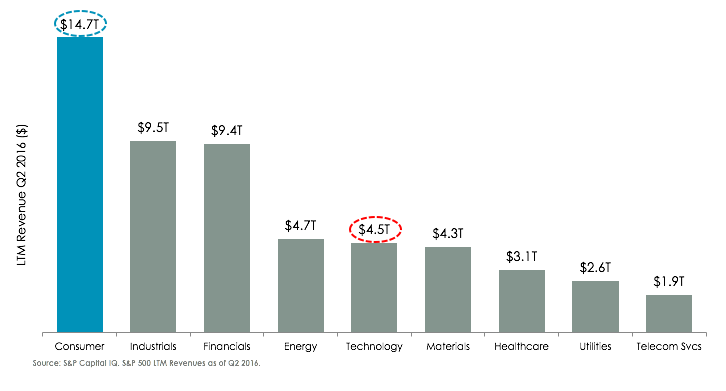
Indeed, at $1.47 trillion, the consumer packaged goods industry dwarfs technology as a share of the nation’s economy.
As Ryan Caldbeck, the head of the consumer-focused investment firm CircleUp noted last year:
The uptick in tech VC dollars going to the CPG market is partly because tech investing is brutally competitive and saturated, and largely because these VCs are awakening to the strong historical returns in CPG, especially with the trend leaning towards small brands stealing market share.
Consumer is a massive market – about 3x the size of tech, as seen below.
Despite the size of the market, the early-stage has historically been underserved by investors due to market inefficiencies like the geographic dispersion of brands and a lack of structured information sources (i.e. there is no Silicon Valley for consumer, and certainly no Crunchbase equivalents – yet).
Strong exits are already possible for consumer brands — and not necessarily from the big-ticket, headline grabbing acquisitions like Dollar Shave Club. Last week This is L. — the condom and period product retailer — sold for roughly $100 million after raising seed funding from investors, including 500 Startups and Y Combinator.
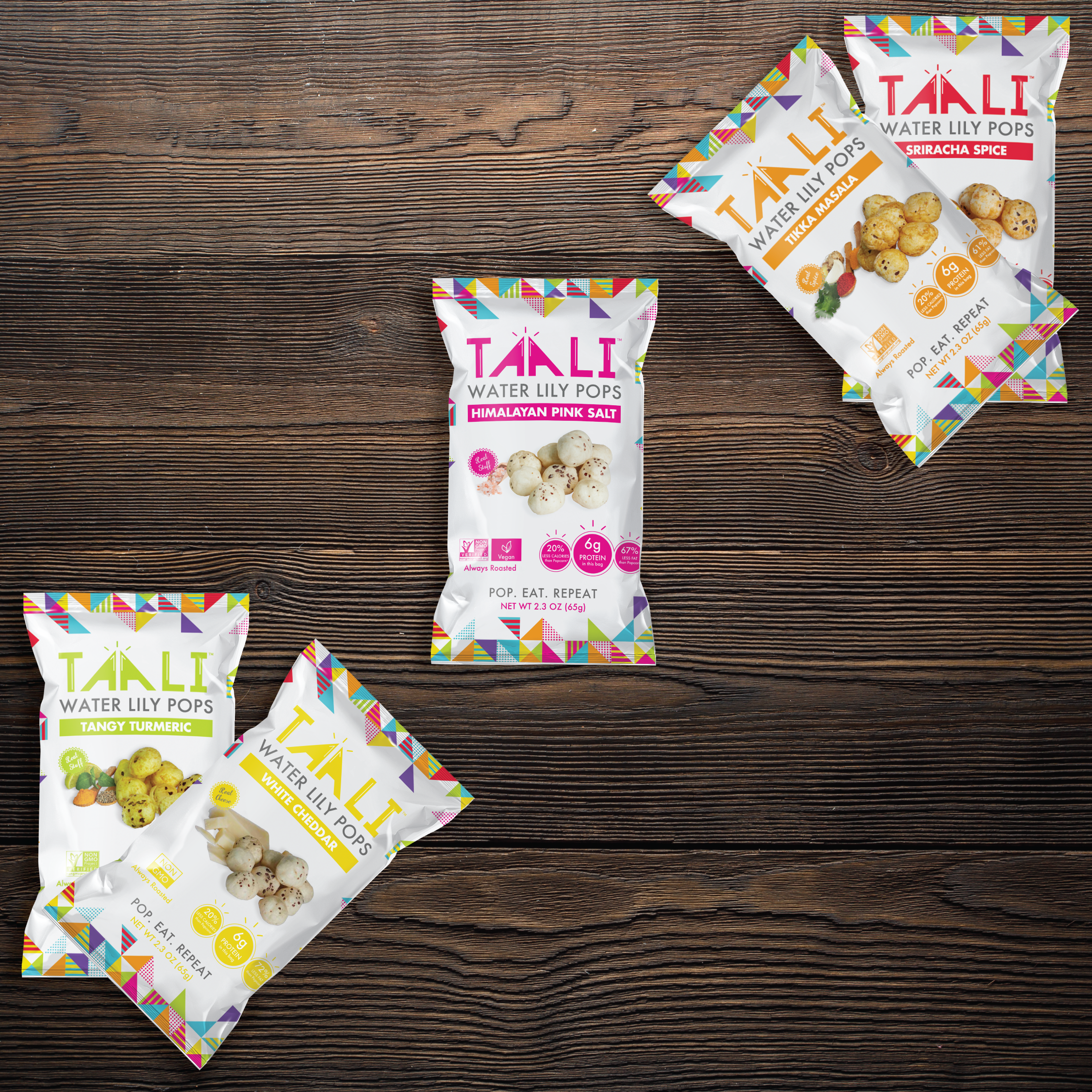
Taali was similarly bootstrapped before it was accepted into Y Combinator. The company is already selling its snacks through Amazon and in retail locations like Fairway in New York and Central Market in Texas. The founders expect to be in stores in California in the next few months.
Powered by WPeMatico
The P&G acquisition of This is L., a startup retailer of period products and prophylactics, shows just how profitable investing in women’s healthcare brands and products can be.
A person with knowledge of the investment put the price tag at roughly $100 million — a healthy outcome for investors and company founder Talia Frenkel. But just as important as the financial outcome is the deal’s implications for other mission-driven companies.
This is L. launched from Y Combinator in August 2015 with a service distributing condoms in New York and San Francisco and steadily expanded into feminine hygiene products.
Frenkel, a former photojournalist who worked for the United Nations and Red Cross, started the company in 2013 — roughly three years after an assignment in Africa revealed the toll that HIV/AIDs was taking on women and girls on the continent.
“I didn’t realize the No. 1 killer of women was completely preventable and I think that really inspired me to action,” Frenkel told TechCrunch at the time of the company’s launch.
Now the company has distributed roughly 250 million products to customers around the world.
“Our strong growth has enabled us to stand in solidarity with women in more than 20 countries,” said Frenkel in a statement following the acquisition. “Our support has ranged from partnering with organizations to send period products to Native communities in South Dakota, to supplying pad-making machines to a women-led business in Tamil Nadu. Pairing our purpose with P&G’s expertise, scale and resources provides an extraordinary opportunity to contribute to a more equitable world.”
The company is available in more than 5,000 stores across the U.S. and is working with women entrepreneurs in countries from Uganda to India and beyond.
“This acquisition is a perfect complement to our Always and Tampax portfolio, with its commitment to a shared mission to advocate for girls’ confidence and serve more women,” said Jennifer Davis, president, P&G Global Feminine Care. “We feel this is a strong union and together we can be a greater force for good.”
For investors with knowledge of the company, the P&G acquisition is a harbinger of things to come. The combination of a non-technical, female founder operating in the consumer packaged goods market with a mission-driven company was an anomaly in the Silicon Valley of four years ago, but Frenkel’s success shows what kind of opportunities exist in the market.
“With this acquisition investors need to update their patterns,” said one investor with knowledge of the company.
Powered by WPeMatico
Well that didn’t last long.
In 2017, Foxconn announced the largest investment of a foreign company in the United States when it selected Mount Pleasant, Wisconsin for a new manufacturing facility. Buttressed by huge economic development grants from Wisconsin, an endorsement from President Trump, and Foxconn CEO Terry Gou’s vision of a maker America, the plant was designed to turn a small town and its environs into the futuristic “Wisconn Valley.”
Now, those dreams are coming apart faster than you can say “Made in America.”
In an interview with Reuters, a special assistant to Gou says that those plans are being remarkably scaled back. Originally designed to be an advanced LCD factory, the new Foxconn facility will instead be a much more modest (but still needed!) research center for engineers.
It’s a huge loss for Wisconsin, but the greater shock may be just how obvious all of this was. I wrote about the boondoggle just a few weeks ago, as had Bruce Murphy at The Verge a few weeks before that. Sruthi Pinnamaneni produced an excellent podcast on Reply All about how much the economic development of Mount Pleasant tore the small town asunder.
The story in short: the economics of the factory never made sense, and economics was always going to win over the hopes and dreams of politicians like Wisconsin governor Scott Walker, who championed the deal. Despite bells and whistles, televisions are a commodity product (unlike, say, airfoils), and thus the cost structure is much more compatible with efficient Asian supply chains than with American expensive labor.
Yet, that wasn’t the only part of the project that never made any sense. Foxconn was building in what was essentially the middle of nowhere, without the sort of dense ecosystem of suppliers and sub-suppliers required for making a major factory hum. (Plus, as a native of Minnesota, I can also attest that Wisconsin is a pile of garbage).
Those suppliers are everything for manufacturers. Just this past weekend, Jack Nicas at the New York Times observed that Apple’s advanced manufacturing facility in Austin, Texas struggled to find the right parts it needed to assemble its top-of-the-line computer, the Mac Pro:
But when Apple began making the $3,000 computer in Austin, Tex., it struggled to find enough screws, according to three people who worked on the project and spoke on the condition of anonymity because of confidentiality agreements.
In China, Apple relied on factories that can produce vast quantities of custom screws on short notice. In Texas, where they say everything is bigger, it turned out the screw suppliers were not.
There are of course huge manufacturing ecosystems in the United States — everything from cars in Detroit, to planes in Washington, to advanced medical devices in several major bio-hubs. But consumer electronics is one that has for the most part been lost to Singapore, Taiwan, Korea, and of course, China.
Geopolitically, Foxconn’s factory made a modicum of sense. With the increasing protectionism emanating from Western capitals, Foxconn could have used some geographical diversity in the event of a tariff fight. The company is Taiwanese, but manufacturers many of its products on the mainland.
And of course, a research center is still an enormous gain for a region of Wisconsin that could absolutely use high-income, professional jobs. Maybe the process of rolling out a next-generation manufacturing ecosystem will take more time than originally anticipated, but nothing is stopping further expansion in the future.
Yet, one can’t help but gaze at the remarkable naïveté of Wisconsin politicians who offered billions only to find that even massive subsidies aren’t enough. It’s a competitive world out there, and the United States has little experience in these fights.
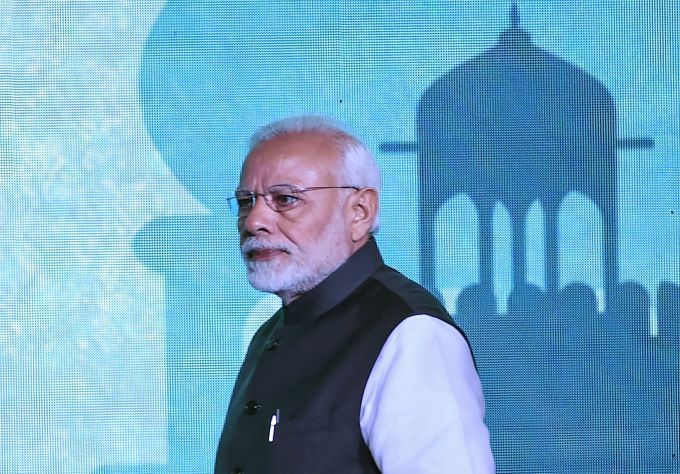
Indian Prime Minister Narendra Modi. (MONEY SHARMA/AFP/Getty Images)
One of the major battles for tech supremacy is over the future of the Indian IT market, which is rapidly bringing more than a billion people onto the internet and giving them robust software services. I’ve talked a bit about data sovereignty, which mandates that Indian data be stored in Indian data centers by Indian companies, pushing out foreign companies like Amazon, Google, and Alibaba.
Now, it looks like India is taking a page from the Asian tiger-school of development, and is going to increasingly favor domestic firms over foreign ones in key industries. Newley Purnell and Rajesh Roy report in the WSJ:
The secretary of India’s Telecommunications Department, Aruna Sundararajan, last week told a gathering of Indian startups in a closed-door meeting in the tech hub of Bangalore that the government will introduce a “national champion” policy “very soon” to encourage the rise of Indian companies, according to a person familiar with the matter. She said Indian policy makers had noted the success of China’s internet giants, Alibaba Group Holding Ltd. and Tencent Holdings Ltd. , the person said. She didn’t immediately respond to a request for more details on the program or its timing.
The idea of national champions is simple. Unlike the innovation world of Silicon Valley, there are obvious sectors in an economy that need to be fulfilled. Food and clothes have to be sold, deliveries made, all kinds of industrial goods need to be built. Rather than creating a competitive market that requires high levels of duplicate capital investment, the government can designate a few companies to take the lead in each market to ensure that they can invest for growth rather than in, say, marketing costs.
If done well, such policies can rapidly industrialize a country’s economic base. When done poorly, the lack of competition can create lethargy among entrepreneurs, who have already won their markets without even trying.
The linchpin is whether the government pushes companies to excel and sets aggressive growth targets. In Korea and China, the central governments actively monitored corporate growth during their catch-up years, and transferred businesses to new entrepreneurs if business leaders failed to perform. Can India push its companies as hard without market forces?
As the technology industry matures in the West, entrepreneurs will look for overseas as their future growth hubs. The challenge is whether they will be let in at all.

Nexon’s MapleStory2 game is one of its most profitable (Screenshot from Nexon) .
Korea and Japan are two of the epicenters of the video game industry, and now one of its top companies is on the auction block, raising tough questions about media ownership.
Nexon founder Kim Jung Ju announced a few weeks ago that he was intending to sell all of his controlling $9 billion stake in the leading video game company. The company has since executed something of a multi-stage auction process to determine who should buy those shares. One leading candidate we’ve learned is Kakao, the leading internet portal and chatting app in Korea.
The other leading candidate is China-based Tencent, which owns exclusive distribution rights in China of some of Nexon’s most important titles.
Tencent has been increasingly under the sway of China’s government, which froze video game licensing last year as it worked to increase content regulation over the industry. Now the question is whether it will be politically palatable to sell a leading star of Korea’s video game industry to its economic rival.
Mr Wi added that Nexon would be an attractive target for Tencent, which pays about Won1tn in annual royalties to the South Korean game developer. But selling the company to Tencent would be “politically burdensome” for Mr Kim, given unfavourable public opinion in South Korea towards such a sale, he cautioned.
“Political risks are high for the deal. Being criticised for selling the company to a foreign rival, especially a Chinese one, would be the last thing that Mr Kim wants,” said Mr Wi.
Such concerns around Chinese media ownership have become acute throughout the world, but we haven’t seen these concerns as much in the video game industry. Clearly, times have changed.
TechCrunch is experimenting with new content forms. This is a rough draft of something new – provide your feedback directly to the author (Danny at danny@techcrunch.com) if you like or hate something here.
My colleague Eric Eldon and I are reaching out to startup founders and execs about their experiences with their attorneys. Our goal is to identify the leading lights of the industry and help spark discussions around best practices. If you have an attorney you thought did a fantastic job for your startup, let us know using this short Google Forms survey and also spread the word. We will share the results and more in the coming weeks.
This newsletter is written with the assistance of Arman Tabatabai from New York
Powered by WPeMatico
If you haven’t been paying attention to TikTok, you haven’t been paying attention. The short-form video app hailing from Beijing’s ByteDance just had its biggest month ever with the addition of 75 million new users in December — a 275 percent increase from the 20 million it added in December 2017, according a recent report from Sensor Tower.
Despite its rapid rise, there are still plenty of people — often, older people — who aren’t quite sure what TikTok is.
TikTok is often referred to as a “lip-syncing” app, which makes it sound like it’s some online karaoke experience. But a closer comparison would be Vine, Twitter’s still sorely missed short-form video app whose content lives on as YouTube compilations.
While it’s true that TikTok is home to some standard lip-syncing, it’s actually better known for its act-out memes backed by music and other sound clips, which get endlessly reproduced and remixed among its young users.
Its tunes are varied — pop, rap, R&B, electro and DJ tracks serve as backing for its 15-second video clips. But the sounds may also be snagged from YouTube music videos (see: I Baked You A Pie above), SoundCloud or from pop culture — like weird soundbites from Peppa Pig or Riverdale — or just original creations.
These memes-as-videos reference things familiar to Gen Z, like gaming culture (see below). They come in the form of standalone videos, reactions, duets, mirrors/clones and more.
The app has been growing steadily since it acquired its U.S.-based rival Musical.ly in November 2017 for north of $800 million, then merged the two apps’ user bases last August.
This gave TikTok the means to grow in Western markets, where it has attracted the interest of U.S. celebrities like Jimmy Fallon and Tony Hawk, for example, along with YouTubers on the hunt for the next new thing.
But unlike Vine (RIP), YouTube or Instagram, TikTok doesn’t yet feel dominated by micro-celebs, though they certainly exist.
Instead, its main feed often surfaces everyday users — aka, amateurs — doing something cute, funny or clever, with a tacit acknowledgement that “yes, this is an internet joke” underlying much of the content.
Okay, okay.
Sometimes these videos are described as “cringey.”
But that’s because those of us trying to talk about TikTok are old(er) people who grew up on the big ol’ mean internet.
Cringey, frankly, is an unfair label, as it dismisses TikTok’s success in setting a tone for its community. Here, users will often post and share unapologetically wholesome content, and receive less mocking than elsewhere on the web — largely because everyone else on TikTok posts similar “cringey” content, too.
You might not know this, however, if your only exposure to TikTok comes from YouTube’s TikTok Cringe Compilations. But spend a day in the (oddly addictive) TikTok feed, and you’ll find a whole world of video that doesn’t exist anywhere else on the web — including on YouTube. Videos that are weird, sure — but also fun to watch.
It’s a stark comparison to the existing social media platforms.
Users today are engaged in the culture wars on Twitter (ban the Nazis! protect free speech!), while YouTubers are gaming the algorithm with hateful, exploitive, dangerous and otherwise questionable content that freaks out advertisers. And Facebook is, well, contributing to war crimes and the toppling of democracy.
Meanwhile, TikTok presents an alternative version of online sharing. Simple, goofy, irreverent — and frankly, it’s a much needed reset.
For example, some of the popular TikTok memes have included videos of kids proclaiming what a great mom they have, as they drag her into frame, or they remind people to pick up litter and conserve water. They might give themselves silly, but self-affirming makeovers where, afterwards, they cite themselves not as “cute” but rather “drop. dead. gorgeous.”
They might spend hours setting up gummy bears as Adele concert-goers, learning how to do a shuffle dance up a set of stairs or in a dance battle their dad. Or they may showcase some special talent — drawing, painting, gymnastics, dance or skateboarding, perhaps. They do science experiments, make jokes or use special effects for a little video magic.
They shout out “hit or miss!” in public places and wait to see who answers. (Look it up.)
Sometimes it’s dumb, Sometimes it’s clever. But it’s addictive.
Of course, it is still the internet. And TikTok isn’t perfect.
The app has also been the subject of troubling reports about its “dark” side, which is reportedly filled with child predators and teens bullying and harassing one another. It’s not clear, however, that TikTok’s affliction with these matters is any worse than any other large, social, public-by-default app of its size.
And unlike some apps, concerned parents — or the users themselves — can set a TikTok account to private, turn off commenting, hide the account from search, disable downloads, disallow reactions and duets and restrict an account from receiving messages.
It is concerning, however, that under-13 kids are setting up social media accounts without parental consent. (But, uh, have you seen Fortnite and Roblox? This is what kids do. At least the TikTok main feed isn’t worrisome, we’ve found.)
The bigger issue, though — and one that could ultimately prove damaging to TikTok — is whether it will be able to keep up with content filtering and takedown requests, or handle its security and privacy protection issues as it scales up.
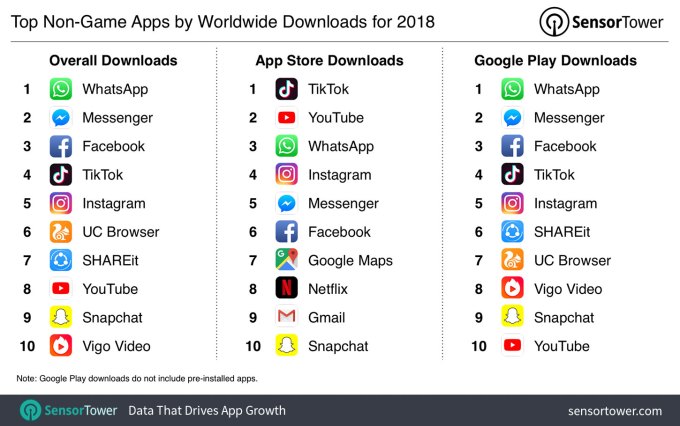
Content and community aren’t the only things contributing to TikTok’s growth.
While Vine may have introduced the concept of short-form video, TikTok made video editing incredibly simple. You don’t need to be a video expert to put together clips with a range of effects. It’s the Instagram for the mobile video age — in a way that Instagram itself won’t be able to reproduce, having already aligned its community with influencers and advertisers.
TikTok’s sizable user base, meanwhile, is due not only to its growth in Western markets, but because of its traction in emerging markets like China and India.
This allowed TikTok to rank No. 4 worldwide across iOS and Android, combined, according to App Annie’s data on the most-downloaded apps of 2018. On iOS, TikTok was the No. 1 most-downloaded app of the year, mainly thanks to China.
At times last year, TikTok even ranked higher than Facebook, Instagram, Snapchat and YouTube.
Both App Annie and Sensor Tower agree that TikTok scored the No. 3 position for most installs among all apps worldwide in 2018.
Now, TikTok is growing in India, says Sensor Tower.
The country accounted for 27 percent of new installs between December 2017 and December 2018, and last month was the source for 32.3 million of TikTok’s 75 million total new downloads — a 25x increase from last year.
Some of this growth comes from ad spend, according to a report from Apptopia, which examined the app’s widened use of ad networks. (It’s also driving people bonkers with its YouTube ads).
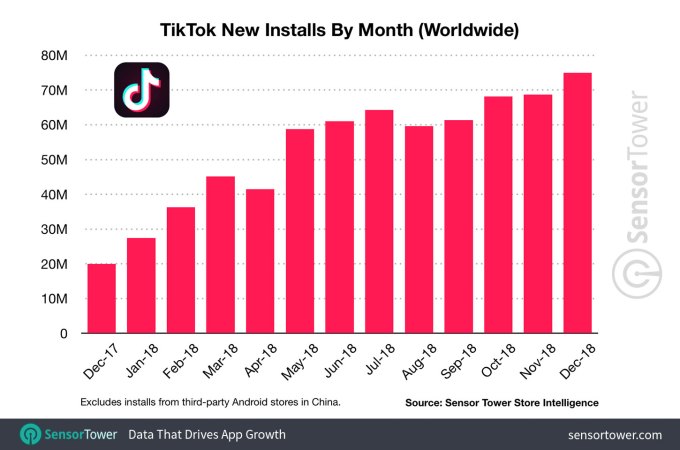
The revenue is starting to arrive, as well.
Worldwide, users spent $6 million tipping their favorite live streamers, a 253 percent year-over-year jump from December 2017’s total of $1.7 million, Sensor Tower estimates. But live streaming is not the default activity on TikTok — it added the feature after shutting down Musical.ly’s live streaming app, Live.ly.

Above: full-screen ad in TikTok when app is first launched; spotted today
Think this is the first real ad campaign I’ve seen on @tiktok_us. @kerrymflynn pic.twitter.com/zt3JcSYCz0
— chris harihar (@chrisharihar) January 26, 2019
Above: an ad appearing earlier this month
TikTok is also starting to test in-app advertising, and is being eyed by agencies as a result. When you launch TikTok, you may see a full-page splash screen ad of some kind — though the company has not officially launched ad products.

But the brands are starting to take notice. This week, for example, TikTok collaborated with SportsManias, an officially licensed NFL Players Association partner, for the introduction of NFL-themed AR animated stickers in time for the Super Bowl. The move feels like a test for how well branded content will perform within the TikTok universe, but the company says it’s “not an ad deal.”
The company also declined to say how many are today using TikTok.
However, parent company ByteDance had publicly stated last year that it had 500 million monthly active users when it announced the app’s rebranding post-merger. It has yet to release new numbers for its global user base.
That said, ByteDance just shared updated stats for China only, on all versions of the TikTok app (including the non-Google Play Android version). It says that TikTok now has 500 million monthly active users in China alone.
Sensor Tower today estimates TikTok has grown to nearly 800 million lifetime installs, not counting Android in China.
Factoring in those Android in China installs, it’s fair to say this app has topped 1 billion downloads.
Here comes the new new internet, folks. It’s big, dominated by emerging markets, mobile, video, meme-ified, and goes viral both online and off.
So if you haven’t been paying attention to TikTok, you may want to get started.
Powered by WPeMatico
PornHub, a popular site that features people in various stages of undress, saw 33.5 billion visits in 2018. There are currently 7.53 billion people on Earth.
Y’all have been busy.
The company, which owns most of the major porn sites online, produces a yearly report that aggregates user behavior on the site. Of particular interest, aside from the fact that all of us are horndogs, is that the U.S., Germany and India are in the top spots for porn browsing and that the company transferred 4,000 petabytes of data, or about 500 MB, per person on the planet.
We ignore this data at our peril. While it doesn’t seem important at first glance, the fact that these porn sites are doing more traffic than most major news organizations is deeply telling. Further, like the meme worlds of Twitter and Facebook, Stormy Daniels and Fortnite made the top searches, which points to the spread of politics and culture into the heart of our desires. TV manufacturers should note that 4K searchers are rising in popularity, which suggests that consumer electronics manufacturers should start getting read for a shift (although it should be noted that there is sadly little free 4K content on these sites, a discovery I just made while researching this brief.)
Need more frightening/enlightening data? Here you go.
Just as ‘1080p’ searches had been a defining term in 2017, now ‘4k’ ultra-hd has seen a significant increase in popularity through-out 2018. The popularity of ‘Romantic’ videos more than doubled, and remained twice as popular with female visitors when compared to men.
Searches referring to the dating app ‘Tinder’ grew by 161% among women, 113% among men and 131% by visitors aged 35 to 44. It was also a top trending term in many countries including the United Kingdom and Australia. The number of Tinder themed fantasy date videos on the site is now more than 3500.
Life imitates art, and eventually porn imitates everything, so perhaps it’s no surprise to see that ‘Bowsette’ also made our list of searches that defined 2018. After the original Nintendo fan-art went viral, searches for Bowsette exceeded 3 million in just one week and resulted in the release of a live-action Bowsette themed porn parody (NSFW) with more than 720,000 views.
 Bowsette. Good. Moving on.
The Bible Belt represented well in the showings, with Mississippi, South Carolina and Arkansas spending the most time looking at porn. Kansas spent the least. Phones got the most use as porn distribution devices and iOS and Android nearly tied in terms of platform popularity.
Windows traffic fell considerably this year, while Chrome OS became decidedly more popular in 2018. Chrome was popular when it came to browsers used, while the PlayStation was the biggest deliverer of flicks to the console user.
Porn is a the canary in the tech coal mine, and where it goes the rest of tech follows. All of these data points, taken together, paint a fascinating picture of a world on the cusp of a fairly unique shift from desktop to mobile and from HD to 4K video. Further, given that these sites are delivering so much data on a daily basis, it’s clear that all of us are sneaking a peek now and again… even if we refuse to admit it.
Powered by WPeMatico

Presenting onstage today in the 2018 TC Disrupt Berlin Battlefield is Indian agtech startup Imago AI, which is applying AI to help feed the world’s growing population by increasing crop yields and reducing food waste. As startup missions go, it’s an impressively ambitious one.
The team, which is based out of Gurgaon near New Delhi, is using computer vision and machine learning technology to fully automate the laborious task of measuring crop output and quality — speeding up what can be a very manual and time-consuming process to quantify plant traits, often involving tools like calipers and weighing scales, toward the goal of developing higher-yielding, more disease-resistant crop varieties.
Currently they say it can take seed companies between six and eight years to develop a new seed variety. So anything that increases efficiency stands to be a major boon.
And they claim their technology can reduce the time it takes to measure crop traits by up to 75 percent.
In the case of one pilot, they say a client had previously been taking two days to manually measure the grades of their crops using traditional methods like scales. “Now using this image-based AI system they’re able to do it in just 30 to 40 minutes,” says co-founder Abhishek Goyal.
Using AI-based image processing technology, they can also crucially capture more data points than the human eye can (or easily can), because their algorithms can measure and asses finer-grained phenotypic differences than a person might pick up on or be easily able to quantify just judging by eye alone.
“Some of the phenotypic traits they are not possible to identify manually,” says co-founder Shweta Gupta. “Maybe very tedious or for whatever all these laborious reasons. So now with this AI-enabled [process] we are now able to capture more phenotypic traits.
“So more coverage of phenotypic traits… and with this more coverage we are having more scope to select the next cycle of this seed. So this further improves the seed quality in the longer run.”
The wordy phrase they use to describe what their technology delivers is: “High throughput precision phenotyping.”
Or, put another way, they’re using AI to data-mine the quality parameters of crops.
“These quality parameters are very critical to these seed companies,” says Gupta. “Plant breeding is a very costly and very complex process… in terms of human resource and time these seed companies need to deploy.
“The research [on the kind of rice you are eating now] has been done in the previous seven to eight years. It’s a complete cycle… chain of continuous development to finally come up with a variety which is appropriate to launch in the market.”
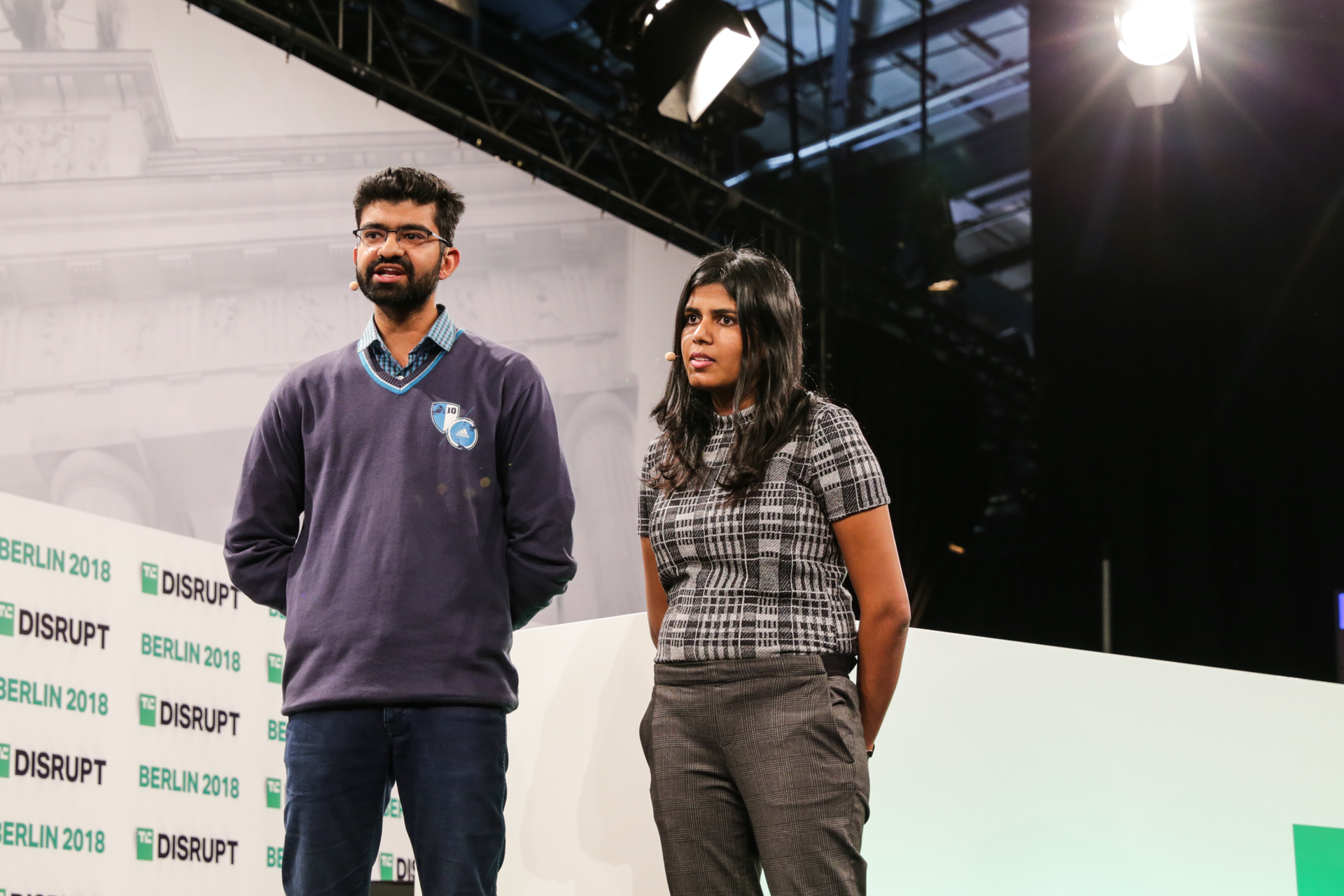
But there’s more. The overarching vision is not only that AI will help seed companies make key decisions to select for higher-quality seed that can deliver higher-yielding crops, while also speeding up that (slow) process. Ultimately their hope is that the data generated by applying AI to automate phenotypic measurements of crops will also be able to yield highly valuable predictive insights.
Here, if they can establish a correlation between geotagged phenotypic measurements and the plants’ genotypic data (data which the seed giants they’re targeting would already hold), the AI-enabled data-capture method could also steer farmers toward the best crop variety to use in a particular location and climate condition — purely based on insights triangulated and unlocked from the data they’re capturing.
One current approach in agriculture to selecting the best crop for a particular location/environment can involve using genetic engineering. Though the technology has attracted major controversy when applied to foodstuffs.
Imago AI hopes to arrive at a similar outcome via an entirely different technology route, based on data and seed selection. And, well, AI’s uniform eye informing key agriculture decisions.
“Once we are able to establish this sort of relation this is very helpful for these companies and this can further reduce their total seed production time from six to eight years to very less number of years,” says Goyal. “So this sort of correlation we are trying to establish. But for that initially we need to complete very accurate phenotypic data.”
“Once we have enough data we will establish the correlation between phenotypic data and genotypic data and what will happen after establishing this correlation we’ll be able to predict for these companies that, with your genomics data, and with the environmental conditions, and we’ll predict phenotypic data for you,” adds Gupta.
“That will be highly, highly valuable to them because this will help them in reducing their time resources in terms of this breeding and phenotyping process.”
“Maybe then they won’t really have to actually do a field trial,” suggests Goyal. “For some of the traits they don’t really need to do a field trial and then check what is going to be that particular trait if we are able to predict with a very high accuracy if this is the genomics and this is the environment, then this is going to be the phenotype.”
So — in plainer language — the technology could suggest the best seed variety for a particular place and climate, based on a finer-grained understanding of the underlying traits.
In the case of disease-resistant plant strains it could potentially even help reduce the amount of pesticides farmers use, say, if the the selected crops are naturally more resilient to disease.
While, on the seed generation front, Gupta suggests their approach could shrink the production time frame — from up to eight years to “maybe three or four.”
“That’s the amount of time-saving we are talking about,” she adds, emphasizing the really big promise of AI-enabled phenotyping is a higher amount of food production in significantly less time.
As well as measuring crop traits, they’re also using computer vision and machine learning algorithms to identify crop diseases and measure with greater precision how extensively a particular plant has been affected.
This is another key data point if your goal is to help select for phenotypic traits associated with better natural resistance to disease, with the founders noting that around 40 percent of the world’s crop load is lost (and so wasted) as a result of disease.
And, again, measuring how diseased a plant is can be a judgement call for the human eye — resulting in data of varying accuracy. So by automating disease capture using AI-based image analysis the recorded data becomes more uniformly consistent, thereby allowing for better quality benchmarking to feed into seed selection decisions, boosting the entire hybrid production cycle.
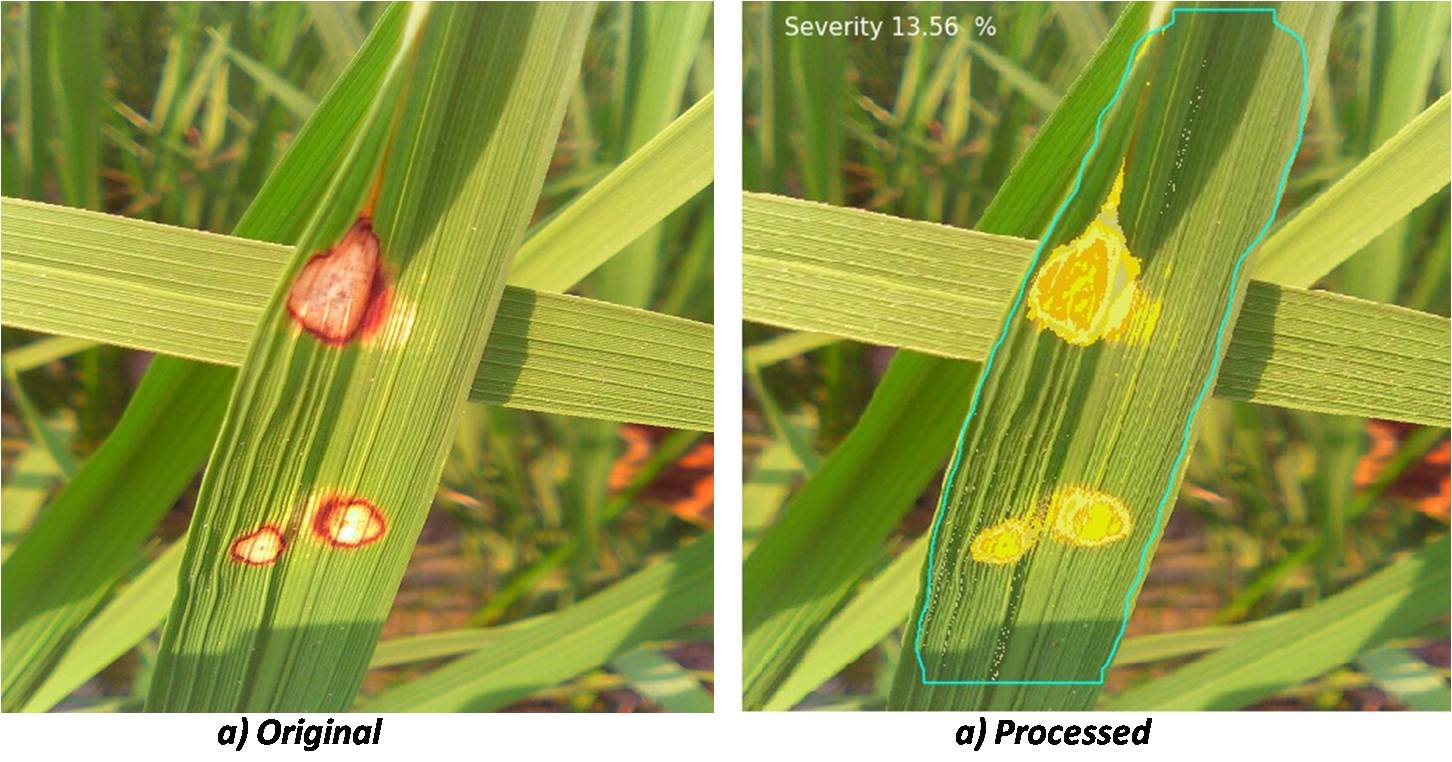
Sample image processed by Imago AI showing the proportion of a crop affected by disease
In terms of where they are now, the bootstrapping, nearly year-old startup is working off data from a number of trials with seed companies — including a recurring paying client they can name (DuPont Pioneer); and several paid trials with other seed firms they can’t (because they remain under NDA).
Trials have taken place in India and the U.S. so far, they tell TechCrunch.
“We don’t really need to pilot our tech everywhere. And these are global [seed] companies, present in 30, 40 countries,” adds Goyal, arguing their approach naturally scales. “They test our technology at a single country and then it’s very easy to implement it at other locations.”
Their imaging software does not depend on any proprietary camera hardware. Data can be captured with tablets or smartphones, or even from a camera on a drone or using satellite imagery, depending on the sought for application.
Although for measuring crop traits like length they do need some reference point to be associated with the image.
“That can be achieved by either fixing the distance of object from the camera or by placing a reference object in the image. We use both the methods, as per convenience of the user,” they note on that.
While some current phenotyping methods are very manual, there are also other image-processing applications in the market targeting the agriculture sector.
But Imago AI’s founders argue these rival software products are only partially automated — “so a lot of manual input is required,” whereas they couch their approach as fully automated, with just one initial manual step of selecting the crop to be quantified by their AI’s eye.
Another advantage they flag up versus other players is that their approach is entirely non-destructive. This means crop samples do not need to be plucked and taken away to be photographed in a lab, for example. Rather, pictures of crops can be snapped in situ in the field, with measurements and assessments still — they claim — accurately extracted by algorithms which intelligently filter out background noise.
“In the pilots that we have done with companies, they compared our results with the manual measuring results and we have achieved more than 99 percent accuracy,” is Goyal’s claim.
While, for quantifying disease spread, he points out it’s just not manually possible to make exact measurements. “In manual measurement, an expert is only able to provide a certain percentage range of disease severity for an image example; (25-40 percent) but using our software they can accurately pin point the exact percentage (e.g. 32.23 percent),” he adds.

They are also providing additional support for seed researchers — by offering a range of mathematical tools with their software to support analysis of the phenotypic data, with results that can be easily exported as an Excel file.
“Initially we also didn’t have this much knowledge about phenotyping, so we interviewed around 50 researchers from technical universities, from these seed input companies and interacted with farmers — then we understood what exactly is the pain-point and from there these use cases came up,” they add, noting that they used WhatsApp groups to gather intel from local farmers.
While seed companies are the initial target customers, they see applications for their visual approach for optimizing quality assessment in the food industry too — saying they are looking into using computer vision and hyper-spectral imaging data to do things like identify foreign material or adulteration in production line foodstuffs.
“Because in food companies a lot of food is wasted on their production lines,” explains Gupta. “So that is where we see our technology really helps — reducing that sort of wastage.”
“Basically any visual parameter which needs to be measured that can be done through our technology,” adds Goyal.
They plan to explore potential applications in the food industry over the next 12 months, while focusing on building out their trials and implementations with seed giants. Their target is to have between 40 to 50 companies using their AI system globally within a year’s time, they add.
While the business is revenue-generating now — and “fully self-enabled” as they put it — they are also looking to take in some strategic investment.
“Right now we are in touch with a few investors,” confirms Goyal. “We are looking for strategic investors who have access to agriculture industry or maybe food industry… but at present haven’t raised any amount.”
Powered by WPeMatico

Because solar and wind power are now cheaper to produce than energy from fossil fuels, the only obstacle that remains to the mass adoption of renewable power is the amount of money utilities need to spend to store the energy those systems produce.
Right now, storing 100 megawatts of renewable energy (enough to power roughly 600,000 homes) means spending roughly $65.6 million on massive batteries like the kind made by Tesla, or relying on huge pumped hydro-electric storage projects that essentially create man-made dams where the release of water spins turbines to generate energy (those projects are typically far larger than 100 megawatts).
A new company called Energy Vault, launched from Bill Gross’ Idealab incubator in Pasadena, Calif., has developed a technology, based on the principles of pumped hydro storage, that it claims can slash the cost of energy storage to a fraction of the current price and make renewable energy cost-effective all day, every day.
As climate change worries mount, finding a solution that can make renewables even more compelling and cost-effective isn’t just a good business — it’s a global priority. 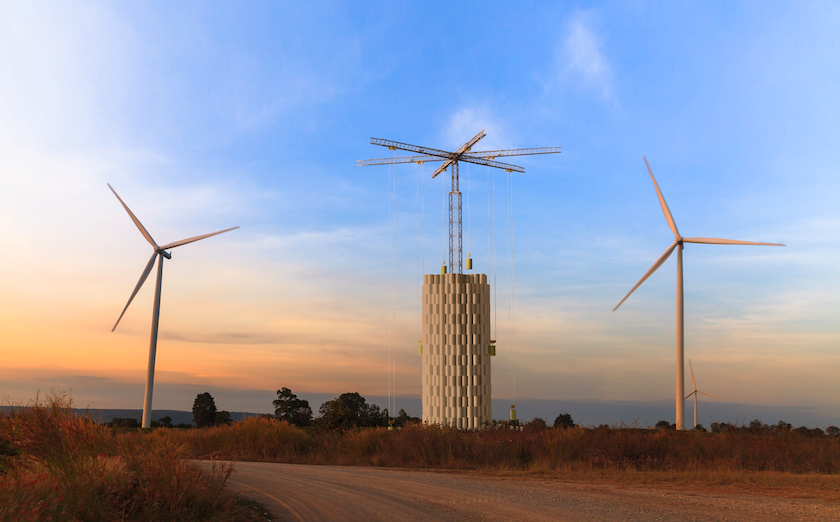
Energy Vault’s technology consists of a 33-story-high, six-armed crane with booms extending to nearly the length of a football field (about 87 yards). That crane is surrounded by 5,000 huge concrete blocks weighing roughly 35 metric tons altogether (or around 172,000 pounds).
“These would typically be built out near wind farms or solar plants,” said Robert Piconi, the chief executive of Energy Vault. “This is not something that you’d drop in the middle of the city.”
The cranes are controlled by a software system that manages the movement of the cement blocks to either store the energy generated by solar or wind farms, or discharge that energy onto the power grid.
According to Piconi, each of the company’s systems will have 35 megawatt hours of nominal energy capacity and 4 megawatts of peak power capacity. Ramp times occur in as little as a millisecond with 100 percent power achieved in 2.9 seconds.
The systems have roundtrip efficiencies of roughly 90 percent and there’s no energy loss, as the technology relies on mechanical energy from incredibly durable materials that have a roughly 30-year lifetime.
And all of this at a price tag of around $7 million to $8 million per system, according to Piconi. What makes the system even more sustainable, according to Piconi, is the use of recycled concrete that was only going to be landfilled — instead of new cement construction.
Energy Vault has already set up a demonstration system in Biasca, Switzerland, next to the company’s Lugarno headquarters. That demonstration plant likely had a role in the company’s ability to sign up a clutch of initial customers, including The Tata Power Company Limited, India’s largest integrated power company, to deploy an initial 35 MWh Energy Vault system by 2019.
“Innovation in energy storage represents the largest and most near-term opportunity to accelerate renewable deployments and bring us closer to replacing fossil fuels as the primary source to meet the world’s continual growth in energy demand,” said Bill Gross, co-founder, Energy Vault and founder of Idealab. “We’re excited to support Energy Vault in bringing this groundbreaking technology to the market.”
Indeed, over the next two years, Energy Vault expects customers to build between 500 megawatts and one gigawatt of storage capacity using its systems, according to Piconi.
“We have customers on every continent to build these units,” he said.
Piconi, a former Danaher executive, met Gross 12 years ago as the Idealab founder was beginning his push into renewable energy technologies. The two men stayed in touch and began seriously contemplating the creation of Energy Vault after nearly a decade of collaboration and contact.
It was back in 2017 that Piconi, Gross and fellow co-founder and chief technical officer Andrea Pedretti hit upon the idea for Energy Vault’s novel approach to energy storage.
“It became clear to him a few years ago how important storage was going to be,” said Piconi.
The three men started looking at the efficiencies available through pumped hydroelectric storage, and began brainstorming ways to mimic that process using mechanical energy. “We looked at a steel tower first, but that was too expensive. We thought about water in a tower pumped up, but there were efficiency issues there,” Piconi said. “Then we got to the concrete bricks and the crane.”
The concrete was important for the cost of materials, and because of the energy intensity and pollution that’s involved with manufacturing cement, the team decided to use recycled cement to make the blocks that its energy storage system would use.
Enter, Cemex, one of the largest cement manufacturers in the world, which has joined with Energy Vault as a partner.
Energy Vault has already raised capital through several “seed” rounds to develop its technology and get the prototype in Switzerland up and running.
“Energy Vault’s team has developed a disruptive platform, and we are enthusiastic to work with their team to deploy an environmentally efficient and cost-effective energy storage solution that is highly viable,” said Dr. Davide Zampini, head of Cemex Global R&D and IP. “We share a common commitment to enable a future where resources are used responsibly, which is paramount to Cemex’s strategy for sustainable development.”
Powered by WPeMatico
False rumors forwarded on WhatsApp have led angry mobs to murder strangers in India, but the Facebook-owned chat app is still racing to add users in the country. Today it launched a feature phone version of WhatsApp for JioPhone 1 and 2’s KaiOS, which are designed to support 22 of India’s vast array of native languages. Users will be able to send text, photos, videos and voice messages with end-to-end encryption, though it will lack advanced features like augmented reality and Snapchat Stories-style Status updates.
WhatsApp was supposed to launch alongside the JioPhone 2 that debuted last month for roughly $41, but was delayed. Forty million JioPhone 1s had already been sold, and it’s been estimated to control 27 percent of the Indian mobile phone market and 47 percent of the country’s feature phone market. Coming to JioPhone should open up a big new growth vector for WhatsApp as it strives to grow its 1.5 billion user count toward the big 2 billion milestone. Meanwhile, it could make the Reliance-owned Jio mobile network more appealing. It also could strengthen the KaiOS operating system, developed by a San Diego startup of the same name that recently took a $22 million investment from Google. WhatsApp rolls out on the JioPhone AppStore today and should be available to everyone by September 20th. The companu wouldn’t say if the app will come to other KaiOS devices made by Nokia and Alcatel.
Facebook has started to squeeze WhatsApp, replacing its departed co-founders with Chris Daniels, who formerly ran the Internet.org and Free Basics accessibility initiative that got kicked out of India over net neutrality concerns. That doesn’t bode well for him now overseeing WhatsApp’s high-risk/high-reward scenario in India. The massive nation is core to the chat app’s growth strategy, but the attacks it’s spurred have lost it India’s hearts and minds.
WhatsApp has scrambled to safeguard its app after numerous reports of rumors circulated on its app about gangs and child abductors led angry mobs to kill people in the streets. Five nomads were recently beaten to death in the rural village of Rainpada after residents watched inaccurate videos forwarded through WhatsApp about kidnappers supposedly rolling through the area, BuzzFeed reports.
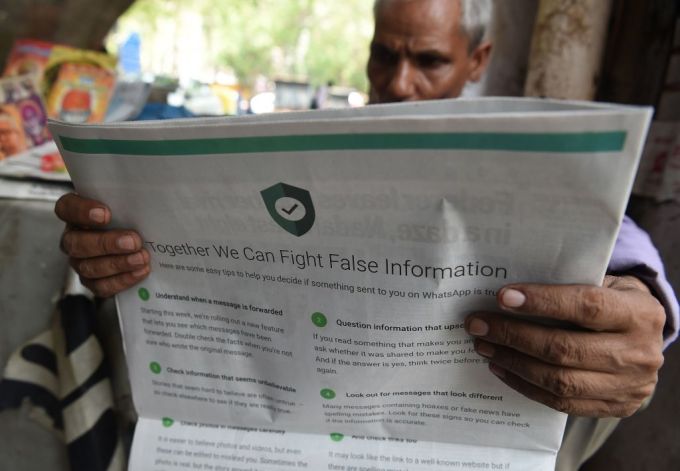
This photo illustration shows an Indian newspaper vendor reading a newspaper with a full back page advertisement from WhatsApp intended to counter fake information, in New Delhi on July 10, 2018. – Facebook owned messaging service WhatsApp on July 10 published full-page advertisements in Indian dailies in a bid to counter fake information that has sparked mob lynching attacks across the country. (Photo by Prakash SINGH / AFP) (Photo credit should read PRAKASH SINGH/AFP/Getty Images)
WhatsApp recently limited how many people you can forward a message to, labeled forwarded messages, and began a radio PSA campaign in Hindi on 46 India stations warning people to verify things they hear on WhatsApp before acting on them.
“The challenge of mob violence requires action from governments, civil society, and technology companies. That’s why WhatsApp launched a broad user education campaign over radio in India and is working with Jio to educate new users about misinformation” a WhatsApp spokesperson tells me. “WhatsApp was built as an alternative to SMS messaging and we think people should be able to text their loved ones across borders without paying exorbitant charges to do so.”
But it’s clear that parent company Facebook sees spreading WhatsApp as part of its mission to bring the world closer together, even as that comes at a cost. The government has pushed WhatsApp to build workarounds for its encryption to identify the source of rumors and misinformation videos. But a WhatsApp spokesperson told BuzzFeed News that “We believe that building ‘traceability’ into WhatsApp would undermine end-to-end encryption and the private nature of WhatsApp creating the potential for serious misuse . . . we will not weaken the privacy protections we provide.”
Jio’s “transition” phones that offer a few third-party apps but not full-fledged smartphone capabilities, alongside its affordable mobile data, have significantly reduced the cost and friction of being online in India. But with that access comes newfound dangers, especially if not combined with news literacy and digital skills education that could help users spot false information before it sparks violence. Lower income users interested in Jio’s feature phones may have even less access to the education needed to not believe everything they read on WhatsApp. What was once a smartphone problem is becoming an every phone problem.
Increasingly the tech world is learning that connecting people to the internet also means connecting them to the worst elements of humanity. That will necessitate a new wave of pessimists and cynics as product managers in order to predict and thwart ways to abuse software instead of allowing idealists to blindly build tools that can be weaponized.
Powered by WPeMatico