india
Auto Added by WPeMatico
Auto Added by WPeMatico
Mfine, an India-based startup aiming to broaden access to doctors and healthcare by using the internet, has pulled in a $17.2 million Series B funding round for growth.
The company is led by four co-founders from Myntra, the fashion commerce startup acquired by Flipkart in 2014. They include CEO Prasad Kompalli and Ashutosh Lawania who started the business in 2017 and were later joined by Ajit Narayanan and Arjun Choudhary, Myntra’s former CTO and head of growth, respectively.
The round is led by Japan’s SBI Investment with participation from sibling fund SBI Ven Capital and another Japanese investor, Beenext. Existing Mfine backers Stellaris Venture Partners and Prime Venture Partners also returned to follow-on. Mfine has now raised nearly $23 million to date.
“In India, at a macro-level, good doctors are far and few and distributed very unevenly,” Kompalli said in an interview with TechCrunch. “We asked ‘Can we build a platform that is a very large hospital on the cloud?,’ that’s the fundamental premise.”
There’s already plenty of money in Indian healthtech platforms — Practo, for one, has raised more than $180 million from investors like Tencent — but Mfine differentiates itself with a focus on partnerships with hospitals and clinics, while others have offered more daily health communities that include remote sessions with doctors and healthcare professionals who are recruited independently of their day job.
“We are entering a different phase of what is called healthtech… the problems that are going to be solved will be much deeper in nature,” Kompalli said in an interview with TechCrunch.
Mfine makes its money as a digital extension of its healthcare partners, essentially. That means it takes a cut of spending from consumers. The company claims to work with more than 500 doctors from 100 “top” hospitals, while there’s a big focus on tech. In particular, it says that an AI-powered “virtual doctor” can help in areas that include summarising diagnostic reports, narrowing down symptoms, providing care advice and helping with preventative care. There are also other services, including medicine delivery from partner pharmacies.
To date, Mfine said that its platform has helped with more than 100,000 consultations across 800 towns in India during the last 15 months. It claims it is seeing around 20,000 consultations per month. Beyond helping increase the utilization of GPs — Mfine claims it can boost their productivity 3 to 4X — the service can also help hospitals and centers increase their revenue, a precious commodity for many.
Going forward, Kompalli said the company is increasing its efforts with corporate companies, where it can help cover employee healthcare needs, and developing its insurance-style subscription service. Over the coming few years, that channel should account for around half of all revenue, he added.
A more immediate goal is to expand its offline work beyond Hyderabad and Bangalore, the two cities where it currently operates.
“This round is a real endorsement from global investors that the model is working,” he added.
Powered by WPeMatico
CleverTap, an India-based startup that lets companies track and improve engagement with users across the web, has pulled in $26 million in new funding thanks to a round led by Sequoia India.
Existing investor Accel and new backer Tiger Global also took part in the deal, which values CleverTap at $150-$160 million, the startup disclosed. The deal takes CleverTap to around $40 million from investors to date.
Founded in 2015 and based in Mumbai, CleverTap competes with a range of customer experience services, including Oracle Cloud. Its service covers a range of touchpoints with consumers, including email, in-app activity, push notifications, Facebook, WhatsApp (for business) and Viber. Its service helps companies map out how their users are engaging across those vectors, and develop “re-engagement” programs to help reactive dormant users or increase engagement among others.
The company says its SDK is installed in more than 8,000 apps and its customers include Southeast Asia-based startups Go-Jek and Zilingo, Hotstar in India and U.S.-based Fandango . With a considerable customer base in Asia, CleverTap puts a particular focus on mobile because many of these markets are all about personal devices.
“Asia is mobile-first and massively growing,” CleverTap CEO and co-founder Sunil Thomas told TechCrunch in an interview. “A lot of engagement in this [part of the] world is timely… we were sort of born physically on the east side of the world, so we got to scale with all these diverse set of devices.”
That stands to benefit CleverTap as it seeks to grow market share outside of Asia, and in markets like the U.S. and Europe where mobile is — right now — just one part of the marketing and customer engagement process. The company believes that engagement by mobile has a long way to develop there.
“Engagement [in the West] is still email-heavy and not really timely,” Thomas said. “Whereas the East thinks of it as ‘Hey, let’s be proactive… instead of a user coming in to hunt for information, can I provide it when I think he or she will need it?’ ”
Of course, mobile push and in-app notifications can be easily abused.
Most people will know of an app on their phone that falls into that category. So, how does a company know what is too much or what isn’t enough?
“As long as you use push or in-app as an extension of your brand, then I think it’s extremely useful,” explained Thomas. “After all, this is a really competitive world; it isn’t just your app out there — if you can make your brand count when this person isn’t in your app, that’ll help you.”
More broadly, Thomas argued that CleverTap brings data to the table which, ultimately, “changes the whole context in real time.” So a customer can really look holistically at their online presence and figure out what is working, and with which users. In real terms, when used to acquire new users online, he said he believes that CleverTap typically doubles registration conversions and triples the buying rate.
“The cost of acquisition to first purchase is what we really effect,” said Thomas. “It’s that moment you get a new person into your house.”
CleverTap has an office in Sunnyvale and it has just landed in Singapore. Now it plans to add a location in Indonesia before the end of the year. Those expansions are centered around business development, with some customer support, since tech and other teams are in India. Already, according to Thomas, the company is looking to grow in Europe while it is weighing the potential to enter Latin America in a move that could include a local partnership.
The CleverTap CEO is also considering raising more money toward the end of the year, when he believes that the company can push its valuation as high as $400 million.
“That’s very doable based on revenue growth,” he said. “We think that the revenue will demand that valuation.”
Powered by WPeMatico
The San Francisco-based startup Branch International, which makes small personal loans in emerging markets, has raised $170 million and announced a partnership with Visa to offer virtual, pre-paid debit cards to Branch client networks in Africa, South-Asia and Latin America.
Branch — which has 150 employees in San Francisco, Lagos, Nairobi, Mexico City and Mumbai — makes loans starting at $2 to individuals in emerging and frontier markets. The company also uses an algorithmic model to determine credit worthiness, build credit profiles and offer liquidity via mobile phones.
“We’ll use [the money] to deepen existing business in Africa. Later this year we’ll announce high-yield savings accounts…in Africa,” says Branch co-founder and chief executive Matt Flannery.
The $170 million round from Foundation Capital and its new debit card partner, Visa, will support Branch’s international expansion, which could include Brazil and Indonesia, according to Flannery. Branch launched in Mexico and India within the last year. In Africa, it offers its services in Kenya, Nigeria and Tanzania.
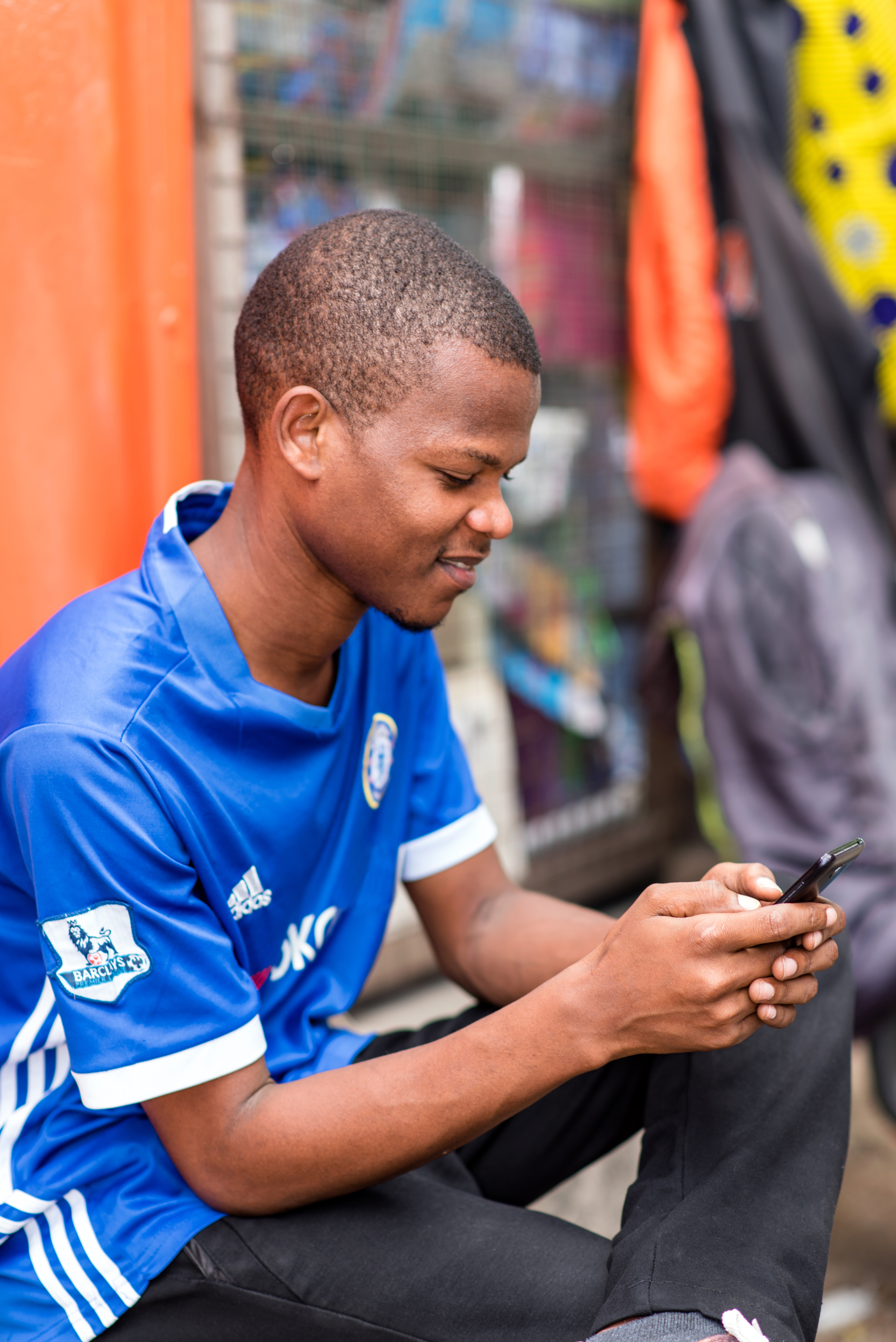
A potential Branch customer
The Branch-Visa partnership will allow individuals to obtain virtual Visa accounts with which to create accounts on Branch’s app. This gives Branch larger reach in countries such as Nigeria — Africa’s most populous country with 190 million people — where cards have factored more prominently than mobile money in connecting unbanked and underbanked populations to finance.
Founded in 2015, Branch started operating in Kenya, where mobile money payment products such as Safaricom’s M-Pesa (which does not require a card or bank account to use) have scaled significantly. M-Pesa now has 25 million users, according to sector stats released by the Communications Authority of Kenya. Branch has more than 3 million customers and has processed 13 million loans and disbursed more than $350 million, according to company stats.
Branch has one of the most downloaded fintech apps in Africa, per Google Play app numbers combined for Nigeria and Kenya, according to Flannery.
Already profitable, Branch International expects to reach $100 million in revenues this year, with roughly 70 percent of that generated in Africa, according to Flannery.
In addition to Visa and Foundation Capital, the $170 Series C round included participation from Branch’s existing investors Andreessen Horowitz, Trinity Ventures, Formation 8, the IFC, CreditEase and Victory Park, while adding new investors Greenspring, Foxhaven and B Capital.
Branch last raised $70 million in 2018. The company’s overall VC haul and $100 million revenue peg register as pretty big numbers for a startup focused primarily on Africa. Pan-African e-commerce startup Jumia, which also announced its NYSE IPO last month, generated $140 million in revenue (without profitability) in 2018.
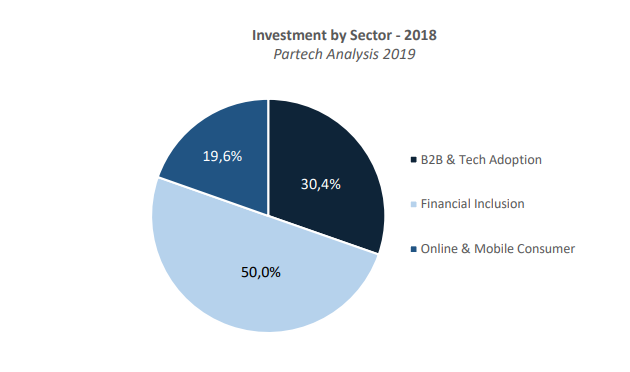 Startups building financial technologies for Africa’s 1.2 billion population have gained the attention of investors. As a sector, fintech (or financial inclusion) attracted 50 percent of the estimated $1.1 billion funding to African startups in 2018, according to Partech.
Branch’s recent round and plans to add countries internationally also tracks a trend of fintech-related products growing in Africa, then expanding outward. This includes M-Pesa, which generated big numbers in Kenya before operating in 10 countries around the world. Nigerian payments startup Paga announced its pending expansion in Asia and Mexico late last year. And payment services such as Kenya’s SimbaPay have also connected to global networks like China’s WeChat.
Powered by WPeMatico
Fresh from closing a notable investment from Airbnb, India’s OYO has expanded its footprint into Japan. The move comes through a joint venture with investor SoftBank — which led OYO’s $1 billion round last year through its Vision Fund — which will cover hotel-based accommodation and home rentals.
Financial details around the joint venture were not disclosed. An OYO representative declined to go into details when asked.
OYO started in India, where it initially aggregated budget hotels; it has since expanded into China, Malaysia, Nepal, the U.K., the UAE, Indonesia, the Philippines and — now — Japan. China, in particular, has shown promise, with OYO’s room inventory there reportedly double what it is in India.
The evolution has not just been a geographical one. Its business has moved from a laser focus on the long-tail of budget hotels to a broader “hospitality” play. It now includes managed private homes and, in India, wedding venues, holiday packages and co-working — while its hotel supply is a mixture of franchised and leased. It has also advanced its focus from budget-minded consumers to cover business travelers, too.
The Japanese JV will be led by Prasun Choudhary, whom OYO describes as a founding member of its team. Like OYO business elsewhere in the world, the company is appealing to small and medium hotel franchises and owners. On the consumer side, its prime segment is domestic and international travelers who seek “budget to mid-segment hospitality,” to use part of a statement from OYO founder and CEO Ritesh Agarwal, who is pictured in the image at the top of this post.
Agarwal is a Thiel fellow who started the company in 2011 when aged just 18. His original business, called Oravel, was an Airbnb clone that pivoted to become OYO. Today, that company is valued at $5 billion after raising more than $1.5 billion from investors.
SoftBank has previously struck joint ventures to bring other Vision Fund companies to Japan. Those include WeWork, Chinese ride-hailing firm Didi Chuxing and India’s Paytm, which launched a payment service in the country.
Powered by WPeMatico
There are a lot of people who never thought they’d see the day venture capitalists would funnel millions into femtech businesses, direct-to-consumer tampon retailers no less. But that’s our new reality and Cora is proof.
San Francisco-based Cora, which develops and sells organic tampons, pads and other personal care products, has just closed a $7.5 million Series A led by Harbinger Ventures. Cora is one of many femtech startups to raise funding this week alone, in what is turning out to be a red-hot year for VC investment in the space.
Femtech, defined as any software, diagnostics, products and services that leverage technology to improve women’s health, has attracted at least $241 million in VC funding so far this year, according to PitchBook. That puts the sector on pace to secure nearly $1 billion in investment by year-end, greatly surpassing last year’s record of $650 million. For more historical context, startups in the space brought in only $62 million in 2012, $225 million in 2014 and $231 million in 2016.
“Investors have realized there is a huge pent-up demand in the market for healthier products for women,” Cora co-founder Molly Hayward tells TechCrunch. “The way in which the VC world is structured, there just has not been a lot of representation. It’s really difficult to understand the value of a product you aren’t ever going to use or to understand a problem you aren’t ever going to have, particularly around period care. This isn’t something we were talking about as a society five years ago.”
The four-year-old startup operates a little differently than your run-of-the-mill D2C company. Like TOMS, the popular footwear brand, Cora donates a month’s supply of products for every month’s supply sold. To date, Cora has donated 5 million pads to girls in India and Kenya and 100,000 products to women in the U.S.
“To me, [Cora] was this incredible, holistic opportunity to change the way that women experience their period,” Hayward said.
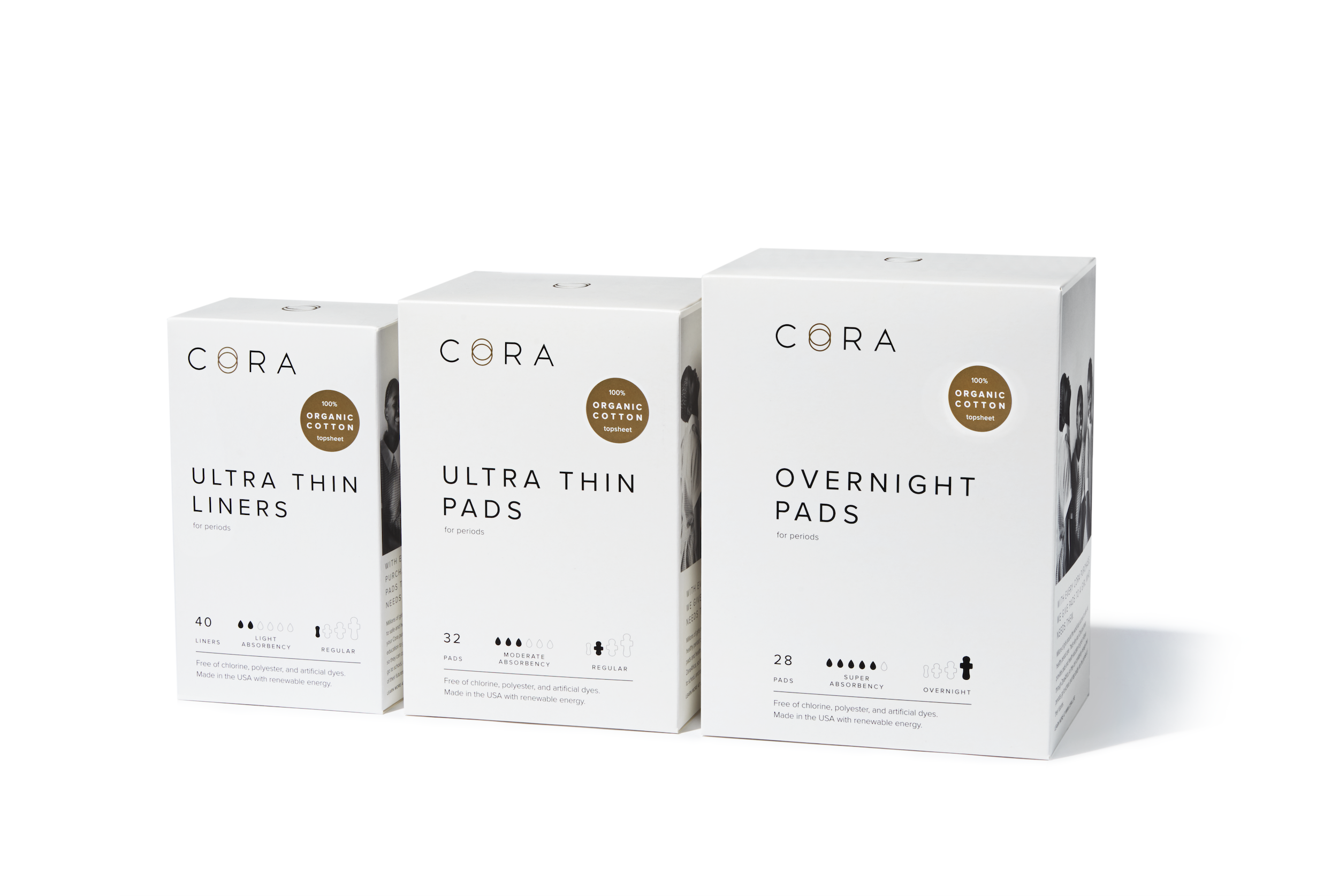 Investors must be excited about Cora’s growth. Though she didn’t disclose specific numbers, Hayward says the brand has expanded 400 percent year-over-year, a metric they are expecting to sustain with this new bout of funding. Cora’s products are sold on a subscription basis, with prices ranging from $8 per month for six tampons to $16 per month for 24. For those unfamiliar with the costs of such products, $8 for six tampons comes at quite the premium. A box of 50 Playtex tampons, for example, retails for around $9.
In Cora’s case, customers are shelling out extra cash for millennial-inspired branding, a soothing unboxing experience and a general ease of access to its products, as well as Cora’s organic, hypoallergenic and compostable materials, which aren’t characteristic of many similar products on the market.
Cora plans to use the capital to put more of its items in Target stores, where it already sells its tampons and pads, and expand its portfolio of products. As part of the funding, Cora has added two more women to its board of directors: Lisa Bougie, the former GM of Stitch Fix, and Andrea Freedman, the former chief financial officer of Method. Its board is now 80 percent female.
Powered by WPeMatico
One year after a $38 million Series B valued on-demand aviation startup Blade at $140 million, the company has begun taxiing the Bay Area’s elite.
As part of a new pilot program, Blade has given 200 people in San Francisco and Silicon Valley exclusive access to its mobile app, allowing them to book helicopters, private jets and even seaplanes at a moments notice for $200 per seat, at least.
Blade, backed by Lerer Hippeau, Airbus, former Google CEO Eric Schmidt and others, currently flies passengers around the New York City area, where it’s headquartered, offering the region’s wealthy $800 flights to the Hamptons, among other flights at various price points. According to Business Insider, it has worked with Uber in the past to help deep-pocketed Coachella attendees fly to and from the Van Nuys Airport to Palm Springs, renting out six-seat helicopters for more than $4,000 a pop.
Its latest pilot seems to target business travelers, connecting riders to the San Francisco International Airport and Oakland International Airport to Palo Alto, San Jose, Monterey and Napa Valley. The goal is to shorten trips made excruciatingly long due to bad traffic in major cities like New York, Los Angeles and San Francisco. Recently, the startup partnered with American Airlines to better establish its network of helicopters, a big step for the company as it works to integrate with existing transportation infrastructure.
New work with @flybladenow pic.twitter.com/eONvKU3rhM
— Tyler Babin (@Tyler_Babin) March 11, 2019
Blade, led by founder and chief executive officer Rob Wiesenthal, a former Warner Music Group executive, has raised about $50 million in venture capital funding to date. To launch at scale and, ultimately, to compete with the likes of soon-to-be-public transportation behemoth Uber, it will have to land a lot more investment support.
Uber too has lofty plans to develop a consumer aerial ridesharing business, as do several other privately-funded startups. Called UberAIR, Uber will offer short-term shareable flights to commuters as soon as 2023. The company has raised billions of dollars to turn this sci-fi concept into reality.
Then there’s Kitty Hawk, a company launched by former Google vice president and Udacity co-founder Sebastian Thrun, which is developing an aircraft that can take off like a helicopter but fly like a plane for short-term urban transportation purposes. Others in the air taxi or vertical take-off and landing aircraft space, including Volocopter, Lilium and Joby Aviation, have raised tens of millions to eliminate traffic congestion or, rather, to chauffer the rich.
Blade’s next stop is India, the Financial Times reports, where it will conduct a pilot connecting travelers in downtown Mumbai and Pune. The company tells TechCrunch they are currently exploring one additional domestic pilot and one additional international pilot.
Powered by WPeMatico

Chinese smartphone maker Xiaomi has announced a new entry level smartphone at an event in Delhi.
The entry-level smartphone is targeted at the Indian market and looks intended to woo feature phone owners to upgrade from a more basic mobile.
It runs Google’s flavor of Android optimized for low-powered smartphones (Android Go) which supports lightweight versions of apps.
Under the hood the dual-SIM handset has a Qualcomm Snapdragon 425 chipset, 1GB RAM and 8GB of storage (though there’s a slot for expanding storage capacity up to 128GB).
Also on board: 4G cellular connectivity and a 3000mAh battery.
Up front there’s a 5 inch HD display with a 16:9 aspect ration, and 5MP selfie camera. An 8MP camera brings up the rear, with support for 1080p video recording.
At the time of writing the Redmi Go is being priced at 4,499 rupee (~$65). Albeit a mark-down graphic on the company’s website suggests the initial price may be a temporary discount on a full RRP of 5,999 rupees (~85). We’ve asked Xiaomi for confirmation.
Xiaomi’s website lists it as available to buy at 12PM March 22.
Mi fans, presenting #RedmiGo #AapkiNayiDuniya
– Qualcomm® Snapdragon
425
– Android
– 3000mAh Battery
– 8MP Rear camera with LED Flash
– 5MP Selfie camera
– 5″ HD display
– 4G Network Connectivity
– Color: Blue & black
– Price: ₹4,499RT & spread the
pic.twitter.com/aanAoiauqj
— Mi India (@XiaomiIndia) March 19, 2019
While Xiaomi is squeezing its entry level smartphone price-tag here, the Redmi Go’s cost to consumers in India still represents a sizeable bump on local feature phone prices.
For example the Nokia 150 Dual SIM candybar can cost as little as 1,500 rupees (~20). Though there’s clearly a big difference between a candybar keypad mobile and a full-screen smartphone. Yet 3x more expensive represents an immovable barrier for many consumers in the market.
The Redmi Go also looks intended to respond to local carrier Reliance Jio’s 4G feature phones, which are positioned — price and feature wise — as a transitionary device, sitting between a dumber feature phone and full-fat smartphone.
The JioPhone 2 launched last year with a price tag of 2,999 rupees (~40). So the Redmi Go looks intended to close the price gap — and thus try to make a transitionary handset with a smaller screen less attractive than a full screen Android-powered smartphone experience.
That said, the JioPhone handsets run a fork of Firefox OS, called KaiOS, which can also run lightweight versions of apps like Facebook, Twitter and Google.
So, again, many India consumers may not see the need (or be able) to shell out ~1,500 rupees more for a lightweight mobile computing experience when they can get something similar for cheaper elsewhere. And indeed plenty of the early responses to Xiaomi’s tweet announcing the Redmi Go brand it “overpriced”.
Powered by WPeMatico
YouTube Music is coming to the next critical battlefield for streaming music services: India. The company announced this week it’s launching its ad-supported version of YouTube Music for free in the country, as well as YouTube Music Premium, its subscription that offers background listening, offline downloads and an ad-free experience for ₹99 a month.
In addition, YouTube Premium, which extends offline play, background listening and the removal of ads across YouTube, is also launching in India. This will include access to YouTube Original programming like Cobra Kai, BTS: Burn The Stage and others, and ships with the Music Premium subscription for ₹129 (rupees) per month.
This is not Google’s first entry into the streaming music market in India. The company already operates Google Play Music — and now, those subscribers will gain access to YouTube Music as part of their subscription, the company says.
India is a key market for streaming services because of its sizable population of 1.3 billion people, many of whom are still coming online for the first time. (Only some 483 million are active internet users today).
Already, Apple and Amazon operate their music services in the region in addition to local players like Gaana, Saavn and others. Spotify also made an India launch a strategic focus this year.
However, Spotify’s entry into India has been complicated by a licensing dispute with Warner Music (WMG’s Warner/Chappell publishing arm, specifically). That conflict led to Spotify arriving in the market without some of today’s biggest artists, like Cardi B. and Ed Sheeran. The case has been ugly: Warner sued Spotify asking for an emergency injunction; Spotify then accused Warner of “abusive behavior;” and Warner called Spotify a “liar.”
Despite its legal troubles, Spotify hit 1 million users in India within a week of launching. That bodes well for its potential when it gets through the legal battles.
Unlike Spotify, YouTube Music is fully licensed as it enters the region — a potential competitive advantage for the time being. It also has a deal with Samsung where Galaxy S10 owners can gain four months of YouTube Premium/YouTube Music Premium for free. (But Spotify has a deeper Samsung partnership, involving preinstalls and Bixby integrations.)
For YouTube, a win in India is needed, as its streaming music service hasn’t picked up traction to date.
To some extent, that’s because YouTube users know they can get to music videos for free, but it also has to do with Google’s baffling strategy in operating two separate brands around music. Apple doesn’t make this mistake. It leverages the power of its platform to promote its only music service, Apple Music.
That may have gotten it into trouble, though — today, Spotify filed a complaint with the European Commission over the “Apple tax” levied on its rivals and its restrictive rules.
Google has said it plans to merge its two music services at some point, but for now the split likely leads to confusion.
“India is where the multi-lingual music scene thrives,” said Lyor Cohen, global head of Music, YouTube, in a statement. “It’s interesting to note how Indian artists have consistently claimed top spots over the last few months in the Global YouTube Top Artists chart. With YouTube Music, we are hoping to bring the best in global and Indian music to millions of fans across India, and give them an immersive music experience, with the magic of music on YouTube,” he added.
Powered by WPeMatico
With the smartphone operating system market sewn up by Google’s Android platform, which has a close to 90% share globally, leaving Apple’s iOS a slender (but lucrative) premium top-slice, a little company called Jolla and its Linux-based Sailfish OS is a rare sight indeed: A self-styled ‘independent alternative’ that’s still somehow in business.
The Finnish startup’s b2b licensing sales pitch is intended to appeal to corporates and governments that want to be able to control their own destiny where device software is concerned.
And in a world increasingly riven with geopolitical tensions that pitch is starting to look rather prescient.
Political uncertainties around trade, high tech espionage risks and data privacy are translating into “opportunities” for the independent platform player — and helping to put wind in Jolla’s sails long after the plucky Sailfish team quit their day jobs for startup life.
Jolla was founded back in 2011 by a band of Nokia staffers who left the company determined to carry on development of mobile Linux as the European tech giant abandoned its own experiments in favor of pivoting to Microsoft’s Windows Phone platform. (Fatally, as it would turn out.)
Nokia exited mobile entirely in 2013, selling the division to Microsoft. It only returned to the smartphone market in 2017, via a brand-licensing arrangement, offering made-in-China handsets running — you guessed it — Google’s Android OS.
If the lesson of the Jolla founders’ former employer is ‘resistance to Google is futile’ they weren’t about to swallow that. The Finns had other ideas.
Indeed, Jolla’s indie vision for Sailfish OS is to support a whole shoal of differently branded, regionally flavored and independently minded (non-Google-led) ecosystems all swimming around in parallel. Though getting there means not just surviving but thriving — and doing so in spite of the market being so thoroughly dominated by the U.S. tech giant.
TechCrunch spoke to Jolla ahead of this year’s Mobile World Congress tradeshow where co-founder and CEO, Sami Pienimäki, was taking meetings on the sidelines. He told us his hope is for Jolla to have a partner booth of its own next year — touting, in truly modest Finnish fashion, an MWC calendar “maybe fuller than ever” with meetings with “all sorts of entities and governmental representatives”.
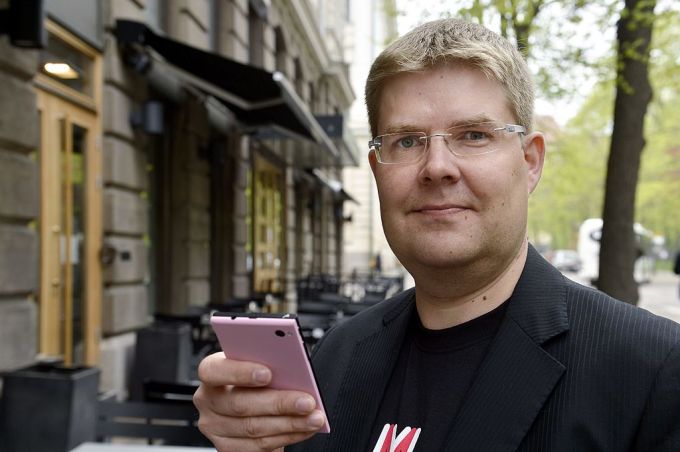
Jolla co-founder, Sami Pienimaki, showing off a Jolla-branded handset in May 2013, back when the company was trying to attack the consumer smartphone space.
(Photo credit: KIMMO MANTYLA/AFP/Getty Images)
Even a modestly upbeat tone signals major progress here because an alternative smartphone platform licensing business is — to put it equally mildly — an incredibly difficult tech business furrow to plough.
Jolla almost died at the end of 2015 when the company hit a funding crisis. But the plucky Finns kept paddling, jettisoning their early pursuit of consumer hardware (Pienimäki describes attempting to openly compete with Google in the consumer smartphone space as essentially “suicidal” at this point) to narrow their focus to a b2b licensing play.
The early b2b salespitch targeted BRIC markets, with Jolla hitting the road to seek buy in for a platform it said could be moulded to corporate or government needs while still retaining the option of Android app compatibility.
Then in late 2016 signs of a breakthrough: Sailfish gained certification in Russia for government and corporate use.
Its licensing partner in the Russian market was soon touting the ability to go “absolutely Google-free!“.
Since then the platform has gained the backing of Russian telco Rostelecom, which acquired Jolla’s local licensing customer last year (as well as becoming a strategic investor in Jolla itself in March 2018 — “to ensure there is a mutual interest to drive the global Sailfish OS agenda”, as Pienimäki puts it).
Rostelecom is using the brand name ‘Aurora OS‘ for Sailfish in the market which Pienimäki says is “exactly our strategy” — likening it to how Google’s Android has been skinned with different user experiences by major OEMs such as Samsung and Huawei.
“What we offer for our customers is a fully independent, regional licence and a tool chain so that they can develop exactly this kind of solution,” he tells TechCrunch. “We have come to a maturity point together with Rostelecom in the Russia market, and it was natural move plan together, that they will take a local identity and proudly carry forward the Sailfish OS ecosystem development in Russia under their local identity.”
“It’s fully compatible with Sailfish operating system, it’s based on Sailfish OS and it’s our joint interest, of course, to make it fly,” he adds. “So that as we, hopefully, are able to extend this and come out to public with other similar set-ups in different countries those of course — eventually, if they come to such a fruition and maturity — will then likely as well have their own identities but still remain compatible with the global Sailfish OS.”
Jolla says the Russian government plans to switch all circa 8M state officials to the platform by the end of 2021 — under a project expected to cost RUB 160.2 billion (~$2.4BN). (A cut of which will go to Jolla in licensing fees.)
It also says Sailfish-powered smartphones will be “recommended to municipal administrations of various levels,” with the Russian state planning to allocate a further RUB 71.3 billion (~$1.1BN) from the federal budget for that. So there’s scope for deepening the state’s Sailfish uptake.
Russian Post is one early customer for Jolla’s locally licensed Sailfish flavor. Having piloted devices last year, Pienimäki says it’s now moving to a full commercial deployment across the whole organization — which has around 300,000 employees (to give a sense of how many Sailfish powered devices could end up in the hands of state postal workers in Russia).
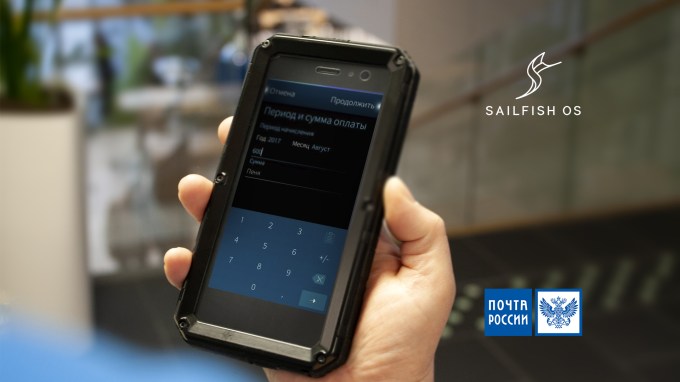
A rugged Sailfish-powered device piloted by Russian post
Jolla is not yet breaking out end users for Sailfish OS per market but Pienimäki says that overall the company is now “clearly above” 100k (and below 500k) devices globally.
That’s still of course a fantastically tiny number if you compare it to the consumer devices market — top ranked Android smartphone maker Samsung sold around 70M handsets in last year’s holiday quarter, for instance — but Jolla is in the b2b OS licensing business, not the handset making business. So it doesn’t need hundreds of millions of Sailfish devices to ship annually to turn a profit.
Scaling a royalty licensing business to hundreds of thousands of users is sums to “good business”, , says Pienimäki, describing Jolla’s business model for Sailfish as “practically a royalty per device”.
“The success we have had in the Russian market has populated us a lot of interesting new opening elsewhere around the world,” he continues. “This experience and all the technology we have built together with Open Mobile Platform [Jolla’s Sailfish licensing partner in Russia which was acquired by Rostelecom] to enable that case — that enables a number of other cases. The deployment plan that Rostelecom has for this is very big. And this is now really happening and we are happy about it.”
Jolla’s “Russia operation” is now beginning “a mass deployment phase”, he adds, predicting it will “quickly ramp up the volume to very sizeable”. So Sailfish is poised to scale.
While Jolla is still yet to turn a full-year profit Pienimäki says several standalone months of 2018 were profitable, and he’s no longer worried whether the business is sustainable — asserting: “We don’t have any more financial obstacles or threats anymore.”
It’s quite the turnaround of fortunes, given Jolla’s near-death experience a few years ago when it almost ran out of money, after failing to close a $10.6M Series C round, and had to let go of half its staff.
It did manage to claw in a little funding at the end of 2015 to keep going, albeit as much leaner fish. But bagging Russia as an early adopter of its ‘independent’ mobile Linux ecosystem looks to have been the key tipping point for Jolla to be able to deliver on the hard-graft ecosystem-building work it’s been doing all along the way. And Pienimäki now expresses easy confidence that profitability will flow “fairly quickly” from here on in.
“It’s not an easy road. It takes time,” he says of the ecosystem-building company Jolla hard-pivoted to at its point of acute financial distress. “The development of this kind of business — it requires patience and negotiation times, and setting up the ecosystem and ecosystem partners. It really requires patience and takes a lot of time. And now we have come to this point where actually there starts to be an ecosystem which will then extend and start to carry its own identity as well.”
In further signs of Jolla’s growing confidence he says it hired more than ten people last year and moved to new and slightly more spacious offices — a reflection of the business expanding.
“It’s looking very good and nice for us,” Pienimäki continues. “Let’s say we are not taking too much pressure, with our investors and board, that what is the day that we are profitable. It’s not so important anymore… It’s clear that that is soon coming — that very day. But at the same time the most important is that the business case behind is proven and it is under aggressive deployment by our customers.”
The main focus for the moment is on supporting deployments to ramp up in Russia, he says, emphasizing: “That’s where we have to focus.” (Literally he says “not screwing up” — and with so much at stake you can see why nailing the Russia case is Jolla’s top priority.)
While the Russian state has been the entity most keen to embrace an alternative (non-U.S.-led) mobile OS — perhaps unsurprisingly — it’s not the only place in the world where Jolla has irons in the fire.
Another licensing partner, Bolivian IT services company Jalasoft, has co-developed a Sailfish-powered smartphone called Accione.
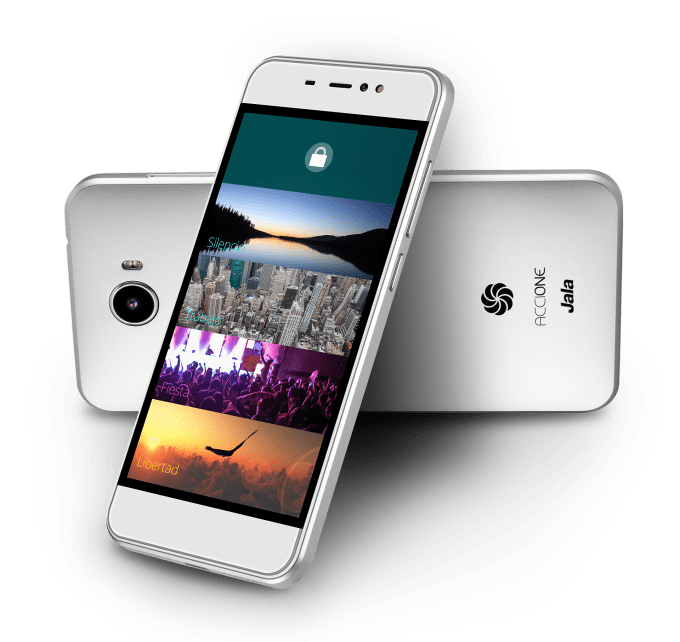
Jalasoft’s ‘liberty’-touting Accione Sailfish smartphone
It slates the handset on its website as being “designed for Latinos by Latinos”. “The digitalization of the economy is inevitable and, if we do not control the foundation of this digitalization, we have no future,” it adds.
Jalasoft founder and CEO Jorge Lopez says the company’s decision to invest effort in kicking the tyres of Jolla’s alternative mobile ecosystem is about gaining control — or seeking “technological libration” as the website blurb puts it.
“With Sailfish OS we have control of the implementation, while with Android it is the opposite,” Lopez tells TechCrunch. “We are working on developing smart buildings and we need a private OS that is not Android or iOS. This is mainly because our product will allow the end user to control the whole building and doing this with Android or iOS a hackable OS will bring concerns on security.”
Lopez says Jalasoft is using Accione as its development platform — “to gather customer feedback and to further develop our solution” — so the project clearly remains in an early phase, and he says that no more devices are likely to be announced this year.
But Jolla can point to more seeds being sewn with the potential, with work, determination and patience, to sprout into another sizeable crop of Sailfish-powered devices down the line.
Even more ambitiously Jolla is also targeting China, where investment has been taken in to form a local consortium to develop a Chinese Sailfish ecosystem.
Although Pienimäki cautions there’s still much work to be done to bring Sailfish to market in China.
“We completed a major pilot with our licensing customer, Sailfish China Consortium, in 2017-18,” he says, giving an update on progress to date. “The public in market solution is not there yet. That is something that we are working together with the customer — hopefully we can see it later this year on the market. But these things take time. And let’s say that we’ve been somewhat surprised at how complex this kind of decision-making can be.”
“It wasn’t easy in Russia — it took three years of tight collaboration together with our Russian partners to find a way. But somehow it feels that it’s going to take even more in China. And I’m not necessarily talking about calendar time — but complexity,” he adds.
While there’s no guarantee of success for Jolla in China, the potential win is so big given the size of the market that even if they can only carve out a tiny slice, such as a business or corporate sector, it’s still worth going after. And he points to the existence of a couple of native mobile Linux operating systems he reckons could make “very lucrative partners”.
That said, the get-to-market challenge for Jolla in China is clearly distinctly different vs the rest of the world. This is because Android has developed into an independent (i.e. rather than Google-led) ecosystem in China as a result of state restrictions on the Internet and Internet companies. So the question is what could Sailfish offer that forked Android doesn’t already?
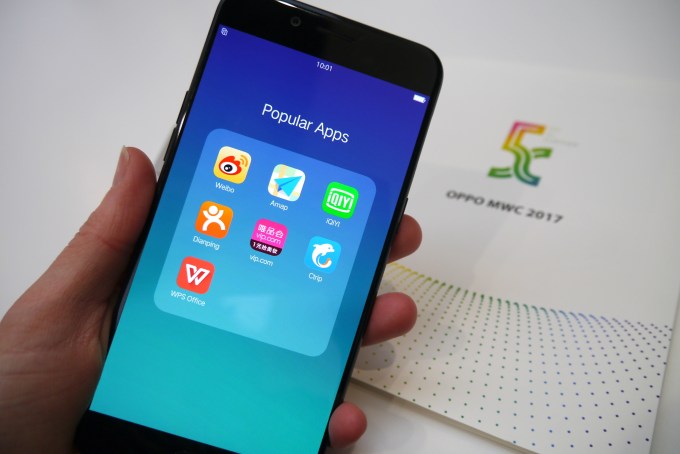
An Oppo Android powered smartphone on show at MWC 2017
Again, Jolla is taking the long view that ultimately there will be appetite — and perhaps also state-led push — for a technology platform bolster against political uncertainty in U.S.-China relations.
“What has happened now, in particular last year, is — because of the open trade war between the nations — many of the technology vendors, and also I would say the Chinese government, has started to gradually tighten their perspective on the fact that ‘hey simply it cannot be a long term strategy to just keep forking Android’. Because in the end of the day it’s somebody else’s asset. So this is something that truly creates us the opportunity,” he suggests.
“Openly competing with the fact that there are very successful Android forks in China, that’s going to be extremely difficult. But — let’s say — tapping into the fact that there are powers in that nation that wish that there would be something else than forking Android, combined with the fact that there is already something homegrown in China which is not forking Android — I think that’s the recipe that can be successful.”
Not all Jolla’s Sailfish bets have paid off, of course. An earlier foray by an Indian licensing partner into the consumer handset market petered out. Albeit, it does reinforce their decision to zero in on government and corporate licensing.
“We got excellent business connections,” says Pienimäki of India, suggesting also that it’s still a ‘watch this space’ for Jolla. The company has a “second move” in train in the market that he’s hopeful to be talking about publicly later this year.
It’s also pitching Sailfish in Africa. And in markets where target customers might not have their own extensive in-house IT capability to plug into Sailfish co-development work Pienimäki says it’s offering a full solution — “a ready made package”, together with partners, including device management, VPN, secure messaging and secure email — which he argues “can be still very lucrative business cases”.
Looking ahead and beyond mobile, Pienimäki suggests the automotive industry could be an interesting target for Sailfish in the future — though not literally plugging the platform into cars; but rather licensing its technologies where appropriate — arguing car makers are also keen to control the tech that’s going into their cars.
“They really want to make sure that they own the cockpit. It’s their property, it’s their brand and they want to own it — and for a reason,” he suggests, pointing to the clutch of major investments from car companies in startups and technologies in recent years.
“This is definitely an interesting area. We are not directly there ourself — and we are not capable to extend ourself there but we are discussing with partners who are in that very business whether they could utilize our technologies there. That would then be more or less like a technology licensing arrangement.”
While Jolla looks to be approaching a tipping point as a business, in terms of being able to profit off of licensing an alternative mobile platform, it remains a tiny and some might say inconsequential player on the global mobile stage.
Yet its focus on building and maintaining trusted management and technology architectures also looks timely — again, given how geopolitical spats are intervening to disrupt technology business as usual.
Chinese giant Huawei used an MWC keynote speech last month to reject U.S.-led allegations that its 5G networking technology could be repurposed as a spying tool by the Chinese state. And just this week it opened a cybersecurity transparency center in Brussels, to try to bolster trust in its kit and services — urging industry players to work together on agreeing standards and structures that everyone can trust.
In recent years U.S.-led suspicions attached to Russia have also caused major headaches for security veteran Kaspersky — leading the company to announce its own trust and transparency program and decentralize some of its infrastructure, including by spinning up servers in Europe last year.
Businesses finding ways to maintain and deepen the digital economy in spite of a little — or even a lot — of cross-border mistrust may well prove to be the biggest technology challenge of all moving forward.
Especially as next-gen 5G networks get rolled out — and their touted ‘intelligent connectivity’ reaches out to transform many more types of industries, bringing new risks and regulatory complexity.
The geopolitical problem linked to all this boils down to how to trust increasing complex technologies without any one entity being able to own and control all the pieces. And Jolla’s business looks interesting in light of that because it’s selling the promise of neutral independence to all its customers, wherever they hail from — be it Russia, LatAm, China, Africa or elsewhere — which makes its ability to secure customer trust not just important but vital to its success.
Indeed, you could argue its customers are likely to rank above average on the ‘paranoid’ scale, given their dedicated search for an alternative (non-U.S.-led) mobile OS in the first place.
“It’s one of the number one questions we get,” admits Pienimäki, discussing Jolla’s trust balancing act — aka how it manages and maintains confidence in Sailfish’s independence, even as it takes business backing and code contributions from a state like Russia.
“We tell about our reference case in Russia and people quickly ask ‘hey okay, how can I trust that there is no blackbox inside’,” he continues, adding: “This is exactly the core question and this is exactly the problem we have been able to build a solution for.”
Jolla’s solution sums to one line: “We create a transparent platform and on top of fully transparent platform you can create secure solutions,” as Pienimäki puts it.
“The way it goes is that Jolla with Sailfish OS is always offering the transparent Sailfish operating system core, on source code level, all the time live, available for all the customers. So all the customers constantly, in real-time, have access to our source code. Most of it’s in public open source, and the proprietary parts are also constantly available from our internal infrastructure. For all the customers, at the same time in real-time,” he says, fleshing out how it keeps customers on board with a continually co-developing software platform.
“The contributions we take from these customers are always on source code level only. We don’t take any binary blobs inside our software. We take only source code level contributions which we ourselves authorize, integrate and then we make available for all the customers at the very same moment. So that loopback in a way creates us the transparency.
“So if you want to be suspicion of the contributions of the other guys, so to say, you can always read it on the source code. It’s real-time. Always available for all the customers at the same time. That’s the model we have created.”
“It’s honestly quite a unique model,” he adds. “Nobody is really offering such a co-development model in the operating system business.
“Practically how Android works is that Google, who’s leading the Android development, makes the next release of Android software, then releases it under Android Open Source and then people start to backboard it — so that’s like ‘source, open’ in a way, not ‘open source’.”
Sailfish’s community of users also have real-time access to and visibility of all the contributions — which he dubs “real democracy”.
“People can actually follow it from the code-line all the time,” he argues. “This is really the core of our existence and how we can offer it to Russia and other countries without creating like suspicion elements each side. And that is very important.
“That is the only way we can continue and extend this regional licensing and we can offer it independently from Finland and from our own company.”
With global trade and technology both looking increasingly vulnerable to cross-border mistrust, Jolla’s approach to collaborative transparency may offer something of a model if other businesses and industries find they need to adapt themselves in order for trade and innovation to keep moving forward in uncertain political times.
Last but not least there’s regulatory intervention to consider.
A European Commission antitrust decision against Google’s Android platform last year caused headlines around the world when the company was slapped with a $5BN fine.
More importantly for Android rivals Google was also ordered to change its practices — leading to amended licensing terms for the platform in Europe last fall. And Pienimäki says Jolla was a “key contributor” to the Commission case against Android.
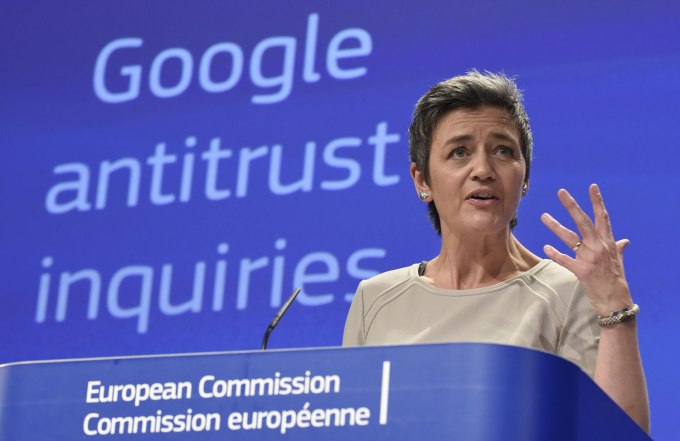
European competition commissioner Margrethe Vestager, on April 15, 2015 in Brussels, as the Commission said it would open an antitrust investigation into Google’s Android operating system. (Photo credit: JOHN THYS/AFP/Getty Images)
The new Android licensing terms make it (at least theoretically) possible for new types of less-heavily-Google-flavored Android devices to be developed for Europe. Though there have been complaints the licensing tweaks don’t go far enough to reset Google’s competitive Android advantage.
Asked whether Jolla has seen any positive impacts on its business following the Commission’s antitrust decision, Pienimäki responds positively, recounting how — “one or two weeks after the ruling” — Jolla received an inbound enquiry from a company in France that had felt hamstrung by Google requiring its services to be bundled with Android but was now hoping “to realize a project in a special sector”.
The company, which he isn’t disclosing at this stage, is interested in “using Sailfish and then having selected Android applications running in Sailfish but no connection with the Google services”.
“We’ve been there for five years helping the European Union authorities [to build the case] and explain how difficult it is to create competitive solutions in the smartphone market in general,” he continues. “Be it consumer or be it anything else. That’s definitely important for us and I don’t see this at all limited to the consumer sector. The very same thing has been a problem for corporate clients, for companies who provide specialized mobile device solutions for different kind of corporations and even governments.”
While he couches the Android ruling as a “very important” moment for Jolla’s business last year, he also says he hopes the Commission will intervene further to level the smartphone playing field.
“What I’m after here, and what I would really love to see, is that within the European Union we utilize Linux-based, open platform solution which is made in Europe,” he says. “That’s why we’ve been pushing this [antitrust action]. This is part of that. But in bigger scheme this is very good.”
He is also very happy with Europe’s General Data Protection Regulation (GDPR) — which came into force last May, plugging in a long overdue update to the bloc’s privacy rules with a much beefed up enforcement regime.
GDPR has been good for Jolla’s business, according to Pienimäki, who says interest is flowing its way from customers who now perceive a risk to using Android if customer data flows outside Europe and they cannot guarantee adequate privacy protections are in place.
“Already last spring… we have had plenty of different customer discussions with European companies who are really afraid that ‘hey I cannot offer this solution to my government or to my corporate customer in my country because I cannot guarantee if I use Android that this data doesn’t go outside the European Union’,” he says.
“You can’t indemnify in a way that. And that’s been really good for us as well.”
Powered by WPeMatico

Google’s Gradient Ventures, the search giant’s dedicated AI fund, is casting its eye to Asia after it led a $7 million Series A round for Elsa, a startup that operates an app for English language learners.
The deal is Gradient’s first in Asia, and it includes participation from existing investors Monk’s Hill Ventures and SOSV. Elsa has now raised $12 million to date.
Elsa was founded in 2015 as a way to help non-English speakers improve their accent and general speaking ability. Vu Van, CEO and one half of the founding team, is a Vietnamese national who, despite being fluent in English, struggled to be understood after moving to the U.S. to study and then work. Together with speech recognition researcher Dr. Xavier Anguera — the startup’s CTO who leads its Portugal-based tech team — Van started Elsa to help people in the same predicament.
“I was very good at grammar, reading and writing but I realized people had a hard time understanding me because I had a very strong accent and my pronunciation wasn’t proper,” Van, who is based in San Francisco but travels extensively, told TechCrunch in an interview. “This impacts confidence when you apply for jobs or are even just meeting friends.”
“There are so many English learning solutions but they are mostly focused on expanding vocabulary or grammar, very few deal with pronunciation,” she added.
Elsa uses voice recognition and AI to grade a user’s speaking versus standard American English (and I thought us Brits were the global standard…) giving them a score at the end. That helps track their progress, while it focuses on pronunciation with a detailed review on how a user is speaking.
The service uses a freemium model that grants users full access to 1,000 courses for around $3-6 per month depending on the length of the package they select. That ranges from one month of access to 12 months. New content is added every week, Van said.

With this money in the bag, Elsa is going after growth in a number of its most promising markets.
The service has users in more than 100 countries, but Vietnam is its top market, with two million paying users. Partly because it is Van’s home market, Elsa has doubled down on Vietnam with a local sales team and localized payments, including the likes of bank transfers and local wallets.
That’s the blueprint for expansion in its next three target countries: Japan, Indonesia and India. Elsa has opened an office in Tokyo and is planning to introduce more localized content for Japanese users. Similar efforts will happen in Indonesia and India, where Van said the app sees strong engagement and downloads without any paid marketing efforts.
Elsa is also working on expanding its content from English to include other languages. Spanish is currently on the horizon and the company is already preparing the back-end technology to make it possible.
“We have to build the voice recognition technology to recognize those languages accurately. We have the infrastructure but now just need to collect voice data to train the model,” explained Van.

Vu Van started Elsa in 2015 with Dr. Xavier Anguera to help non-English speakers improve their accent and general speaking ability.
Beyond geographic expansion, Elsa is also going after schools and classrooms. Already, in Vietnam, it is working with a handful of schools that have added the app to their classroom work. The company allows schools to upload their specific content or curriculum to Elsa to make it part of a student’s homework or assessment. Teachers can see if a student has completed oral homework, and the app grades their efforts.
“We want to help these teachers help their students,” Van said. “Even with the best intentions, they simply can’t teach speaking.”
The model for the education push sees schools pay a licensing fee per student, which Van said is subsidized, while uploading their content is free.
Snagging investment from Gradient is a notable achievement for Elsa, but it will also allow the startup to tap into the company’s talent, too. That’s because Gradient operates a rotational program that allows Google employees to spend three to six months working at portfolio startups on secondment. That process hasn’t kicked off for Elsa just yet, but Van is hopeful of securing an engineer who might otherwise be prohibitively expensive for her company.
Gradient Ventures was founded in 2017 and this deal is the fund’s 18th, according to Crunchbase. Its previous investments include Canvass Analytics and Test.ai.
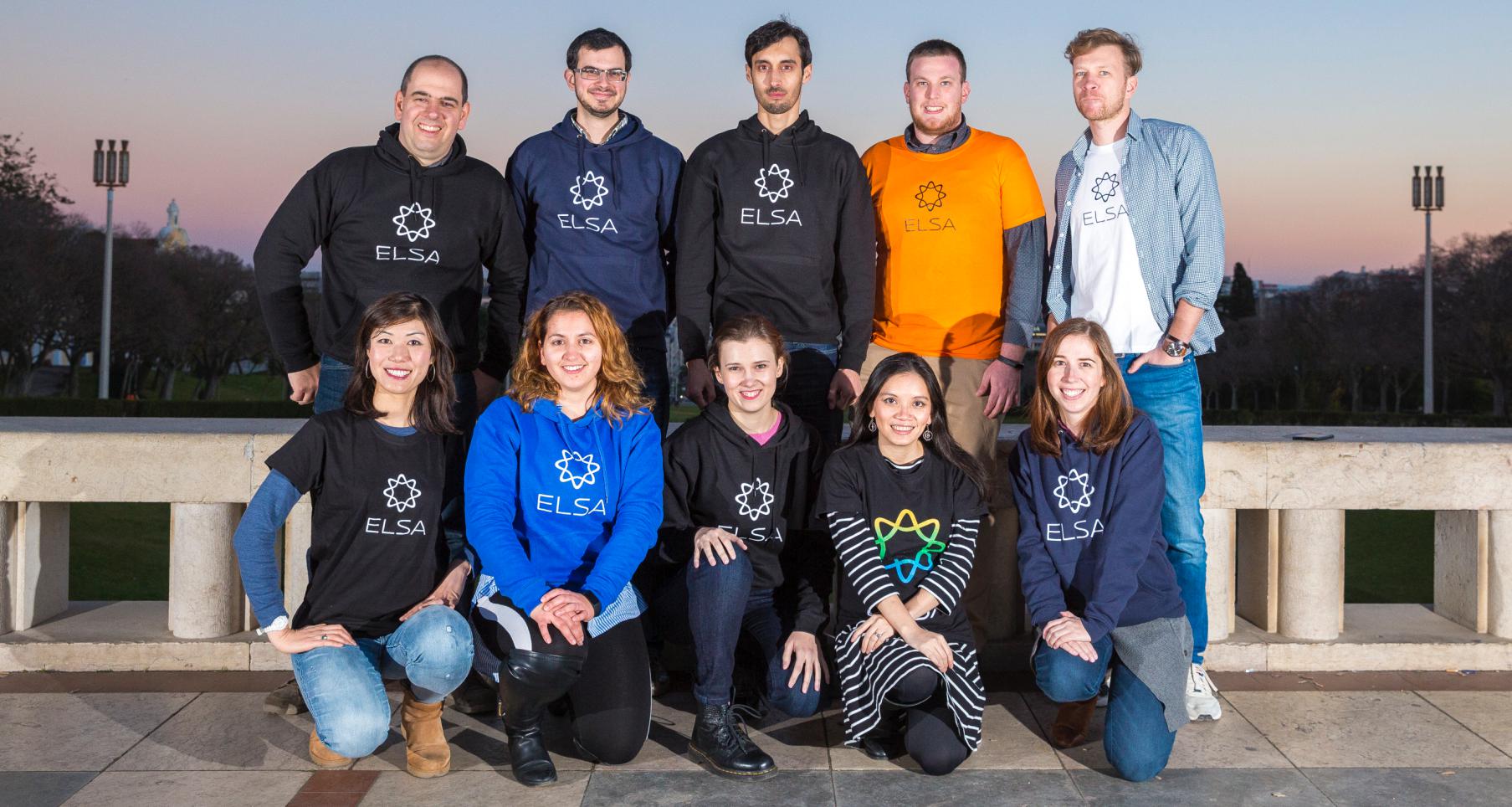
The Elsa team
Powered by WPeMatico