india
Auto Added by WPeMatico
Auto Added by WPeMatico
WhatsApp has amassed more than 400 million users in India, the instant messaging app confirmed today, reaffirming its gigantic reach in its biggest market.
Amitabh Kant, CEO of highly influential local think-tank NITI Aayog, revealed the new stat at a press conference held by WhatsApp in New Delhi on Thursday. A WhatsApp spokesperson confirmed that the platform indeed had more than 400 million monthly active users in the country.
The remarkable revelation comes more than two years after WhatsApp said it had hit 200 million users in India. WhatsApp — or Facebook — did not share any India-specific users count in the period in between.
The public disclosure today should help Facebook reaffirm its dominance in India, where it appears to be used by nearly every smartphone user. According to research firm Counterpoint, India has about 450 million smartphone users. (Some other research firms peg the number to be lower.)
It’s worth pointing out that WhatsApp also supports KaiOS — a mobile operating system for feature phones. Millions of KaiOS-powered JioPhone handsets have shipped in India. Additionally, there are about 500 million internet users, according to several industry estimates.
As WhatsApp becomes ubiquitous in the nation, the service is increasingly mutating to serve additional needs. Businesses such as social-commerce app Meesho have been built on top of WhatsApp. Facebook backed Meesho recently in what was its first investment of this kind in an Indian startup. Then, of course, WhatsApp has also come under hot water for its role in the spread of false information in the nation.
As ByteDance and others aggressively expand their businesses in India, Facebook’s perceived dominance in the country has come under attack in recent months. ByteDance’s TikTok, which has amassed 120 million users in India, has been heralded by many as the top competitor of Facebook.
A WhatsApp spokesperson also told TechCrunch that India remains WhatsApp’s biggest market. In 2017, Facebook said its marquee service had about 250 million users in India — a figure it has not updated in the years since.
WhatsApp, which has about 1.5 billion monthly active users worldwide, does not really have any major competitor in India. The closest to a competitor it has in the country is Messenger, another platform owned by Facebook, and Hike, which millions of users check everyday. Times Internet — an internet conglomerate in India that runs several news outlets, entertainment services and more — claims to reach 450 million users in the country each month.
At the aforementioned press conference, WhatsApp global chief Will Cathcart said WhatsApp also plans to roll out WhatsApp Pay, its payment service, to all its users toward the end of the year — something TechCrunch reported earlier.
Its arrival in India’s burgeoning payments space could create serious tension for Google Pay, Flipkart’s PhonePe and Paytm. For Facebook, WhatsApp Pay’s success is even more crucial as the company currently has no plans to bring cryptocurrency wallet Calibra to the country, it told TechCrunch on the sidelines of the Libra and Calibra unveil.
In a series of announcements this week, WhatsApp also unveiled a tie-up with NITI Aayog to promote women’s entrepreneurship. “By launching ‘gateway to a billion opportunities’ and our digital skills training program, we hope to shine a light on the amazing work already happening and build the next generation of entrepreneurs and change makers,” said Cathcart.
At a conference in Mumbai on Wednesday, Cathcart announced a partnership with the Indian School of Public Policy — India’s first program in the theory and practice of public policy, product design and management — to bring a series of privacy design workshops to future policy makers. These workshops will explore “the importance and practice of privacy-centric design to help technology make a positive impact on society,” the Facebook-owned platform said.
Powered by WPeMatico
Netflix has a new plan to win users in India: make the entry point to its service incredibly cheap. The streaming giant today introduced a low-priced mobile tier in the country that costs Rs 199 ($2.8) per month in a bid to take on Disney, Amazon and dozens of other aggressively priced competitors in the country.
The new subscription tier from Netflix restricts the usage of the service to one mobile device — and permits only one concurrent stream — and offers the standard definition viewing (~480p). Users also can opt to have the new plan on their tablets, but again, several features such as the ability to cast (or mirror) the content to a TV are restricted.
Netflix began testing a lower-priced subscription plan in India and some other Asian markets late last year. (During the test, Netflix charged users about $3.6 per month.) At a press conference in New Delhi, company officials said today that there is currently no plan to expand this offering to other regions. During the trial period, Netflix was also testing a weekly subscription plan; that too, is no longer being pursued, officials said.
The announcement comes days after Netflix reported that it added 2.7 million new subscribers in the quarter that ended in June this year, far fewer than the 5.1 million figure it had projected earlier this year. Jessica Lee, VP of Communications at Netflix, said the company’s recent performance in other markets did not influence its move in India.
During its earnings report, Netflix said last week that it planned to introduce a mobile-only subscription offering in India by Q3 this year. But the company has moved to make the new offering already live in the country. Previous subscription tiers that start at Rs 499 ($7.2) and go up to Rs 799 ($11.5) will continue to be offered in the country.
Mobile devices are increasingly driving media consumption in India, said Ajay Arora, director of Product Innovation at Netflix. The streaming service’s users in India have shown far richer appetite for consuming content on mobile devices than users in any other nation, he said.
India has turned into an intense battleground for video streaming services in recent years. Netflix today competes with more than three-dozen local and international players in the country. Hotstar, owned by Disney, currently leads the market with over 300 million users. The ad-supported service offers about 80% of its catalog at no cost to users. Its yearly plan, which includes titles from HBO and Showtime, is priced at Rs 999 ($14.5). Amazon Prime Video is similarly priced in India.
Indians spend 30% of their smartphone time and over 70% of their mobile data on entertainment services, a recent industry report estimated.
A cheaper plan could significantly help Netflix grow its user base in the country, analysts say. “Netflix had a good early start, but growth has been slow in the last six months given the mass Indian consumer market remains value-conscious,” Mihir Shah, vice president of research firm Media Partners Asia, told TechCrunch.
“At 200 rupees, Netflix could address a sizable target market in India. One could draw parallels from the Indian multiplex industry, which caters to 100 million consumers spending an average $4 per movie,” he added.
Netflix is estimated to have less than two million subscribers in India. However, despite its relatively smaller user base, it was the top video streaming app in the country by revenue last year, according to research firm App Annie. Research firm IHS Markit estimates that the service could scale to 4 million subscribers in the country by year-end.
At a conference last year, Netflix CEO Reed Hastings said that India could contribute as many as 100 million users to the platform in the coming years.
Netflix CEO “expects to see 100m” subscribers in India. A reminder, only ~80m Indians (top 10%) make more than $3000/yr. Even for them a $90 annual Netflix sub is well over a week’s wages. And they can get local content for basically free. So no, not 100m https://t.co/323RHe6hmS
— Stanley Pignal (@spignal) February 23, 2018
Some analysts say Netflix also needs to focus on its content catalog to make it more appealing to Indians. Hotstar has grown its business largely on top of live streaming of high-profile cricket matches. Netflix, which has produced over two-dozen titles in India to date, currently has very few titles that focus on sports.
“Netflix will need to strike the right balance of ensuring a steady supply of original local content,” Shah said.
Powered by WPeMatico
VertoFX, an Africa and emerging markets-focused currency trading and payment startup, has raised a $2.1 million seed round, led by Accelerated Digital Ventures.
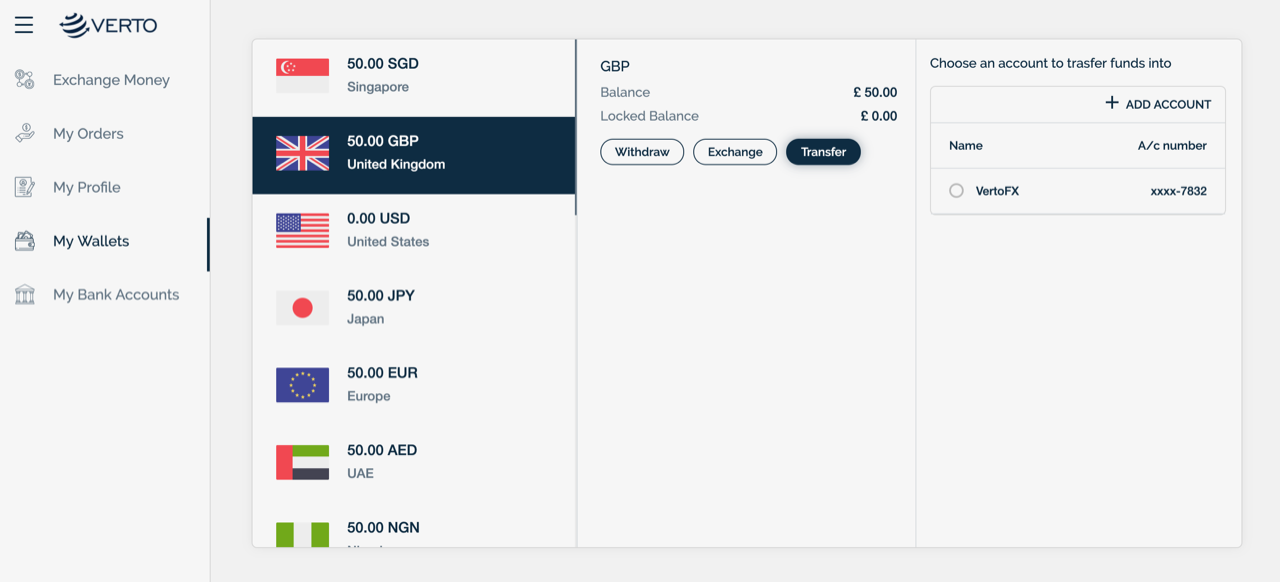
The London-based company, with a subsidiary in Lagos, Nigeria, has created a platform that allows businesses and banks to exchange and make payments in exotic foreign currencies that don’t often convert or trade conveniently across businesses or banks.
For example, South Africa’s Rand is Africa’s most convertible and traded currency — with lower spreads and transaction costs — while currencies of countries such as Ethiopia or Egypt may be difficult or expensive to trade or transact B2B payments.
“That’s the reason we are utilizing technology to create a marketplace model and price discovery to create liquidity for these currencies,” VertoFX founder Ola Oyetayo told TechCrunch.
There are around 40 global currencies that are considered exotic or illiquid, most of them in frontier markets in Asia, Africa and the Middle-East, according to Oyetayo.
 And there’s a revenue opportunity to creating a convenient online marketplace for trading and payments in these currencies.
“Our research says there’s about $400 billion being done by small and medium-scale businesses in Africa alone in transactional volume on an annual basis. If we take 1% of that as a commission or transaction fee, that’s a $4 billion addressable market, just in the continent,” said Oyetayo.
 VertoFX was founded in 2017 by Oyetayo and Anthony Oduwole — both ex-global bankers born in Nigeria. The company was part of Y Combinator’s 2019 winter cohort and processed around $7 million in transaction volume last month, according to Oyetayo.
VertoFX is registered as a payment services provider with the U.K.’s Financial Conduct Authority. Current clients include several undisclosed banks and San Francisco-based payment venture Flutterwave.
VertoFX doesn’t release revenue figures, but confirmed it earns a commission, or spread, on each transaction processed on its platform. There are currently 19 currencies on the platform and the ability to settle in 120 countries, including China and the U.S.
VertoFX is also moving into offering market research — toward potential subscription services — on the currencies it trades, according to Oyetayo.
The startup will use the round for platform development, expanding the currencies and gaining licenses in new countries. “We’ll also use the round for hiring, primarily in compliance and regulator type roles,” said Oyetayo. VertoFX already has a developer team in India and is looking at local developer talent for its Africa offices.
ADV’s Ryan Proctor confirmed the VC firm’s lead on the investment round, which also included participation from YC and several local angel investors in Africa, Oyetayo told TechCrunch.
On the possibility of becoming acquired by a big bank, VertoFX isn’t so interested, according to Oyetayo.
“We both come from big banks and if we’d wanted to go down that route we’d have developed this more as a software as a service platform,” he said.
“We’re playing the long game here, and I don’t think acquisition is the end game,” he said.
Powered by WPeMatico
Netflix said on Wednesday that it will roll out a cheaper subscription plan in India, one of the last great growth markets for global companies, as the streaming giant scrambles to find ways to accelerate its slowing growth worldwide.
The company added 2.7 million new subscribers in the quarter that ended in June this year, it said today, far fewer than the 5 million figure it had forecasted earlier this year.
The company said lowering its subscription plan, which starts at $9 in the U.S., would help it reach more users in India and expand its overall subscriber base. The new plan will be available in India in Q3. According to third-party research firms, Netflix has fewer than 2 million subscribers in India.
Netflix started to test a lower-priced subscription plan in India and some other markets in Asia late last year. The plan restricts the usage of the service to one mobile device and offers only the standard definition viewing (~480p). During the period of testing, which was active as of two months ago, the company charged users as low as $4.
The company did not specify the exact amount it intends to charge users for the cheaper mobile-only plan. During the testing period, Netflix also provided some users the option to get a subscription that would only last for a week. The company also did not say if it intended to bring the cheaper plan to other markets. TechCrunch has reached out to Netflix for more details. (Update: Netflix declined to elaborate at this point.)
“After several months of testing, we’ve decided to roll out a lower-priced mobile-screen plan in India to complement our existing plans. We believe this plan, which will launch in Q3, will be an effective way to introduce a larger number of people in India to Netflix and to further expand our business in a market where Pay TV ARPU is low (below $5),” the company said in its quarterly earnings report.
Selling an entertainment service in India, the per capita GDP of which is under $2,000, is extremely challenging. The vast majority of companies that have performed exceedingly well in the nation offer their products and services at a very low price.
Just look at Spotify, which entered India earlier this year and for the first time decided to offer full access to its service at no cost to local users. Even its premium option that features playback in higher quality costs Rs 119 ($1.6) per month.
That’s not to say that winning in India, home to more than 1.3 billion people, can’t be rewarding. Disney-owned streaming service Hotstar, which offers 80% of its content catalog at no cost, has amassed more than 300 million monthly active users. There are about 500 million internet users in India, according to industry reports.
In fact, Hotstar set a global record for most simultaneous views to a live event — about 25.3 million users — during the recently concluded ICC cricket world cup. It broke its own previous records. Hotstar’s free offering comes bundled with ads, while its ad-free premium option costs Rs 999 ($14.5) for year-long access.
Amazon, another global rival of Netflix, bundles its Prime Video streaming service in its Prime membership, which includes access to faster delivery of packages and its music service, for Rs 999 a year.
For Netflix, the decision to lower its pricing in India comes at a time when it has hiked the subscription cost in many parts of the world in recent quarters. In the U.S., for instance, Netflix said earlier this year that it would raise its subscription price by up to 18%.
During a visit to India early last year, Netflix CEO Reed Hastings said the country could eventually emerge as the place that would bring the next 100 million users to his platform. “The Indian entertainment business will be much larger over the next 20 years because of investment in pay services like Netflix and others,” he said.
So far, Netflix has largely tried to lure customers through its original series. (Many popular U.S. shows such as NBC’s “The Office” that are available on Netflix’s U.S. catalog are not offered in its India palate.) The company, which has produced more than a dozen original shows and movies for India, this week unveiled five more that are in the pipeline.
“We are seeing nice, steady increases in engagement in India. Growth in that country is a marathon and we are in it for the long haul,” Ted Sarandos, chief content officer at Netflix, said during an earnings call today.
Powered by WPeMatico
Users of Amazon’s voice assistant will soon be able to talk to Alexa in Hindi. Amazon announced today that it has added a Hindi voice model to its Alexa Skills Kit for developers. Alexa developers can also update their existing published skills in India for Hindi.
Amazon first revealed last month during its re: MARS machine learning and artificial intelligence conference that it would add fluent Hindi to Alexa. Before, Alexa was only able to understand a few Hinglish (a portmanteau of Hindi and English) commands. Rohit Prasad, vice president and head scientist for Alexa, told Indian news agency IANS that adding Hindi to Alexa posed a “contextual, cultural as well as content-related challenge” because of the wide variety of dialects, accents and slang used in India.
Along with English, Hindi is one of India’s official languages (Google Voice Assistant also offers Hindi support). According to Citi Research, Amazon holds about a 30% market share, about the same as its main competitor, Walmart-backed Flipkart.
Powered by WPeMatico
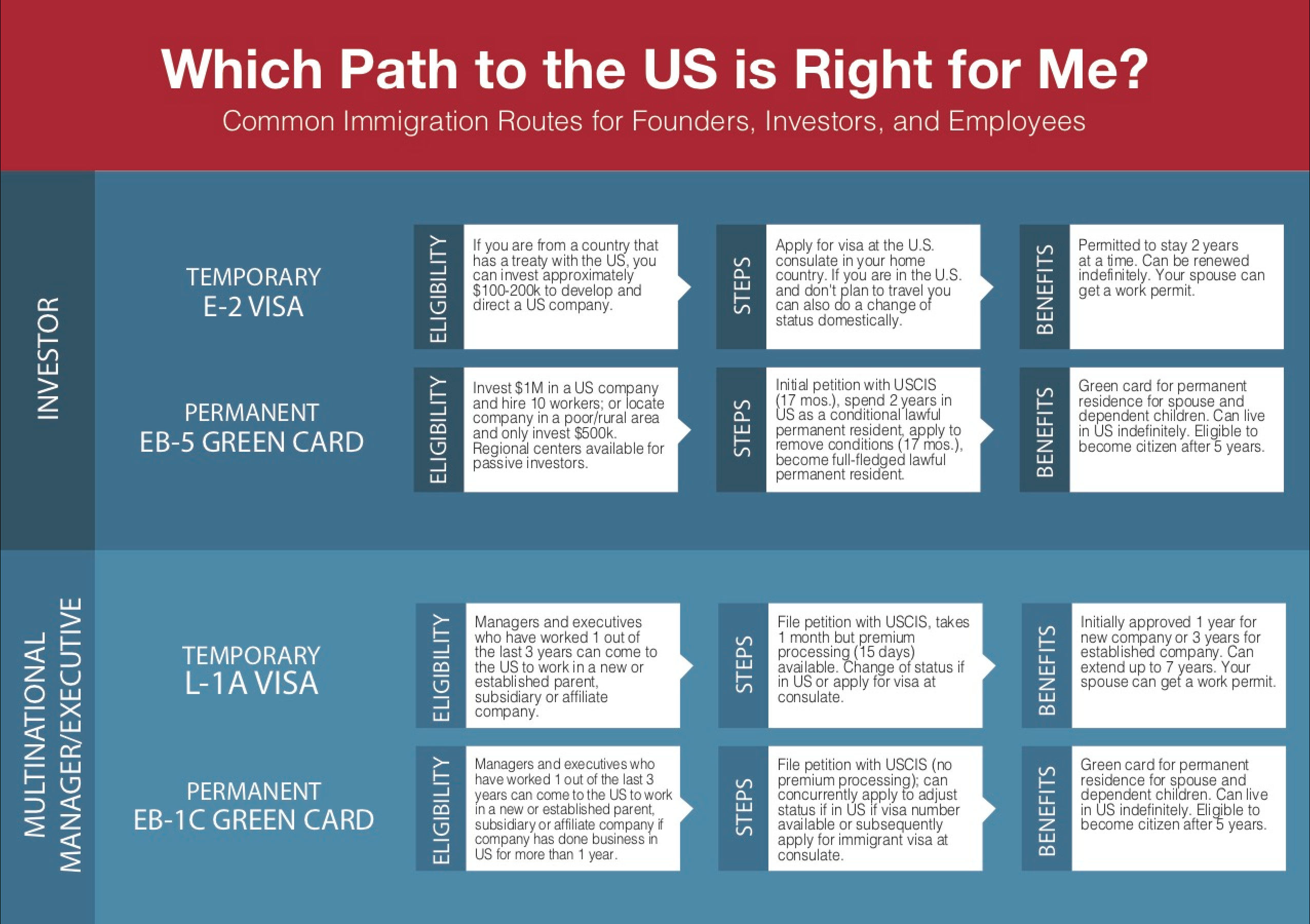
While not a startup visa, the EB-5 investor green card offers many entrepreneurs a path to a green card by investing money and creating jobs in the U.S. Under the EB-5 program, an entrepreneur’s family is also eligible for green cards.
Imminent regulatory changes to the EB-5 program are expected to make obtaining an EB-5 green card a whole lot more expensive. The minimum investment is anticipated to more than double to $1.35 million from the current $500,000. And with individuals from India expected to face a backlog for EB-5 green cards shortly, the opportunity to obtain an EB-5 green card at a relatively low cost and in a timely manner is closing.
Powered by WPeMatico
NiYO Solutions, a Bangalore-based “neo-bank” that helps salaried employees and blue-collar workers access company benefits and other financial services, has raised $35 million in a new funding round to expand its business in the nation and explore international markets for some of its products.
The four-year-old startup, which serves small and medium businesses and other salaried employees across India, raised its Series B from Horizons Ventures, Tencent and existing investor JS Capital. It has raised $49.2 million to date, with its $13.2 million Series A closing in January last year.
NiYO Solutions serves as a “neo-bank” that relies on traditional financial institutions (Yes Bank and DCB banks, in its case) and offers to customers additional features such as lending and insurance. Blue-collared employees in India (and many other markets) continue to struggle in availing crucial financial services from banks that typically reserve them for the privileged segment. With its payroll solution and other products, NiYO is trying to drive financial inclusion in the country, it said.
The startup also offers a global travel card with no mark-up fee. More than 50,000 users have already signed up for the travel card — and NiYO intends to scale that figure to 500,000 by April next year. In an interview with TechCrunch, Vinay Bagri, co-founder and CEO of NiYO, said the startup is exploring bringing the travel card to other markets — though he did not share any names.
He said the startup will also use the fresh capital to build new product offerings and in expansion of its distribution and marketing efforts. It also wants to grow its customer base from about 1 million currently to 5 million in the next three years. Bagri said NiYO is looking to acquire other startups that are a good fit for its vision.
Neo banks are increasingly becoming popular across the globe as traditional banks show little interest in addressing the needs of niche customer bases. Tide and N26 are showing remarkable growth in European markets, while Azlo in the U.S. and Tyro Payments and Volt Bank in Australia are also among the top players.
In developing regions such as India, too, this tried and tested idea is increasingly being replicated. Open, another Bangalore-based neo-bank, helps businesses automate their finances. It raised $30 million last month.
Powered by WPeMatico

The immigration process in the U.S. has become a high-stakes undertaking for employers, workers, and entrepreneurs. Predictability has eroded. Processing times have soared. And any mistake or misstep now has dire consequences.
Over the past three years, immigration policies and procedures have been in a state of flux and the process has become more unforgiving for even the smallest mistakes. Putting your best foot forward is crucial. Employers and individuals need to formulate a long-term strategy and backup options to stay protected.
The increase in Requests for Evidence and the backlog for many visa and green card categories has meant longer waiting times. What’s more, the Trump administration’s recent decision to close all USCIS’s international offices—and shift that workload back to the U.S.—is expected to compound the backlogs and delays.
We are seeing these issues affect startups every day. My law firm works with hundreds of startups every year to help them and their employers figure out their immigration paperwork. The overall piece of advice we give is to decide on a specific goal based on a deep understanding of the company and the individual and by examining the options strategically.
Then, you can figure out the right approach for a visa, green card, or citizenship application. Regardless of my personal interest in the matter, now more than ever, I recommend consulting with an experienced immigration attorney who can handle the process with integrity, creativity, compassion, and rigor.

The new normal for immigration means increased employee recruiting and retention costs for employers. However, hiring immigrants remains possible.
Powered by WPeMatico
Mukesh Ambani, India’s richest man, has enabled tens of millions of people — if not more — to come online for the first time with his disruptive telecom network. He has changed how many Indians, once thrifty about each megabyte they spent browsing the internet, consume mobile data today.
But many of these first-time internet users are increasingly struggling with grasping the nuances of the internet — often ending up trusting everything they see online and, in extreme cases, causing major chaos in the nation. Ambani now wants to help these people understand the ins and outs of the digital world.
His telecom network Reliance Jio announced today a literacy program called “Digital Udaan” for first-time internet users in India. The two-and-a-half-year-old telecom network, which has amassed more than 300 million subscribers, said it has partnered with Facebook to create “the largest ever digital literacy program” that will offer audio-visual training in 10 regional languages.
As part of the Digital Udaan program, Reliance Jio will hold training sessions to help its users learn about internet safety, and how they should engage with popular services and its devices. The operator said it will hold these sessions each Saturday and also provide training videos and information brochures to users.
Reliance Jio said Facebook helped it build and curate modules that are relevant for people in cities and small towns in India. In the first phase of the program, Jio will conduct these training sessions in about 200 different locations across 13 states. It will then expand to more than 7,000 locations, where “millions of JioPhone users and other first-time internet users” live.
“Facebook is an ally in this mission, and we are delighted to partner with Jio in attracting new Internet users and creating mechanisms for them to unleash the power of that access,” Ajit Mohan, VP and MD of Facebook India, said in a statement. Facebook and WhatsApp count India, where they reach about 350 million users, as their largest and fastest growing market. There are more than 500 million internet users in India.
Akash Ambani, director of Reliance Jio, said he hopes to “help eradicate barriers of information asymmetry and provide accessibility in real time. It is a program for inclusive information, education and entertainment, where no Indian will be left out of this digital drive. Jio envisions to take this to every town and village of India, achieving 100% digital literacy in the country.”
Reliance Jio, through its free voice calls and low-data prices, has significantly helped accelerate the growth of India’s internet and smartphone ecosystem. The platform has brought the nation, now the world’s second largest internet and smartphone market, to a point that many thought would have taken more than five years to reach.
But this growth has also accompanied new sets of challenges. WhatsApp, which is the most popular app in India, continues to grapple with the spread of false information in the nation, for instance. Other social media services are facing similar challenges as well. Last year, WhatsApp began to air TV commercials in India to help users become more cautious about the messages they share on its service. It also partnered with Reliance Jio to pay for teams of performers to travel across India to hold roadshows to help people better understand the rampant rise of fake news.
Prabhakar Kumar, co-ordinator of CMS Medialab, an organization that monitors media trends in India, told TechCrunch in an earlier interview that the level of literacy among the users who are coming onboard now is much lower than those who came online before them.
Powered by WPeMatico
Even as much of the world is digitizing its governance, in small towns and villages of India, data about its citizens is still being largely logged on long and thick notebooks. Have they received the subsidized cooking gas cylinders? How frequent are the power cuts in the village? If these data points exist at all, they are probably stored in big paperbacks stacked in a corner of some agency’s office.
Five years ago, two young entrepreneurs — Prukalpa Sankar and Varun Banka — set out to modernize this system. They founded SocialCops, a startup that builds tools that make it easier for government officials — and anyone else — to quickly conduct surveys and maintain digital records that could be accessed from anywhere.
The Indian government was so impressed with SocialCops’ offering that it partnered with the startup on National Data Platform, a project to connect and bring more transparency within many of the state-run initiatives; and Ujjwala Yojana, a project to deliver subsidized cooking gas cylinders to poor women across the nation.
“This is a crucial step towards good governance through which we will be able to monitor everything centrally,” India’s Prime Minister Narendra Modi said of National Data Platform. “It will enable us to effectively monitor every village of the country.”
Two years ago, the duo wondered if the internal tools that they built for their own teams to manage their projects could help data teams around the world? The early results are in: Atlan, a startup they founded using learnings from SocialCops, has secured more than 200 customers from over 50 nations and has raised $2.5 million in pre-Series A funding led by Waterbridge Ventures, an early stage venture fund.
The startup, which employs about 80 people, has also received backing from Ratan Tata, Chairman Emeritus of conglomerate Tata Sons, Rajan Anandan, the former head of Google Southeast Asia, and 500 Startups. On Tuesday, Singapore-headquartered Atlan moved out of stealth mode.
The premise of Atlan’s products is simple. It’s built on the assumption that the way most people in enterprises deal with data is inefficient and broken, Sankar and Banka told TechCrunch in an interview. Typically, there is no central system to keep track of all these data points that often live in their own silos. This often results in people spending days to figure out what their compliance policy is, for instance.
“Atlan wants to democratize data inside organizations,” said Sankar.
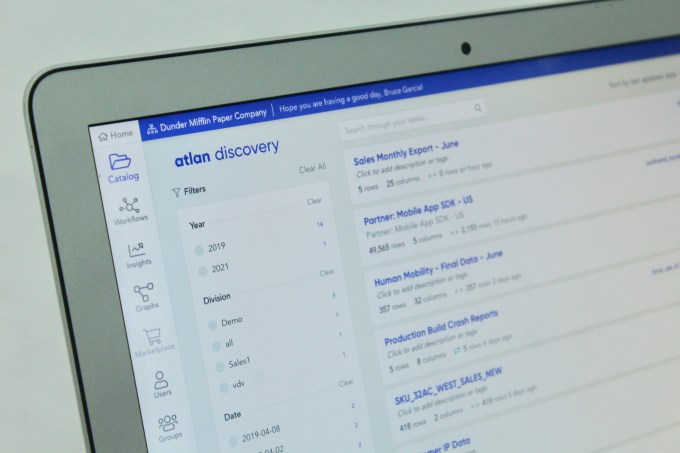
Teams within a typical company currently use a number of different tools to gather and manage data. Atlan has built products — dubbed Discovery, Grid, and Workflows — to create a collaboration layer, bringing together diverse data (from internal and external sources), tools and people to one interface.
“We are reimagining every human interaction with data. For instance, code has a profile on GitHub—what would a “profile” of data look like? What if you could share data as easily as a Google Sheets link, without worrying about the size or format? Or what would a data versioning and approval workflow look like? What if data scientists could acquire external data within minutes, instead of the months it takes right now?” said Banka.
The startup has also built a product called Collect that allows an organization to quickly deploy apps to collect granular data. These apps can collect data even when there is no internet connection. All of these data points, too, then find their way to the interface.
Atlan intends to use the capital it has raised on product development and sign more customers. It has already won some big names including Unilever, Milkbasket, Barbeque Nation, WPP and GroupM, Mahindra Group and InMobi in India, Chuan Lim Construction in Singapore, ServeHaiti in Haiti, Swansea University in the UK, the Ministry of Environment in Costa Rica, and Varun Beverages in Zambia.
In a prepared statement, Manish Kheterpal, Managing Partner at WaterBridge Ventures, said, “companies are struggling to overcome the friction that arises when diverse individuals need to collaborate, leading to project failure. The IPOs of companies like Slack and Zoom are proof that we live in the era of consumerization of the enterprise. With its sharp focus on data democratization, Atlan is well-positioned to reimagine the future of how data teams work.”
As for SocialCops, Sankar said it will live on as a data science community and pursue its signature “social good” mission.
Powered by WPeMatico