india
Auto Added by WPeMatico
Auto Added by WPeMatico

BharatPe, a New Delhi-based firm that is enabling hundreds of thousands of merchants to start accepting digital payments for the first time, and is also giving them access to working capital, has raised $50 million as it looks to scale its business in the nation.
The Series B round for the one-year-old startup was led by San Francisco-headquartered VC firm Ribbit Capital and London-based Steadview Capital, both of which have previously invested in a number of financial services in India.
Existing investors Sequoia Capital, Beenext Capital and Insight Partners also participated in the round, pushing BharatPe’s all-time raise to $65 million. The new round valued the startup at $225 million, Ashneer Grover, co-founder and CEO of BharatPe, told TechCrunch in an interview.
Google and Amazon, both of which offer payment services in India, were also in advanced stages of talks to fund BharatPe’s Series B financing round, but the startup’s founding team was not keen on diluting their stakes, especially in the wake of BharatPe’s recent growth, a person familiar with the matter told TechCrunch.
BharatPe operates an eponymous service to help offline merchants accept digital payments. Even as India has already emerged as the second largest internet market, with more than 500 million users, much of the country remains offline. Among those outside of the reach of the internet are merchants running small businesses, such as roadside tea stalls.
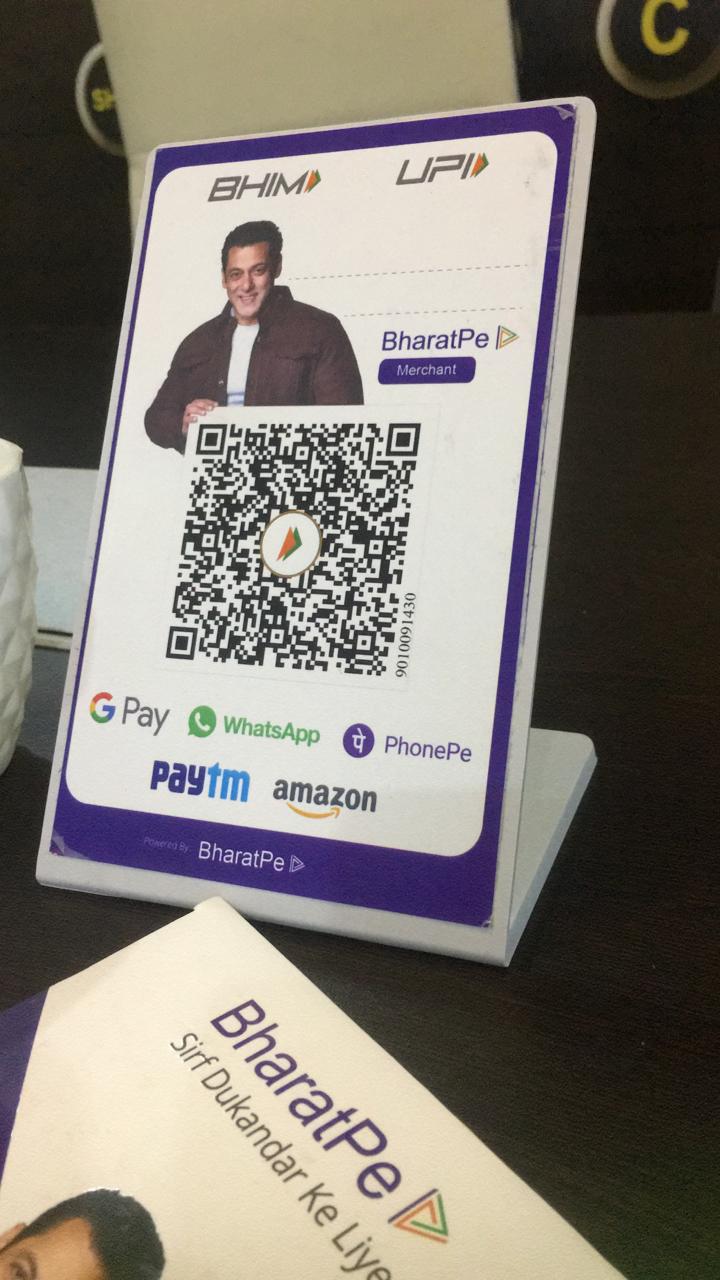
To make these merchants comfortable in accepting digital payments, BharatPe relies on QR codes built as part of government-backed UPI payments infrastructure. “We get them to put up a QR code in their shops, and any customer that uses a UPI-powered payments app — which is now supported by nearly every payments app in India — can pay these shop owners digitally,” said Grover.
Through BharatPe, these merchants also get access to a simplified dashboard on their phones to track the customers who owe them money and get periodic reminders.
BharatPe has amassed more than 1.5 million merchants on its platform. It processes more than 21 million transactions a month, worth more than $83 million, Grover said.
BharatPe also allows merchants to secure short-term loans. New merchants can secure about $500 for a period of three months from BharatPe. As merchants spend more time on BharatPe, the firm increases the amount to about $2,000.
The lending business is crucial to BharatPe. Payment apps make little to no money through making transactions on their platforms. Those processing UPI payments can not even charge a small commission to merchants. “There is no money to be made in doing payments in India,” Grover said. So you charge small interest on loans.
Access to working capital is a major challenge in developed markets such as India. According to a World Bank report, more than 2 billion people globally do not have access to working capital.
Grover said BharatPe aims to use the fund to add about 3.5 million merchants in the next 12 months. The firm has more than 2,000 sales people who are adding 400,000 new merchants to BharatPe each month, he said.
The rest of the money will go into financing the loans on the platform and building new solutions. Later today, BharatPe will launch a new service to connect suppliers and merchants through BharatPe so that their accounts are in sync.
Powered by WPeMatico
India today addressed a long-standing challenge that has been affecting the country’s booming startup ecosystem. As part of a raft of measures to boost overall economic growth from a five-year low, Finance Minister Nirmala Sitharaman said New Delhi is exempting startups from Section 56(2) — a provision more popularly known as an “angel tax” in the local income tax laws — that required startups to pay a certain tax if they received an investment at a rate higher than their “fair market valuation.”
Local tax authority in India does not recognize the discounted cash flow method that many investors use to value early-stage startups, and instead value the company for what it is worth currently, which as you can imagine, is very little. Investors assess a startup’s value based on what it could eventually become in the future.
Prior to today’s announcement, the government levied a 30% tax on affected startups. Sitharaman said any startup that is registered with the Department of Industrial Policy & Promotion, a government body, will be exempted from the angel tax. Those not registered will remain subjected to it, she said in a press conference Friday.
More than 24,000 startups are currently registered with the Department of Industrial Policy & Promotion. The law was originally introduced amid concerns that wealthy people could invest in bogus startups as a way to launder money.
“Angel tax was there to stop shell companies from creating capital from nowhere,” Piyush Goyal, a minister for commerce and industry as well as railways, said in a statement Friday.
The angel tax, which was introduced in 2012, became a roadblock for many investors who wanted to fund early-stage startups. The announcement today comes weeks after the Narendra Modi government said it would address this issue.
Many prominent investors, startup founders, analysts and other industry executives have long publicly criticized the angel tax, telling the government that it is severely hurting the health of the local ecosystem.
Anand Mahindra, chairman of Mahindra Group, said last year that the angel tax needs “immediate attention or else all chances of building a rival to Silicon Valley in India will be lost.”
Sreejith Moolayil, a founder of health food startup True Elements, said the existence of an angel tax would leave many entrepreneurs like him with no choice but to shut down their companies.
Late last year, India’s tax department sent a flurry of notices to startups demanding them to pay the angel tax on funds they received from individual investors. The notices sparked an uproar, with many calling it “harassment.”
“Hope this will address the concerns of DPIIT registered startups. The proposed cell should look into concerns of all startups including those who are already under notice,” said Ashish Aggarwal, who oversees Public Policy at industry body Nasscom, of today’s announcement.
The government will also set up a dedicated cell to address other tax problems that startups face, Sitharaman said. “A startup having any income-tax issue can approach the cell for quick resolution,” the ministry said in a statement.
Jayanth Kolla, founder and chief analyst at research firm Convergence Catalyst, told TechCrunch earlier that the angel tax was the primary reason early-stage startups in the nation were struggling to raise money from investors.
Even as Indian tech startups raised a record $10.5 billion in 2018, early-stage startups saw a decline in the number of deals they participated in and the amount of capital they received. Early-stage startups participated in 304 deals in 2018 and raised $916 million in funds last year, down from $988 million they raised from 380 rounds in 2017 and $1.096 billion they raised from 430 deals the year before, research firm Venture Intelligence told TechCrunch.
I’ve said before, a willingness to relook at policies is a display of strength, not https://t.co/8y4tPp8Iva’s press conference by @nsitharaman will, I hope, mark the start of a new, interactive & interdependent relationship between Govt&business. @narendramodi @AmitShah (1/4)
— anand mahindra (@anandmahindra) August 23, 2019
Sitharaman also announced the country was scrapping a recently introduced additional levy on foreign funds. The government would revoke the surcharge, which increased tax on foreign companies investing in India to over 40%, she said. She also promised to pay out all pending tax refunds owed to small and medium enterprises within 30 days. Companies have long complained that the tax authority takes too much time to refund the money owed to them.
Powered by WPeMatico

Each month millions of Indians are coming online for the first time, making India the last great growth market for internet companies worldwide. But winning them presents its own challenges.
These users, most of whom live in small cities and villages in India, can’t speak English. Their interests and needs are different from those of their counterparts in large cities. When they come online, the world wide web that is predominantly focused on the English-speaking masses, suddenly seems tiny, Google executives acknowledged at a media conference last year. According to a KPMG-Google report (PDF) on Indian languages, there will be 536 million non-English speaking users using internet in India by 2021.
Many companies are increasingly adding support for more languages, and Silicon Valley giants such as Google are developing tools to populate the web with content in Indian languages.
But there is still room for others to participate. On Friday, a new startup announced it is also in the race. And it has already received the backing of Y Combinator (YC).
Lokal is a news app that wants to bring local news to hundreds of millions of users in India in their regional languages. The startup, which is currently available in the Telugu language, has already amassed more than two million users, Jani Pasha, co-founder of Lokal, told TechCrunch in an interview.
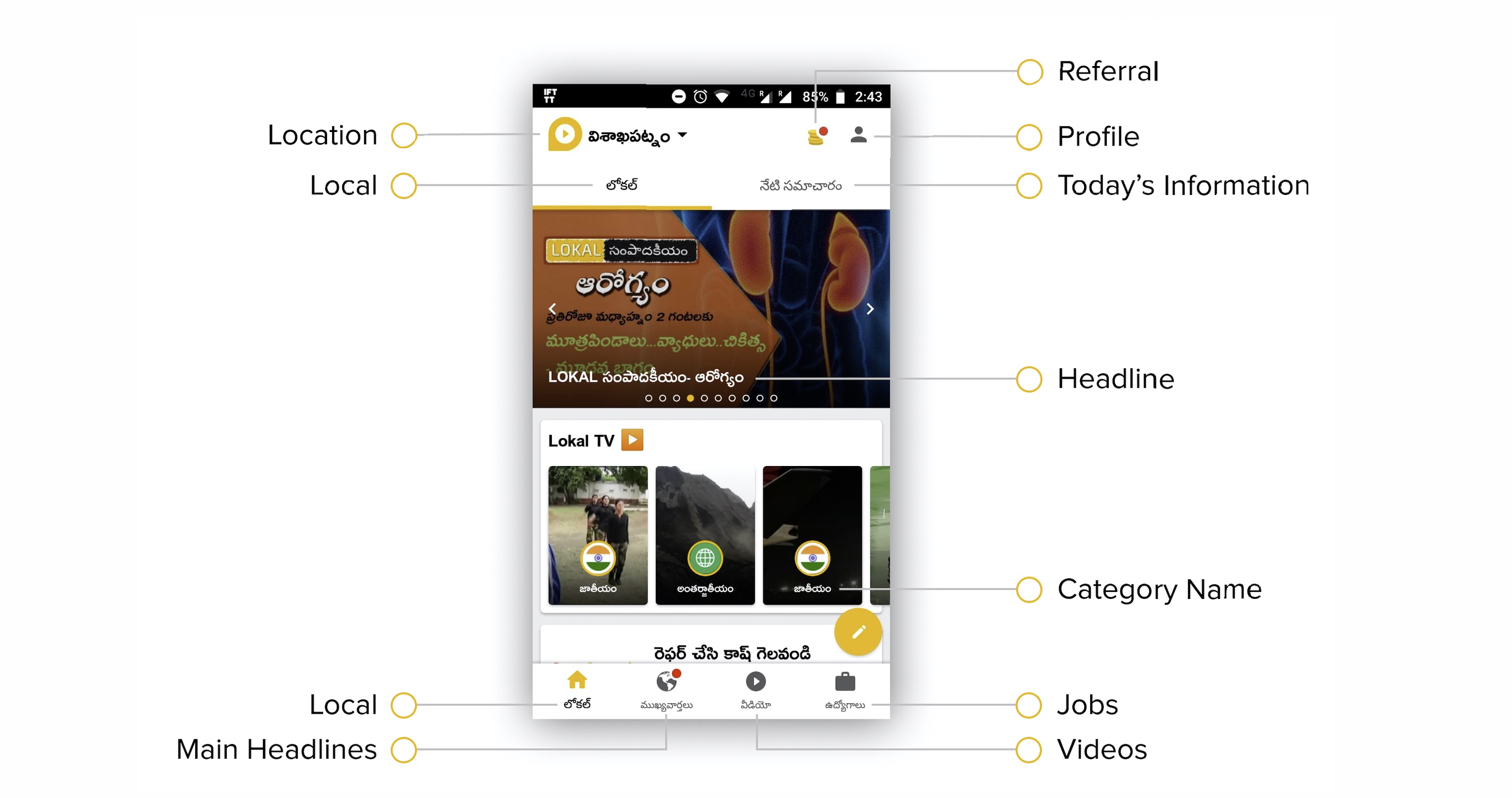
There are tens of thousands of publications in India and several news aggregators that showcase the top stories from the mainstream outlets. But very few today are focusing on local news and delivering it in a language that the masses can understand, Pasha said.
Lokal is building a network of stringers and freelance reporters who produce original reporting around the issues and current affairs of local towns and cities. The app is updated throughout the day with regional news and also includes an “information” stream that shows things like current price of vegetables, upcoming events and contact details for local doctors and police stations.
The platform has grown to cover 18 districts in South India and is slowly ramping up its operations to more corners of the country. The early signs show that people are increasingly finding Lokal useful. “In 11 of the 18 districts we cover, we already have a larger presence and reader base than other media houses,” Pasha said.
Before creating Lokal, Pasha and the other co-founder of the startup, Vipul Chaudhary, attempted to develop a news aggregator app. The app presented news events in a timeline, offering context around each development.
“We made the biggest mistake. We built the product for four to five months without ever consulting with the users. We quickly found that nobody was using it. We went back to the drawing board and started interviewing users to understand what they wanted. How they consumed news, and where they got their news from,” he said.
“One thing we learned was that most of these users in tier 2 and tier 3 India still heavily rely on newspapers. Newspapers still carry a lot of local news and they rely on stringers who produce these news pieces and source them to publications,” he added.
But newspapers have limited pages, and they are slow. So Pasha and the team tried to build a platform that addresses these two things.
Pasha tried to replicate it through distributing local news, sourced from stringers, on a WhatsApp group. “That one WhatsApp group quickly became one of many as more and more people kept joining us,” he recalls. And that led to the creation of Lokal.
Along the journey, the team found that classifieds, matrimonial ads and things like birthday wishes are still driving people to newspapers, so Lokal has brought those things to the platform.
Pasha said Lokal will expand to three more states in the coming months. It will also begin to experiment with monetization, though that is not the primary focus currently. “The plan is to eventually bring this to entire India,” he said.
A growing number of startups today are attempting to build solutions for what they call India 2 and India 3 — the users who don’t live in major cities, don’t speak English and are financially not as strong.
ShareChat, a social media platform that serves users in 15 regional languages — but not English — said recently it has raised $100 million in a round led by Twitter. The app serves more than 60 million users each month, a figure it wants to double in the next year.
Powered by WPeMatico

Is there room for another social media platform? ShareChat, a four-year-old social network in India that serves tens of million of people in regional languages, just answered that question with a $100 million financing round led by global giant Twitter .
Other than Twitter, TrustBridge Partners, and existing investors Shunwei Capital, Lightspeed Venture Partners, SAIF Capital, India Quotient and Morningside Venture Capital also participated in the Series D round of ShareChat.
The new round, which pushes ShareChat’s all-time raise to $224 million, valued the firm at about $650 million, a person familiar with the matter told TechCrunch. ShareChat declined to comment on the valuation.

Screenshot of Sharechat home page on web
“Twitter and ShareChat are aligned on the broader purpose of serving the public conversation, helping the world learn faster and solve common challenges. This investment will help ShareChat grow and provide the company’s management team access to Twitter’s executives as thought partners,” said Manish Maheshwari, managing director of Twitter India, in a prepared statement.
Twitter, like many other Silicon Valley firms, counts India as one of its key markets. And like Twitter, other Silicon Valley firms are also increasingly investing in Indian startups.
ShareChat serves 60 million users each month in 15 regional languages, Ankush Sachdeva, co-founder and CEO of the firm, told TechCrunch in an interview. The platform currently does not support English, and has no plans to change that, Sachdeva said.
That choice is what has driven users to ShareChat, he explained. In the early days of the social media platform, the firm experimented with English language. It saw most of its users choose English as their preferred language, but this also led to another interesting development: Their engagement with the app significantly reduced.
“For some reason, everyone wanted to converse in English. There was an inherent bias to pick English even when they did not know it.” (Only about 10% of India’s 1.3 billion people speak English. Hindi, a regional language, on the other hand, is spoken by about half a billion people, according to official government figures.)
So ShareChat pulled support for English. Today, an average user spends 22 minutes on the app each day, Sachdeva said. The learning in the early days to remove English is just one of the many things that has shaped ShareChat to what it is today and led to its growth.
In 2014, Sachdeva and two of his friends — Bhanu Singh and Farid Ahsan, all of whom met at the prestigious institute IIT Kanpur — got the idea of building a debate platform by looking at the kind of discussions people were having on Facebook groups.
They identified that cricket and movie stars were popular conversation topics, so they created WhatsApp groups and aggressively posted links to those groups on Facebook to attract users.
It was then when they built chatbots to allow users to discover different genres of jokes, recommendations for phones and food recipes, among other things. But they soon realized that users weren’t interested in most of such offerings.
“Nobody cared about our smartphone recommendations. All they wanted was to download wallpapers, ringtones, copy jokes and move on. They just wanted content.”
So in 2015, Sachdeva and company moved on from chatbots and created an app where users can easily produce, discover and share content in the languages they understand. (Today, user generated content is one of the key attractions of the platform, with about 15% of its user base actively producing content.)
A year later, ShareChat, like tens of thousands of other businesses, was in for a pleasant surprise. India’s richest man, Mukesh Ambani, launched his new telecom network Reliance Jio, which offered users access to the bulk of data at little to no charge for an extended period of time.
This immediately changed the way millions of people in the country, who once cared about each megabyte they consumed online, interacted with the internet. On ShareChat people quickly started to move from sharing jokes and other messages in text format to images and then videos.
That momentum continues to today. ShareChat now plans to give users more incentive — including money — and tools to produce content on the platform to drive engagement. “There remains a huge hunger for content in vernacular languages,” Sachdeva said.
Speaking of money, ShareChat has experimented with ads on the app and its site, but revenue generation isn’t currently its primary focus, Sachdeva said. “We’re in the Series D now so there is obviously an obligation we have to our investors to make money. But we all believe that we need to focus on growth at this stage,” he said.
ShareChat also has many users in Bangladesh, Nepal and the Middle East, where many users speak Indian regional languages. But the startup currently plans to focus largely on expanding its user base in India.
It will use the new capital to strengthen the technology infrastructure and hire more tech talent. Sachdeva said ShareChat is looking to open an office in San Francisco to hire local engineers there.
A handful of local and global giants have emerged in India in recent years to cater to people in small cities and villages, who are just getting online. Pratilipi, a storytelling platform has amassed more than 5 million users, for instance. It recently raised $15 million to expand its user base and help users strike deals with content studios.
Perhaps no other app poses a bigger challenge to ShareChat than TikTok, an app where users share short-form videos. TikTok, owned by one of the world’s most valued startups, has over 120 million users in India and sees content in many Indian languages.
But the app — with its ever growing ambitions — also tends to land itself in hot water in India every few weeks. In all sensitive corners of the country. On that front, ShareChat has an advantage. Over the years, it has emerged as an outlier in the country that has strongly supported proposed laws by the Indian government that seek to make social apps more accountable for content that circulates on their platforms.
Powered by WPeMatico

Xiaomi has now been India’s top smartphone seller for eight straight quarters. The company has become a constant headache for Samsung in the world’s second largest smartphone market as sales have slowed pretty much everywhere else in the world.
The Chinese electronics giant shipped 10.4 million handsets in the quarter that ended in June, commanding 28.3% of the market, research firm IDC reported Tuesday. Its closest rival, Samsung — which once held the top spot in India — shipped 9.3 million handsets in the nation during the same period, settling for a 25.3% market share.
Overall, 36.9 million handsets were shipped in India during the second quarter of this year, up 9.9% from the same period last year, IDC reported. This was the highest volume of handsets ever shipped in India for Q2, the research firm said.
As smartphone shipments slow or decline in most of the world, India has emerged as an outlier that continues to show strong momentum as tens of millions of people purchase their first handset in the country each quarter.
Research firm Counterpoint told TechCrunch that there are about 450 million smartphone users in India, up from about 350 million late last year and 300 million in late 2017. This growth has made India, home to more than 1.3 billion people, the fastest growing market worldwide.
Globally, meanwhile, smartphone shipments declined by 2.3% year-over-year in Q2 2019, according to IDC.
Chinese phone makers Vivo and Oppo, both of which spent lavishly in marketing during the recent local favorite cricket season in India, also expanded their base in the country. Vivo had 15.1% of the local market share, up from 12.6% in Q2 2018, while Oppo’s share grew from 7.6% to 9.7% during the same period. The market share of Realme, which has gained following after it started to replicate some of Xiaomi’s early models, also shot up, moving from 1.2% in Q2 2018 to 7.7% in Q2 2019.
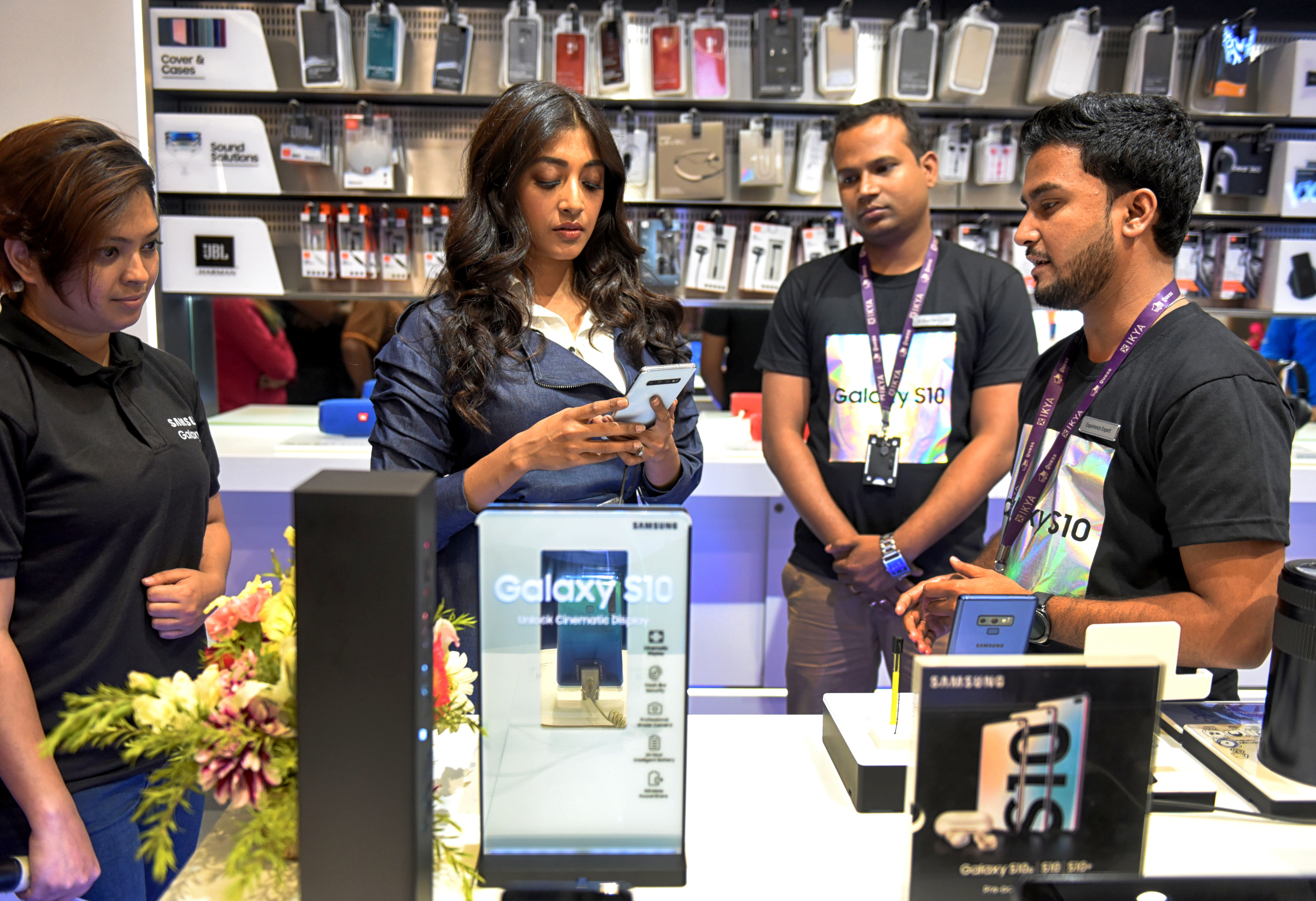
Samsung showroom demonstrator seen showing the features of new S10 Smartphone during the launching ceremony (Photo by Avishek Das/SOPA Images/LightRocket via Getty Images)
The key to gaining market share in India has remained unchanged over the years: better specs at lower prices. The average selling price of a handset during Q2 was $159 in the quarter that ended in June this year. Seventy-eight percent of the 36.9 million phones that shipped in India during this period sported a sticker price below $200, IDC said.
That’s not to say that phones priced above $200 don’t have a market in India. Per IDC, the fastest growing smartphone segment in the nation was priced between $200 to $300, witnessing a 105.2% growth over the same period last year.
Smartphones priced between $400 and $600 were the second-fastest growing segment in the country, with a 16.1% growth since the same period last year. Chinese phone maker OnePlus assumed 63.6% of this premium segment, followed by Apple (which has less than 2% of the overall local market share) and Samsung.
Feature phones that have maintained a crucial position in India’s handsets market continue to maintain their significant footprint, though their popularity is beginning to wane — 32.4 million feature phones shipped in India during Q2 this year, down 26.3% since the same period last year.
India has become Xiaomi’s biggest market. It entered the country five years ago, and for the first two, relied mostly on selling handsets online to cut overhead. But the company has since established and expanded its presence in the brick and mortar market, which continues to account for much of the sales in the country.
Earlier this month, the Chinese phone maker said it had set up its 2,000th Mi Home store in India. It is on track to have a presence in 10,000 physical stores in the country by the end of the year, and expects to see half of its sales come from the offline market by that time frame.
Samsung has stepped up its game in India in the last two years, as well. The company, which opened the world’s largest phone factory in the country last year, has ramped up productions of its Galaxy A series of smartphones that are aimed at budget-conscious customers and conceptualized a similar series that includes Galaxy M10, M20 and M30 smartphone models for the Indian market. The Galaxy A series handsets drove much of the growth for the company, IDC said.
Even as it lags behind Xiaomi, Samsung shipped more handsets in Q2 2019 compared to Q2 2018 (9.3 million versus 8 million) and its market share grew from 23.9% to 25.3% during the same period.
“The vendor was also offering attractive channel schemes to clear the stocks of Galaxy J series. Galaxy M series (exclusive online till the end of 2Q19) saw price reductions, which helped retain the 13.5% market share in the online channel in 2Q19 for Samsung,” IDC said.
But the South Korean giant continues to have a tough time passing Xiaomi, which continues to maintain low profit margins (Xiaomi says it only makes 5% profit on any hardware it sells). Xiaomi has also expanded its local production efforts in India and created more than 10,000 jobs in the country, more than 90% of which have been filled by women.
Powered by WPeMatico
India’s Reliance Jio, which has disrupted the local telecom and features phone markets in less than three years of existence, is ready to foray into many more businesses.
In a series of announcements Monday, which included a long-term partnership with global giant Microsoft, Reliance Jio said it will commercially roll out its broadband service next month; an IoT platform with ambitions to power more than a billion devices on January 1 next year; and “one of the world’s biggest blockchain networks” in the next 12 months — all while also scaling its retail and commerce businesses.
The broadband service, called Jio Fiber, is aimed at individual customers, small and medium-sized businesses as well as enterprises, Mukesh Ambani, chairman and managing director of Reliance Industries and Asia’s richest man, said at a shareholders’ meeting today.
The service, which is being initially targeted at 20 million homes and 15 million businesses in 1,600 towns, will start rolling out commercially starting September 5. Ambani said more than half a million customers have already been testing the broadband service, which was first unveiled last year.
The broadband service will come bundled with access to hundreds of TV channels and free calls across India and at discounted rates to the U.S. and Canada, Ambani said. The service, the cheapest tier of which will offer internet speeds of 100Mbps, will be priced at Rs 700 (~$10) a month. The company said it will offer various plans to meet a variety of needs, including those of customers who want access to gigabit internet speeds.
Continuing its tradition to woo users with significant “free stuff,” Jio, which is a subsidiary of India’s largest industrial house (Reliance Industries) said customers who opt for the yearly plan of its fiber broadband will be provided with the set-top box and an HD or 4K TV at no extra charge. Specific details weren’t immediately available. A premium tier, which will be available starting next year, will allow customers to watch many movies on the day of their public release.
The broadband service will bundle games from many popular studios, including Microsoft Game Studios, Riot Games, Tencent Games and Gameloft, Jio said.
The company also announced a 10-year partnership with Microsoft to launch new cloud data centers in India to ensure “more of Jio’s customers can access the tools and platforms they need to build their own digital capability,” said Microsoft CEO Satya Nadella in a video appearance Monday.
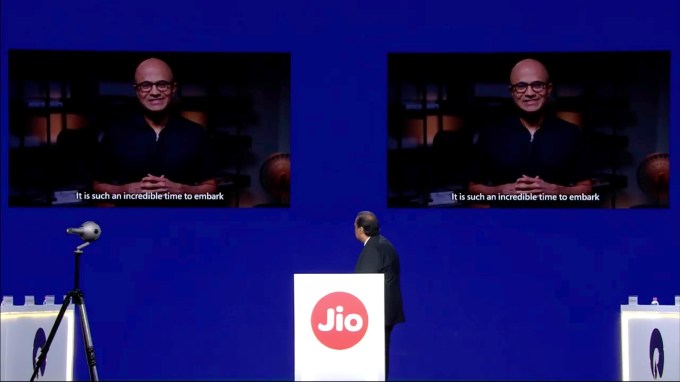
Microsoft CEO Satya Nadella talks about the company’s partnership with Reliance Jio
“At Microsoft, our mission is to empower every person and every organization on the planet to achieve more. Core to this mission is deep partnerships, like the one we are announcing today with Reliance Jio. Our ambition is to help millions of organizations across India thrive and grow in the era of rapid technological change.”
“Together, we will offer a comprehensive technology solution, from compute to storage, to connectivity and productivity for small and medium-sized businesses everywhere in the country,” he added.
As part of the partnership, Nadella said, Jio and Microsoft will jointly offer Azure, Microsoft 365 and Microsoft AI platforms to more organizations in India, and also bring Azure Cognitive Services to more devices and in 13 Indian languages to businesses in the country. The solutions will be “accessible” to reach as many people and organizations in India as possible, he added. The cloud services will be offered to businesses for as little as Rs 1,500 ($21) per month.
The first two data centers will be set up in Gujarat and Maharashtra by next year. Jio will migrate all of its non-networking apps to the Microsoft Azure platform and promote its adoption among its ecosystem of startups, the two said in a joint statement.
The foray into broadband business and push to court small enterprises come as Reliance Industries, which dominates the telecom and retail spaces in India, attempts to diversify from its marquee oil and gas business. Reliance Jio, the nation’s top telecom operator, has amassed more than 340 million subscribers in less than three years of its commercial operations.
At the meeting, Ambani also unveiled that Saudi Arabia’s state-owned oil producer Aramco was buying a 20% stake in $75 billion worth Reliance Industries’ oil-to-chemicals business.
Like other Silicon Valley companies, Microsoft sees massive potential in India, where tens of millions of users and businesses have come online for the first time in recent years. Cloud services in India are estimated to generate a revenue of $2.4 billion this year, up about 25% from last year, according to research firm Gartner. Microsoft has won several major clients in India in recent years, including insurance giant ICICI Lombard.
Today’s partnership could significantly boost Microsoft’s footprint in India, posing a bigger headache for Amazon and Google.
Ambani also said Reliance Retail, the nation’s largest retailer, is working on a “digital stack” to create a new commerce partnership platform in India to reach tens of millions of merchants, consumers and producers. Ambani said Reliance Industries plans to list both Reliance Retail and Jio publicly in the next years.
“We have received strong interests from strategic and financial investors in our consumer businesses — Jio and Reliance Retail. We will induct leading global partners in these businesses in the next few quarters and move towards listing of both these companies within the next five years,” he said.
The announcement comes weeks after Reliance Industries acquired for $42.3 million a majority stake in Fynd, a Mumbai-based startup that connects brick and mortar retailers with online stores and consumers. Reliance Industries has previously stated plans to launch a new e-commerce firm in the country.
Without revealing specific details, Ambani also said that Jio is building an IoT platform to control at least one billion of the two billion IoT devices in India by next year. He said he sees IoT as a $2.8 billion revenue opportunity for Jio. Similarly, the company also plans to expand its blockchain network across India, he said.
“Using blockchain, we can deliver unprecedented security, trust, automation and efficiency to almost any type of transaction. And using blockchain, we also have an opportunity to invent a brand-new model for data privacy where Indian data, especially customer data is owned and controlled through technology by the Indian people an d not by corporate, especially global corporations,” he added.
Powered by WPeMatico

Paytm, India’s biggest mobile payments firm, now has 10 million customers in Japan, the company said as it pushes to expand its reach in international markets. Paytm entered Japan last October after forming a joint venture with SoftBank and Yahoo Japan called PayPay.
In addition to 10 million users, PayPay is now supported by 1 million merchant partners and local stores in Japan, Vijay Shekhar Sharma, founder and CEO of Paytm said Thursday. The mobile payments app has clocked more than 100 million transactions to date in the nation, he claimed. In June, PayPay had 8 million users.
“Thank you India  for your inspiration and giving us chance to build world class tech…,” he posted in a tweet.
Like in India, cash also dominates much of the daily transactions in Japan. Large medical clinics and supermarkets often refuse to accept plastic cards and instead ask for cash. This encouraged Paytm, which also has presence in Canada, to explore the Japanese market.
And it has the experience, capital and tech chops to achieve it. The mobile payments app has amassed more than 250 million registered users in India. Most of these customers signed up after the Indian government invalidated much of the cash in the nation in late 2016.
PayPay competes with a handful of local players in Japan. Its biggest competition is Line, an instant messaging app that has followed China’s WeChat model to aggressively expand its offerings in recent years.
Like PayPay, Line also has no shortage of money. Earlier this year, it announced a ¥30 billion ($282 million) reward campaign to boost usage of its payments service. Line has more than 80 million users in Japan, 32 million of whom used its payments service as of February this year. There are about 120 million internet users in Japan.
PayPay maintains a ¥10 billion ($94 million) marketing campaign of its own, as part of which customers who make a certain number of transactions and participate in referral programs earn some money. In a statement, PayPay said Thursday that moving forward it “will strive to create a society where people can buy anything through cashless payments in every corner of the country with a safe and secured service for our users.”
Powered by WPeMatico

Chinese mobile-phone and device maker Transsion will list in an IPO on Shanghai’s STAR Market, Transsion confirmed to TechCrunch.
The company — which has a robust Africa sales network — could raise up to 3 billion yuan (or $426 million).
“The company’s listing-related work is running smoothly. The registration application and issuance process is still underway, with the specific timetable yet to be confirmed by the CSRC and Shanghai Stock Exchange,” a spokesperson for Transsion’s Office of the Secretary to the Chairman told TechCrunch via email.
Transsion’s IPO prospectus is downloadable (in Chinese) and its STAR Market listing application available on the Shanghai Stock Exchange’s website.
STAR is the Shanghai Stock Exchange’s new Nasdaq-style board for tech stocks that also went live in July with some 25 companies going public.
Headquartered in Shenzhen — where African e-commerce unicorn Jumia also has a logistics supply-chain facility — Transsion is a top-seller of smartphones in Africa under its Tecno brand.
The company has a manufacturing facility in Ethiopia and recently expanded its presence in India.
Transsion plans to spend the bulk of its STAR Market raise (1.6 billion yuan or $227 million) on building more phone assembly hubs and around 430 million yuan ($62 million) on research and development, including a mobile phone R&D center in Shanghai, a company spokesperson said.
Transsion recently announced a larger commitment to capturing market share in India, including building an industrial park in the country for manufacture of phones to Africa.
The IPO comes after Transsion announced its intent to go public and filed its first docs with the Shanghai Stock Exchange in April.
Listing on the STAR Market will put Transsion on the freshly minted exchange seen as an extension of Beijing’s ambition to become a hub for high-potential tech startups to raise public capital. Chinese regulators lowered profitability requirements for the exchange, which means pre-profit ventures can list.
Transsion’s IPO process comes when the company is actually in the black. The firm generated 22.6 billion yuan ($3.29 billion) in revenue in 2018, up from 20 billion yuan a year earlier. Net profit for the year slid to 654 million yuan, down from 677 million yuan in 2017, according to the firm’s prospectus.
Transsion sold 124 million phones globally in 2018, per company data. In Africa, Transsion holds 54% of the feature phone market — through its brands Tecno, Infinix and Itel — and in smartphone sales is second to Samsung and before Huawei, according to International Data Corporation stats.
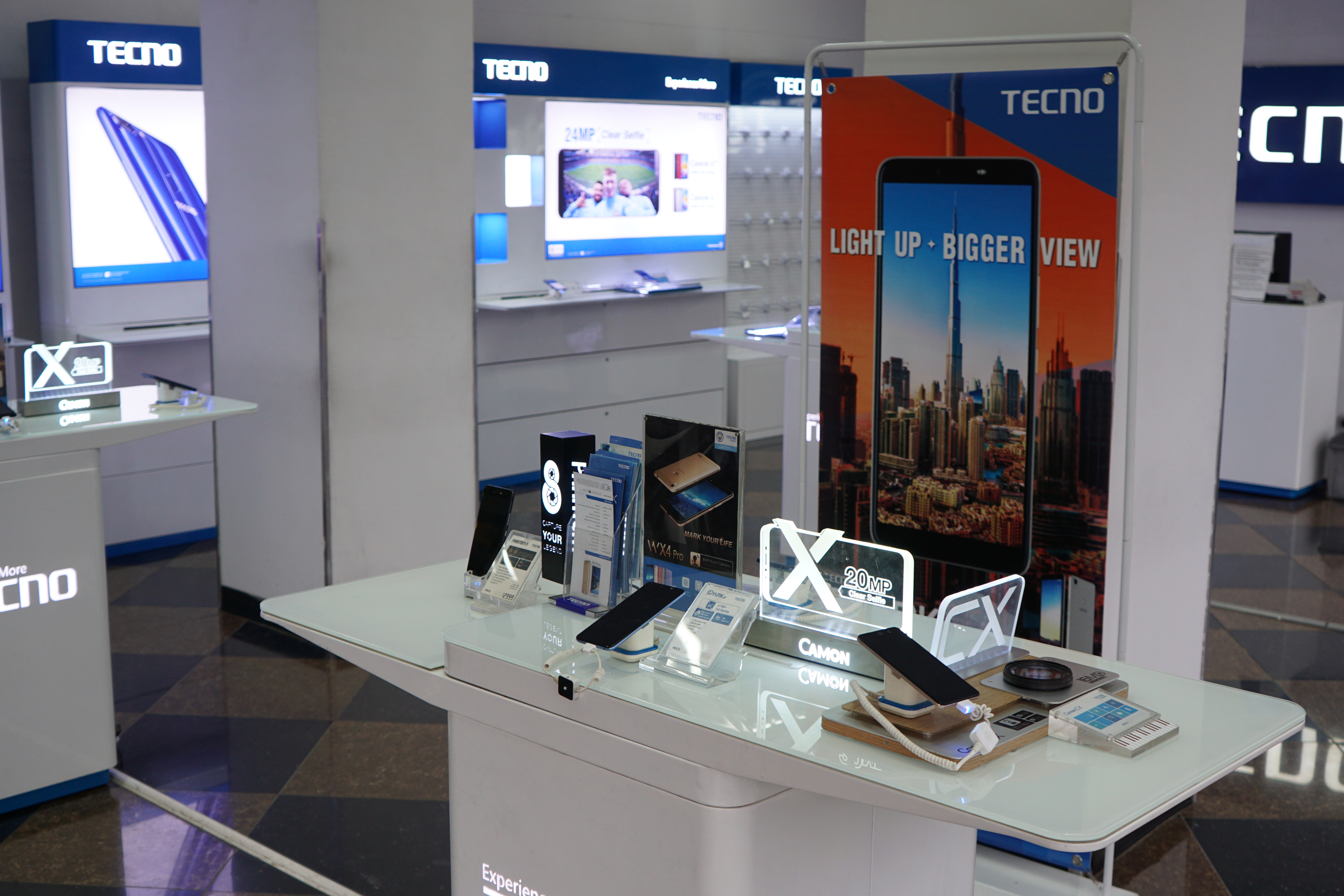 Transsion has R&D centers in Nigeria and Kenya and its sales network in Africa includes retail shops in Nigeria, Kenya, Tanzania, Ethiopia and Egypt. The company also attracted attention for being one of the first known device makers to optimize its camera phones for African complexions.
On a recent research trip to Addis Ababa, TechCrunch learned the top entry-level Tecno smartphone was the W3, which lists for 3,600 Ethiopian Birr, or roughly $125.
In Africa, Transsion’s ability to build market share and find a sweet spot with consumers on price and features gives it prominence in the continent’s booming tech scene.
Africa already has strong mobile-phone penetration, but continues to undergo a conversion from basic USSD phones, to feature phones, to smartphones.
Smartphone adoption on the continent is low, at 34%, but expected to grow to 67% by 2025, according to GSMA.
This, added to an improving internet profile, is key to Africa’s tech scene. In top markets for VC and startup origination — such as Nigeria, Kenya, and South Africa — thousands of ventures are building business models around mobile-based products and digital applications. 
If Transsion’s IPO enables higher smartphone conversion on the continent, that could enable more startups and startup opportunities — from fintech to VOD apps.
Another interesting facet to Transsion’s IPO is its potential to create greater influence from China in African tech, in particular if the Shenzhen company moves strongly toward venture investing.
China’s engagement with African startups has been light compared to China’s deal-making on infrastructure and commodities — further boosted in recent years as Beijing pushes its Belt and Road plan.
Transsion’s IPO move is the second recent event — after Chinese owned Opera’s big venture spending in Nigeria — to reflect greater Chinese influence and investment in the continent’s digital scene.
So in coming years, China could be less known for building roads and bridges in Africa and more for selling smartphones and providing VC for African startups.
Powered by WPeMatico
Indifi, a Gurgaon-based startup that offers loans to small and medium-sized businesses and also operates an online lending marketplace, has raised 1,450 million Indian rupees ($20.4 million) in a new financing round to expand its business in the country.
The Series C round for the four-year-old startup was led by CDC Group, a U.K.-government-owned VC fund. Existing investors Accel, Elevar Equity, Omidyar Networks and Flourish Ventures also participated in the round, the startup announced on Tuesday (Indian Standard Time).
Indifi, which has raised about $34 million in venture capital to date, has also relied on debt to grow and finance loans on its platform. Currently, it’s in about $21 million in debt, Alok Mittal, co-founder and managing director of Indifi, told TechCrunch in an interview.
Indifi, which itself finances some loans, additionally also serves as a marketplace for banks and non-banking financial companies to participate in funding loans to small and medium-sized enterprises, said Mittal. Both the businesses are equally growing and contributing to its bottom line, he said.
A typical loan processed by Indifi is of about $7,000 in size. Overall, the startup offers between $1,400 to $70,000 in capital to businesses.
Unlike banks and many other online lenders, Indifi works with an ecosystem of companies to assess risk factors before granting a loan to a business, Mittal said. For instance, Indifi works with food-delivery startups Zomato and Swiggy and checks a restaurant’s history and feedback from their customers before issuing to a restaurant.
Similarly, if an enterprise from the travel industry were to look for a loan, Indifi checks the volatility of the market. Some of its other business partners include Oyo Rooms, MakeMyTrip, Flipkart, FirstData, Travel Booking and Riya Travel.
“We chose to invest in Indifi because of its advanced data-driven approach that enables it to reach [thousands] of underserved customers across India. By reducing the high cost of risk assessment and customer acquisition, Indifi helps formal and informal businesses to access growth finance that otherwise may not receive it,” Srini Nagarajan, managing director and head of CDC Group’s Asia business, said in a statement.
Despite its longer background check process, Mittal said Indifi has been able to finance nearly 50% of all the applications it gets, compared to about 10% deals that materialize with banks and other lenders.
Indifi, which spent the first year and a half of its existence building relationships with major companies and refining its products, has amassed more than 15,000 customers to date, Mittal said. Its client base has grown by 2.5 times in the past year, he said.
The startup will use the fresh capital to find new clients and lending partners to expand its marketplace business, Mittal said. It will also explore lending to businesses in more sectors, including logistics (so fleet-owners could also get loan).
Indifi competes with a handful of businesses, including Bangalore-based Zest Money, Five Star Finance, Capital Float and, in some capacity, Drip Capital, which recently raised $25 million.
Powered by WPeMatico
Even before pitching onstage at Y Combinator, Indian car refueling startup MyPetrolPump has managed to snag $1.6 million in seed financing.
The business, which is similar to startups in the U.S. like Filld, Yoshi and Booster Fuels, took 10 months to design and receive approval for its proprietary refueling trucks that can withstand the unique stresses of providing logistics services in India.
Together with co-founder Nabin Roy, a serial startup entrepreneur, MyPetrolPump co-founder and chief executive Ashish Gupta pooled $150,000 to build the company’s first two refuelers and launch the business.
MyPetrolPump began operating out of Bangalore in 2017 working with a manufacturing partner to make the 20-30 refuelers that the company expects it will need to roll out its initial services. However, demand is far outstripping supply, according to Gupta.
“We would need hundreds of them to fulfill the demand,” Gupta says. In fact the company is already developing a licensing strategy that would see it franchise out the construction of the refueling vehicles and regional management of the business across multiple geographies.
Bootstrapped until this $1.6 million financing, MyPetrolPump already has five refueling vehicles in its fleet and counts 2,000 customers already on its ledger.
These are companies like Amazon and Zoomcar, which both have massive fleets of vehicles that need refueling. Already the company has delivered 5 million liters of fuel with drivers working daily 12-hour shifts, Gupta says.
While services like MyPetrolPump have cropped up in the U.S. as a matter of convenience, in the Indian context, the company’s offering is more of necessity, says Gupta.
“In the Indian context, there’s pilferage of fuel,” says Gupta. Bus drivers collude with gas station operators to skim money off the top of the order, charging for 50 liters of fuel but only getting 40 liters pumped in. Another problem that Gupta says is common is the adulteration of fuel with additives that can degrade the engine of a vehicle.
There’s also the environmental benefit of not having to go all over to refill a vehicle, saving fuel costs by filling up multiple vehicles with a single trip from a refueling vehicle out to a location with a fleet of existing vehicles.
The company estimates it can offset 1 million tons of carbon in a year — and provide more than 300 billion liters of fuel. The model has taken off in other geographies as well. There’s Toplivo v Bak in Russia (which was acquired by Yandex), Gaston in Paris and Indonesia’s everything mobility company, Gojek, whose offerings also include refueling services.
And Gupta is preparing for the future as well. If the world moves to electrification and electric vehicles, the entrepreneur says his company can handle that transition as well.
“We are delivering a last-mile fuel delivery system,” says Gupta. “If tomorrow hydrogen becomes the dominant fuel we will do that… If there is electricity we will do that. What we are building is the convenience of last-mile delivery to energy at the doorstep.”
Powered by WPeMatico