india
Auto Added by WPeMatico
Auto Added by WPeMatico
We finally know just about how many subscribers Hotstar has amassed over the years in India. “Approximately 8 million.”
Disney said on Wednesday that its eponymous streaming service now has over 50 million subscribers, nearly 8 million of whom are in India, where it launched its service atop Hotstar less than a week ago.
Five-year-old Hotstar is the most popular on-demand streaming service in India with more than 300 million users. The service and its operator, Indian network Star India, were picked up by Disney as part of its $71 billion deal with Fox last year.
For years, people in the industry have been curious about Hotstar’s premium subscriber base — to no luck. Most estimates have suggested it had about 1.5 million to 2 million subscribers. Executives at rival firms have expected that figure to be lower.
In fact, a months-long analysis conducted by one streaming firm in India concluded recently that there were 2 million paying subscribers for music and video services. So 8 million is a huge milestone.
But ARPU that Disney will clock from these 8 million subscriber is going to be far lower. Disney+ Hotstar is available in India at a yearly subscription cost of about $20. (That’s the revised subscription cost. Prior to Disney+’s launch in India, Hotstar charged about $13.) The service also offers a lower-cost tier that costs under $5.5 a year.
And for that $20 a year, subscribers of Disney+ Hotstar get access to a wide-range of catalog that includes access to Disney Originals in English as well as several local languages, live sporting events, dozens of TV channels, and thousands of movies and shows, including some sourced from HBO, Showtime, ABC and Fox that maintain syndication partnerships with the Indian streaming service.
“I think everyone is still trying to sort out the right pricing. It’s true the average Indian consumer is used to far lower prices and can’t afford more. However, we need to focus on the consumers likely to buy this, who have the requisite broadband access and income, etc,” Matthew Ball, former head of strategic planning for Amazon Studios, told TechCrunch in a recent conversation.
Disney+ competes with more than three dozen international and local players in India, including Netflix, Amazon Prime Video, Times Internet’s MX Player (which has over 175 million monthly active users), Zee5, Apple TV+ and Alt Balaji, which has over 27 million subscribers.
Most of these services monetize their viewers through ads, and have kept their monthly subscription price below $3.
Powered by WPeMatico

DeHaat, an online platform that offers full-stack agricultural services to farmers, has raised $12 million as it looks to scale its network across India.
The Series A financial round for the eight-year-old Patna and Gurgaon-based startup was led by Sequoia Capital India. Dutch entrepreneurial development bank FMO, and existing investors Omnivore and AgFunder, also participated in the round. The startup, which began to seek funding from external investors last year, has raised $16 million to date and $3 million in venture debt.
DeHaat (which means village in Hindi) eases the burden on farmers by bringing together brands, institutional financers and buyers on one platform, explained Shashank Kumar, co-founder and chief executive of the startup, in an interview with TechCrunch.
The platform helps farmers secure thousands of agri-input products, including seeds and fertilizers, and receive tailored advisory on the crop they should sow in a season. “We have built a comprehensive database of crop tests to offer advice to farmers,” he said.
DeHaat, which employs 242 people, also helps them connect with 200 institutional partners to provide farmers with working capital, and when the season is over, helps them sell their yields to bulk buyers such as Reliance Fresh, food delivery startup Zomato and business-to-business e-commerce giant Udaan.
DeHaat today operates in 20 regional hubs in the eastern part of India — states such as Bihar, Uttar Pradesh, and Jharkhand — and serves more than 210,000 farmers, said Kumar.
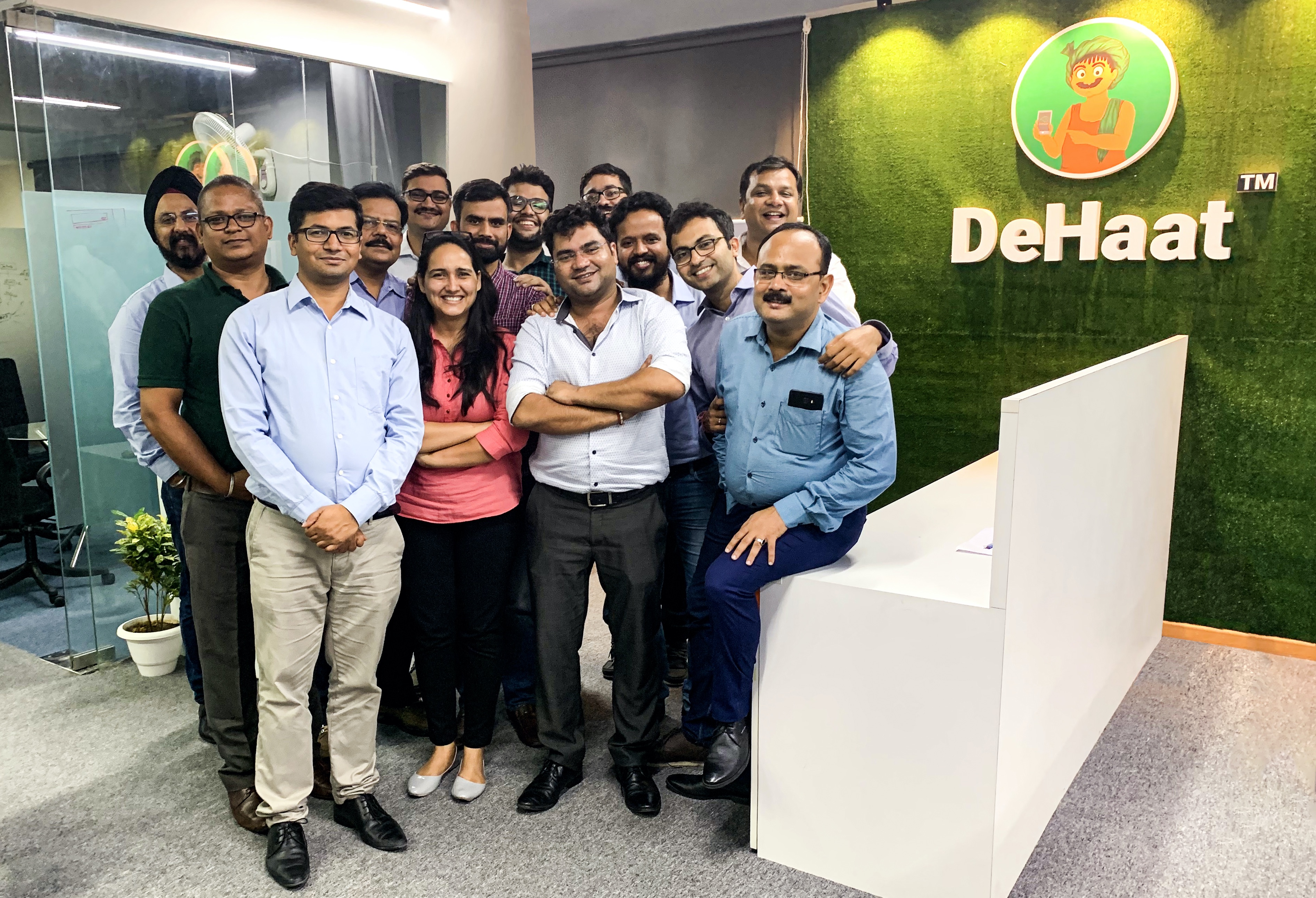
Shashank Kumar, Amrendra Singh, Adarsh Srivastav and Shyam Sundar Singh co-founded DeHaat in 2012
The startup has developed a network of hundreds of micro-entrepreneurs in rural areas that distribute agri-input goods to farmers from their regional hubs and then bring back the output to the same hub.
“We have an app in local languages and a helpline desk that farmers, many of whom don’t own a smartphone, use to reach out to us and explain their pain points and needs,” he said.
DeHaat does not charge any fee for its advisory, but takes a cut whenever farmers use its platform to buy agri-inputs or sell their crop yields.
The startup will use the fresh capital to extend its network to 2,000 rural retail centres, on-board more micro-entrepreneurs for last-mile delivery and reach 1 million farmers by June of next year, said Kumar. DeHaat is also working on automating its supply chain and developing more sophisticated data analytics, he said.
At stake is India’s agriculture market that is worth $350 billion and serves nearly 100 million small and independent farmers, said Abhishek Mohan, VP at Sequoia Capital India, the VC fund that writes more checks than anyone else in the country.
“This industry is on the brink of a massive transformation thanks to ease of regulation, farmers getting organized and increasing penetration of smartphones. DeHaat is leveraging these trends to build the next-gen product in agricultural supply chain,” said Mohan in a statement.
“The tipping point that led to Sequoia India’s decision to partner with them was the field visit, where the farmers expressed how proud they were to be associated with a platform they felt truly worked in their favour. This impact and deep brand loyalty stems from the leadership team’s razor-sharp focus, deep empathy and fine execution,” he added.
Powered by WPeMatico

Disney+ has arrived in the land of Bollywood. The company on Friday (local time) rolled out its eponymous streaming service in India through Hotstar, a popular on-demand video streamer it picked up as part of the Fox deal.
To court users in India, the largest open entertainment market in Asia, Disney is charging users 1,499 Indian rupees (about $19.5) for a year, the most affordable plan in any of the more than a dozen markets where Disney+ is currently available.
Subscribers of the revamped streaming service, now called Disney+ Hotstar, will get access to Disney Originals in English as well as several local languages, live sporting events, dozens of TV channels, and thousands of movies and shows, including some sourced from HBO, Showtime, ABC and Fox that maintain syndication partnerships with the Indian streaming service. It also maintains partnership with Hooq — at least for now.
Unlike Disney+’s offering in the U.S. and other markets, in India, the service does not support 4K and streams content at nearly a tenth of their bitrate.
Disney+ Hotstar is also offering a cheaper yearly premium tier, priced at Rs 399 (about $5.3), that will offer subscribers access to movies, shows (but not those sourced from aforementioned U.S. networks and studios) and live sporting events; it won’t include Disney Originals.
Access to streaming of sporting events, especially of cricket matches, has helped five-year-old Hotstar become the most popular on-demand video streaming in India. During the cricket tournament Indian Premier League (IPL) last year, the service amassed more than 300 million monthly active users and more than 100 million daily active users.
It also holds the global record for most simultaneous views on a live stream, about 25 million — more than thrice its nearest competitor.
Prior to today’s launch, Hotstar offered its premium plans at 999 Indian rupees, and 365 Indian rupees. Existing subscribers won’t be affected by the price revision for the duration of their current subscription.
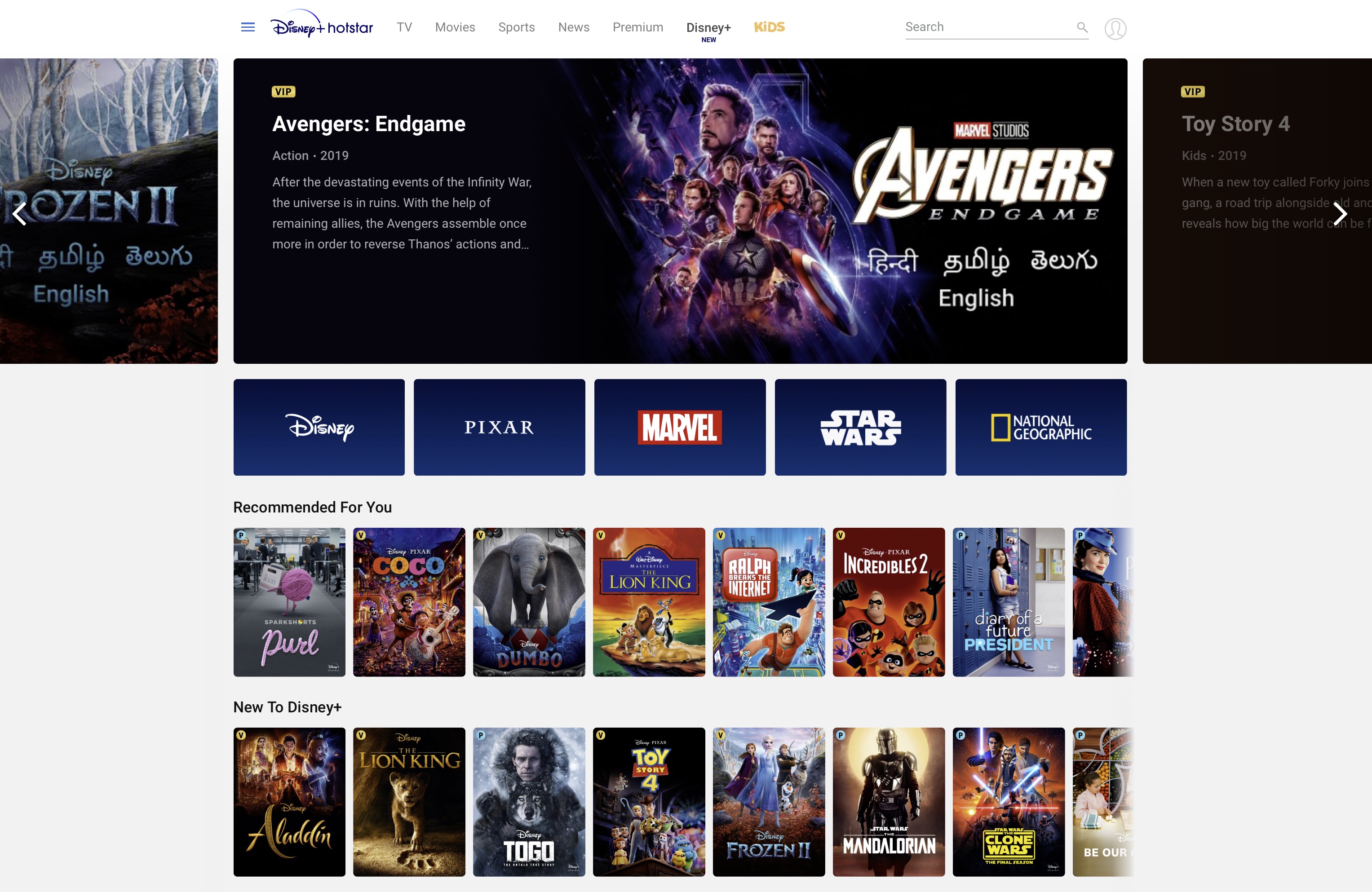
The service, run by Indian conglomerate Star India, offers access to about 80% of its catalog at no cost to users. The company monetizes these viewers through ads.
But in recent years, the company has begun to explore ways to turn its users into subscribers. Two years ago, Hotstar stopped offering cricket match streaming to non-paying users.
People familiar with the matter told TechCrunch that Hotstar has about 1.5 million paying subscribers, lower than what most industry firms estimate. But that figure is still higher than most of its competitors.
And there are many.
Disney+ will compete with more than three dozen international and local players in India, including Netflix, Amazon Prime Video, Times Internet’s MX Player (which has over 175 million monthly active users), Zee5, Apple TV+ and Alt Balaji, which has amassed over 27 million subscribers.
“The arrival of Disney+ in India is another case study in the globalization of entertainment in the digital era. For decades, the biggest companies in the world have expanded their reach into different markets. But it’s new, and actually quite profound, that everyone on earth receives the very same version of such a specific cultural product,” Matthew Ball, former head of strategic planning for Amazon Studios, told TechCrunch.
As in some other markets, including the U.S., streaming services have inked deals with telecom networks, TV vendors, cable TV operators and satellite TV players to extend their reach in India.
Most of these streaming services monetize their viewers by selling ads, and those who do charge have kept their premium plans below $3.
Why that figure? That’s the number most industry executives think — by spending years in the Indian market — that people in the country are willing to pay for viewing content. The average of how much an individual pays for cable TV, for instance, in India is also about $3.
“I think everyone is still trying to sort out the right pricing. It’s true the average Indian consumer is used to far lower prices and can’t afford more. However, we need to focus on the consumers likely to buy this, who have the requisite broadband access and income, etc,” said Ball.
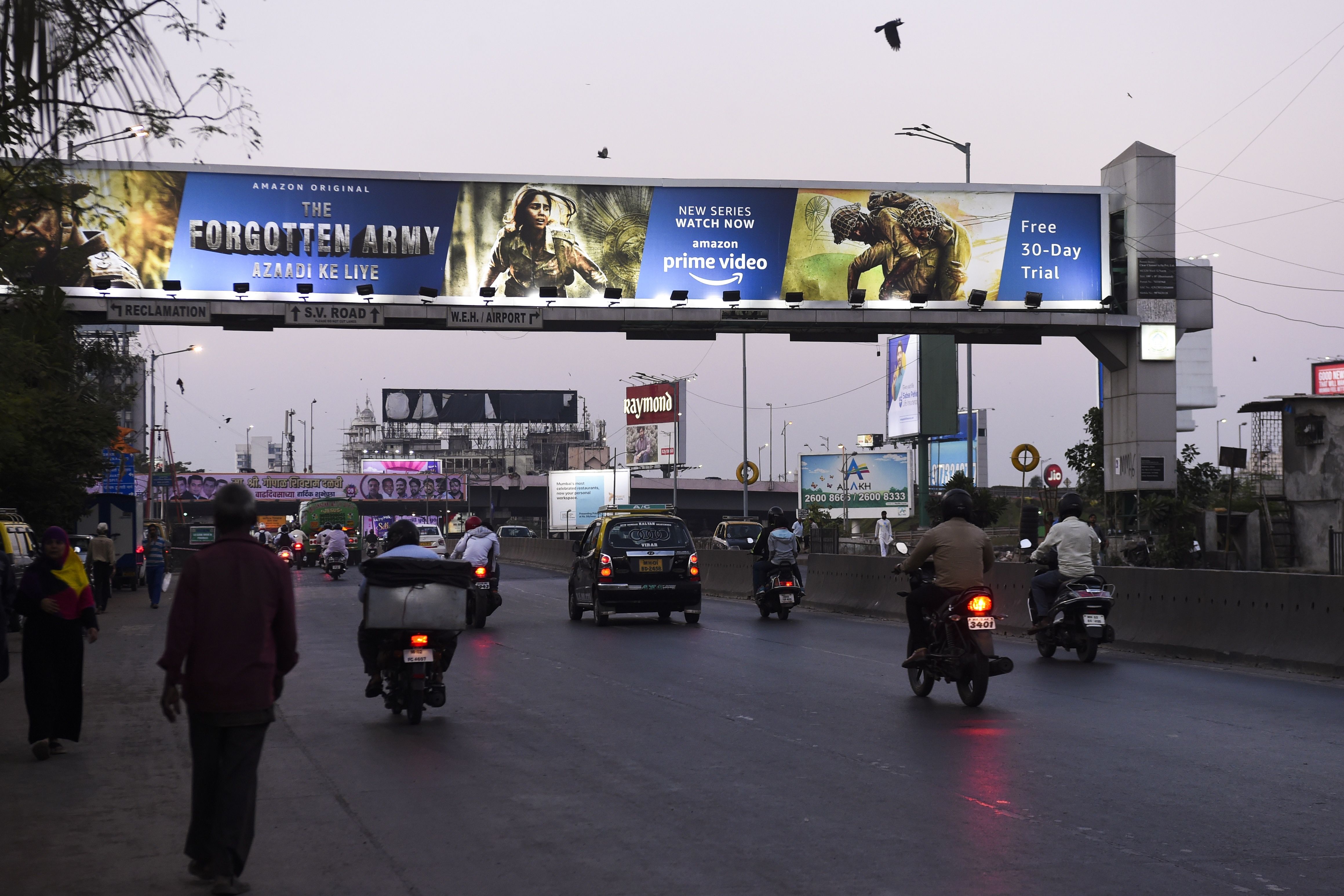
Commuters drive along a road past a billboard in Mumbai advertising the Amazon Prime Video online series “The Forgotten Army”. (Photo by INDRANIL MUKHERJEE / AFP via Getty Images)
At stake is India’s booming on-demand video streaming market that, according to Boston Consulting Group, is estimated to grow to $5 billion from half a billion two years ago.
Hotstar’s hold on India could make it easier for Disney+, which has launched in more than a dozen markets and has amassed over 28 million subscribers.
As the country spends about two more weeks in lockdown that New Delhi ordered last month to curtail the spread of coronavirus, this could also compel many to give Disney+ a try.
On the flip side, if the lockdown is extended, the current season of IPL, which has been postponed until mid-April, might be further delayed or cancelled altogether. Either of those scenarios could hurt the reach of Hotstar, which sees a massive drop in its user base after the conclusion of each cricket tournament.
Disney initially planned to launch its streaming service in India on March 28, the day IPL was supposed to commence. But the company later postponed the launch by six days.
Industry executives told TechCrunch that if IPL is cancelled, it could severely hurt the financials of Hotstar, which clocks more than 50% of its revenue during the 50-odd days of the cricket season.
Some said Disney+’s premier catalog might not be relevant for most of Hotstar’s user base, who seem to care about this streaming service only during the cricket season or to catch up on Indian soap operas.
Hotstar has also received criticism for censoring more content on its platform than any other streaming service in India. Last month, Hotstar blocked from streaming on its platform an episode of “Last Week Tonight with John Oliver” that was critical of Indian Prime Minister Narendra Modi. YouTube made that segment available without any edits.
John Oliver slammed Hotstar for censoring the episode and noted that the streaming service had additionally edited out parts from his older episodes where he made fun of Disney. In 2017, Hotstar also edited out a segment from Oliver’s show in which he mocked Samsung for the Galaxy Note 7 fiasco. Hotstar and Samsung had a commercial partnership.
Hotstar did not respond to multiple requests for comment in 2017. Hotstar did not respond to multiple requests for comment on the recent controversy.
Powered by WPeMatico

Vijay Shekhar Sharma, founder and chief executive of India’s most valuable startup, Paytm, posed an existential question in a recent press conference.
“What do you think of the commercial model for digital mobile payments. How do we make money?” Sharma asked Nandan Nilekani, one of the key architects of the Universal Payments Infrastructure that created a digital payments revolution in the country.
It’s the multi-billion-dollar question that scores of local startups and international giants have been scrambling to answer as many of them aggressively shift their focus to serving merchants and building lending products and other financial services .
New Delhi’s abrupt move to invalidate much of the paper bills in the cash-dominated nation in late 2016 sent hundreds of millions of people to cash machines for months to follow.
For a handful of startups such as Paytm and MobiKwik, this cash crunch meant netting tens of millions of new users in a span of a few months.
India then moved to work with a coalition of banks to develop the payments infrastructure that, unlike Paytm and MobiKwik’s earlier system, did not act as an intermediary “mobile wallet” to serve as an intermediary between users and their banks, but facilitated direct transaction between two users’ bank accounts.
Silicon Valley companies quickly took notice. For years, Google and the likes have attempted to change the purchasing behavior of people in many Asian and African markets, where they have amassed hundreds of millions of users.
In Pakistan, for instance, most people still run errands to neighborhood stores when they want to top up credit to make phone calls and access the internet.
With China keeping its doors largely closed for foreign firms, India, where many American giants have already poured billions of dollars to find their next billion users, it was a no-brainer call.
“Unlike China, we have given equal opportunities to both small and large domestic and foreign companies,” said Dilip Asbe, chief executive of NPCI, the payments body behind UPI.
And thus began the race to participate in the grand Indian experiment. Investors have followed suit as well. Indian fintech startups raised $2.74 billion last year, compared to 3.66 billion that their counterparts in China secured, according to research firm CBInsights.
And that bet in a market with more than half a billion internet users has already started to pay off.
“If you look at UPI as a platform, we have never seen growth of this kind before,” Nikhil Kumar, who volunteered at a nonprofit organization to help develop the payments infrastructure, said in an interview.
In October, just three years after its inception, UPI had amassed 100 million users and processed over a billion transactions. It has sustained its growth since, clocking 1.25 billion transactions in March — despite one of the nation’s largest banks going through a meltdown last month.
“It all comes down to the problem it is solving. If you look at the western markets, digital payments have largely been focused on a person sending money to a merchant. UPI does that, but it also enables peer-to-peer payments and across a wide-range of apps. It’s interoperable,” said Kumar, who is now working at a startup called Setu to develop APIs to help small businesses easily accept digital payments.
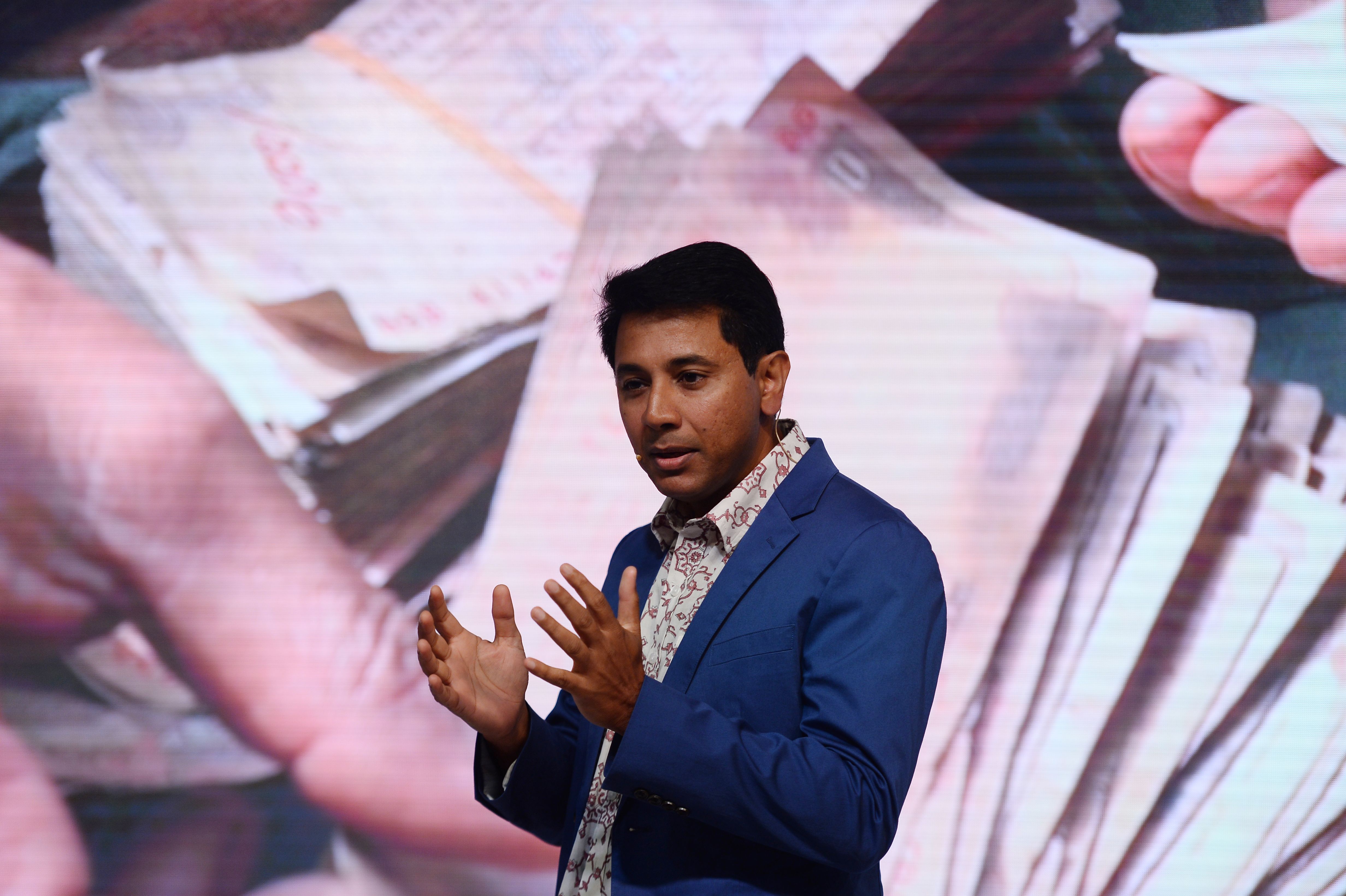
Vice-president of Google’s Next Billion Users Caesar Sengupta speaks during the launch of the Google “Tez” mobile app for digital payments in New Delhi on September 18, 2017 (Photo: Getty Images via AFP PHOTO / SAJJAD HUSSAIN)
The Google Pay app has amassed over 67 million monthly active users. And the company has found the UPI pipeline so fascinating that it has recommended similar infrastructure to be built in the U.S.
In August, the Federal Reserve proposed to develop a new inter-bank 24×7 real-time gross settlement service that would support faster payments in the country. In November, Google recommended (PDF) that the U.S. Federal Reserve implement a real-time payments platform such as UPI.
“After just three years, the annual run rate of transactions flowing through UPI is about 19% of India’s Gross Domestic Product, including 800 million monthly transactions valued at approximately $19 billion,” wrote Mark Isakowitz, Google’s vice president of Government Affairs and Public Policy.
Paytm itself has amassed more than 150 million users who use it every year to make transactions. Overall, the platform has 300 million mobile wallet accounts and 55 million bank accounts, said Sharma.
But despite on-boarding more than a hundred million users on their platform, payment firms are struggling to cut their losses — let alone turn a profit.
At an event in Bangalore late last year, Sajith Sivanandan, managing director and business head of Google Pay and Next Billion User Initiatives, said current local rules have forced Google Pay to operate in India without a clear business model.
Mobile payment firms never levied any fee to users as a strategy to expand their reach in the country. A recent directive from the government has now put an end to the cut they were receiving to facilitate UPI transactions between users and merchants.
Google’s Sivanandan urged the local payment bodies to “find ways for payment players to make money” to ensure every stakeholder had incentives to operate.
Paytm, which has raised more than $3 billion to date, reported a loss of $549 million in the financial year ending in March 2019.
The firm, backed by SoftBank and Alibaba, has expanded to several new businesses in recent years, including Paytm Mall, an e-commerce venture, social commerce, financial services arm Paytm Money and a movies and ticketing category.
This year, Paytm has expanded to serve merchants, launching new gadgets such as a stand that displays QR check-out codes that comes with a calculator and a battery pack, a portable speaker that provides voice confirmations of transactions and a point-of-sale machine with built-in scanner and printer.
In an interview with TechCrunch, Sharma said these devices are already garnering impressive demand from merchants. The company is offering these gadgets to them as part of a subscription service that helps it establish a steady flow of revenue.
The firm’s Money arm, which offers lending, insurance and investing services, has amassed over 3 million users. The head of Paytm Money, Pravin Jadhav, resigned from the company this week, a person familiar with the matter said. A Paytm spokeswoman declined to comment. (Indian news outlet Entrackr first reported the development.)
Flipkart’s PhonePe, another major player in India’s payments market, today serves more than 175 million users, and over 8 million merchants. Its app serves as a platform for other businesses to reach users, explained Rahul Chari, co-founder and CTO of the firm, in an interview with TechCrunch. The company is currently not taking a cut for the real estate on its app, he added.
But these startups’ expansion into new categories means that they now have to face off even more rivals, and spend more money to gain a foothold. In the social commerce category, for instance, Paytm is competing with Naspers-backed Meesho and a handful of new entrants; and heavily-backed OkCredit and KhataBook today lead the bookkeeping market.
BharatPe, which raised $75 million two months ago, is digitizing mom and pop stores and granting them working capital. And PineLabs, which has already become a unicorn, and MSwipe have flooded the market with their point-of-sale machines.
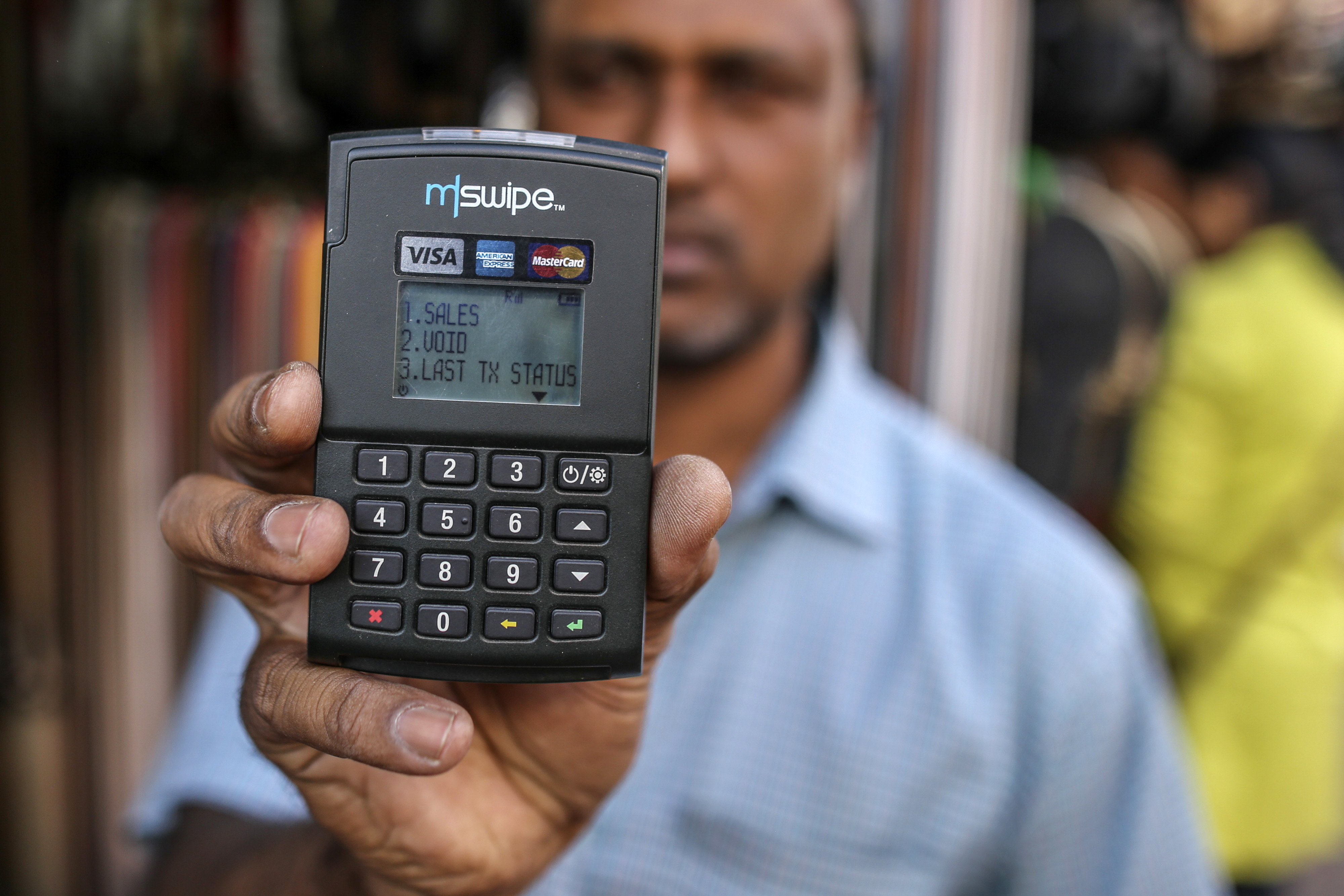
A vendor holds an Mswipe terminal, operated by M-Swipe Technologies Pvt Ltd., in an arranged photograph at a roadside stall in Bengaluru, India, on Saturday, Feb. 4, 2017. (Photographer: Dhiraj Singh/Bloomberg via Getty Images)
“They have no choice. Payment is the gateway to businesses such as e-commerce and lending that you can monetize. In Paytm’s case, their earlier bet was Paytm Mall,” said Jayanth Kolla, founder and chief analyst at research firm Convergence Catalyst.
But Paytm Mall has struggled to compete with giants Amazon India and Walmart’s Flipkart. Last year, Mall pivoted to offline-to-online and online-to-offline models, wherein orders placed by customers are serviced from local stores. The company also secured about $160 million from eBay last year.
An executive who previously worked at Paytm Mall said the venture has struggled to grow because its goal-post has constantly shifted over the years. It has recently started to focus on selling fastags, a system that allows vehicle owners to swiftly pay toll fees. At least two more executives at the firm are on their way out, a person familiar with the matter said.
Kolla said the current dynamics of India’s mobile payments market, where more than 100 firms are chasing the same set of audience, is reminiscent of the telecom market in the country from more than a decade ago.
“When there were just four to five players in the telecom market, the prospect of them becoming profitable was much higher. They were scaling like crazy. They grew with the lowest ARPU in the world (at about $2) and were still profitable.
“But the moment that number grew to more than a dozen overnight, and the new players started offering more affordable plans to subscribers, that’s when profitability started to become elusive,” he said.
To top that off, the arrival of Reliance Jio, a telecom operator run by India’s richest man, in 2016 in the country with the cheapest tariff plans in the world, upended the market once again, forcing several players to leave the market, or declare bankruptcies, or consolidate.
India’s mobile payments market is now heading to a similar path, said Kolla.
If there were not enough players fighting for a slice of India’s mobile payments market that Credit Suisse estimate could reach $1 trillion by 2023, WhatsApp, the most popular app in the country with more that 400 million users, is set to roll out its mobile payments service in the country in a couple of months.
At the aforementioned press conference, Nilekani advised Sharma and other players to focus on financial services such as lending.
Unfortunately, the coronavirus outbreak that promoted New Delhi to order a three-week lockdown last month is likely going to impact the ability of millions of people to use such services.
“India has more than 100 million microfinance accounts, serviced in cash every week by gig-economy workers, who hawk vegetables on street corners or embroider saris sold in malls, among other things. Three out of four workers make a living by working casually for others or at their family firms and farms. Prolonged shutdowns will impair their ability to repay loans of 2.1 trillion rupees ($28.5 billion), putting the world’s largest microfinance industry at risk,” wrote Bloomberg columnist Andy Mukherjee.

Powered by WPeMatico

Google Cloud today announced its plans to open four new data center regions. These regions will be in Delhi (India), Doha (Qatar), Melbourne (Australia) and Toronto (Canada) and bring Google Cloud’s total footprint to 26 regions. The company previously announced that it would open regions in Jakarta, Las Vegas, Salt Lake City, Seoul and Warsaw over the course of the next year. The announcement also comes only a few days after Google opened its Salt Lake City data center.
GCP already had a data center presence in India, Australia and Canada before this announcement, but with these newly announced regions, it now offers two geographically separate regions for in-country disaster recovery, for example.

Google notes that the region in Doha marks the company’s first strategic collaboration agreement to launch a region in the Middle East with the Qatar Free Zones Authority. One of the launch customers there is Bespin Global, a major managed services provider in Asia.
“We work with some of the largest Korean enterprises, helping to drive their digital transformation initiatives. One of the key requirements that we have is that we need to deliver the same quality of service to all of our customers around the globe,” said John Lee, CEO, Bespin Global. “Google Cloud’s continuous investments in expanding their own infrastructure to areas like the Middle East make it possible for us to meet our customers where they are.”
Powered by WPeMatico
Like baseball, cricket relies on grass, dirt, wood, cork, spit, spin, drop and rise en route to either victory or loss. And like baseball — and just about any other sport, really — cricket coaching staffs and their players worldwide are looking for more ways to track every move.
Tracking statistics is nothing new. With each action, a player produces a stat that can be used to track improvement or struggle over a given period of time. But as players get stronger and stakes — financial and otherwise — get higher, a need for more specific data is proving necessary.
India-based SeeHow transforms sports equipment into sensors to do just that, and it does so without having to alter anything on the athlete’s body. Its sensors are baked into cricket balls and bat handles to track very specific types of data that batsmen and bowlers generate. And tracking the behavior of a bowled ball and where and how it lands on a bat all play a role in the story of cricket.
“Putting the sensor inside the ball or bat handle where the action is happening is when you can capture data fundamentally at a higher accuracy,” says Dev Chandan Behera, founder and CEO of SeeHow . “Most MEMS [micro-electro-mechanical systems] can measure up to 2,000 degrees per second, i.e about 300+ RPMs. International spinners like Shane Warne can spin the ball up to 3,000 RPMs. This is something we are able to capture.”
To obtain data, a trainer first assigns a bowler and/or a batsman in the accompanying Android app before a session. (Behera says an iOS app is due this year.) During play, each action is captured in near real time for each corresponding player.
For bowlers, the sensor tracks speed, spin, seam position or orientation, and length — where the ball lands on the pitch. For batsmen, the sensor tracks swing speed and angle, where it hits on the bat, what kind of deliveries they played, what their responses were to a particular delivery and the velocity of the ball off the bat.
This data is then streamed in real time and can be read by players and coaches alike on the app. The app retains a history of a player’s progress in order to make any necessary adjustments and to track improvements.
“In bat on ball sport or racquetball sport, you’re doing something in response to the pitcher or your opponent, and that’s something we’re able to capture into a single system,” Behera says. Because both the data from the batter and the bowler are streaming to a single system, he adds, the app is able to tell users what the reaction time is.
Behera grew up playing cricket with the intention of improving enough to ensure his rise through the ranks.
“Growing up we would use chalk, cones or a sheet of A4 paper as markers during play to assess how we bowled,” Behera says of his early years. “A coach would use a slate to mark the number of balls bowled and selection would be based on whether you had his attention in that particular window when he happened to look at you playing. You might just have a bad day and not get selected to the next level.”
After moving to Singapore, Behera continued competing in the sport, and says he was exposed to more tools and more methodical training approaches.
“We used to record videos through mobile phone cameras and compare them to videos on YouTube or show it to our seniors or coaches for tips,” he says. “However, the process was very ad hoc, and without any data and science to it, it was subjective. We never improved and made it as cricketers.”
His experience building robots, combined with his cricket playing, prompted him to consider using a ball as a way to glean data to help improve cricketers’ performances.
“It occurred to me that we could address this issue by bringing in a new perspective to the ball itself. The experience of building such complex hardware helped me gauge the challenges we needed to build a sports operating system that will enable sensors in the field of play to provide this holistic learning experience in cricket.”
Behera says SeeHow’s sensors are being used at 12 cricket academies in nine countries. First-class cricketer Abhishek Bhat is a fast bowler whose speed topped at 120km. He writes that after two weeks, he was able to push his pace into the mid 130s:
However, it wasn’t until SeeHow came into the picture that I was able to get a consistent measurement of my bowling speed, session after session and day after day. I cannot overstate the impact bowling with the smart ball has had on my bowling speed.
I had my first bowling session with the smart ball in early November and I was bowling in the mid-120s, barely getting above 130kmph. Then with some technical adjustments in a couple of weeks time, I was consistently bowling close to the 130 kmph mark. It was then that I realized that bowling fast is more than just about technique, it’s about the mindset.
SeeHow isn’t the only company trying to improve the way cricketers train.
A company called StanceBeam has developed a system that, among other things, provides session insights, the power generated from a swing, angles and directions of a swing and a 3D analysis of a batsman’s swing. It does so through a hardware extension that players attach to the ends of their bats and that relays data via an app.
Microsoft is also in the game of cricket analysis. The company partnered with star India cricketer Anil Kumble and his company Spektacom to enhance the reach of its sensor, which is designed to help better engage fans and broadcasters through the use of embedded sensors, artificial intelligence, video modeling and augmented reality. The company’s first offering is a smart sticker for bats that contains sensor tech designed to track batting behavior that is readable via an app.
As cricket starts to find an audience beyond the Commonwealth countries and continues to draw big dollars, look for tech to play a bigger role in attracting and maintaining audiences and players.
For SeeHow, cricket is just the beginning.
“Baseball is a very natural extension to cricket if you look at how the sport is played and the equipment,” Behera says. “And we have also done mixed martial arts with sensors in the gloves.”
The company has filed for five patents, one of which, Behera says, is around the construction of the ball, specifically in order to be able to hold the vibrations.
“We have mounted the sensor in the sports equipment at the core and introduced a protective material to cushion the sensor from impact and vibration,” he says. “The patent captures the construction of the ball that mounts the sensor and introduces the protective material in a novel manner to be able to capture the motion data at the core.”
As it scales, SeeHow will look to license the hardware to equipment manufacturers and become a platform company. SeeHow is funded through a friends and family round and is currently in search of seed funding.
Powered by WPeMatico
Some of Latin America’s leading venture capital investors are now backing hotel chains.
In fact, Ayenda, the largest hotel chain in Colombia, has raised $8.7 million in a new round of funding, according to the company.
Led by Kaszek Ventures, the round will support the continued expansion of Ayenda’s chain of hotels in Colombia and beyond. The hotel operator already has 150 hotels operating under its flag in Colombia and has recently expanded to Peru, according to a statement.
Financing came from Kaszek Ventures and strategic investors like Irelandia Aviation, Kairos, Altabix and BWG Ventures.
The company, which was founded in 2018, now has more than 4,500 rooms under its brand in Colombia and has become the biggest hotel chain in the country.
Investments in brick and mortar chains by venture firms are far more common in emerging markets than they are in North America. The investment in Ayenda mirrors big bets that SoftBank Group has made in the Indian hotel chain Oyo and an investment made by Tencent, Sequoia China, Baidu Capital and Goldman Sachs, in LvYue Group late last year, amounting to “several hundred million dollars”, according to a company statement.
“We’re seeking to invest in companies that are redefining the big industries and we found Ayenda, a team that is changing the hotel’s industry in an unprecedented way for the region”, said Nicolas Berman, Kaszek Ventures partner.
Ayenda works with independent hotels through a franchise system to help them increase their occupancy and services. The hotels have to apply to be part of the chain and go through an up to 30-day inspection process before they’re approved to open for business.
“With a broad supply of hotels with the best cost-benefit relationship, guests can travel more frequently, accelerating the economy,” says Declan Ryan, managing partner at Irelandia Aviation.
The company hopes to have more than 1 million guests in 2020 in their hotels. Rooms list at $20 per-night, including amenities and an around the clock customer support team.
Oyo’s story may be a cautionary tale for companies looking at expanding via venture investment for hotel chains. The once high-flying company has been the subject of some scathing criticism. As we wrote:
The New York Times published an in-depth report on Oyo, a tech-enabled budget hotel chain and rising star in the Indian tech community. The NYT wrote that Oyo offers unlicensed rooms and has bribed police officials to deter trouble, among other toxic practices.
Whether Oyo, backed by billions from the SoftBank Vision Fund, will become India’s WeWork is the real cause for concern. India’s startup ecosystem is likely to face a number of barriers as it grows to compete with the likes of Silicon Valley.
Powered by WPeMatico
During the days when Snapchat’s popularity was booming, investors thought the company would become the anchor for a new Los Angeles technology scene.
Snapchat, they hoped, would spin-off entrepreneurs and angel investors who would reinvest in the local ecosystem and create new companies that would in turn foster more wealth, establishing LA as a hub for tech talent and venture dollars on par with New York and Boston.
In the ensuing years, Los Angeles and its entrepreneurial talent pool has captured more attention from local and national investors, but it’s not Snap that’s been the source for the next generation of local founders. Instead, several former SpaceX employees have launched a raft of new companies, capturing the imagination and dollars of some of the biggest names in venture capital.
“There was a buzz, but it doesn’t quite have the depth of bench of people that investors wanted it to become,” says one longtime VC based in the City of Angels. “It was a company in LA more than it was an LA company.”
Perhaps the most successful SpaceX offshoot is Relativity Space, founded by Jordan Noone and Tim Ellis. Since Noone, a former SpaceX engineer, and Ellis, a former Blue Origin engineer, founded their company, the business has been (forgive the expression) a rocket ship. Over the past four years, Relativity href=”https://techcrunch.com/2019/10/01/relativity-a-new-star-in-the-space-race-raises-160-million-for-its-3-d-printed-rockets/”> has raised $185.7 million, received special dispensations from NASA to test its rockets at a facility in Alabama, will launch vehicles from Cape Canaveral and has signed up an early customer in Momentus, which provides satellite tug services in orbit.
Powered by WPeMatico
Despite the rapid growth of e-commerce in India, Southeast Asia and other emerging markets, the vast majority of retail transactions there still happen offline in small stores that also serve as neighborhood hubs.
The central role these stores play in their communities led GGV Capital to develop what the firm refers to as its mom-and-pop shop investment thesis. This means backing startups that help small retailers digitize operations, tap into better supply chains and serve as delivery points in markets where logistics and online payment infrastructures are still developing. In turn, GGV’s managing partners believe this will lay the groundwork for stronger e-commerce growth.
Companies that GGV has already invested in under this thesis include B2B e-commerce platform Udaan and Telio, bookkeeping app KhataBook and social commerce startup Shihuituan (also called Nice Tuan) in China.
GGV managing partner Hans Tung says the mom-and-pop shop thesis means looking at consumers’ shopping habits across countries and understanding why they are different from a historical and social perspective. During his career, Tung has observed e-commerce develop in markets including the United States, China, Japan, Taiwan, India, Southeast Asia and Latin America. Offline shopping habits, population density, transportation infrastructure and credit card penetration all played a factor in how e-commerce evolved in each of those places.
“You realize e-commerce doesn’t exist in a vacuum. It exists as a substitute for what is happening in the offline world,” he says. “Mobile payment doesn’t happen in a vacuum. It just fulfills the same needs with a different method. It was a substitution for what was happening in the offline world with credit card and debit card penetration.”
Powered by WPeMatico

The growing market of fantasy sports in India may soon have a new and odd entrant: ShareChat .
The local social networking app, which in August last year raised $100 million in a financing round led by Twitter, has developed a fantasy sports app and has been quietly testing it for six months, two sources familiar with the matter told TechCrunch.
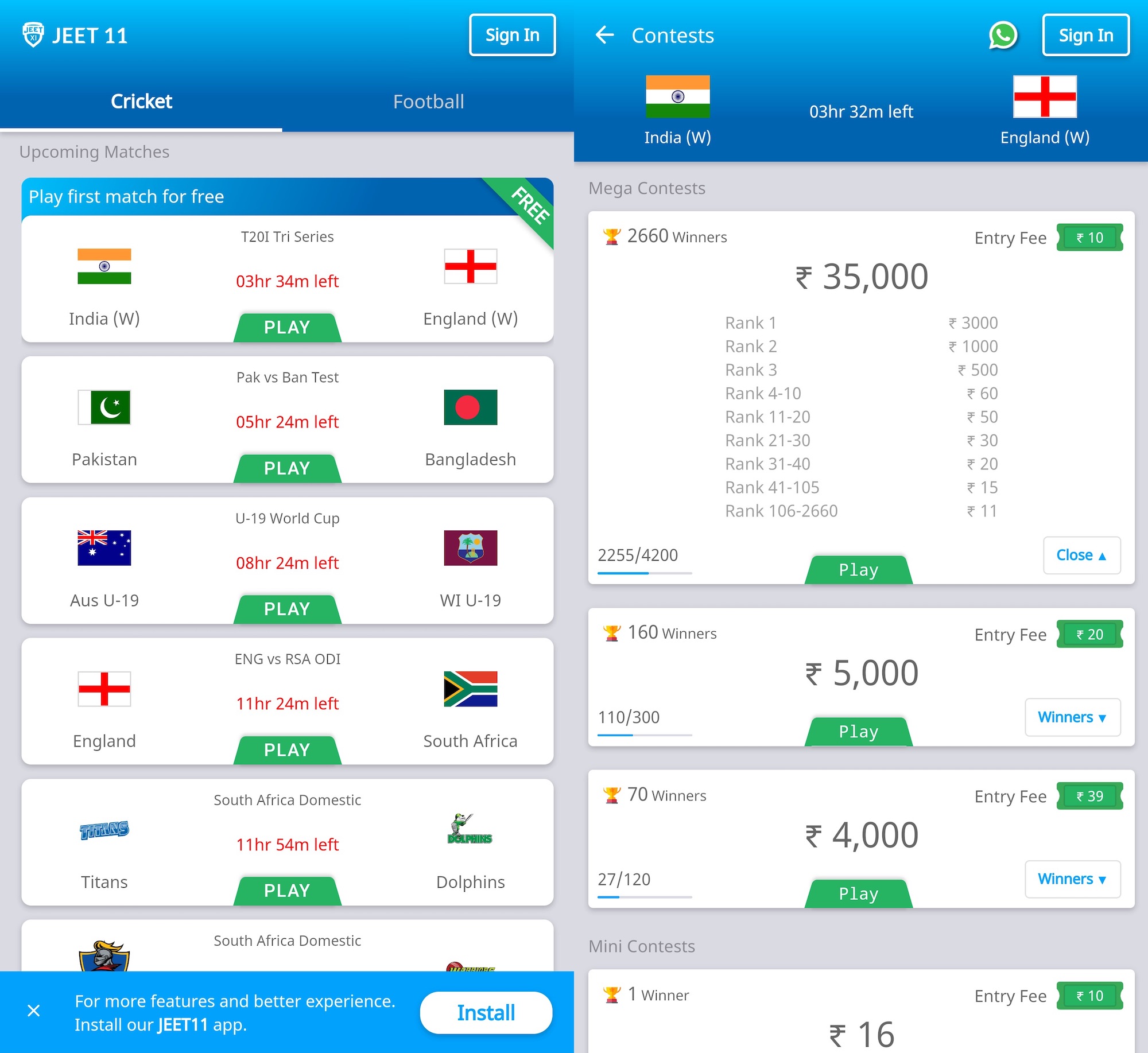
ShareChat’s fantasy sports app, called Jeet11, allows betting on cricket and football matches and has already amassed more than 120,000 registered users, the sources said. The app, or its website, does not disclose its association with ShareChat.
A ShareChat spokesperson confirmed the existence of the app and said the startup was testing the product.
Jeet11 is not available for download on the Google Play Store due to the Android maker’s guidelines on betting apps, so ShareChat has been distributing it through Xiaomi’s GetApps app store and the Jeet11 website, and has been promoting it on Instagram. It is also available as a web app.
Fantasy sports, a quite popular business in many markets, has gained some traction in India in recent years. Dream11, backed by gaming giant Tencent, claimed to have more than 65 million users early last year. It has raised about $100 million to date and is already valued north of $1 billion.
Bangalore-based MPL, which counts Sequoia Capital India as an investor and has raised more than $40 million, appointed Virat Kohli, the captain of the Indian cricket team, as its brand ambassador last year.
In the last two years, scores of startups have emerged to grab a slice of the market, and the vast majority of them are focused on cricket. Cricket is the most popular sport in India, just ask Disney’s Hotstar, which claimed to have more than 100 million daily active users during the cricket season last year.
Or ask Facebook, which unsuccessfully bid $600 million to secure streaming rights of the IPL cricket tournament. It has since grabbed rights to some cricket content and appointed the Hotstar chief as its India head.
So it comes as no surprise that many sports betting apps have signed cricketers as their brand ambassador. Hala-Play has roped in Hardik Pandya and Krunal Pandya, while Chennai-based Fantain Sports has appointed Suresh Raina.
But despite the growing popularity of fantasy sports apps, where users pick players and bet real money on their performances, the niche is still sketchy in many markets that consider it betting. In fact, Twitter itself restricts promotion of fantasy sports services in many markets across the world.
In India, too, several states, including Assam, Arunachal Pradesh, Odisha, Sikkim and Telangana, have banned fantasy sports betting. Jeet11 currently requires users to confirm that they don’t live in any of the restricted states before signing up for the service.
“It doesn’t help matters either that the fantasy sports business’ attempts at legitimacy involve trying to be seen as video games — a cursory glance at a speakers panel for any Indian video game developer event is evidence of this — rather than riding on its own merits,” said Rishi Alwani, a long-time analyst of Indian gaming market and publisher of news outlet the Mako Reactor.
An executive who works at one of the top fantasy sports startups in India, speaking on the condition of anonymity, said that despite handing out cash rewards to thousands of users each day, it is still challenging to retain customers after the conclusion of any popular cricket tournament. “And that’s after you have somehow convinced them to visit your website or download the app,” he said.
For ShareChat, which has been exploring ways to monetize its 60 million-plus users and posted a loss of about $58 million on no revenue in the financial year ending March 31, that’s anything but music to the ears. In recent months, the startup, which serves users in more than a dozen local languages, has been experimenting with ads.
Powered by WPeMatico