1010Computers | Computer Repair & IT Support

Peltarion raises $20M for its AI platform

Peltarion, a Swedish startup founded by former execs from companies like Spotify, Skype, King, TrueCaller and Google, today announced that it has raised a $20 million Series A funding round led by Euclidean Capital, the family office for hedge fund billionaire James Simons. Previous investors FAM and EQT Ventures also participated, and this round brings the company’s total funding to $35 million.

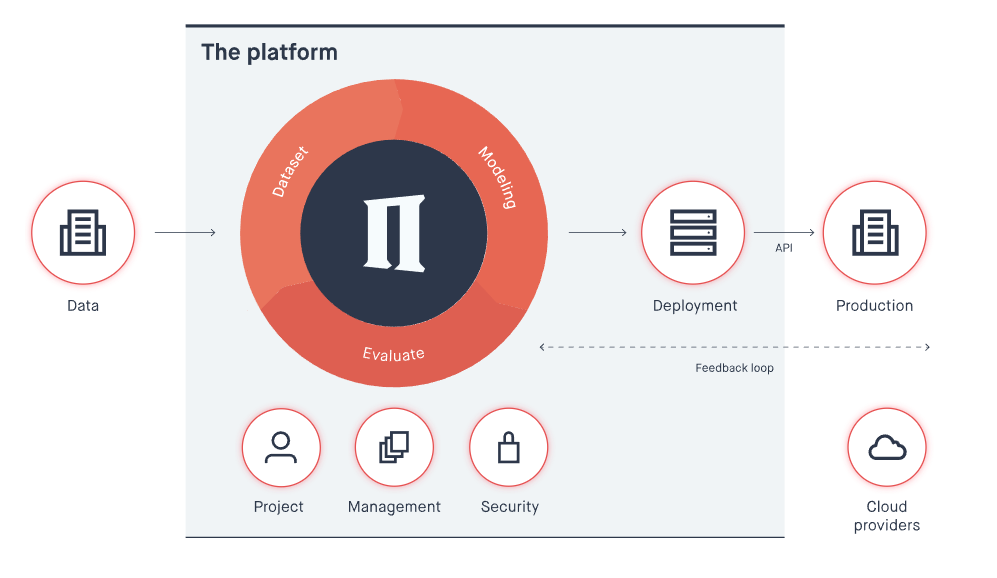
There is obviously no dearth of AI platforms these days. Peltarion focus on what it calls “operational AI.” The service offers an end-to-end platform that lets you do everything from pre-processing your data to building models and putting them into production. All of this runs in the cloud and developers get access to a graphical user interface for building and testing their models. All of this, the company stresses, ensures that Peltarion’s users don’t have to deal with any of the low-level hardware or software and can instead focus on building their models.

“The speed at which AI systems can be built and deployed on the operational platform is orders of magnitude faster compared to the industry standard tools such as TensorFlow and require far fewer people and decreases the level of technical expertise needed,” Luka Crnkovic-Friis, of Peltarion’s CEO and co-founder, tells me. “All this results in more organizations being able to operationalize AI and focusing on solving problems and creating change.”

In a world where businesses have a plethora of choices, though, why use Peltarion over more established players? “Almost all of our clients are worried about lock-in to any single cloud provider,” Crnkovic-Friis said. “They tend to be fine using storage and compute as they are relatively similar across all the providers and moving to another cloud provider is possible. Equally, they are very wary of the higher-level services that AWS, GCP, Azure, and others provide as it means a complete lock-in.”

Peltarion, of course, argues that its platform doesn’t lock in its users and that other platforms take far more AI expertise to produce commercially viable AI services. The company rightly notes that, outside of the tech giants, most companies still struggle with how to use AI at scale. “They are stuck on the starting blocks, held back by two primary barriers to progress: immature patchwork technology and skills shortage,” said Crnkovic-Friis.

The company will use the new funding to expand its development team and its teams working with its community and partners. It’ll also use the new funding for growth initiatives in the U.S. and other markets.

Powered by WPeMatico

Daily Crunch: Facebook (possibly) considered buying Unity

The Daily Crunch is TechCrunch’s roundup of our biggest and most important stories. If you’d like to get this delivered to your inbox every day at around 9am Pacific, you can subscribe here.

1. Facebook mulled multi-billion-dollar acquisition of gaming giant Unity, book claims

Less than a year after making a $3 billion investment into the future of virtual reality with the purchase of Oculus VR, Facebook CEO Mark Zuckerberg was considering another multi-billion-dollar bet by buying Unity, the popular game engine that’s used to build half of all gaming titles.

At least, that’s the claim made in a new book, “The History of the Future,” by Blake Harris, which digs deep into the founding story of Oculus and the drama surrounding the Facebook acquisition, subsequent lawsuits and personal politics of founder Palmer Luckey.

2. Alibaba’s Ant Financial buys UK currency exchange giant WorldFirst reportedly for around $700M

Although the companies were relatively quiet about the deal, it could end up being pretty significant, showing both the market connections between China and Europe and the margin pressures that many smaller remittance companies are under in the wake of larger companies like Amazon building their own money-moving services.

3. Nintendo makes the old new again with Mario, Zelda, Tetris titles for Switch

We round up everything Nintendo announced yesterday, from Super Mario Maker 2 to the unexpected remake of Game Boy classic Link’s Awakening.

Tesla dog mode

4. Tesla ‘Dog mode’ and ‘Sentry mode’ are now live to guard your car and pets

Dog mode is meant to accomplish two things: to keep dogs (or perhaps a hamster or cat) in a climate-controlled environment if left unattended in a vehicle, and to let passersby know their status.

5. Happy Valentine’s Day: your dating app account was hacked, says Coffee Meets Bagel

Users of the dating app Coffee Meets Bagel woke up this morning to find an email in their inboxes warning that their account information had been stolen by a third-party who gained unauthorized access to the company’s systems.

6. Apple is selling the iPhone 7 and iPhone 8 in Germany again

Apple was forced to pull the iPhone 7 and iPhone 8 models from shelves in the country last month, after chipmaker Qualcomm posted security bonds to enforce a December court injunction.

7. Malt raises $28.6M for its freelancer platform

Malt has created a marketplace for companies and engineers working as freelancers. There are currently 100,000 freelancers on the platform and 15,000 companies using Malt regularly.

Powered by WPeMatico

First look at Twitter’s Snapchatty new Camera feature

Twitter has been secretly developing an enhanced camera feature that’s accessible with a swipe from the home screen and allows you to overlay captions on photos, videos, and Live broadcasts before sharing them to the timeline. Twitter is already used by people to post pictures and videos, but as it builds up its profile as a media company, and in the age of Snapchat and Instagram, it is working on the feature in hopes it will get people doing that even more.

Described in Twitter’s code as the “News Camera”, the Snapchat-style visual sharing option could turn more people into citizen journalists… or just get them sharing more selfies, reaction shots, and the world around them. Getting more original visual content into Twitter spices up the feed and could also help photo and video ads blend in.

Prototypes of the new Twitter camera were first spotted by social media consultant Matt Navarra a week ago, and he produced a video of the feature today.

He describes the ability to swipe left from the homescreen to bring up the new unified capture screen. After you shoot some media, overlays appear prompting you to add a location and a caption to describe “what’s happening”. Users can choose from six colored backgrounds for the caption and location overlay card before posting, which lets you unite words and imagery on Twitter for the first time to make a splash with your tweets.

NEW! Twitter is testing a ‘News Camera’ feature…

Let’s you add location details and colour overlays to photos, videos, or live streams.

Has a redesigned composer UI too.

First spotted by me here: https://t.co/zVfXKJ8WBS pic.twitter.com/AwpHOpr9Vy

— Matt Navarra (@MattNavarra) February 14, 2019

Meanwhile, code digger and frequent TechCrunch tipster Jane Manchun Wong has found Twitter code describing how users should “Try the updated Twitter camera” to “capture photos, videos, and go live”. Bloomberg and CNBC had previously reported that Twitter was building an improved camera, but without feature details or screenshots.

Twitter confirmed to TechCrunch that it’s currently developing the new camera feature. A Twitter spokesperson told us “I can confirm that we’re working on an easier way to share thing like images and videos on Twitter. What you’re seeing is in mid-development so it’s tough to comment on what things will look like in the final stage. The team is still actively working on what we’ll actually end up shipping.” When asked when it would launch, the spokesperson told us “Unfortunately we don’t have a timeline right now. You could expect the first half of this year.”

Twitter has largely sat by as visual sharing overtook the rest of the social media landscape. It’s yet to launch a Snapchat Stories feature like almost every other app — although you could argue that Moments was an effort to do that — and it seems to have neglected Persicope as the Live broadcasting trend waned. But the information density of all the words on Twitter might make it daunting to mainstream users compared to something easy and visual like Instagram.

This month, as it turns away from reporting monthly active users, Twitter reported daily active users for the first time, revealing it has 126 million that are monetizable compared to Snapchat’s 186 million while Instagram has over 500 million.

The new Twitter camera could make the service more appealing for people who see something worth sharing, but don’t always know what to say,

Powered by WPeMatico

AWS announces new bare metal instances for companies who want more cloud control

When you think about Infrastructure as a Service, you typically pay for a virtual machine that resides in a multi-tenant environment. That means, it’s using a set of shared resources. For many companies that approach is fine, but when a customer wants more control, they may prefer a single tenant system where they control the entire set of hardware resources. This approach is also known as “bare metal” in the industry, and today AWS announced five new bare metal instances.

You end up paying more for this kind of service because you are getting more control over the processor, storage and other resources on your own dedicated underlying server. This is part of the range of products that all cloud vendors offer. You can have a vanilla virtual machine, with very little control over the hardware, or you can go with bare metal and get much finer grain control over the underlying hardware, something that companies require if they are going to move certain workloads to the cloud.

As AWS describes it in the blog post announcing these new instances, these are for highly specific use cases. “Bare metal instances allow EC2 customers to run applications that benefit from deep performance analysis tools, specialized workloads that require direct access to bare metal infrastructure, legacy workloads not supported in virtual environments, and licensing-restricted Tier 1 business critical applications,” the company explained.

The five new products, called m5.metal, m5d.metal, r5.metal, r5d.metal, and z1d.metal (catchy names there, Amazon) offer a variety of resources:

Chart courtesy of Amazon

These new offerings are available starting today as on-demand, reserved or spot instances, depending on your requirements.

Powered by WPeMatico

Firefox for iOS gets persistent private browsing tabs

Firefox for iOS is getting an update today that brings a new layout for its menu and settings, as well as new organization settings in the New Tabs features to iPhone and iPad users. But more importantly, it is also introducing persistent Private Browsing tabs that allow you to keep private browsing tabs alive across sessions.

Typically, when you exit Firefox, your private browsing sessions will exit, too. Now, when you relaunch Firefox, you’ll be right back in your private browsing sessions. And while it’s important to remember that private browsing doesn’t render you anonymous, it does automatically erase your cookies, passwords and browsing history. Sometimes you want those to persist across your sessions, though, given that it’s annoying to have to re-enter your passwords every time you quite the app, for example, and now Firefox lets you do that until you actively exit the private browsing mode.

“Keeping your private browsing preferences seamless is just another way we’re making it simple and easy to give you back control of the privacy of your online experience,” Mozilla explains in today’s announcement.

With this updates, users now also get different options to organize the view they see when they open a blank new tab. You can now chose between having new tabs open to your bookmarks list, Firefox Home (which features your top sites and recommendations from the Mozilla-owned Pocket), a list of your recent history or a custom URL (with your own homepage, for example). Or, if you just like to see a white page, you can also opt to see a blank page.

As for the new settings and menu layout, Mozilla notes that these now closely mirror the Firefox desktop version. That means you can now access your bookmarks, history, Reading List and download from the Library menu item, for example.

Powered by WPeMatico

Zoho’s office suite gets smarter

As far as big tech companies go, Zoho is a bit different. Not only has it never taken any venture funding, it also offers more than 40 products that range from its online office suite to CRM and HR tools, email, workflow automation services, video conferencing, a bug tracker and everything in-between. You don’t often hear about it, but the company has more than 45 million users worldwide and offices in the U.S., Netherlands, Singapore, Dubai, Yokohama and Beijing — and it owns its data centers, too.

Today, Zoho is launching a major update to its core office suite products: Zoho Writer, Sheet, Show and Notebooks. These tools are getting an infusion of AI — under Zoho’s “Zia” brand — as well as new AppleTV and Android integrations and more. All of the tools are getting some kind of AI-based feature or another, but they are also getting support for Zia Voice, Zoho’s conversational AI assistant.

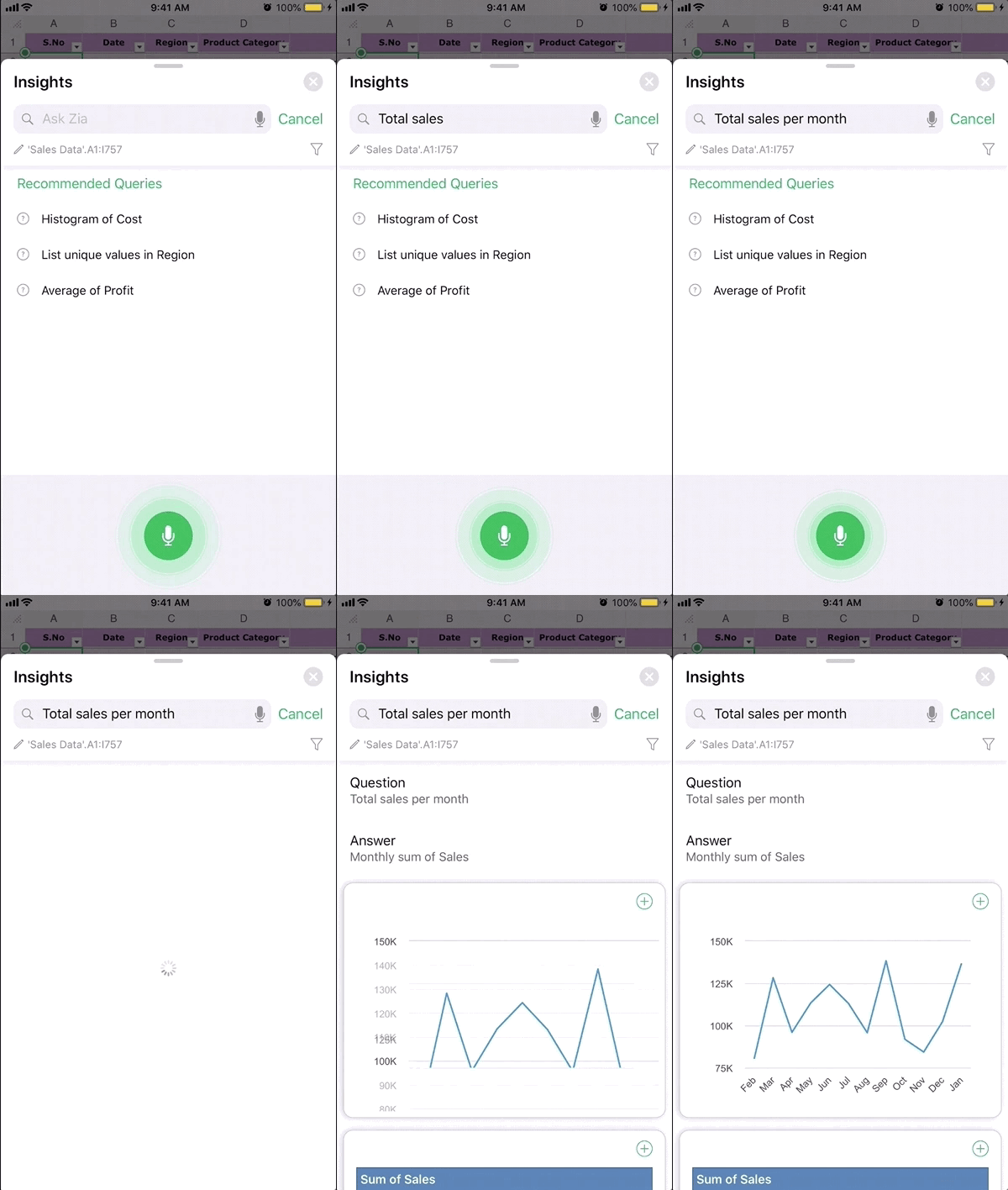
With this, you can now ask questions about data in your spreadsheets, for example, and Zia will create charts and even pivot tables for you. Similarly, Zoho is using Zia in its document editor and presentation tools to provide better grammar and spellchecking tools (and it’ll now offer a readability score and tips for improving your text). In Zoho Notebook, the note-taking application that is also the company’s newest app, Zia can help users create different formats for their note cards based on the content (text, photo, audio, checklist, sketch, etc.).

“We want to make AI helpful in a very contextual manner for a specific application,” Raju Vegesna, Zoho’s chief evangelist, told me. “Because we do AI across the board, we learned a lot and were are able to apply learnings on one technology and one piece of context and apply that to another.” Zoho first brought Zia to its business intelligence app, for example, and now it’s essentially bringing the same capabilities to its spreadsheet app, too.

It’s worth noting that Google and Microsoft are doing similar things with their productivity apps, too, of course. Zoho, however, argues that it offers a far wider range of applications — and its stated mission is that you should be able to run your entire business on its platform. And the plan is to bring some form of AI to all of them. “Fast-forward a few months and [our AI grammar and spellchecker] is applied to the business application context — maybe a support agent responding to a customer ticket can use this technology to make sure there are no typos in those responses,” Vegesna said.

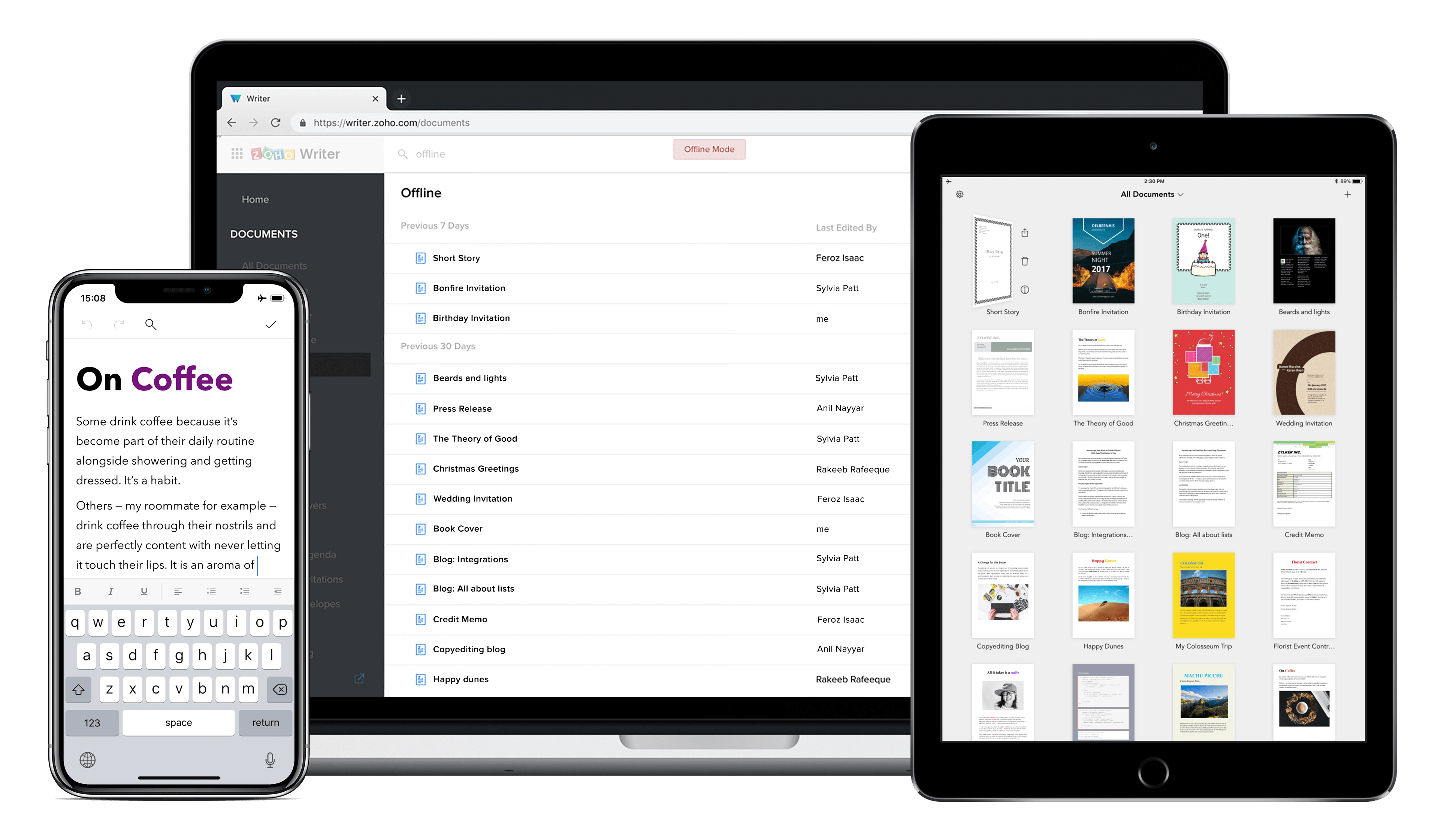
There are plenty of other updates in this release, too. Zoho Show now works with AppleTV-enabled devices for example, and Android users can now use their phones as a smart remote for Show. Zoho Sheet now lets you build custom functions and scripts and Zoho Writer’s web, mobile and iPad versions can now work completely offline.

The broader context here, though, is that Zoho, with its ridiculously broad product portfolio, is playing a long game. The company has no interest in going public. But it also knows that it’s going up against companies like Google and Microsoft. “Vertical integration is not something that you see in our industry,” said Vegesna. “Companies are in that quick mode of getting traction, sell or go public. We are looking at it in the 10 to 20-year time frame. To really win that game, you need to make these serious investments in the market. The improvements you are seeing here are at the surface level. But we don’t see ourselves as a software company. We see ourselves as a technology company.” And to build up these capabilities, Vegesna said, Zoho has invested hundreds of millions of dollars into its own data centers in the U.S., Europe and Asia, for example.

Powered by WPeMatico

Amazon, Western Union debut PayCode to sell goods in emerging markets and let shoppers pay in cash

While Amazon has been methodical (read: a little slow) in launching local versions of its site for various global markets, it has now embarked on a secondary track to snag more business outside the 14 countries where it has built out full operations.

Amazon has partnered with Western Union to set up a service called PayCode, which lets people shop and pay for Amazon items using local currencies that would not have been accepted on the site before, starting with services in 10 countries: Chile, Columbia, Hong Kong, Indonesia, Kenya, Malaysia, Peru, Philippines, Taiwan and Thailand.

Specifically, shoppers in these markets will now be able to go into Western Union outposts and pay for their Amazon purchases in cash, which also means that payment cards or other virtual payment methods will also not be required to buy from Amazon — one of the barriers to expanding the service up to now into more emerging economies, where card and bank account penetration is much lower than in developed markets like the U.S. and Europe.

“Amazon is committed to enabling customers anywhere in the world to shop on Amazon.com, and a big part of that is to allow customers to pay for their cross-border online purchases in a way that is most convenient for them,” said Ben Volk, director, Payment Acceptance and Experience at Amazon, in a statement. “Amazon PayCode leverages the reach of Western Union to make cross-border online shopping a reliable and convenient experience for customers who do not have access to international credit cards, or prefer to pay in cash.”

In terms of what they will be able to buy, people can shop across the breadth of the Amazon marketplace, but Amazon notes that they will only be able to use PayCode if it’s offered as an option at checkout (which will only happen in the markets where PayCode is supported); if the item that is chosen is “export eligible,” and if the item’s value “exceeds the maximum value allowed for use on this payment type” — although Amazon doesn’t appear to specify what that maximum value is. Once you complete the purchase online (or possibly more likely, on mobile), you get a “PayCode” QR code that you will have 48 hours to take to a Western Union to pay for the goods; otherwise your order gets cancelled.

The deal between Amazon and Western Union was initially announced last October, with very little detail and fanfare. The PayCode name then appeared to leak out a month later around what appeared to be a test in India (where it has not launched… yet). Today was the first time that the companies unveiled the first launch countries.

PayCode is a significant advance for Amazon as it seeks to step up to the next level of being a global e-commerce powerhouse to compete against the likes of Alibaba.

The latter company has made a lot of inroads to work in a wider array of markets beyond its home base of China, specifically tapping into a long tail of supply from its home market and demand for those goods abroad. Alibaba is also taking care of business when it comes to making more seamless transactions related to those trades. Just today, its financial services affiliate Ant Financial announced that it would acquire U.K.’s WorldFirst, which provides foreign money transfer for businesses and individuals, for a price that we heard from sources was in the region of $700 million.

Amazon currently operates 15 Amazon websites globally: in the U.S., U.K., Australia, Brazil, Canada, China, France, Germany, India, Italy, Japan, Mexico, Netherlands, Spain and Turkey. (It appears also to have a Prime-only site in Singapore.) Up to now, these would have been the only countries where Amazon would offer goods in local currencies.

Adding a new tranche of countries using PayCode will potentially massively expand how many people can shop on Amazon without Amazon going through the steps of setting up full-fledged operations in those countries to serve those consumers and sellers. (Or, this being Amazon, this would be a key way for the company to start testing the waters to figure out which market might do best with a full-fledged store.) Over time, you might imagine that Amazon might extend PayCode to markets where it has sites, too, to give shoppers more flexibility in how they pay for goods for themselves or that they are buying for others.

It’s a big market opportunity. Amazon cites estimates from Forrester Research that say cross-border shopping will represent 20 percent of e-commerce by 2022, accounting for $630 billion.

For Western Union, this is a potentially big partnership, too.

Today, PayCode allows people to use Western Union to act as a physical pay station for their Amazon goods, giving Western Union a small cut on those transactions. But you might imagine how this could evolve over time, where remittances sent from family members abroad via Western Union — a very common use of remittance networks — might immediately get redeemed to cover purchases on Amazon.

Similarly, Western Union is working closer with MPesa, the African mobile wallet service that lets people essentially use their phone top-up account as a payment account, and you could imagine how this too could get incorporated into the PayCode experience to facilitate buying and paying on devices, without having to go into Western Union shops and use actual cash.

“We’re helping to unlock access to Amazon.com for customers who need and want items that can only be found online in many parts of the world,” said Khalid Fellahi, SVP and General Manager of Western Union Digital, in a statement. “This is a great example of two global brands innovating and collaborating to bring customers more convenience and choice. In a world where cross-border buyers and sellers are often located on different continents and in completely different financial ecosystems, our platform is ideally suited to solving the complexity of collecting local currency and converting it into whatever currency merchants need on the other end.”

Powered by WPeMatico
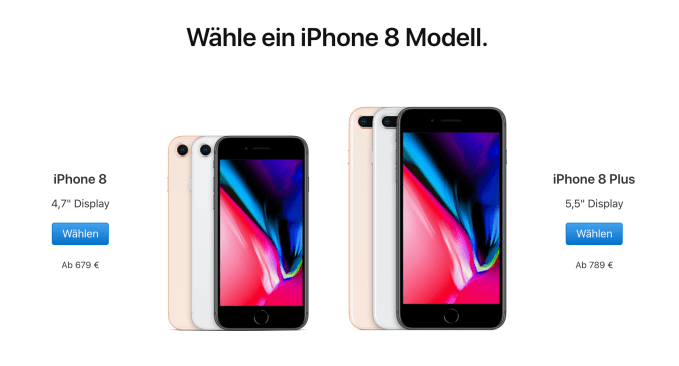
Apple is selling the iPhone 7 and iPhone 8 in Germany again

Two older iPhone models are back on sale in Apple stores in Germany — but only with Qualcomm chips inside.

The iPhone maker was forced to pull the iPhone 7 and iPhone 8 models from shelves in its online shop and physical stores in the country last month, after chipmaker Qualcomm posted security bonds to enforce a December court injunction it secured via patent litigation.

Apple told Reuters it had “no choice” but to stop using some Intel chips for handsets to be sold in Germany. “Qualcomm is attempting to use injunctions against our products to try to get Apple to succumb to their extortionist demands,” it said in a statement provided to the news agency.

Apple and Qualcomm have been embroiled in an increasingly bitter global legal battle around patents and licensing terms for several years.

The litigation follows Cupertino’s move away from using only Qualcomm’s chips in iPhones after, in 2016, Apple began sourcing modem chips from rival Intel — dropping Qualcomm chips entirely for last year’s iPhone models. Though still using some Qualcomm chips for older iPhone models, as it will now for iPhone 7 and iPhone 8 units headed to Germany.

For these handsets Apple is swapping out Intel modems that contain chips from Qorvo which are subject to the local patent litigation injunction. (The litigation relates to a patented smartphone power management technology.) 

Hence Apple’s Germany webstore is once again listing the two older iPhone models for sale…

Newer iPhones containing Intel chips remain on sale in Germany because they do not containing the same components subject to the patent injunction.

“Intel’s modem products are not involved in this lawsuit and are not subject to this or any other injunction,” Intel’s general counsel, Steven Rodgers, said in a statement to Reuters.

While Apple’s decision to restock its shelves with Qualcomm-only iPhone 7s and 8s represents a momentary victory for Qualcomm, a separate German court tossed another of its patent suits against Apple last month — dismissing it as groundless. (Qualcomm said it would appeal.)

The chipmaker has also been pursing patent litigation against Apple in China, and in December Apple appealed a preliminary injunction banning the import and sales of old iPhone models in the country.

At the same time, Qualcomm and Apple are both waiting the result of an antitrust trial brought against Qualcomm’s licensing terms in the U.S.

Two years ago the FTC filed charges against Qualcomm, accusing the chipmaker of operating a monopoly and forcing exclusivity from Apple while charging “excessive” licensing fees for standards-essential patents.

The case was heard last month and is pending a verdict or settlement.

Powered by WPeMatico

Nintendo makes the old new again with Mario, Zelda, Tetris titles for Switch

The afternoon brought an eventful series of announcements from Nintendo in one of its Direct video promos, and 2019 is looking to be a banner year for the Switch. Here’s everything the company announced, from Super Mario Maker 2 to the unexpected remake of Game Boy classic Link’s Awakening.

The stream cold opened with a look at the new Mario Maker, which would honestly be enough announcement for one day. But boy did they have more up their sleeves.

First the actually new stuff:

Shown last but likely to garner the bulk of the internet’s response is the remake of Link’s Awakening, which came out more than a quarter of a century ago on Game Boy. I admit to never finishing this, but I loved the feel of it, so I’m dying to play this new tilt-shifted, perspective-switching 3D version.

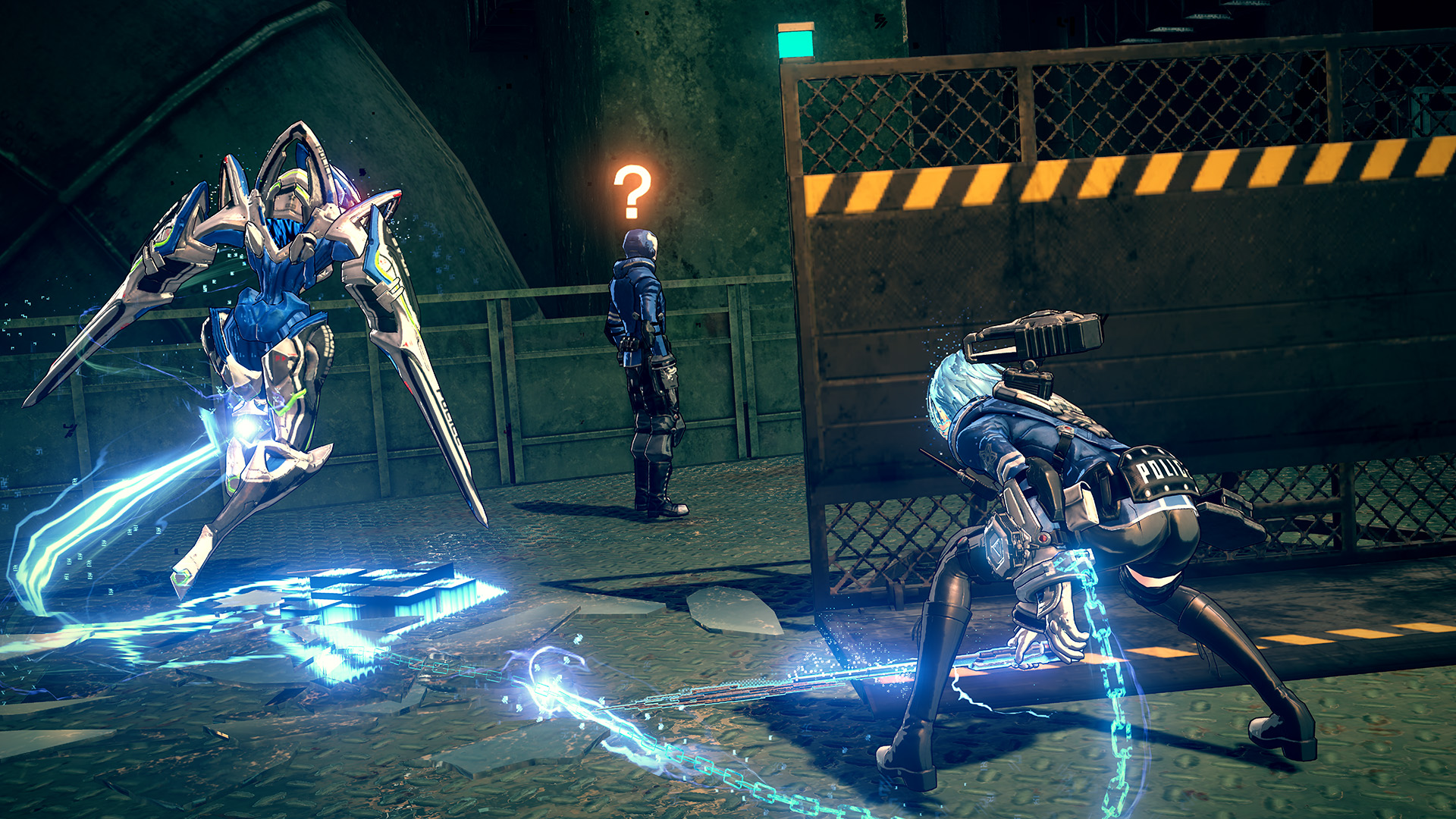
Platinum has an intriguing new game called Astral Chain, in which you appear to control two fighters at the same time in some crazy-looking robot(?)-on-robot action. Talent from The Wonderful 101, Bayonetta and Nier: Automata ensure this will be worth keeping an eye on.

The recent trend of battle royale and perhaps the best game ever made, Tetris, combine in Tetris 99, where 100 people simultaneously and competitively drop blocks. It looks bonkers, and it’s free on Switch starting right now.

And on the JRPG tip:

Fire Emblem: Three Houses got a long spot that introduced the main characters, whom you’ll no doubt ally with and/or be betrayed by. Romance is in the air! And arrows.

From the back-to-basics studio that put out I Am Setsuna and Lost Sphear comes Oninaki, an action RPG that looks like a good well-crafted bit of fun, if not particularly original.

Dragon Quest 11 S — an enhanced version of the original hit — and DQ Builders 2 are on their way to Switch later this year, in Fall and July respectively.

Rune Factory 4 Special is another enhanced, remastered classic in a series that I adore (though I wish they’d remaster Frontier). It was also announced that RF5 is in development, so thank God for that.

Final Fantasy VII is coming at the end of March, and Final Fantasy IX is available now. I’m ashamed to say I never played the latter but this is a great opportunity to.

Sidescrollers new and old:

BOXBOY! + BOXGIRL! is a new entry in a well-like puzzle platformer series that introduces some new characters and multiplayer. Coming in April.

Bloodstained: Ritual of the Night got a teaser, but we’ve heard a lot about this Castlevania spiritual sequel already. Just come out!

Yoshi’s Crafted World comes out March 29, but there’s a demo available today.

Captain Toad: Treasure Tracker gets an update adding multiplayer to its intricate levels, and soon, a paid pack for new ones. I might wait for a combined version but this should be fun.

Miscellaneous but still interesting:

The new Marvel Ultimate Alliance is coming this summer and I can’t wait. The second one was a blast but it came out way too long ago. A good co-op brawler is a natural fit for the Switch, plus being a superhero is fun.

Daemon X Machina, the striking-looking mech combat game, is getting a demo ahead of the summer release. They’re going to incorporate changes and advice from players so if you want to help shape the game, get to it.

Disney Tsum Tsum Festival… I don’t know what this is. But it looks wild.

Deltarune! It’s the sequel-ish to the beloved Undertale, and you can get the first chapter on Switch now. Play Undertale first, or you won’t get the dog jokes.

There were a few more little items here and there, but that’s the gist. Boy am I glad I have a Switch!

You can watch the full Direct here.

Powered by WPeMatico

Nintendo is releasing a free battle royale version of Tetris

It came right in the middle of the Nintendo Direct announcement this afternoon: “99 players… but only one reigns supreme.”

It could be a tagline for just about any of the run-and-gun shoot ’em up battle royale games that are so popular right now, à la Fortnite or Apex. Instead, it’s the tagline for the new… Tetris?

Nintendo only touched on it for about 40 seconds (so details are a bit light), but the company says it’s releasing later today a free-to-play, 99-player version of Tetris called Tetris 99. It’ll be a free download for Nintendo Switch Online members.

It seems to mostly be the Tetris we all know, with a twist: performing particularly well will let you attack other players with garbage, filling their carefully curated rows with a bunch of junk.

No word yet on if you’ll be able to make your blocks Floss or do the Carlton dance.

Powered by WPeMatico