india
Auto Added by WPeMatico
Auto Added by WPeMatico
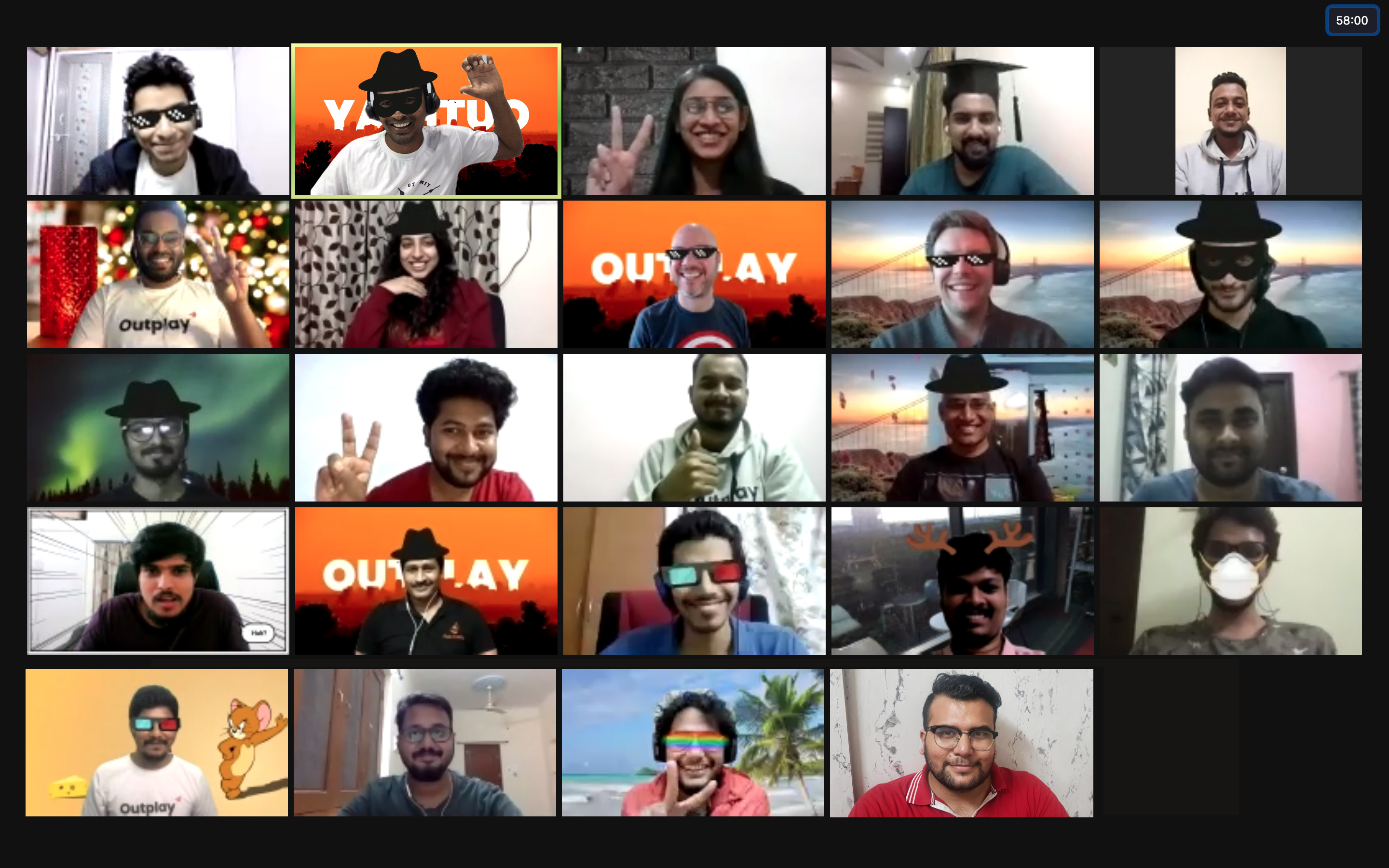
Outplay’s team members on a video call
Sales engagement platforms (SEP) help sales teams automate and track the large number of tasks they need to do each day as they contact leads and hone in on potential deals. Focused on small-to-medium-sized companies, SEP startup Outplay announced today it has raised $2 million from Sequoia Capital India’s Surge program for early-stage startups.
Outplay was founded in January 2020 by brothers Ram and Laxman Papineni and now counts more than 300 clients. Before launching Outplay, the Papineni brothers built AppVirality, a referall marketing tool for app developers.
Laxman told TechCrunch that Outplay’s customers come from sectors like IT, computer software, marketing and advertising and recruiting, and most are based in North America and Europe.
Outplay is designed for teams that use multiple channels to reach potential customers, including phone calls, text messages, email, live chats on websites, and social media platforms like LinkedIn or Twitter. It integrates with customer relationship management platforms like Salesforce and Pipedrive, giving sales people a new interface that includes productivity and automation tools to cut the time they spend on administrative tasks.
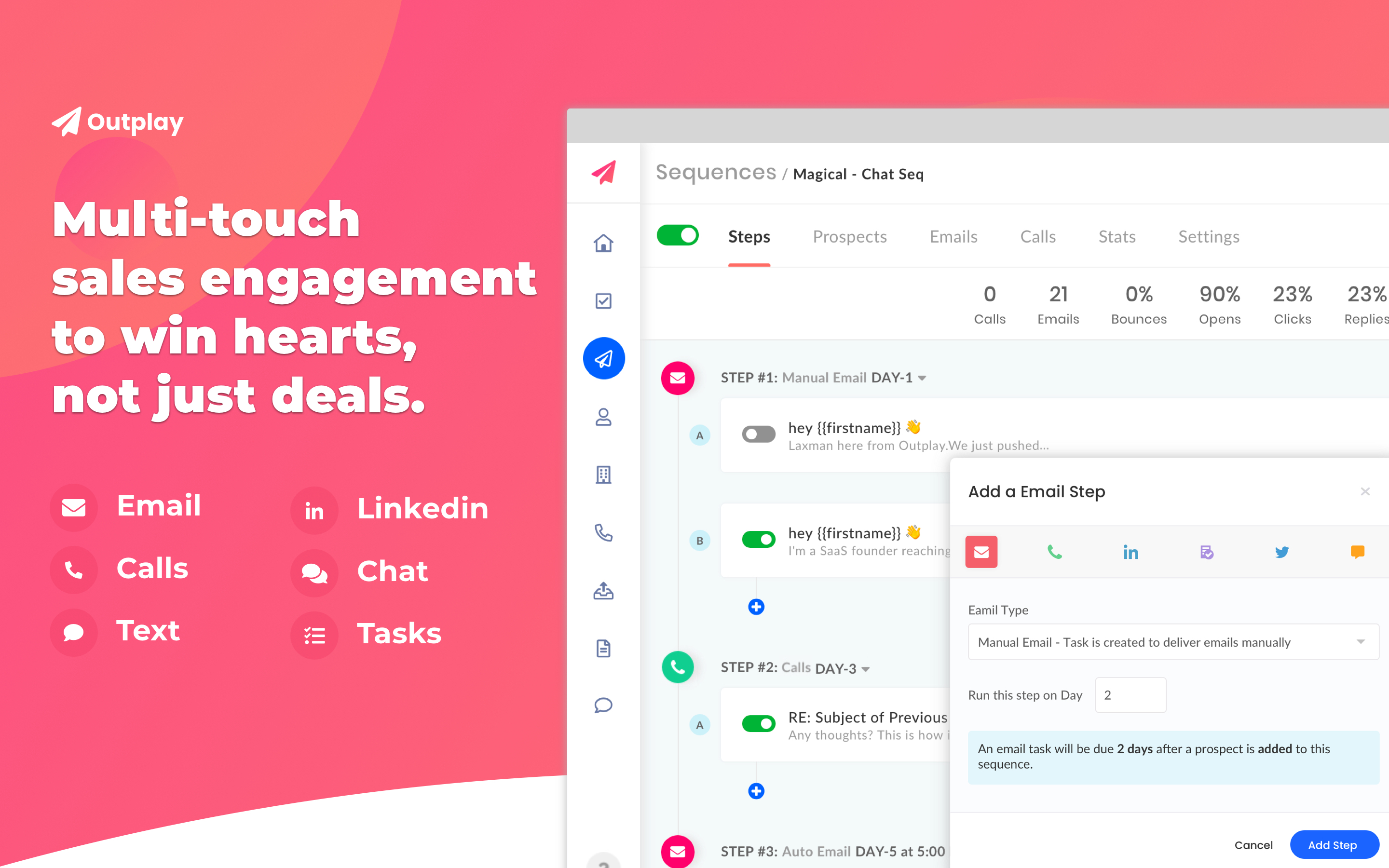
Outplay’s platform
For example, Outplay can be used create sequences that send initial messages through different platforms, and then automatically follows up with new messages if there isn’t a reply within a pre-set time frame. Outplay also provides analytics to help sales people track how well sales campaigns are working.
Two of Outplay’s biggest competitors are Outreach and SalesLoft, both of which hit unicorn status in recent funding rounds. Laxman said Outplay is focused on ease of use, with other differentiators including more integrations with CRMs and other software, and a strong customer support team.
Powered by WPeMatico

A startup by an Apple alum that has become home to millions of low-skilled workers in India said on Tuesday it has raised an additional $12.5 million, just five months after securing $8 million from high-profile investors.
One-year-old Apna said Sequoia Capital India and Greenoaks Capital led the $12.5 million Series B investment in the startup. Existing investors Lightspeed India and Rocketship VC also participated in the round. The startup, whose name is Hindi for “ours,” has now raised more than $20 million.
More than 6 million low-skilled workers such as drivers, delivery personnel, electricians and beauticians have joined Apna to find jobs and upskill themselves. But there’s more to this.
An analysis of the platform showed how workers are helping one another solve problems — such as a beautician advising another beautician to perform hair dressing in a particular way that tends to make customers happier and tip more, and someone sharing how they negotiated a hike in their salary from their employer.
“The sole idea of this is to create a network for these workers,” Nirmit Parikh, Apna founder and chief executive told TechCrunch in an interview. “Network gap has been a very crucial challenge. Solving it enables people to unlock more and more opportunities,” he said. Harshjit Sethi, principal at Sequoia India, said Apna was making inroads with “building a professional social network for India.”
The startup has become an attraction for several big firms, including Amazon, Flipkart, Unacademy, Byju’s, Swiggy, BigBasket, Dunzo, BlueStar and Grofers, which have joined as recruiters to hire workers. Apna offers a straightforward onboarding process — thanks to support for multiple local languages — and allows users to create a virtual business card, which is then shown to the potential recruiters. Parikh said Apna’s AI understands the cultural nuances, helping recruiters find the best candidates for their needs.
The past six months have been all about growth at Apna, said Parikh. The app, available on Android, had 1.2 million users in August last year, for instance. During this period, there have been 60 million interactions between recruiters and potential applicants, he said. The platform, which has amassed more than 80,000 employers, has a retention rate of over 95%, said Parikh.
“Apna has taken a jobs-centric approach to upskilling that we are very excited about. Lack of accountability has been the core issue with current skill / vocational learning alternatives for grey and blue-collar workers. Apna has turned the problem on its head by creating net-positive job outcomes for anyone who chooses to upskill on the platform,” said Vaibhav Agrawal, partner at Lightspeed India, in a statement.

Image Credits: Nirmit Parikh
Parikh got the idea of building Apna after he kept hearing about the difficulty his family and friends faced in India in hiring people. This was puzzling to Parikh, as he wondered how could there be a shortage of workers in India when there are hundreds of millions of people actively looking for such jobs. The problem, Parikh realized, was that there wasn’t a scalable networking infrastructure in place to connect workers with employers.
Before creating the startup, Parikh met workers and went undercover as an electrician and floor manager to understand the problems workers were facing. That journey has not ended. The startup talks to over 15,000 users each day to understand what else Apna could do for them.
“One of the things we heard was that users were facing difficulties with interviews. So we started groups to practice them with interviews. We also started upskilling users, which has made us an edtech player. We plan to ramp up this effort in the coming months,” said Parikh, who also started an AI firm more than a decade ago to solve challenges with electricity flux and then another startup to solve for information overload. (The first startup is now being run by family and friends, and the second firm was sold to Intel, Parikh said.)
Parikh said the startup is overwhelmed each day with the response it is getting from its customers and the industry. Each day, he said, people share how they were able to land jobs, or increase their earnings. In recent months, several high-profile executives from companies such as Uber and BCG have joined Apna to scale the startup’s vision, he said, adding that the problem Apna is solving in India exists everywhere and the startup’s hope is to eventually serve people across the globe.
The app currently has no ads, and Parikh said he intends to not change that. “Once you get in the ad business, you start doing things you probably shouldn’t be doing,” he said. The startup instead plans to monetize its platform by charging recruiters, and offering upskill courses. But Parikh maintained that Apna will always offer its courses to users for free. The premium version will target those who need extensive assistance, he said. The startup also plans to expand its team.
As is the case elsewhere, millions of people lost their livelihood in India in the past year as coronavirus shut many businesses and workers migrated to their homes. There are over 250 million blue and grey-collar workers in India, and providing them meaningful employment opportunities is one of the biggest challenges in our country, said Sethi.
Powered by WPeMatico
Zomato has raised $250 million, two months after closing a $660 million Series J financing round, as the Indian food delivery startup builds a war-chest ahead of its IPO later this year.
Kora (which contributed $115 million), Fidelity ($55 million), Tiger Global ($50 million), Bow Wave ($20 million) and Dragoneer ($10 million) pumped the new capital into the 12-year-old Gurgaon-headquartered startup, Info Edge, a publicly listed investor in Zomato, disclosed in a filing (PDF) to a local stock exchange. The new investment gives Zomato a post-money valuation of $5.4 billion, up from $3.9 billion in December last year, said Info Edge, which owns 18.4% stake in the Indian startup.
The new investment reinforces the strong confidence investors have in Zomato, which struggled to raise money for much of last year. Zomato, which acquired the Indian food delivery business of Uber early last year, competes with Prosus Ventures-backed Swiggy (valued at about $3.6 billion) in India. Together they work with over 440,000 delivery partners, a larger workforce than that employed by Indian Department of Posts.
A third player, Amazon, also entered the food delivery market in India last year, though its operations are still limited to parts of Bangalore.
At stake is India’s food delivery market, which analysts at Bernstein expect to balloon to be worth $12 billion by 2022, they wrote in a report to clients. With about 50% of the market share, Zomato is the current leader among the three, Bernstein analysts wrote.
“We find the food-tech industry in India to be well positioned to sustained growth with improving unit economics. Take-rates are one of the highest in India at 20-25% and consumer traction is increasing. Market is largely a duopoly between Zomato and Swiggy with 80%+ share,” wrote analysts at Bank of America in a recent report, reviewed by TechCrunch.
Zomato and Swiggy have improved their finances in recent years, which is especially impressive because making money with food delivery is very often more challenging in India. Unlike Western markets such as the U.S., where the value of each delivery item is about $33, in India, a similar item carries the price tag of $3 to $4, according to research firms.
Both the startups eliminated hundreds of jobs last year as the coronavirus pandemic hit their businesses. Zomato co-founder and chief executive Deepinder Goyal said in December that the food delivery market was “rapidly coming out of COVID-19 shadows.”
“December 2020 is expected to be the highest ever GMV month in our history. We are now clocking ~25% higher GMV than our previous peaks in February 2020. I am supremely excited about what lies ahead and the impact that we will create for our customers, delivery partners and restaurant partners,” he said.
In an email to employees in September last year, Goyal said Zomato was working on its IPO for “sometime in the first half” of 2021 and was raising money to build a war-chest for “future M&A, and fighting off any mischief or price wars from our competition in various areas of our business.”
Powered by WPeMatico

When you want to buy a refrigerator or a television, you can walk to the nearby electronics store or visit an e-commerce website like Amazon. But where do you go when you’re looking for parts of a crane, a door or chassis of different machines?
For several businesses globally, the answer to that question is increasingly Zetwerk, a Bangalore-based startup.
The three-year-old startup runs a business-to-business marketplace for manufacturing items that connects OEMs (original equipment manufacturers) and EPC (engineering procurement construction) customers with manufacturing small-businesses and enterprises.
All the products it sells today are custom-made. “Nobody has a stock of such inventories. You get the order, you find manufacturers and workshops that make them,” explained Amrit Acharya, co-founder and chief executive of Zetwerk, in an interview with TechCrunch.
Its customers — there are over 250 of them, up from 100 a year ago — operate across two-dozen industries (including process plants, oil & gas, steel, aerospace, medical devices, apparel and luxury goods) in the infrastructure space, and approach Zetwerk with digital designs they wish to be translated into physical products.
Customers aren’t alone in seeing value in Zetwerk. On Wednesday, the Indian startup said it has raised $120 million in a Series D financing round led by existing investors Greenoaks Capital and Lightspeed Venture Partners. Existing investors Sequoia Capital and Kae Capital also participated in the Series D round.
The new round, which brings Zetwerk’s to-date raise to $193 million, gives the firm a post-money valuation of somewhere between $600 million to $700 million, a person familiar with the matter told TechCrunch. (A quick side note: Zetwerk announced a $21 million Series C round last year, but ended up raising $31 million in that round.)
Zetwerk was co-founded by Acharya, Srinath Ramakkrushnan, Rahul Sharma and Vishal Chaudhary. Long before Acharya and Ramakkrushnan joined forces to tackle this space, they had been contemplating this idea.
Both of them studied at IIT Madras, went to the same exchange program in Singapore, and were colleagues at Kolkata-headquartered conglomerate ITC. While working there, they realized that part of a product manager’s job at the firm was dealing with gazillions of suppliers and the manufacturing items they offered.
The process was archaic: There were no databases, and people couldn’t track shipments.
The early version of Zetwerk, which was a database of suppliers, was a direct response to this. But after listening to requests from customers, the startup saw a bigger opportunity and transformed itself into a full-fledged marketplace with integrations with third-party vendors. Once a firm has placed an order, Zetwerk allows them to keep tabs on the progress of manufacturing and then the shipping. There are also quality checks in place.
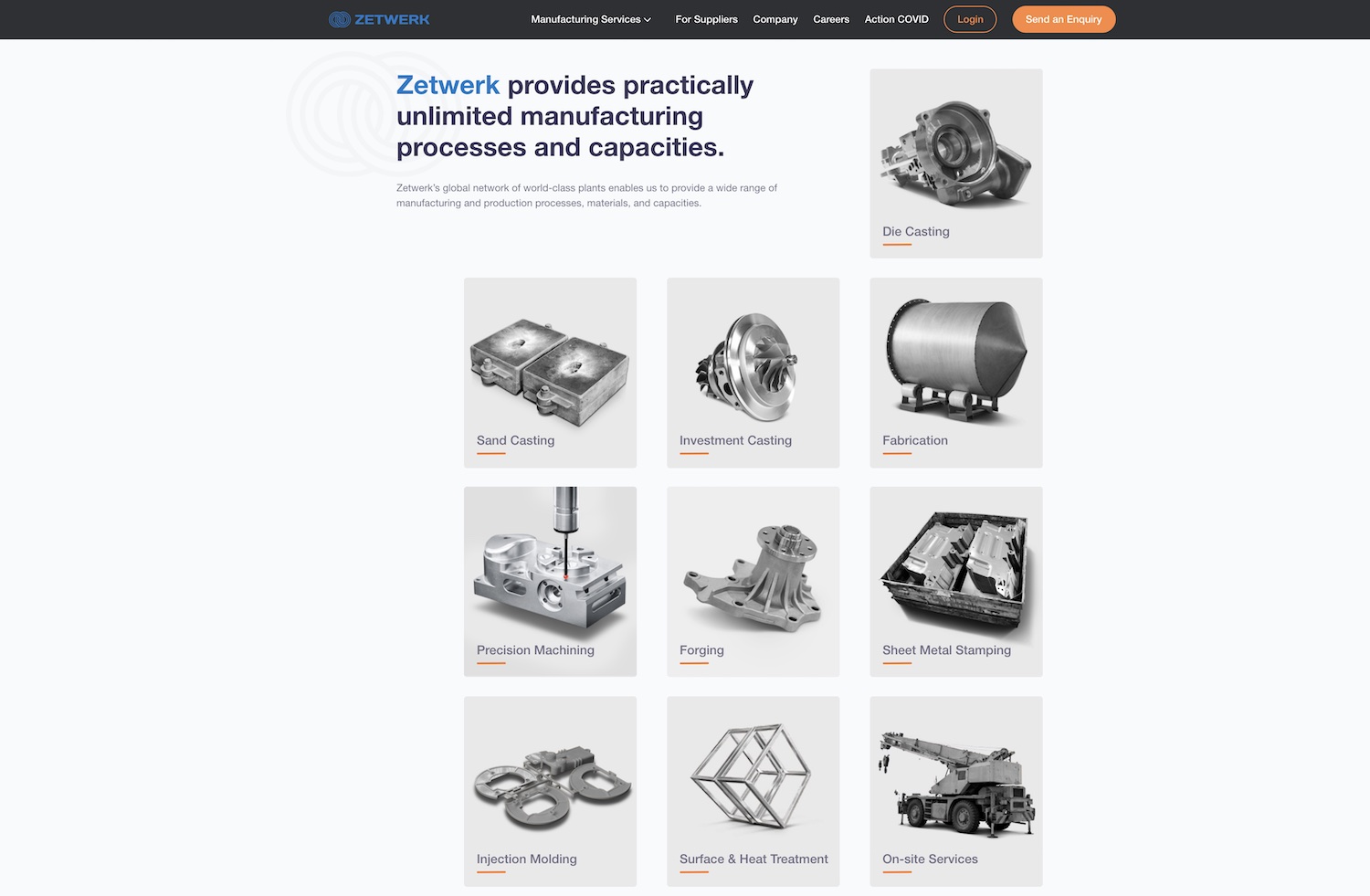
Zetwerk website
Zetwerk operates in such a unique space today — Shailesh Lakhani, managing director at Sequoia India, says the startup has defined a new category of marketplace — that by and large it’s not competing with any other firm in India — or South Asia. (The startup competes with domain project consultants in the offline world.)
The opportunity in India itself is gigantic. According to industry reports, manufacturing today accounts for 14% of India’s GDP. Vaibhav Agarwal, a partner at Lightspeed, estimates that the market is as large as $40 billion to $60 billion in India and global trade-tailwinds that creates opportunity to serve international demand.
As more and more companies expand or shift their manufacturing to India — in part due to import duties imposed by India and geo-political tension with China, the global hub for manufacturing — this opportunity has only grown bigger in recent years.
“India has a lot of depth in manufacturing, but much of it has not been tapped well,” said Acharya.
Zetwerk — which grew 3X last year and reported revenue of $43.9 million in the financial year that ended in March, a 20X growth from the year prior — plans to deploy the new capital to expand to more areas of categories, and broaden its technology stack. Consumer goods (which covers items such as mixer grinders and TVs) is an area Zetwerk expanded to last year, and said it accounts for 15% of the revenue it generated in the last six months.
Currently 25 of its customers are in the U.S., Canada, Europe and other international markets. Acharya said the startup plans to open offices overseas this year as it scouts for more international customers.
“We are excited to partner with Zetwerk on the next leg of their journey, as they expand their value proposition globally. Zetwerk’s operating system for manufacturing has digitized multiple supply chains end-to-end, ensuring on-time delivery and high quality standards. This has led to rapid growth in India and internationally, with the potential to quickly become one of the most important manufacturing platforms globally,” said Neil Shah, partner at Greenoaks Capital, in a statement.
Powered by WPeMatico
When Apple reports its earnings on Wednesday, you can expect mentions of India on the call.
Apple shipped more than 1.5 million iPhone units in India in the quarter that ended in December, up 100% year-on-year, making this its best quarter in the world’s largest smartphone market to date, according to research firms Counterpoint and CyberMedia.
Thanks to the improved sales of older generation iPhone 11, iPhone XR, iPhone 12 and the newer iPhone SE, Apple doubled its market share in India to 4% in the quarter, the research firms said.
Overall, Apple shipped more than 3.2 million iPhone units in India in 2020, up 60% year-on-year, Counterpoint said.
The shipment growth comes months after Apple launched its online store in the country and offered customers a wide-range of financing and upgrade options, AppleCare+, and lucrative perks such as a free set of AirPods with the purchase of iPhone 11. The company plans to open its first physical retail store in the country later this year.
For more than a decade, Apple has struggled to sell its handsets in India because of the expensive price tags they carry. Most smartphones that ship in India are priced between $100 to $200. Samsung, and a group of Chinese smartphone vendors including Xiaomi, Oppo, and Vivo flooded the market in the past decade with their affordable smartphones.
None the less, in recent years Apple has visibly grown more interested in the country that is also one of the world’s fastest growing smartphones markets. The company’s contract manufacturers today locally assemble a range of iPhone models and some accessories — an effort the company kickstarted more than two years ago. (A recent violent event at an Indian facility of Wistron, one of Apple’s contract manufacturers, however, underscored some of the challenges Apple will grapple with as it looks to scale its local production efforts in the country.)
That move has allowed Apple to lower prices of some older generation iPhone models in India, where for years the company has passed import duty charges to customers. The starting price of the iPhone 12 Pro Max is $1,781 in India, compared to $1,099 in the U.S. (Apple has yet to start locally assemble the iPhone 12 units.) The AirPods Pro, which sells at $249 in the U.S., was made available in India at $341 at the time of launch. AirPods Max, similarly, is priced at $815 in India, compared to $549 in the U.S. (It doesn’t help that an average person in India makes $2,000 a year.)
Unlike most foreign firms that offer their products and services for free in India or at some of the world’s cheapest prices, Apple has focused entirely on a small fraction of the population that can afford to pay big bucks, Jayanth Kolla, chief analyst at Convergence Catalyst, told TechCrunch.
That’s not to say that Apple has not made some changes to its price strategy for India. The monthly cost of Apple Music is $1.35 in India, compared to $9.99 in the U.S. Its Apple One bundle, which includes Apple Music, TV+, Arcade and iCloud, costs $2.65 a month in India.
Powered by WPeMatico
Welcome back to This Week in Apps, the weekly TechCrunch series that recaps the latest in mobile OS news, mobile applications and the overall app economy.
The app industry is as hot as ever, with a record 218 billion downloads and $143 billion in global consumer spend in 2020.
Consumers last year also spent 3.5 trillion minutes using apps on Android devices alone. And in the U.S., app usage surged ahead of the time spent watching live TV. Currently, the average American watches 3.7 hours of live TV per day, but now spends four hours per day on their mobile devices.
Apps aren’t just a way to pass idle hours — they’re also a big business. In 2019, mobile-first companies had a combined $544 billion valuation, 6.5x higher than those without a mobile focus. In 2020, investors poured $73 billion in capital into mobile companies — a figure that’s up 27% year-over-year.
This week, we’re looking into how President Biden’s inauguration impacted news apps, the latest in the Parler lawsuit, and how TikTok’s app continues to shape culture, among other things.
Logos for AWS (Amazon Web Services) and Parler. Image Credits: TechCrunch
U.S. District Judge Barbara Rothstein in Seattle this week ruled that Amazon won’t be required to restore access to web services to Parler. As you may recall, Parler sued Amazon for booting it from AWS’ infrastructure, effectively forcing it offline. Like Apple and Google before it, Amazon had decided that the calls for violence that were being spread on Parler violated its terms of service. It also said that Parler showed an “unwillingness and inability” to remove dangerous posts that called for the rape, torture and assassination of politicians, tech executives and many others, the AP reported.
Amazon’s decision shouldn’t have been a surprise for Parler. Amazon had reported 98 examples of Parler posts that incited violence over the past several weeks before its decision. It told Parler these were clear violations of the terms of service.
Parler’s lawsuit against Amazon, however, went on to claim breach of contract and even made antitrust allegations.
The judge shot down Parler’s claims that Amazon and Twitter were colluding over the decision to kick the app off AWS. Parler’s claims over breach of contract were denied, too, as the contract had never said Amazon had to give Parler 30 days to fix things. (Not to mention the fact that Parler breached the contract on its side, too.) It also said Parler had fallen short in demonstrating the need for an injunction to restore access to Amazon’s web services.
The ruling only blocks Parler from forcing Amazon to again host it as the lawsuit proceeds, but is not the final ruling in the overall case, which is continuing.
@livbedumb♬ drivers license – Olivia Rodrigo
We already knew TikTok was playing a large role in influencing music charts and listening behavior. For example, Billboard last year noted how TikTok drove hits from Sony artists like Doja Cat (“Say So”) and 24kGoldn (“Mood”), and helped Sony discover new talent. Columbia also signed viral TikTok artists like Lil Nas X, Powfu, StaySolidRocky, Jawsh 685, Arizona Zervas and 24kGoldn. Meanwhile, Nielsen has said that no other app had helped break more songs in 2020 than TikTok.
This month, we’ve witnessed yet another example of this phenomenon. Olivia Rodrigo, the 17-year-old star of Disney+’s “High School Musical: The Musical: the Series” released her latest song, “Drivers License” on January 8. The pop ballad and breakup anthem is believed to be referencing the actress’ relationship with co-star Joshua Bassett, which gave the song even more appeal to fans.
Upon its release the song was heavily streamed by TikTok users, which helped make it an overnight sensation of sorts. According to a report by The WSJ, Billboard counted 76.1 million streams and 38,000 downloads in the U.S. during the week of its release. It also made a historic debut at No. 1 on the Hot 100, becoming the first smash hit of 2021.
On January 11, “Drivers License” broke Spotify’s record for most streams per day (for a non-holiday song) with 15.17 million global streams. On TikTok, meanwhile, the number of videos featuring the song and the views they received doubled every day, The WSJ said.
Charli D’Amelio’s dance to it on the app has now generated 5 million “Likes” across nearly 33 million views, as of the time of writing.
@charlidamelio♬ drivers license – Olivia Rodrigo
Of course, other TikTok hits have broken out in the past, too — even reaching No. 1 like “Blinding Lights” (The Weeknd) and “Mood” (24kGoldn). But the success of “Drivers License” may be in part due to the way it focuses on a subject that’s more relevant to TikTok’s young, teenage user base. It talks about first loves and being dumped for the other girl. And its title and opening refer to a time many adults have forgotten: the momentous day when you get your driver’s license. It’s highly relatable to the TikTok crowd who fully embraced it and made it a hit.
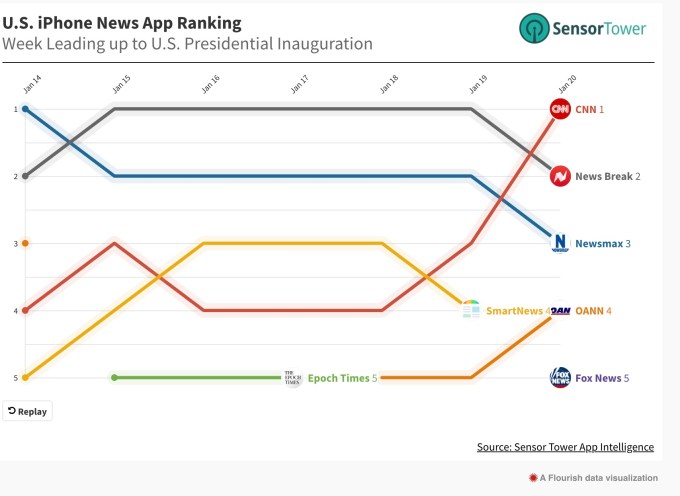
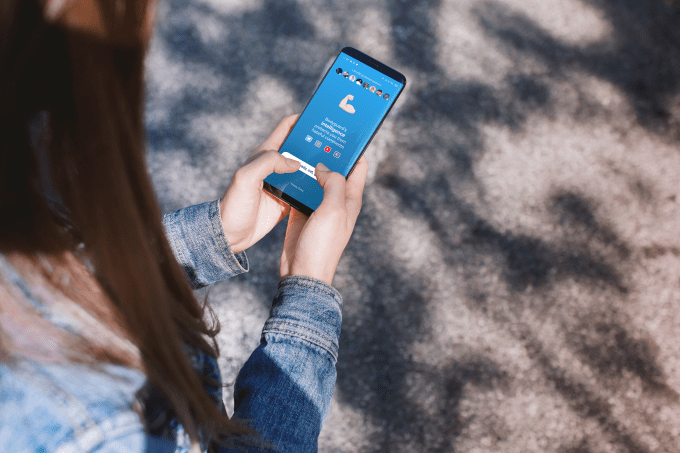
Image Credits: Bodyguard
A French content moderation app called Bodyguard, detailed here by TechCrunch, has brought its service to the English-speaking market. The app allows you to choose the level of content moderation you want to see on top social networks, like Twitter, YouTube, Instagram and Twitch. You can choose to hide toxic content across a range of categories, like insults, body shaming, moral harassment, sexual harassment, racism and homophobia and indicate whether the content is a low or high priority to block.
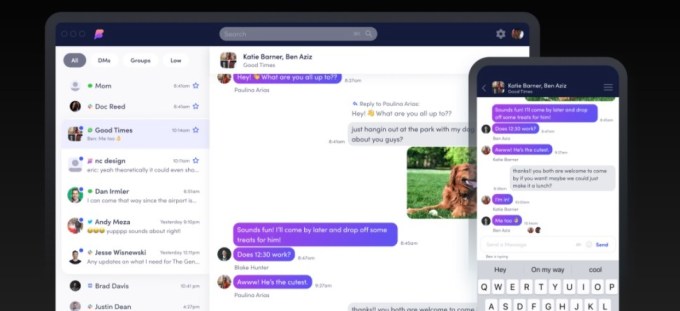
Image Credits: Beeper
Pebble’s founder and current YC Partner Eric Migicovsky has launched a new app, Beeper, that aims to centralize in one interface 15 different chat apps, including iMessage. The app relies on an open-source federated, encrypted messaging protocol called Matrix that uses “bridges” to connect to the various networks to move the messages. However, iMessage support is more wonky, as the company actually ships you an old iPhone to make the connection to the network. But this system allows you to access Beeper on non-Apple devices, the company says. The app is slowly onboarding new users due to initial demand. The app works across MacOS, Windows, Linux, iOS and Android and charges $10/mo for the service.

Powered by WPeMatico
Previously, we introduced the concept of flexible VC: structures that allow founders to access immediate risk capital while preserving exit and ownership optionality. We list here all the active flexible VCs we have identified, broken into these categories:
These investors are paid back primarily based on a percentage of revenues.
Chattanooga, TN-based Capacity Capital was launched in 2020 with a primary focus on the southeastern U.S. Jonathan Bragdon, its CEO, describes Capacity as “a team of founders-turned-funders making non-dilutive, founder-aligned investments of $50,000-$300,000 in post-startup, post-revenue businesses planning to 2x revenues in 12-24 months. Investments are typically in exchange for a capped, single-digit revenue share and a right to equity under certain circumstances.
If the company sells or raises enough capital, the investment converts into an agreed-upon percentage of equity. If the company grows without raising additional equity funding, founders redeem most of the equity right, based on a pre-agreed return amount. With a portfolio that includes food, tech and services, the fund is industry-agnostic and focused on the overlooked and underrepresented with high-margin business models.”
Jonathan sometimes refers to their investments as “micro-mezzanine” because “mezz is typically structured as a contractual periodic payment, with some equity-like upside, but subordinate to other debt … so most lenders look at it like equity. But, it is typically shorter term with fewer control mechanisms than equity (i.e., not VC). I wanted [a term for] something similar (between debt and equity) but on an extremely small scale.”
In addition to a fund, the overall Capacity organization provides direct mentorship, consulting and connects founders to a broad network of talent, diverse forms of capital and existing resources focused on the post-startup stage of growth. The founders, LPs and venture partners have a long history in local startup ecosystems in the Southeast including LaunchTN, The Company Lab, CO.STARTERS and several other regional funds and resources.
Greater Colorado Venture Fund (GCVF) is a $17 million seed fund that invests in high-growth startups in rural Colorado using equity and flexible VC structuring.
A typical GCVF flexible VC investment is $100,000-$250,000 for up to 10% ownership, of which 9% is redeemable, with a sub-10% revenue share and 12-month-plus holiday period. GCVF specializes in providing critical support to founders based in small communities, while connecting them to an unfair network well-beyond their small-town headquarters.
GCVF is pioneering the future of venture capital and high-growth startups for all small communities. With Colorado as an ideal pilot community, the GCVF team (which includes Jamie Finney, a co-author of this article) has helped grow multiple staple initiatives in the rural Colorado startup ecosystem, including West Slope Startup Week, Telluride Venture Accelerator, Startup Colorado, Energize Colorado Gap Fund and the Greater Colorado Pitch Series.
Recognizing the need for creative investment structures in their Colorado market, they co-founded the Alternative Capital Summit, creating the first community of flexible VCs and alternative startup investors.
They share their learnings on flexible VC and pioneering rural startup ecosystems on the GCVF blog.
Powered by WPeMatico
Amazon is doubling down on one of the biggest strengths of its Prime Video streaming service: aggressive pricing.
The e-commerce giant on Wednesday launched Prime Video Mobile Edition, an even more affordable tier of the on-demand video streaming service — now also bundling some mobile data.
Prime Video Mobile Edition, for which Amazon has partnered with Indian telecom network Airtel, will feature 28-day mobile-only, single-user, standard definition (SD) access to customers in India for Rs 89 ($1.22). This tier will include 6GB of mobile data that customers can consume during the subscription period. There’s also a slightly expensive plan for Prime Video Mobile Edition that will charge customers Rs 299 but will offer 1.5GB mobile data for each day of the subscription. To anyone who subscribes to Prime Video Mobile Edition, Amazon says it will pick the tab for the first month.
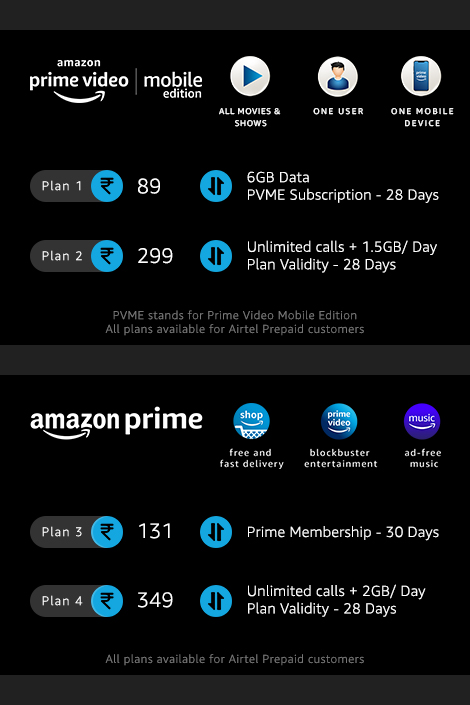
Amazon Prime subscription costs $1.7 a month in India and includes access to Prime Video and Prime Music.
The new Prime Video plan is currently only available in India. Its launch comes two years after Netflix unveiled a similar plan in India.
Affordable pricing is key for on-demand steaming services that are looking to make inroads in India, the world’s second-largest internet market. Even as more than 600 million users are online in the country today, only a fraction of them currently pay to access digital subscriptions. In a recent report to clients, analysts at Goldman Sachs estimated that gaming and video streaming market in India could clock as much as $5 billion in gross value transactions by March 2025.
“India is one of our fastest growing territories in the world with very high engagement rates. Buoyed by this response, we want to double-down by offering our much-loved entertainment content to an even larger base of Indian customers. Given high mobile broadband penetration in the country, the mobile phone has become one of the most widely used streaming devices,” said Jay Marine, vice president, Amazon Prime Video Worldwide, in a statement.
Airtel, the second-largest telecom operator in India, is the first roll-out partner for Prime Video Mobile Edition, said Sameer Batra, director, Mobile Business Development at Amazon, suggesting that the company may ink similar deals with other telecom operators in the country as it looks to expand the “reach of our service to the entire pre-paid customer base in India.”
Nearly every on-demand video streaming service in India, including Netflix and Disney+ Hotstar, maintain various partnerships with local telecom operators and satellite TV providers to reach more users in the country. Amazon did not explicitly say when or if it plans to extend Prime Video Mobile Edition outside of India.
Powered by WPeMatico
WhatsApp has enjoyed unrivaled reach in India for years. By mid-2019, the Facebook-owned app had amassed over 400 million users in the country. Its closest app rival at the time was YouTube, which, according to the company’s own statement and data from mobile insight firm App Annie, had about 260 million users in India then.
Things have changed dramatically since.
In the month of December, YouTube had 425 million monthly active users on Android phones and tablets in India, according to App Annie, the data of which an industry executive shared with TechCrunch. In comparison, WhatsApp had 422 million monthly active users on Android in India last month.
Factoring in the traction both these apps have garnered on iOS devices, WhatsApp still assumes a lead in India with 459 million active users1, but YouTube is not too far behind with 452 million users.
With China keeping its doors closed to U.S. tech giants, India emerged as the top market for Silicon Valley and Chinese companies looking to continue their growth in the last decade. India had about 50 million internet users in 2010, but it ended the decade with more than 600 million. Google and Facebook played their part to make this happen.
In the last four years, both Google and Facebook have invested in ways to bring the internet to people who are offline in India, a country of nearly 1.4 billion people. Google kickstarted a project to bring Wi-Fi to 400 railway stations in the country and planned to extend this program to other public places. Facebook launched Free Basics in India, and then — after the program was banned in the country — it launched Express Wi-Fi.
Both Google and Facebook, which identify India as their biggest market by users, have scaled down on their connectivity efforts in recent years after India’s richest man, Mukesh Ambani, took it upon himself to bring the country online. After he succeeded, both the companies bought multibillion-dollar stakes in his firm, Jio Platforms, which has amassed over 400 million subscribers.
Jio Platforms’ cut-rate mobile data tariff has allowed hundreds of millions of people in India, where much of the online user base was previously too conscious about how much data they spent on the internet, to consume, worry-free, hours of content on YouTube and other video platforms in recent years. This growth might explain why Google is doubling down on short-video apps.
The new figures shared with TechCrunch illustrate a number of other findings about the Indian market. Even as WhatsApp’s growth has slowed2 in India, it continues to enjoy an unprecedented loyalty among its users.
More than 95% of WhatsApp’s monthly active users in India use the app each day, and nearly its entire user base checks the app at least once a week. In comparison, three-fourths of YouTube’s monthly active users in India are also its daily active users.
The data also showed that Google’s eponymous app as well as Chrome — both of which, like YouTube, ship pre-installed3 on most Android smartphones — has also surpassed over 400 million monthly active users in India in recent months. Facebook’s app, in comparison, had about 325 million monthly active users in India last month.
When asked for comment, a Google spokesperson pointed TechCrunch to a report from Comscore last year, which estimated that YouTube had about 325 million monthly unique users in India in May 2020.
A separate report by research firm Media Partners Asia on Monday estimated that YouTube commanded 43% of the revenue generated in the online video market in India last year (about $1.4 billion). Disney+ Hotstar assumed 16% of the market, while Netflix had 14%.
Powered by WPeMatico
ShareChat, an Indian social network that added Twitter as an investor in 2019, may soon receive the backing of two more American firms.
The Bangalore-based startup is in advanced stages of talks to raise money from Google and Snap, as well as several existing investors, including Twitter, three sources familiar with the matter told TechCrunch.
The new financing round — a Series E — is slated to be larger than $200 million, with Google alone financing more than $100 million of it, four sources said, requesting anonymity as the talks are private. The round values ShareChat at more than $1 billion, two of the sources said.
ShareChat, Google and Snap did not immediately respond to a request for comment. ShareChat has raised about $264 million to date and was valued at nearly $700 million last year.
The terms of the deal could change and the talks may not materialize into an investment, the sources cautioned. Local TV channel ET Now reported last year that Google was in talks to acquire ShareChat.
ShareChat’s marquee and eponymous app caters to users in 15 Indian languages and has a large following in small Indian cities and towns. Twitter and Snap, on the other hand, are struggling to gain users beyond urban cities in the world’s second-largest internet market. Both Twitter and Snapchat have about 50 million monthly active users in India, according to a popular mobile insight firm.
In an interview with TechCrunch last year, Ankush Sachdeva, co-founder and chief executive of ShareChat, said the app was growing “exponentially” and that users were spending, on average, more than 30 minutes on the app each day.
If the deal goes through, it would be the first investment from Snapchat’s parent company into an Indian startup. Google, on the other hand, has been on a spree of late. The Android-maker last month invested in DailyHunt and InMobi’s Glance, both of which operate short-video apps.
Like the two, ShareChat also operates a short-video app. Its app, called Moj, had amassed more than 80 million monthly active users as of September last year, the startup said at the time. Several of these short videos apps, as well as Times Internet’s MX TakaTak (operated by MX Player), have witnessed an accelerated growth in recent quarters thanks in part to New Delhi banning ByteDance’s TikTok and hundreds of other Chinese apps mid-last year.
Last year, Google announced that it plans to invest $10 billion in India over the course of five to seven years. Days later, the company invested $4.5 billion in Indian telecom giant Jio Platforms. Google and Facebook, which invested $5.7 billion in Jio Platforms last year, reach more than 400 million users in the country.
Google, Facebook, ShareChat, DailyHunt and Glance generate most of their revenue through ads. About 85% of the ad market in India is currently commanded by Facebook and Google, analysts at Bank of America wrote in a report to clients last year. “We estimate this market to be $10 billion by 2024 and see room for Facebook to increase its market-share by 4 percentage points in 4 years led by partnership with Jio. We estimate Facebook may have $4.7 billion revenues by 2024,” they wrote in the equity research report, obtained by TechCrunch.
Powered by WPeMatico