india
Auto Added by WPeMatico
Auto Added by WPeMatico
Apple incorporated the announcement of this year’s Apple Design Award winners into its virtual Worldwide Developers Conference (WWDC) online event instead of waiting until the event had wrapped, like last year. Ahead of WWDC, Apple previewed the finalists, whose apps and games showcased a combination of technical achievement, design and ingenuity. This evening, Apple announced the winners across six new award categories.
In each category, Apple selected one app and one game as the winner.
In the Inclusivity category, winners supported people from a diversity of backgrounds, abilities and languages.
This year, winners included U.S.-based Aconite’s highly accessible game, HoloVista, where users can adjust various options for motion control, text sizes, text contrast, sound and visual effect intensity. In the game, users explore using the iPhone’s camera to find hidden objects, solve puzzles and more. (Our coverage)

Image Credits: Aconite
Another winner, Voice Dream Reader, is a text-to-speech app that supports more than two dozen languages and offers adaptive features and a high level of customizable settings.
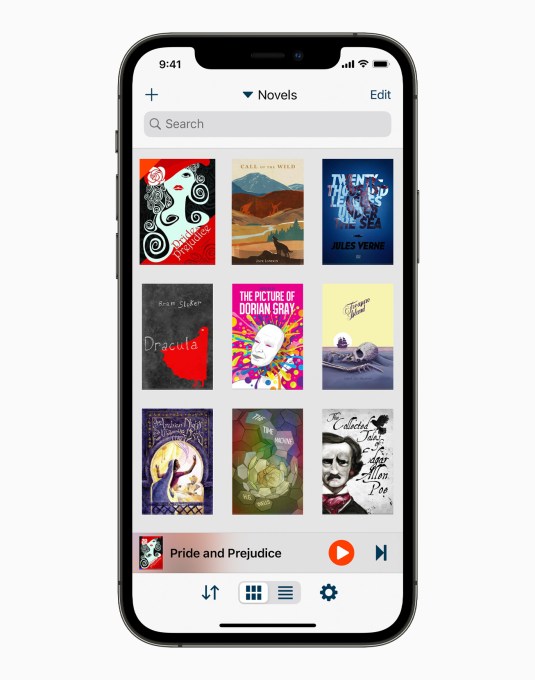
Image Credits: Voice Dream LLC
In the Delight and Fun category, winners offer memorable and engaging experiences enhanced by Apple technologies. Belgium’s Pok Pok Playroom, a kid entertainment app that spun out of Snowman (Alto’s Adventure series), won for its thoughtful design and use of subtle haptics, sound effects and interactions. (Our coverage)

Image Credits: Pok Pok
Another winner included U.K.s’ Little Orpheus, a platformer that combines storytelling, surprises and fun, and offers a console-like experience in a casual game.

Image Credits: The Chinese Room
The Interaction category winners showcase apps that offer intuitive interfaces and effortless controls, Apple says.
The U.S.-based snarky weather app CARROT Weather won for its humorous forecasts, unique visuals and entertaining experience, which is also available as Apple Watch faces and widgets.

Image Credits: Brian Mueller, Grailr LLC
Canada’s Bird Alone game combines gestures, haptics, parallax and dynamic sound effects in clever ways to brings its world to life.
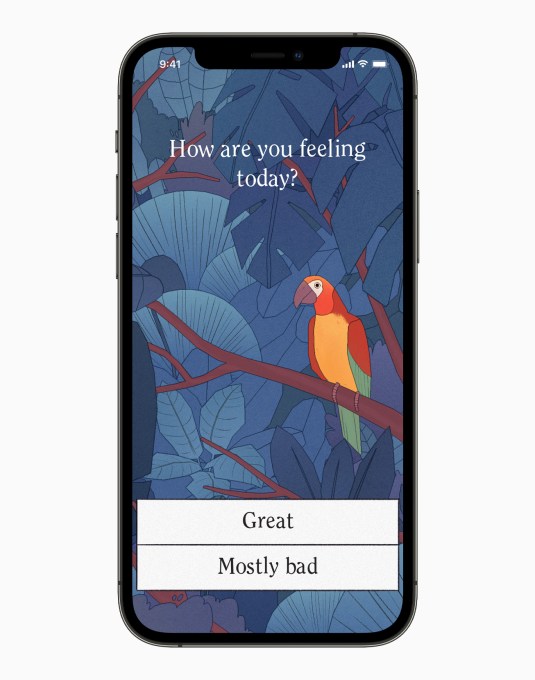
Image Credits: George Batchelor
A Social Impact category doled out awards to Denmark’s Be My Eyes, which enables people who are blind and low vision to identify objects by pairing them with volunteers from around the world using their camera. Today, it supports more than 300,000 users who are assisted by over 4.5 million volunteers. (Our coverage)

Image Credits: S/I Be My Eyes
U.K.’s ustwo games won in this category for Alba, a game that teaches about respecting the environment as players save wildlife, repair a bridge, clean up trash and more. The game also plants a tree for every download.
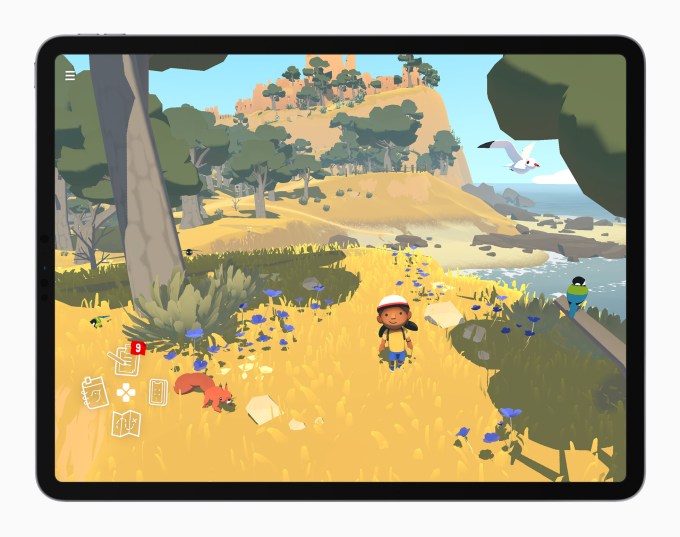
Image Credits: ustwo games
The Visuals and Graphics winners feature “stunning imagery, skillfully drawn interfaces, and high-quality animations,” Apple says.
Belarus-based Loóna offers sleepscape sessions, which combine relaxing activities and atmospheric sounds with storytelling to help people wind down at night. The app was recently awarded Google’s “best app” of 2020.
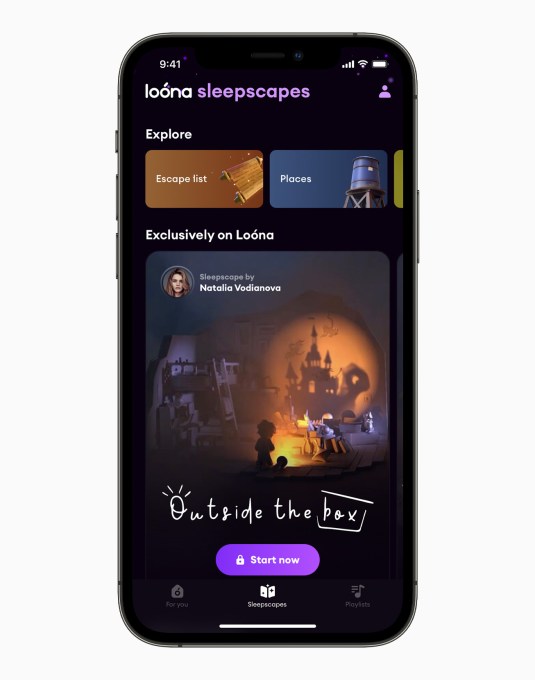
Image Credits: Loóna Inc
China’s Genshin Impact won for pushing the visual frontier on gaming, as motion blur, shadow quality and frame rate can be reconfigured on the fly. The game had previously made Apple’s Best of 2020 list and was Google’s best game of 2020.
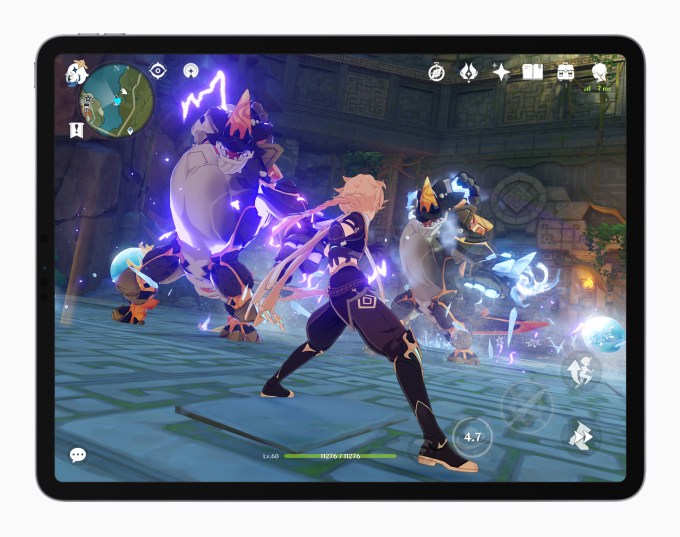
Image Credits: miHoYo Limited
Innovation winners included India’s NaadSadhana, an all-in-one, studio-quality music app that helps artists perform and publish. The app uses AI and Core ML to listen and provide feedback on the accuracy of notes, and generates a backing track to match.
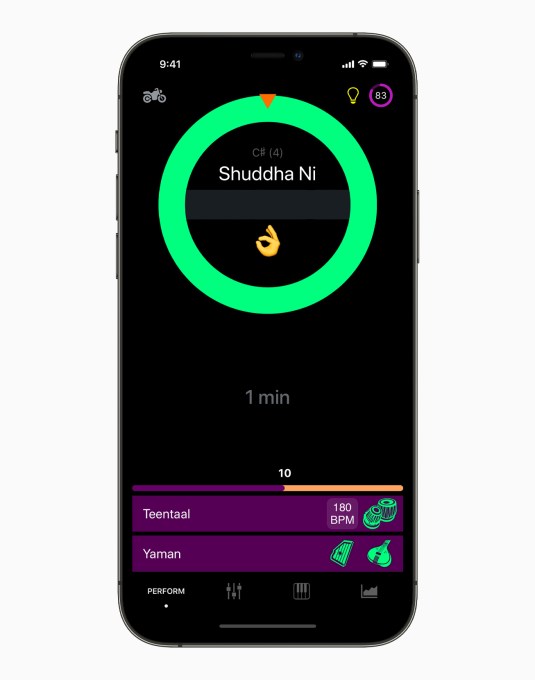
Image Credits: Sandeep Ranade
Riot Games’ League of Legends: Wild Rift (U.S.) won for taking a complex PC classic and delivering a full mobile experience that includes touchscreen controls, an auto-targeting system for newcomers and a mobile-exclusive camera setting.

Image Credits: Riot Games
The winners this year will receive a prize package that includes hardware and the award itself.
A video featuring the winners is here on the Apple Developer website.
“This year’s Apple Design Award winners have redefined what we’ve come to expect from a great app experience, and we congratulate them on a well-deserved win,” said Susan Prescott, Apple’s vice president of Worldwide Developer Relations, in a statement. “The work of these developers embodies the essential role apps and games play in our everyday lives, and serve as perfect examples of our six new award categories.”

Powered by WPeMatico

Paytm, India’s most valuable startup, confirmed to its shareholders and employees on Monday that it plans to file for an IPO.
In a letter to shareholders and employees, Paytm said that it plans to raise money by issuing fresh equity in the IPO, and also sell existing shareholders’ shares at the event. The startup has offered its employees the option to sell their stakes in the firm.
This is the first time the Noida-headquartered firm, which is valued at $16 billion and has raised over $3 billion to date, has commented on its plans about the IPO. The startup said in the letter that it has received an in-principle approval from the board of directors to pursue the public market.
Paytm, which is backed by Alibaba and SoftBank, hasn’t shared when it plans to file for the IPO, but has sought shareholders’ response to their intention to sell stakes by the end of the month.
Two sources familiar with the matter told TechCrunch that Paytm plans to raise about $3 billion and is targeting a valuation of up to $30 billion in the IPO. Paytm declined to comment.
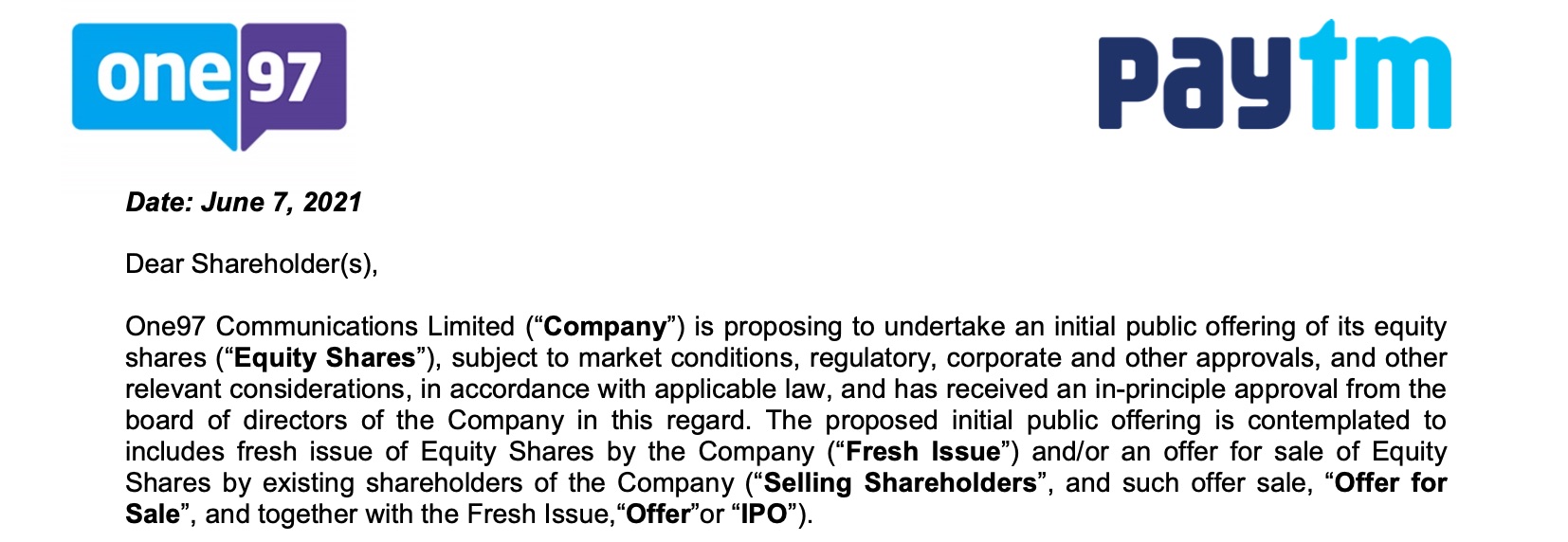
Paytm’s letter — obtained by TechCrunch — to shareholders on Monday.
This isn’t the first time Paytm has planned to explore the public route. Exactly 10 years ago, long before Paytm established itself as the largest mobile wallet firm and expanded to several financial and commerce services, the startup had filed with the regulator with intentions to become public. The startup at the time cancelled the IPO plan and instead raised money from VCs to explore new avenues for growth.
A lot is riding on a successful IPO of Paytm — which reported a consolidated loss of $233.6 million for the financial year that ended in March this year, down from $404 million a year ago. (The startup’s revenue fell 10% during this period to $437.6 million.) India’s stock markets are yet to be fully tested for tech startups’ stocks in the country — though retail investors have shown good signs in recent years.
The startup, which competes with Google Pay and Flipkart-backed PhonePe, has realigned its payments strategy in recent years to assume a leadership position in the merchant payments market.
In a report to its clients late last month, analysts at Bernstein said the startup’s credit tech vertical is likely to lead the next wave of its revenue growth.
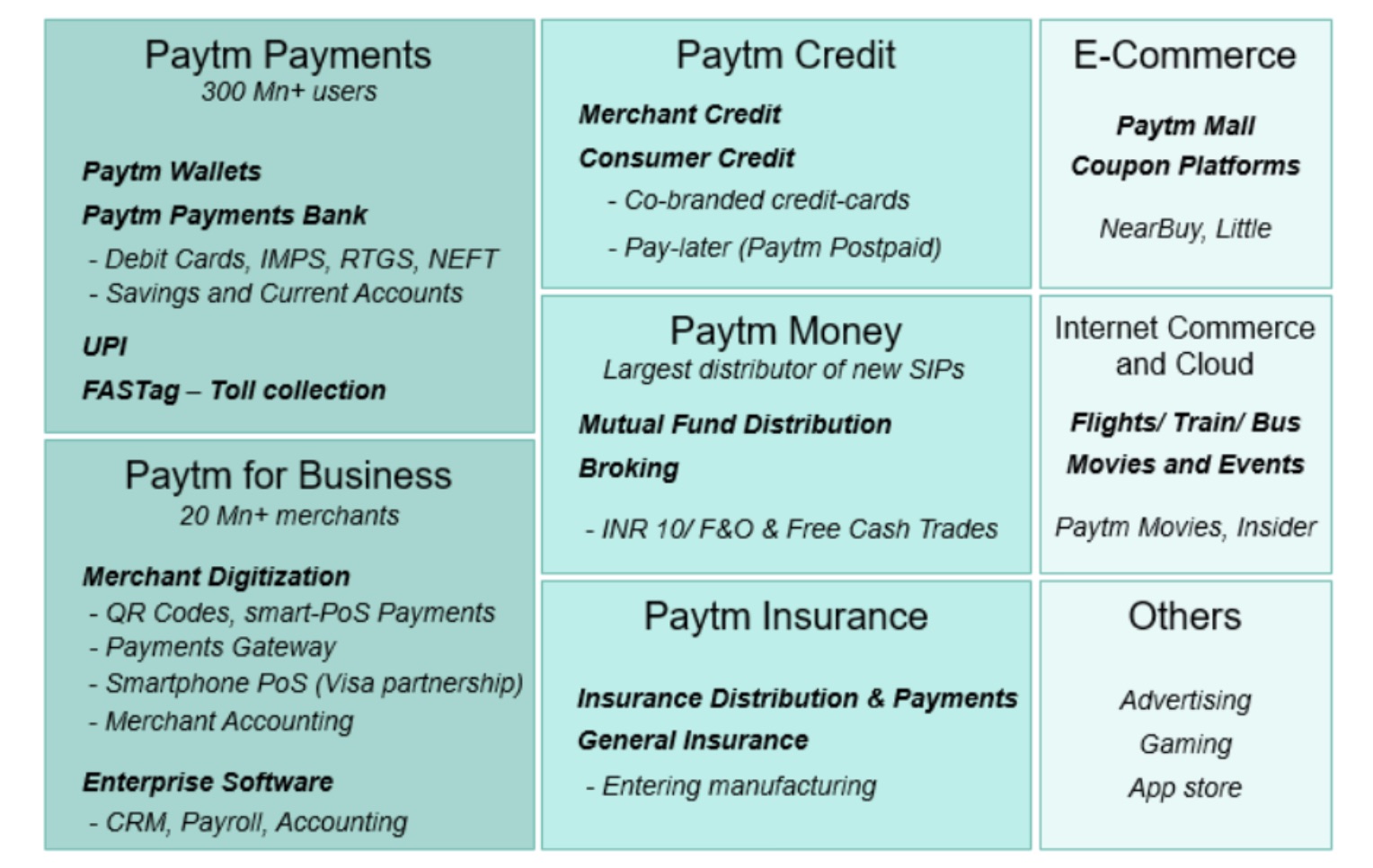
An overview of Paytm’s financial services ecosystem (Bernstein)
“With the advent of UPI, there has been a rising narrative that questioned Paytm’s market leadership,” the analysts wrote, referring to the exponential growth of payments stack developed by retail banks in India that has been adopted by several firms, including Google and PhonePe (as well as Paytm), and which has somewhat lowered the appeal of mobile wallets in India.
“However, under the hood, Paytm leads on merchant payments and has built an ecosystem of synergistic fintech verticals around its ‘super-app.’ The ecosystem spans payments (wallet/UPI), full-suite merchant acquiring, credit tech, digital bank, wealth, and insurance tech. We believe the super-app battle in India is not a ‘winner takes all’ but a game of execution, business building, and creating a superior customer experience with ecosystem integration,” Bernstein analysts added.
Paytm is the latest Indian giant startup that has expressed an interest in becoming public in recent months. Earlier this year, food delivery startup Zomato said it plans to raise $1.1 billion through an initial public offering. TechCrunch reported last month that Flipkart was in talks to raise over $1 billion in what is expected to be its financial fundraise ahead of an IPO.
Powered by WPeMatico
Hello and welcome back to Equity, TechCrunch’s venture capital-focused podcast where we unpack the numbers behind the headlines.
This is Equity Monday, our weekly kickoff that tracks the latest private market news, talks about the coming week, digs into some recent funding rounds and mulls over a larger theme or narrative from the private markets. You can follow the show on Twitter here and myself here.
After a somewhat quiet weekend, things are kicking off in rapid-fire fashion this week. Here’s what you need to know:
With a busy funding market and a yet-busy IPO cycle, it should be yet another busy week. Strap in!
Equity drops every Monday at 7:00 a.m. PST, Wednesday, and Friday at 6:00 AM PST, so subscribe to us on Apple Podcasts, Overcast, Spotify and all the casts!
Powered by WPeMatico

My mom cuts to the chase when she is describing my beat to others. In her words, I cover companies like Uber before they become companies like Uber. And honestly? I can’t exactly disagree with the description. The best feeling in tech journalism is telling a story about a startup before it becomes a household name. As an early-stage reporter, I honestly bet a lot on the potential of a savvy edtech founder or creative marketplace play. And when I’m doing my job right, I point to the unique insight that will make the startup successful or challenged in the future.
On that note, one of my favorite renewed series at TechCrunch is an EC-1 (Extra Crunch subscription required), a story series that goes through the nitty-gritty of a startup’s story, from its original days to its pivots along the way. I’ve spent the past few months on one of these projects — and mine is coming out next week! In the meantime, you’ve read packages about StockX and Tonal, and our latest just came out: the Klaviyo EC-1:

Image Credits: Nigel Sussman
Enjoy this long-form read and big thanks to Danny Crichton, my Equity co-host and managing editor here at TechCrunch, who has been managing and editing all of these projects.
In the rest of this newsletter we’ll get into All Raise data, the new Miami and a new lineup you don’t want to miss. Follow me on Twitter @nmasc_ for updates throughout the week.
All Raise, a nonprofit dedicated to increasing the footprint of women founders and funders, has released its annual report for 2020. The whole thing is honestly worth a read, but we especially paid attention to how funding has dropped for female founders:
Here’s what to know: On Equity, we talked about how these abysmal metrics were both a predicted but still surprising effect of Zoom investing. This disconnect is the conversation no one has during an upmarket — and metrics are one way we can benchmark progress.
To quote Winnie CEO and co-founder Sara Mauskopf, “Internet is the new Miami.” The networks made online — either through the rise of meme culture or Substack spice — can be a competitive advantage in the world of investment, as two new funds this week showed us.
Here’s what to know: Ryan Hoover and Vedika Jain announced Weekend Fund 3, which will include a $1 million community raise. And Chief Meme Officer Turner Novak finally debuted Banana Capital’s debut fund launched with $9.99 million in funding.
Novak explained how being internet-first impacts his investments:
“It just kind of happens where [my investments] are people who understand the culture of the internet, to understand memes and understand wit and humor and appreciate that a little bit more,” he said. “Those are probably the people that are more naturally intuitive investments, so it definitely does skew that direction.”
While Novak didn’t share explicit targets or mandates around investment in diverse founders, he pointed to his track record at Gelt VC, in which 41% of capital went to woman CEOs. To date, 65% of Banana Capital’s portfolio founding teams include non-white founders and 50% of the teams include more than one gender.
Seen on TechCrunch
Atlassian launches a Jira for every team
CES will return to Las Vegas in 2022
Microsoft’s new default font options, rated
Seen on Extra Crunch
Hacking my way into analytics: A creative’s journey to design with data
How Brex more than doubled its valuation in a year
India is in crisis. It is devastating and heartbreaking to watch this unfold and impact our family and friends and colleagues and people. My colleague Manish Singh, who is based there, wrote up the different ways you can donate to help out.
I’ll end by quoting Singh:
With several major industries, including film and sports, going about their lives pretending there is no crisis, entrepreneurs and startups have emerged as a rare beam of hope in recent days, springing to action to help the nation navigate its darkest hours.
It’s a refreshing change from last year, when thousands of Indian startups themselves were struggling to survive. And while some startups are still severely disrupted, offering a helping hand to the nation has become the priority for most.
Until next week,
Powered by WPeMatico

Arm today announced the launch of two new platforms, Arm Neoverse V1 and Neoverse N2, as well as a new mesh interconnect for them. As you can tell from the name, V1 is a completely new product and maybe the best example yet of Arm’s ambitions in the data center, high-performance computing and machine learning space. N2 is Arm’s next-generation general compute platform that is meant to span use cases from hyperscale clouds to SmartNICs and running edge workloads. It’s also the first design based on the company’s new Armv9 architecture.
Not too long ago, high-performance computing was dominated by a small number of players, but the Arm ecosystem has scored its fair share of wins here recently, with supercomputers in South Korea, India and France betting on it. The promise of V1 is that it will vastly outperform the older N1 platform, with a 2x gain in floating-point performance, for example, and a 4x gain in machine learning performance.

Image Credits: Arm
“The V1 is about how much performance can we bring — and that was the goal,” Chris Bergey, SVP and GM of Arm’s Infrastructure Line of Business, told me. He also noted that the V1 is Arm’s widest architecture yet. He noted that while V1 wasn’t specifically built for the HPC market, it was definitely a target market. And while the current Neoverse V1 platform isn’t based on the new Armv9 architecture yet, the next generation will be.
N2, on the other hand, is all about getting the most performance per watt, Bergey stressed. “This is really about staying in that same performance-per-watt-type envelope that we have within N1 but bringing more performance,” he said. In Arm’s testing, NGINX saw a 1.3x performance increase versus the previous generation, for example.

Image Credits: Arm
In many ways, today’s release is also a chance for Arm to highlight its recent customer wins. AWS Graviton2 is obviously doing quite well, but Oracle is also betting on Ampere’s Arm-based Altra CPUs for its cloud infrastructure.
“We believe Arm is going to be everywhere — from edge to the cloud. We are seeing N1-based processors deliver consistent performance, scalability and security that customers want from Cloud infrastructure,” said Bev Crair, senior VP, Oracle Cloud Infrastructure Compute. “Partnering with Ampere Computing and leading ISVs, Oracle is making Arm server-side development a first-class, easy and cost-effective solution.”
Meanwhile, Alibaba Cloud and Tencent are both investing in Arm-based hardware for their cloud services as well, while Marvell will use the Neoverse V2 architecture for its OCTEON networking solutions.
Powered by WPeMatico
Banking tech startup Zeta is inching closer to the much sought-after unicorn status as it engages with investors to finalize a new round, two sources familiar with the matter told TechCrunch.
SoftBank Vision Fund 2 is in advanced stages of talks to lead a ~$250 million Series D round in the five-year-old startup, the sources said. The investment proposal values the Indian startup, co-founded by high-profile entrepreneur Bhavin Turakhia, at over $1 billion, up from $300 million in its maiden external funding (Series C) in 2019.
The round has yet to close, a third person said.
A SoftBank spokesperson declined to comment.
Five-year-old Zeta helps banks launch modern retail and fintech products. The thesis is that banks — largely operating on antiquated technologies — today don’t have the time and expertise to offer the best experience to hundreds of millions of customers and fintech firms they serve.
Zeta is attempting to help banks either use the startup’s cloud-native, API-first banking stack as its core framework or build services atop it to offer better a experience to all customers — think of improved mobile app and debit and credit features. It also offers API, SDKs and payment gateways to banks to work more efficiently with fintech firms.
The startup has amassed clients in several Asian and Latin American markets.
Turakhia, with his brother Divyank, started his first venture in 1998. Along the way, they sold four web companies to Endurance for $160 million. Zeta is the third startup Bhavin has co-founded since then — the other being business messaging platform Flock and Radix.
When the deal is finalized, Zeta would join a growing list of Indian startups that have turned a unicorn in recent months. Last week, social commerce Meesho — also backed by SoftBank Vision Fund 2 — fintech firm CRED, e-pharmacy firm PharmEasy, millennials-focused Groww, business messaging platform Gupshup and social network ShareChat attained the unicorn status.
The story was updated with additional details and to note that the round hasn’t closed.
Powered by WPeMatico
Y Combinator’s latest batch — W21 — features 350 startups from 41 nations. Fifty percent of the firms, the highest percentage to date, in the new batch are based outside of the United States.
India is the second-largest demographic represented in the new batch. The world’s second-largest internet market has delivered 43 startups in the new batch, another record figure in the history of the storied venture firm. (For comparison, the W20 batch had 25 Indian startups, up from 14 in S20, 12 each in S19 and W19 and one each in W16, S15 and W15.)
“YC going remote has helped make YC more attractive to companies at different stages and far away geographies. For companies in India, founders no longer have to spend three months away from their customers or teams. Covid has also taught us that building a program that is remote and more software based makes YC more accessible to founders around the globe,” the firm said in a statement to TechCrunch.
“When it comes to choosing founders in India, we accept them based on the same criteria we judge companies from anywhere else. Founders must be able to communicate their local context to investors. That is an important skill.”
Here’s a list of startups, in no particular order, from India that have made it to YC W21, with some context — wherever possible — on what they are attempting to build (several have elected to stay off the record).
QuestBook, from CreatorOS, is an app for professionals to teach in bite-sized courses using chat and a mobile-first experience. We wrote about CreatorOS last year.
Leap Club is attempting to build a Good Eggs for India. Leap Club users can order fresh and organic groceries sourced from local farms through the startup’s website or through WhatsApp. The startup says it delivers the item to customers within 12 hours of harvesting. Leap Club is already garnering over $14,000 in monthly revenue.
CashBook is building a cash account app for small businesses in India. There are over 60 million small businesses in the country, nearly all of which currently rely on traditional ways — pen and paper — for bookkeeping. The startup launched its app just six months ago and has already amassed 200,000 monthly active users. In the month of February, CashBook logged cash transactions of $511 million.
GimBooks is attempting to solve a similar problem as CashBook, though from a different angle. The startup says it offers industry-based invoicing and bookkeeping with integrated banking and payments. Its app has been downloaded more than 1.4 million times, amassed over 11,000 paying customers and clocked revenues of over $450,000.
BusinessOnBot is banking on the popularity of WhatsApp in India, where the Facebook-owned app has amassed over 450 million monthly active users. BusinessOnBot says it is building Shopify on WhatsApp for direct-to-consumer brands and small and medium-sized businesses, helping them acquire users and automate sales.
ZOKO is helping businesses do sales, marketing and customer support on WhatsApp.
Prescribe is a Shopify for hospitals. Its platform is aimed at helping doctor’s offices run their business online. Users can book appointments, chat with the doctor, pay and refer friends on WhatsApp.
Chatwoot is an open-source customer engagement suite alternative to Intercom and Zendesk. Over 1,000 companies are already using Chatwoot and it’s clocking $32,000 in ARR from six customers.
Weekday is helping companies hire engineers who are crowdsourced by their network of scouts. The startup says it has found a way to solve the biggest problem with referrals — that it doesn’t scale.
Fountain9 helps food brands and retailers reduce food wastage. According to some estimates, over $260 billion worth of food is wasted every year due to mismanaged inventory.
Dyte is attempting to build a Stripe for live video calls. The startup says a firm can integrate its branded, configurable and programmable video calling service within 10 minutes using the Dyte SDK.
YourQuote has built a writing platform, with over 100 million posts. It has over 250,000 daily active users. The startup clocked revenues of $200,000 last year and is profitable.
Fifthtry is building a GitHub for product documentation. The tool blocks code changes until documentation has been approved. It has piloted its tool with three companies, all of which have over 100 developers. The startup plans to launch its tool publicly next month.
Voosh is building an OYO for restaurants and dark kitchens in India, helping them improve their economics using tech.
Kodo is building a Brex for India, helping Indian startups and small businesses secure corporate credit cards. (Banks and other credit card companies are still not addressing this opportunity. The problem Brex solved in the U.S. is even acute in India, Deepti Sanghi, co-founder and chief executive of Kodo, said in the presentation.
Krab provides instant loans for trucking companies in India. India’s logistics market, despite being valued at $160 billion, remains one of the most inefficient sectors that continues to drag the economy. In recent years, a handful of startups have started to explore ways to work with trucking companies.
Bueno Finance says it wants to help the next billion users in India get access to financial services. It says it wants to solve for short-term cash needs of customers by using digital credit card over UPI. It was to build a Chime for India, and has amassed 70,000 customers.
Betterhalf is building a Match.com for 100 million Indians. It says it is generating $75,000 in monthly revenues, a figure that is growing 30% every month.
Pensil is helping teachers who use YouTube monetize their courses. “YouTube is the largest education platform in India — but it’s not built for teachers,” said Surender Singh, co-founder of Pensil, at the presentation on Tuesday. The startup has built tools to allow teachers to create content, facilitate discussions and collect payments.
AcadPal operates an eponymous app for India’s 10 million teachers to share homework with a tap. The startup is attempting to target a $1.4 billion market, which consists of over 400,000 private schools.
Pragmatic Leaders is attempting to build a platform to provide cost-effective alternative to an MBA. It is already clocking a monthly revenue of $112,000 and is cash-flow positive.
Splitsub is addressing a problem that tens of millions of users in India face — subscription fatigue. It says it has built a Pinduoduo for online subscriptions in India, allowing group buying and sharing of online subscriptions for services such as Netflix and Spotify.
Zingbus has built a platform for bus travel between Indian cities. (Several startups in India are helping users get cabs, three-wheelers autos and two-wheelers bikes. Buses have remained largely untapped.)
Tilt is building a docked bike-sharing platform for Indian campuses. The startup, which has generated about $20,000 in revenues this month so far, says it has been profitable for the past 18 months.
FanPlay is a platform for social media influencers, helping them monetize by playing mobile games with their fans and followers.
(Also read: Why Y Combinator Went 8,725 Miles Away From Mountain View To Find The Next Big Startup)
In India only a fraction of the nation’s 1.3 billion people currently have access to insurance and some analysts say that digital firms could prove crucial in bringing these services to the masses. According to rating agency ICRA, insurance products had reached less than 3% of the population as of 2017.
An average Indian makes about $2,100 a year, according to the World Bank. ICRA estimated that of those Indians who had purchased an insurance product, they were spending less than $50 on it in 2017.
Three startups in the current batch are planning to disrupt this market, which is largely commanded by state and bank-backed insurers.
GroMo is an app for independent agents to sell insurance in India. Most insurance policies in India are sold by agents. The startup says it is already generating monthly revenues of over $200,000.
Bimaplan is attempting to replace the agents with an app and reach users by a referral network. The app launched last month and has already sold 700 policies this month.
BimaPe helps users better understand their policies, and make informed decisions about whether those policies are right for them. The startup, leveraging New Delhi’s new regulations, is using a government issued ID card to fetch insurance policies.
Codingal is an online, after-school program for K-12 students in India to learn computer science. There are roughly 270 million K-12 students in the country.
Unschool provides professional education for college students in India. The founders say, “As former leaders in youth-run organisations with 3,000 members and edtech startups in India, we saw how colleges are not preparing students for the real world.”
Flux Auto builds self-driving kits for trucks.
SigNoz is an open-source alternative to DataDog, a $30 billion company, helping developers find and solve issues in their software deployed on cloud. The startup says recent laws such as GDPR and CPRA have helped drive adoption of SigNoz.
Pibit.ai are APIs to turn unstructured documents into structured data.
Invoid creates identity workflows in India. It’s tapping into a huge market opportunity: About 11 billion know-your-customers authentication is conduced by firms in India each year.
Redcliffe Lifesciences performs genetic testing and IVF treatments across India. Its revenue in March has topped $600,000.
Veera Health is an online clinic that treats Polycystic Ovary Syndrome (PCOS), a lifelong condition that affects 10-20% women in India. The startup says it launched 12 weeks ago, and 85% members have reported feeling “in control” of their PCOS after 1 month.
Snazzy is SmileDirectClub for India. The startup says it sells clear aligners that are 70% cheaper than those sold by dentists.
BeWell Digital is building the operating system for India’s 1.5 million hospitals, labs, clinics and pharmacies by starting with insurance regulatory compliance.
Triomics is operating a SaaS platform for end-to-end automation of clinical trials.
Powered by WPeMatico

Policybazaar has raised $75 million as the Indian online insurance platform looks to expand its presence in UAE and Middle East.
Sarbvir Singh, chief executive of Policybazaar, told TechCrunch that the startup had raised $75 million, but didn’t elaborate. Falcon Edge Capital led the new tranche of investment in the Indian startup, which has raised about $630 million to date, according to research firm Tracxn.
The 12-year-old startup, which counts SoftBank Group’s Vision Fund and Tiger Global among its investors, is among a handful of startups that is attempting to upend India’s insurance market, which is largely commanded by state and bank-backed insurers.
Policybazaar serves as an aggregator that allows users to compare and buy policies — across categories including life, health, travel, auto and property — from dozens of insurers on its website without having to go through conventional agents.
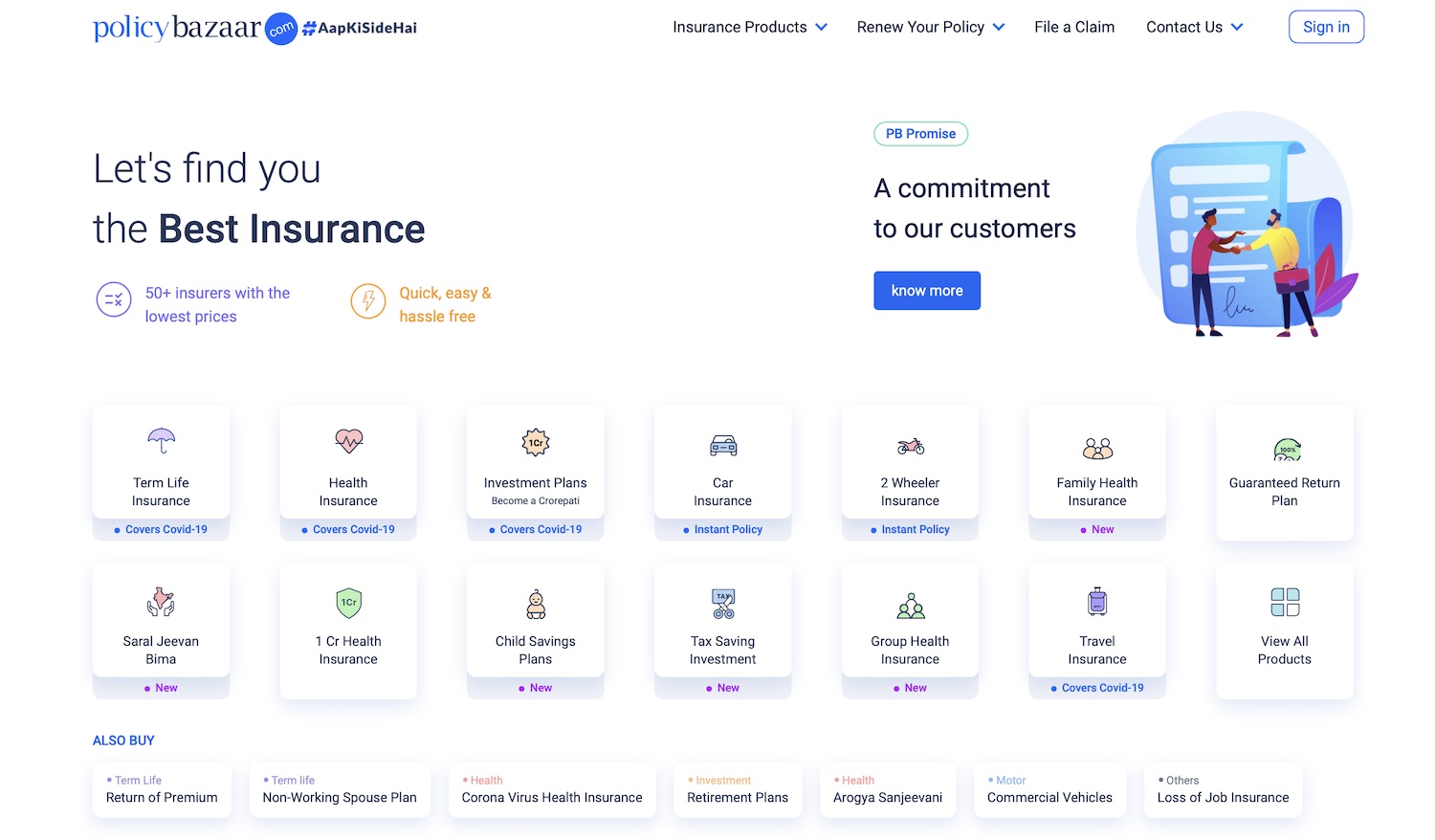
A screengrab of Policybazaar website
In India only a fraction of the nation’s 1.3 billion people currently have access to insurance and some analysts say that digital firms could prove crucial in bringing these services to the masses. According to rating agency ICRA, insurance products had reached less than 3% of the population as of 2017.
An average Indian makes about $2,100 in a year, according to World Bank. ICRA estimated that of those Indians who had purchased an insurance product, they were spending less than $50 on it in 2017.
In a recent report, analysts at Bernstein estimated that Policybazaar commands 90% of share in the online insurance distribution market. The platform also sells loans, credit cards and mutual funds. The startup says it sells over a million policies a month.
“India has an under-penetrated insurance market. Within the under-penetrated landscape, digital distribution through web-aggregators like Policybazaar forms <1% of the industry. This offers a large headroom for growth,” Bernstein analysts wrote to clients.
The startup, which is working on an initial public offering slated for next year, said it will use the fresh investment to expand its presence across the UAE and Middle East regions.
“PolicyBazaar has shown stellar innovation, execution, and relentlessness in establishing itself as the market leader in online insurance aggregation in India. We believe the playbook it has established over the last 10 years in being the most efficient sales channel for insurance manufacturers, can act as a catalyst to gain market leadership in the GCC,” said Navroz Udwadia, co-founder of Falcon Edge Capital, in a statement.
Early Stage is the premier “how-to” event for startup entrepreneurs and investors. You’ll hear firsthand how some of the most successful founders and VCs build their businesses, raise money and manage their portfolios. We’ll cover every aspect of company building: Fundraising, recruiting, sales, product-market fit, PR, marketing and brand building. Each session also has audience participation built-in — there’s ample time included for audience questions and discussion. Use code “TCARTICLE at checkout to get 20% off tickets right here.
Powered by WPeMatico
Krafton, the developer of popular gaming title PUBG Mobile, has invested $22.4 million in Indian esports firm Nodwin Gaming, the two firms said Tuesday as the South Korean firm looks to maintain some presence in what was once its key overseas market.
Nodwin Gaming, a subsidiary of local gaming giant Nazara, has established itself as one of the largest esports firms in India.
The Gurgaon-headquartered firm today works with several firms, including Blizzard Entertainment, Valve, Riot Games and ESL to help them host events, provide commentary, produce and license content, and amass brands and sponsors.
Nodwin, which recently expanded to Africa, will deploy the fresh capital to accelerate its growth in international markets, it said.
Krafton and Nodwin have been engaging with one another for some time. The two firms last week announced that they will be collaborating to hold two PUBG Mobile events in Asia.
“Esports will be a key pillar to the growth of sports entertainment in the future. It sits at a wonderful intersection of sports, entertainment and technology where nations such as India can pave the path. With Krafton coming on board, we have an endorsement from the mecca of gaming and esports — South Korea — on what we are building from India for the world based on our competence in mobile first markets,” said Akshat Rathee, co-founder and managing director of Nodwin Gaming, in a statement.
India banned PUBG Mobile and hundreds of other apps with affiliation to China last year, citing cybersecurity concerns. Krafton has been attempting to bring PUBG Mobile back in India, but hasn’t had any luck yet.
To assuage New Delhi’s concerns about users’ security, Krafton said it had cut ties with Chinese publisher Tencent. (It also inked a global cloud deal with Microsoft.) Sean Hyunil Sohn, the head of Corporate Development at Krafton, said earlier this month at a gaming conference that the firm “will work hard” to bring PUBG Mobile back in India, but didn’t elaborate.
“Krafton is excited to partner with Nodwin Gaming to help foster the promising esports ecosystem and engage with our fans and players in India,” said Changhan Kim, chief executive of Krafton in a statement.
“Taking the momentum from this partnership, we will explore additional investment opportunities in the region to uphold our commitment and dedication in cultivating the local video game, esports, entertainment, and tech industries.”
Powered by WPeMatico
Tens of millions of people each year purchase a second-hand smartphone in India, the world’s second-largest market. Phone makers and giant online sellers such as Amazon and Flipkart are aware of it, but it’s too much of a hassle for them to inspect, repair and resell used phones. But these firms also know that customers are more likely to buy a smartphone if they are offered the ability to trade-in their existing handsets.
A startup that is helping these firms tackle this challenge said on Thursday it has raised $15 million in a new financing round. New York-based Olympus Capital Asia made the investment through Asia Environmental Partners, a fund dedicated to the environmental sector. The five-year-old startup, which counts Blume Ventures among its early investors, has raised $42 million to date.
Cashify operates an eponymous platform — both online and physical stores and kiosks — for users to sell and buy used smartphones, tablets, smartwatches, laptops, desktops and gaming consoles. But 90% of its business today surrounds the smartphone category, explained Mandeep Manocha, founder and chief executive of Cashify, in an interview with TechCrunch.
“For consumers, our proposition is that we make it easy for you to sell your devices. You come to our site or app, answer questions to objectively evaluate the condition of your device, and we give you an estimate of how much your gadget is worth,” he said. “If you like the price, we pick it up from your doorstep and give you instant cash.”
A few years ago, I wrote about the struggle e-commerce firms face globally in handling returned items. There are many liability challenges — such as having to ensure that the innards in a returned smartphone haven’t been tempered with — as well as overhead costs in reversing an order.
Manocha said that phone makers and e-commerce firms have found better ways to handle returned items in recent years, but they still lose a significant amount of money on them. These challenges have created a big opportunity for startups such as Cashify.
In fact, Cashify says it’s the market leader in its category in India. The startup has partnerships with “nearly every OEM,” including Apple, Samsung, OnePlus, Oppo, Xiaomi, Vivo and HP. “If you walk into an Apple store today, they use our platform.” For consumers in India, if they opted for the trade-in program, Apple.com also uses Cashify’s trading platform, he said.
The startup also works with top e-commerce firms in India — Amazon, Flipkart and Paytm Mall. The firms use Cashify’s trading and exchange software, and also rely on the startup for liquidation of devices. The startup then repairs these gadgets and sells the refurbished units to customers.
“Essentially, whether you come directly to us, or go to popular e-commerce firms or phone OEMs, we are handling the majority of the trading,” he said. Even if a customer trades in the device to OEMs, or e-commerce firms, these companies sell the device to players like Cashify, which serves over 2 million customers in more than 1,500 cities.
The startup plans to deploy part of the fresh capital to expand its presence in the offline market. Manocha said Cashify currently has dozens of offline stores and kiosks at shopping malls across the country and it has already proven immensely effective in brand awareness among customers.
The startup also plans to expand outside of India, hire more talent and invest more in getting the word out about its offerings. Manocha said the team is also working on expanding its expertise to more hardware categories such as cameras.
“The management team at Cashify has an excellent track record in building a strong consumer-facing franchise and building relationships with OEMs, e-commerce companies and electronic product retailers to be present across all touch points for the consumer,” said Pankaj Ghai, managing director of Asia Environmental Partners, in a statement.
Powered by WPeMatico