Enterprise
Auto Added by WPeMatico
Auto Added by WPeMatico

The Europas Unconference & Awards is back on 3 July in London and we’re excited to announce more speakers and panel sessions as the event takes shape. Crypto and Blockchain will be a major theme this year, and we’re bringing together many of the key players. TechCrunch is once again the key media partner, and if you attend The Europas you’ll be first in the queue to get offers for TC events and Disrupt in Europe later in the year.
You can also potentially get your ticket for free just by sharing your own ticket link with friends and followers. See below for the details and instructions.
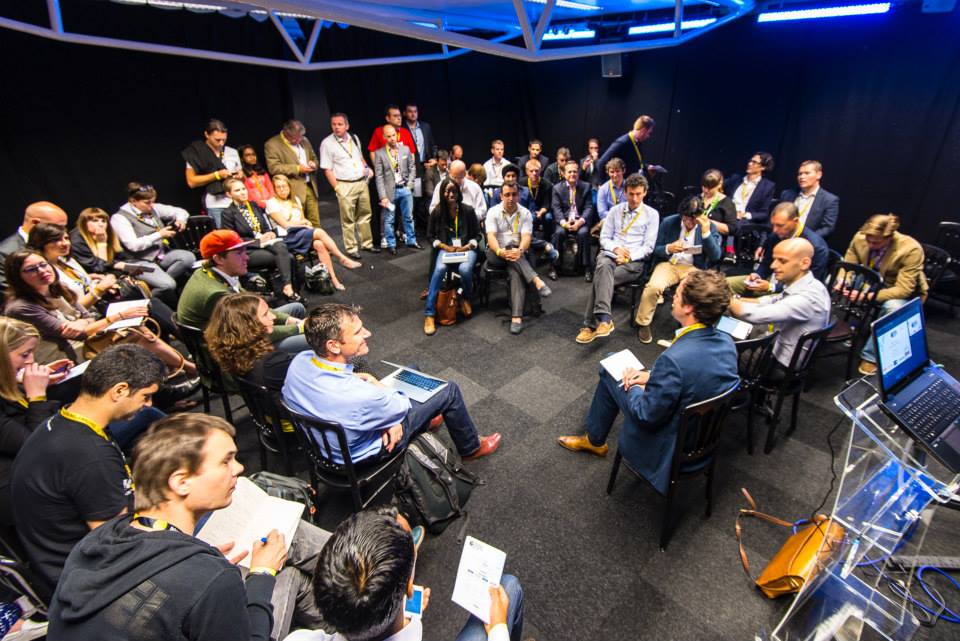
To recap, we’re jumping straight into our popular breakout sessions where you’ll get up close and personal with some of Europe’s leading investors, founders and thought leaders.
The Unconference is focused into zones including AI, Fintech, Mobility, Startups, Society, and Enterprise and Crypto / Blockchain.
Our Crypto HQ will feature two tracks of panels, one focused on investing and the other on how blockchain is disrupting everything from financial services, to gaming, to social impact to art.
We’ve lined up some of the leading blockchain VCs to talk about what trends and projects excite them most, including Outlier Ventures’ Jamie Burke, KR1’s George McDonaugh, blockchain angel Nancy Fenchay, Fabric Ventures’ Richard Muirhead and Michael Jackson of Mangrove Capital Partners.
Thinking of an ICO vs crowdfunding? Join Michael Jackson on how ICOs are disrupting venture capital and Ali Ganjavian, co-founder of Studio Banana, the creators of longtime Kickstarter darling OstrichPillow to understand the ins and outs of both.
We’ve also lined up a panel to discuss the process of an ICO – what do you need to consider, the highs, the lows, the timing and the importance of community. Linda Wang, founder and CEO of Lending Block, which recently raised $10 million in an April ICO, joins us.
We are thrilled to announce that Civil, the decentralised marketplace for sustainable journalism, will be joining to talk about the rise of fake news and Verisart’s Robert Norton will share his views on stamping out fraud in the art world with blockchain. Min Teo of ConsenSys will discuss blockchain and social impact and Jeremy Millar, head of Consensys UK, will speak on Smart Contracts.
Our Pathfounders Startup Zone is focused purely on startups. Our popular Meet the Press panel is back where some of tech’s finest reporters will tell you what makes a great tech story, and how to pitch (and NOT pitch them). For a start, TechCrunch’s Steve O’Hear and Quartz’s Joon Ian Wong are joining.
You’ll also hear from angels and investors including Seedcamp’s Carlos Eduardo Espinal; Eileen Burbidge of Passion Capital; Accel Partners’ Andrei Brasoveanu; Jeremy Yap; Candice Lo of Blossom Capital; Scott Sage of Crane Venture Partners; Tugce Ergul of Angel Labs; Stéphanie Hospital of OneRagtime; Connect Ventures’ Sitar Teli and Jason Ball of Qualcomm Ventures.
Sound great? You can grab your ticket here.
All you need to do is share your personal ticket link. Your friends get 15% off, and you get 15% off again when they buy.
The more your friends buy, the more your ticket cost goes down, all the way to free!
The Public Voting in the awards ends 11 June 2018 11:59: https://theeuropas.polldaddy.com/s/theeuropas2018
We’re still looking for sponsor partners to support these editorially curated panels.
Please get in touch with Petra@theeuropas.com for more details.
SPEAKERS SO FAR:
Jamie Burke, Outlier Ventures

Jeremy Millar, ConsenSys

Linda Wang, Lending Block

Robert Norton, Verisart
George McDonaugh, KR1

Eileen Burbidge, Passion Capital
Carlos Eduardo Espinal, Seedcamp

Sitar Teli, Connect Ventures

Michael Jackson, Mangrove Capital Partners

Min Teo, ConsenSys

Steve O’Hear, TechCrunch

Joon Ian Wong, Quartz

Richard Muirhead, Fabric Ventures

Nancy Fechnay, Blockchain Technologist + Angel
Candice Lo, Blossom Capital

Scott Sage, Crane Venture Partners

Andrei Brasoveanu, Accel

Tina Baker, Jag Shaw Baker
Jeremy Yap
Candice Lo, Blossom Capital
Tugce Ergul, Angel Labs

Stéphanie Hospital, OneRagtime
Jason Ball, Qualcomm Ventures
The Europas Awards
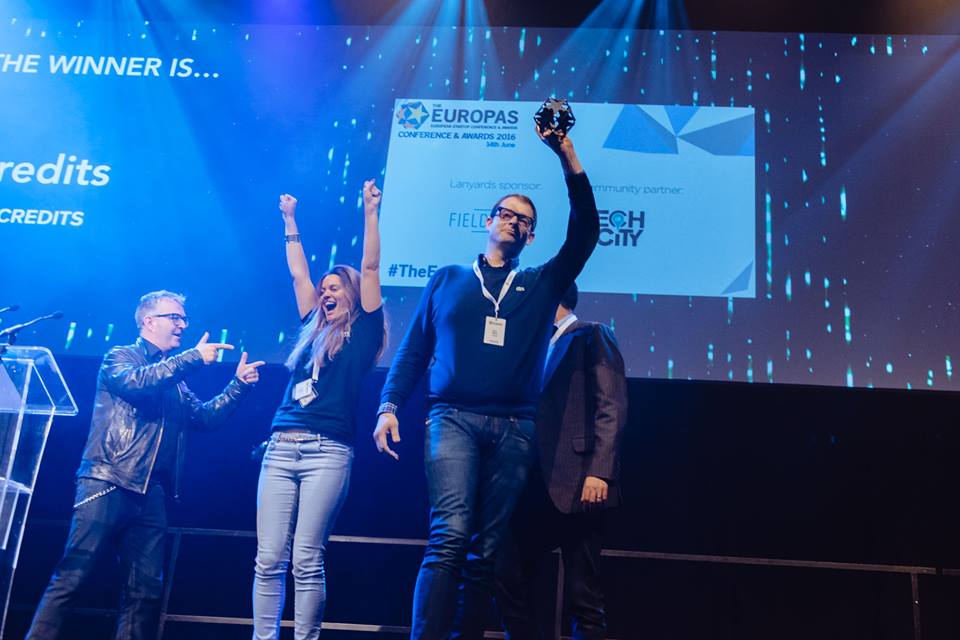
The Europas Awards are based on voting by expert judges and the industry itself. But key to the daytime is all the speakers and invited guests. There’s no “off-limits speaker room” at The Europas, so attendees can mingle easily with VIPs and speakers.
Public Voting is still humming along. Please remember to vote for your favourite startups!
Awards by category:
Hottest Media/Entertainment Startup
Hottest E-commerce/Retail Startup
Hottest Marketing/AdTech Startup
Hottest Enterprise, SaaS or B2B Startup
Hottest Platform Economy / Marketplace
Hottest Cyber Security Startup
Hottest Internet of Things Startup
Fastest Rising Startup Of The Year
Hottest GreenTech Startup of The Year
Best Angel/Seed Investor of the Year
Hottest VC Investor of the Year
Hottest Blockchain/Crypto Startup Founder(s)
Hottest Blockchain Protocol Project
Hottest Corporate Blockchain Project
Hottest Blockchain ICO (Europe)
Hottest Financial Crypto Project
Hottest Blockchain for Good Project
Hottest Blockchain Identity Project
Hall Of Fame Award – Awarded to a long-term player in Europe
The Europas Grand Prix Award (to be decided from winners)
The Awards celebrates the most forward thinking and innovative tech & blockchain startups across over some 30+ categories.
Startups can apply for an award or be nominated by anyone, including our judges. It is free to enter or be nominated.
Instead of thousands and thousands of people, think of a great summer event with 1,000 of the most interesting and useful people in the industry, including key investors and leading entrepreneurs.
• No secret VIP rooms, which means you get to interact with the Speakers
• Key Founders and investors speaking; featured attendees invited to just network
• Expert speeches, discussions, and Q&A directly from the main stage
• Intimate “breakout” sessions with key players on vertical topics
• The opportunity to meet almost everyone in those small groups, super-charging your networking
• Journalists from major tech titles, newspapers and business broadcasters
• A parallel Founders-only track geared towards fund-raising and hyper-networking
• A stunning awards dinner and party which honors both the hottest startups and the leading lights in the European startup scene
• All on one day to maximise your time in London. And it’s sunny (probably)!

That’s just the beginning. There’s more to come…
Powered by WPeMatico
Nvidia launched a monster box yesterday called the HGX-2, and it’s the stuff that geek dreams are made of. It’s a cloud server that is purported to be so powerful it combines high-performance computing with artificial intelligence requirements in one exceptionally compelling package.
You know you want to know the specs, so let’s get to it: It starts with 16x NVIDIA Tesla V100 GPUs. That’s good for 2 petaFLOPS for AI with low precision, 250 teraFLOPS for medium precision and 125 teraFLOPS for those times when you need the highest precision. It comes standard with a 1/2 a terabyte of memory and 12 Nvidia NVSwitches, which enable GPU to GPU communications at 300 GB per second. They have doubled the capacity from the HGX-1 released last year.
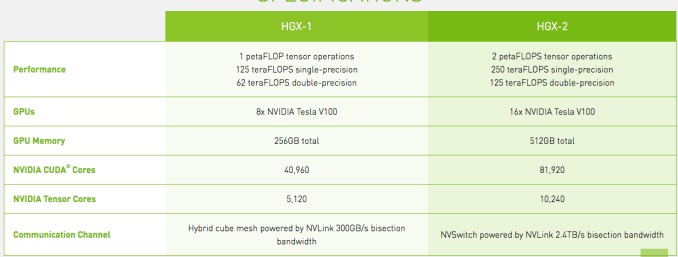
Chart: Nvidia
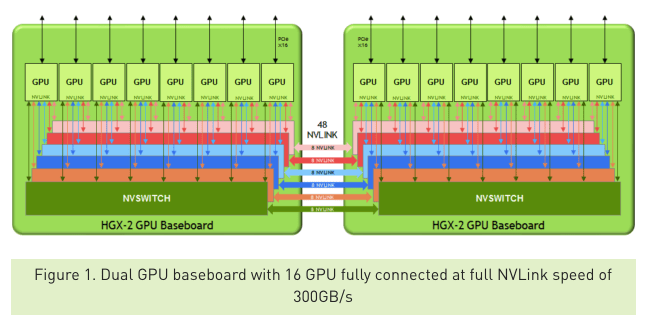
Paresh Kharya, group product marketing manager for Nvidia’s Tesla data center products, says this communication speed enables them to treat the GPUs essentially as a one giant, single GPU. “And what that allows [developers] to do is not just access that massive compute power, but also access that half a terabyte of GPU memory as a single memory block in their programs,” he explained.
Graphic: Nvidia
Unfortunately you won’t be able to buy one of these boxes. In fact, Nvidia is distributing them strictly to resellers, who will likely package these babies up and sell them to hyperscale data centers and cloud providers. The beauty of this approach for cloud resellers is that when they buy it, they have the entire range of precision in a single box, Kharya said.
“The benefit of the unified platform is as companies and cloud providers are building out their infrastructure, they can standardize on a single unified architecture that supports the entire range of high-performance workloads. So whether it’s AI, or whether it’s high-performance simulations, the entire range of workloads is now possible in just a single platform,”Kharya explained.
He points out this is particularly important in large-scale data centers. “In hyperscale companies or cloud providers, the main benefit that they’re providing is the economies of scale. If they can standardize on the fewest possible architectures, they can really maximize the operational efficiency. And what HGX allows them to do is to standardize on that single unified platform,” he added.
As for developers, they can write programs that take advantage of the underlying technologies and program in the exact level of precision they require from a single box.
The HGX-2 powered servers will be available later this year from partner resellers, including Lenovo, QCT, Supermicro and Wiwynn.
Powered by WPeMatico
Want to understand all the most important tech stats and trends? Legendary venture capitalist Mary Meeker has just released the 2018 version of her famous Internet Trends report. It covers everything from mobile to commerce to the competition between tech giants. Check out the full report below, and we’ll add some highlights soon. Then come back for our slide-by-slide analysis of the most important parts of the 294 page report.
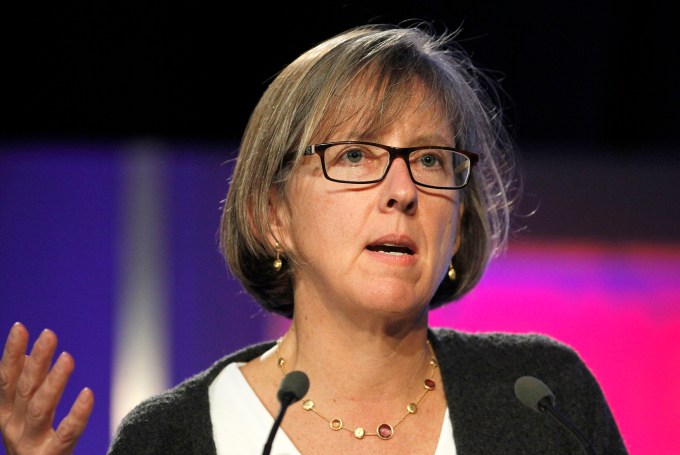
Mary Meeker, analyst with Morgan Stanley, speaks during the Web 2.0 Summit in San Francisco, California, U.S., on Tuesday, Nov. 16, 2010. This year’s conference, which runs through Nov. 17, is titled “Points of Control: The Battle for the Network Economy.” Photographer: Tony Avelar/Bloomberg via Getty Images
Powered by WPeMatico
Movable Ink has always prided itself on providing marketers with a way to deliver highly customized emails, but today the company decided to take that one step further. It announced an SDK that enables developers to build custom applets to add their own unique information to any email.
The company has always seen itself as a platform on which marketers can build these highly customized email marketing campaigns, says Bridget Bidlack SVP of product at Movable Ink .
“We built our business on making it easier for marketers to add intelligent content into any email campaign through a library of hundreds of apps. With our [latest] launch, we’re really opening up our development framework to agencies and system integrators so that they can create those apps on their own,” Bidlack explained.
This means companies are free to create any type of data integration they wish and not simply rely on Movable Ink to supply it for them. Bidlack says that could be anything from the current weather to accurate inventory levels, loyalty point scores and recent purchase activity.
What’s more, Movable Ink doesn’t really care about the source of the data. It could come from the company CRM system, internal database or offer management tool. Bidlack says Movable Ink can incorporate that data into an email regardless of where it’s stored.
This all matters because the company’s whole raison d’etre is about providing a customized email experience for every user. Instead of getting a generic email marketing campaign, you would get something that pulls in details from a variety of sources inside the company to build a custom email aimed directly at the individual recipient.
Company co-founder and CEO Vivek Sharma says that when they launched in 2010, service providers at the time were focused on how many people they could reach and open rate, but nobody was really thinking about the content. His company wanted to fill that gap by focusing specifically on building emails with customized content.
As Sharma said, they didn’t try to take on the email service providers. Instead they wanted to build this intelligent customization layer on top. They have grown increasingly sophisticated with their approach in the last 8 years and count companies like Dunkin’ Donuts, Bloomingdale’s, Comcast and Delta among their 500+ customers. They also have strategic partnerships with companies in the space like Salesforce, Oracle, IBM, Cheetah Digital, Epsilon and many others.
The approach seems to be working. The company has raised a modest $14 million since it launched in 2010, but today it boasts $40 million in annual recurring revenue, according to Sharma.
Powered by WPeMatico

OpenStack is one of the most important and complex open-source projects you’ve never heard of. It’s a set of tools that allows large enterprises ranging from Comcast and PayPal to stock exchanges and telecom providers to run their own AWS-like cloud services inside their data centers. Only a few years ago, there was a lot of hype around OpenStack as the project went through the usual hype cycle. Now, we’re talking about a stable project that many of the most valuable companies on earth rely on. But this also means the ecosystem around it — and the foundation that shepherds it — is now trying to transition to this next phase.
The OpenStack project was founded by Rackspace and NASA in 2010. Two years later, the growing project moved into the OpenStack Foundation, a nonprofit group that set out to promote the project and help manage the community. When it was founded, OpenStack still had a few competitors, like CloudStack and Eucalyptus. OpenStack, thanks to the backing of major companies and its fast-growing community, quickly became the only game in town, though. With that, community events like the OpenStack Summit started to draw thousands of developers, and with each of its semi-annual releases, the number of contributors to the project has increased.
Now, that growth in contributors has slowed and, as evidenced by the attendance at this week’s Summit in Vancouver.
In the early days, there were also plenty of startups in the ecosystem — and the VC money followed them, together with some of the most lavish conference parties (or “bullshit,” as Canonical founder Mark Shuttleworth called it) that I have experienced. The OpenStack market didn’t materialize quite as fast as many had hoped, though, so some of the early players went out of business, some shut down their OpenStack units and others sold to the remaining players. Today, only a few of the early players remain standing, and the top players are now the likes of Red Hat, Canonical and Rackspace.

And to complicate matters, all of this is happening in the shadow of the Cloud Native Computing Foundation (CNCF) and the Kubernetes project it manages being in the early stages of the hype cycle.
Meanwhile, the OpenStack Foundation itself is in the middle of its own transition as it looks to bring on other open-source infrastructure projects that are complementary to its overall mission of making open-source infrastructure easier to build and consume.
Unsurprisingly, all of this clouded the mood at the OpenStack Summit this week, but I’m actually not part of the doom and gloom contingent. In my view, what we are seeing here is a mature open-source project that has gone through its ups and downs and now, with all of the froth skimmed off, it’s a tool that provides a critical piece of infrastructure for businesses. Canonical’s Mark Shuttleworth, who created his own bit of drama during his keynote by directly attacking his competitors like Red Hat, told me that low attendance at the conference may not be a bad thing, for example, since the people who are actually in attendance are now just trying to figure out what OpenStack is all about and are all potential customers.
Others echoed a similar sentiment. “I think some of it goes with, to some extent, what’s been building over the last couple of Summits,” Bryan Thompson, Rackspace’s senior director and general manager for OpenStack, said as he summed up what I heard from a number of other vendors at the event. “That is: Is open stack dead? Is this going away? Or is everything just leapfrogging and going straight to Kubernetes on bare metal. And I don’t want to phrase it as ‘it’s a good thing,’ because I think it’s a challenge for the foundation and for the community. But I think it’s actually a positive thing because the core OpenStack services — the core projects — have just matured. We’re not in the early science experiment days of trying to push ahead and scale and grow the core projects, they were actually achieved and people are actually using it.”
That current state produces fewer flashy headlines, but every survey, both from the Foundation itself and third-party analysts, show that the number of users — and their OpenStack clouds — continues to grow. Meanwhile, the Foundation is looking to bring up attendance at its events, too, by adding container and CI/CD tracks, for example.
The company that maybe best exemplifies the ups and downs of OpenStack is Mirantis, a well-funded startup that has weathered the storm by reinventing itself multiple times. Mirantis started as one of the first OpenStack distributions and contributors to the project. During those early days, it raised one of the largest funding rounds in the OpenStack world with a $100 million Series B round, which was quickly followed by another $100 million round in 2015. But by early 2017, Mirantis had pivoted from being a distribution and toward offering managed services for open-source platforms. It also made an early bet on Kubernetes and offered services for that, too. And then this year, it added yet another twist to its corporate story by refocusing its efforts on the Netflix-incubated Spinnaker open-source tool and helping companies build their CI/CD pipelines based on that. In the process, the company shrunk from almost 1,000 employees to 450 today, but as Mirantis CEO and co-founder Boris Renski told me, it’s now cash-flow positive.
So just as the OpenStack Foundation is moving toward CI/CD with its Zuul tool, Mirantis is betting on Spinnaker, which solves some of the same issues, but with an emphasis on integrating multiple code repositories. Renski, it’s worth noting, actually advocated for bringing Spinnaker into the OpenStack foundation (it’s currently managed on a more ad hoc basis by Netflix and Google).
“We need some governance, we need some process,” Renski said. “The [OpenStack] Foundation is known for actually being very good and effectively seeding this kind of formalized, automated and documented governance in open source and the two should work together much closer. I think that Spinnaker should become part of the Foundation. That’s the opportunity and I think it should focus 150 percent of their energy on that before it builds its own thing and before [Spinnaker] goes off to the CNCF as yet another project.”
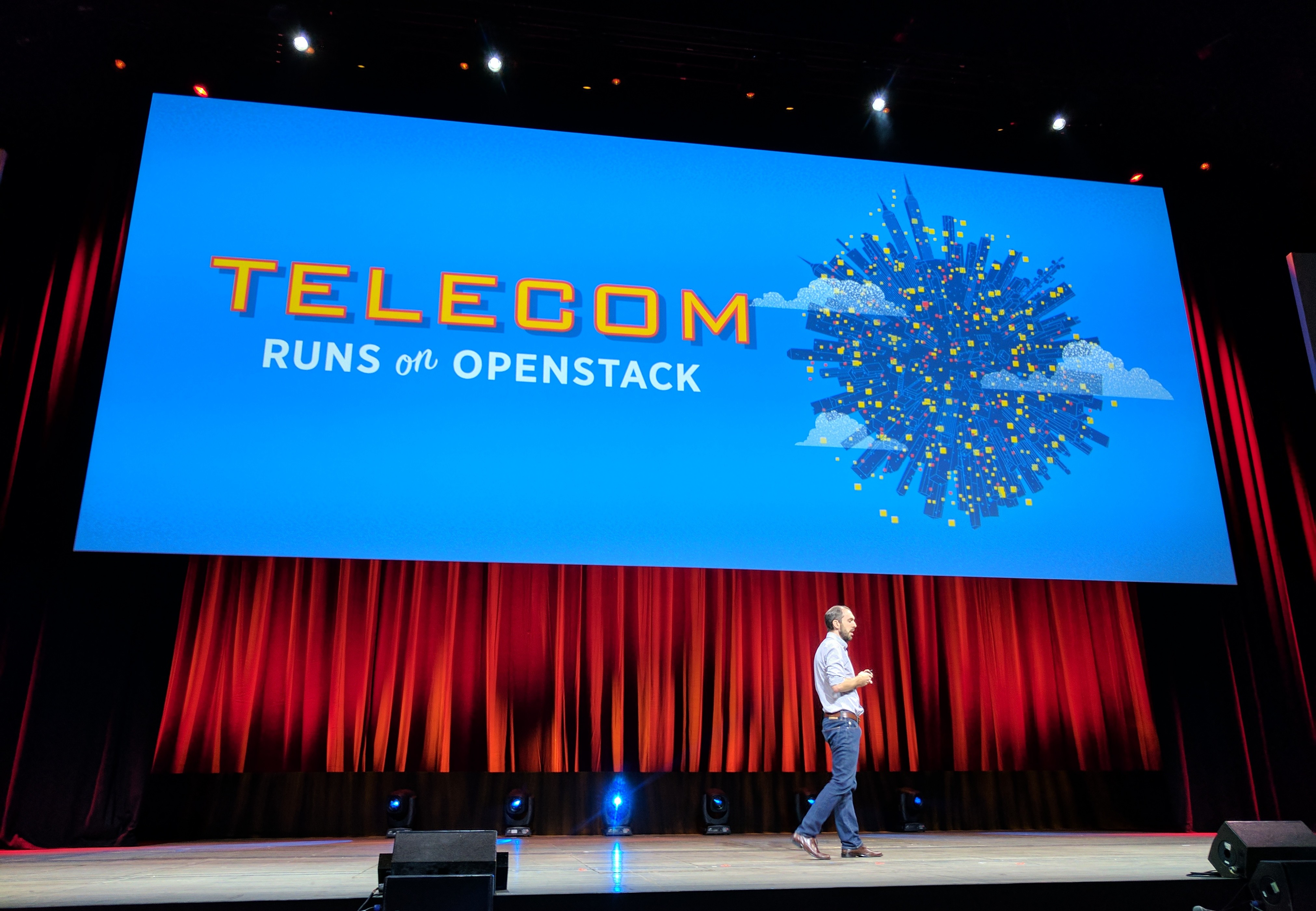
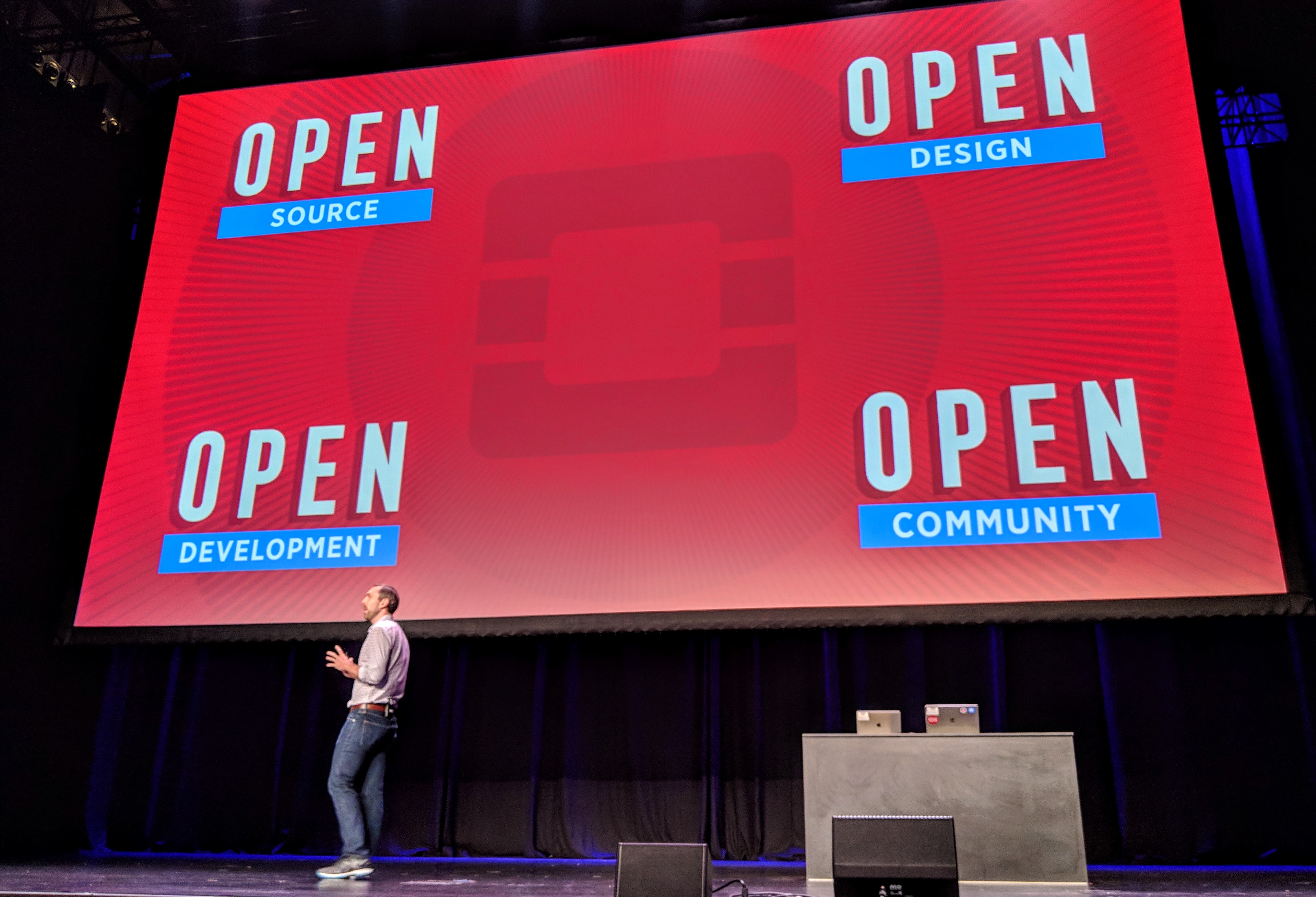
So what does the Foundation think about all of this? In talking to OpenStack CTO Mark Collier and Executive Director Jonathan Bryce over the last few months, it’s clear that the Foundation knows that change is needed. That process started with opening up the Foundation to other projects, making it more akin to the Linux Foundation, where Linux remains in the name as its flagship project, but where a lot of the energy now comes from projects it helps manage, including the likes of the CNCF and Cloud Foundry. At the Sydney Summit last year, the team told me that part of the mission now is to retask the large OpenStack community to work on these new topics around open infrastructure. This week, that message became clearer.
“Our mission is all about making it easier for people to build and operate open infrastructure,” Bryce told me this week. “And open infrastructure is about operating functioning services based off of open source tool. So open source is not enough. And we’ve been, you know, I think, very, very oriented around a set of open source projects. But in the seven years since we launched, what we’ve seen is people have taken those projects, they’ve turned it into services that are running and then they piled a bunch of other stuff on top of it — and that becomes really difficult to maintain and manage over the long term.” So now, going forward, that part about maintaining these clouds is becoming increasingly important for the project.
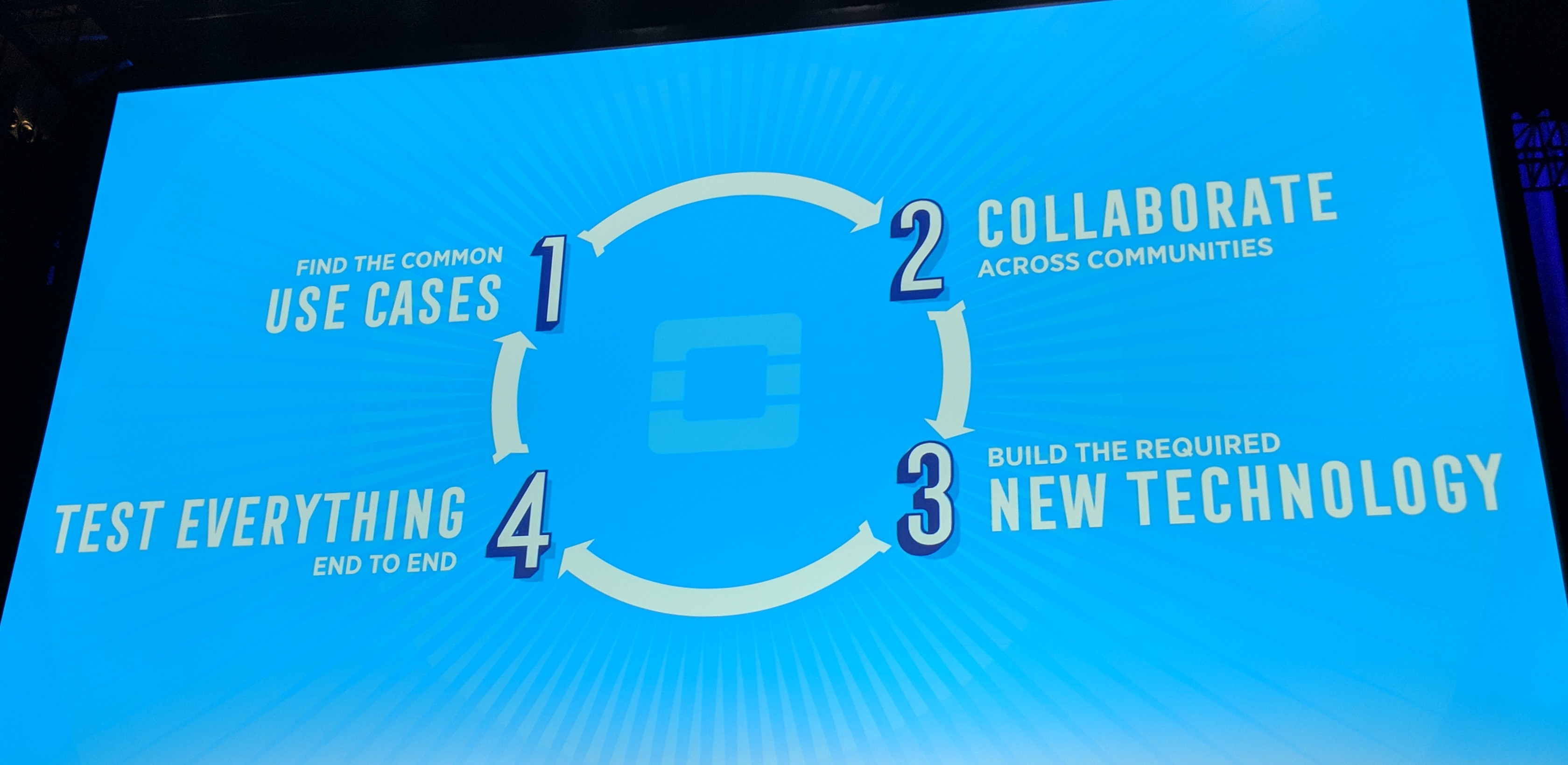
“Open source is not enough,” is an interesting phrase here, because that’s really at the core of the issue at hand. “The best thing about open source is that there’s more of it than ever,” said Bryce. “And it’s also the worst thing. Because the way that most open source communities work is that it’s almost like having silos of developers inside of a company — and then not having them talk to each other, not having them test together, and then expecting to have a coherent, easy to use product come out at the end of the day.”
And Bryce also stressed that projects like OpenStack can’t be only about code. Moving to a cloud-native development model, whether that’s with Kubernetes on top of OpenStack or some other model, is about more than just changing how you release software. It’s also about culture.
“We realized that this was an aspect of the foundation that we were under-prioritizing,” said Bryce. “We focused a lot on the OpenStack projects and the upstream work and all those kinds of things. And we also built an operator community, but I think that thinking about it in broader terms lead us to a realization that we had last year. It’s not just about OpenStack. The things that we have done to make OpenStack more usable apply broadly to these businesses [that use it], because there isn’t a single one that’s only running OpenStack. There’s not a single one of them.”
More and more, the other thing they run, besides their legacy VMware stacks, is containers and specifically containers managed with Kubernetes, of course, and while the OpenStack community first saw containers as a bit of a threat, the Foundation is now looking at more ways to bring those communities together, too.
What about the flagging attendance at the OpenStack events? Bryce and Collier echoed what many of the vendors also noted. “In the past, we had something like 7,000 developers — something insane — but the bulk of the code comes down to about 200 or 300 developers,” said Bryce. Even the somewhat diminished commercial ecosystem doesn’t strike Bryce and Collier as too much of an issue, in part because the Foundation’s finances are closely tied to its membership. And while IBM dropped out as a project sponsor, Tencent took its place.
“There’s the ecosystem side in terms of who’s making a product and selling it to people,” Collier acknowledged. “But for whom is this so critical to their business results that they are going to invest in it. So there’s two sides to that, but in terms of who’s investing in OpenStack and the Foundation and making all the software better, I feel like we’re in a really good place.” He also noted that the Foundation is seeing lots of investment in China right now, so while other regions may be slowing down, others are picking up the slack.
So here is an open-source project in transition — one that has passed through the trough of disillusionment and hit the plateau of productivity, but that is now looking for its next mission. Bryce and Collier admit that they don’t have all the answers, but if there’s one thing that’s clear, it’s that both the OpenStack project and foundation are far from dead.
Powered by WPeMatico
InVision, the startup that wants to be the operating system for designers, today introduced its app store and asset store within InVision Studio. In short, InVision Studio users now have access to some of their most-used apps and services from right within the Studio design tool. Plus, those same users will be able to shop for icons, UX/UI components, typefaces and more from within Studio.
While Studio is still in its early days, InVision has compiled a solid list of initial app store partners, including Google, Salesforce, Slack, Getty, Atlassian, and more.
InVision first launched as a collaboration tool for designers, letting designers upload prototypes into the cloud so that other members of the organization could leave feedback before engineers set the design in stone. Since that launch in 2011, InVision has grown to 4 million users, capturing 80 percent of the Fortune 100, raising a total of $235 million in funding.
While collaboration is the bread and butter of InVision’s business, and the only revenue stream for the company, CEO and founder Clark Valberg feels that it isn’t enough to be complementary to the current design tool ecosystem. Which is why InVision launched Studio in late 2017, hoping to take on Adobe and Sketch head-on with its own design tool.
Studio differentiates itself by focusing on the designer’s real-life workflow, which often involves mocking up designs in one app, pulling assets from another, working on animations and transitions in another, and then stitching the whole thing together to share for collaboration across InVision Cloud. Studio aims to bring all those various services into a single product, and a critical piece of that mission is building out an app store and asset store with the services too sticky for InVision to rebuild from Scratch, such as Slack or Atlassian.
With the InVision app store, Studio users can search Getty from within their design and preview various Getty images without ever leaving the app. They can then share that design via Slack or send it off to engineers within Atlassian, or push it straight to UserTesting.com to get real-time feedback from real people.
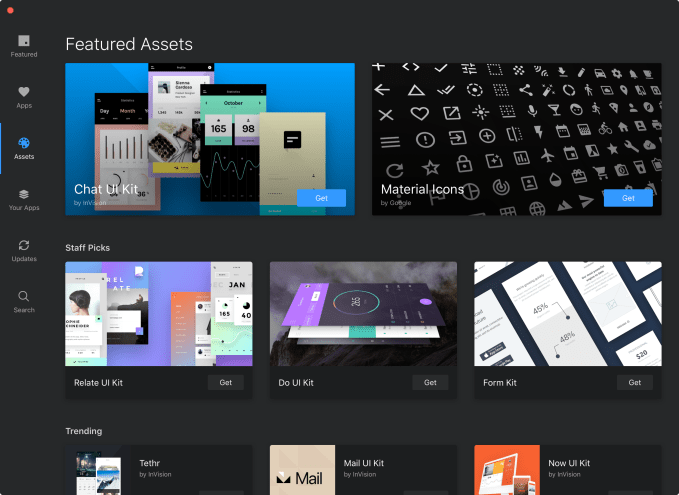
InVision Studio launched with the ability to upload an organization’s design system (type faces, icons, logos, and hex codes) directly into Studio, ensuring that designers have easy access to all the assets they need. Now InVision is taking that a step further with the launch of the asset store, letting designers sell their own assets to the greater designer ecosystem.
“Our next big move is to truly become the operating system for product design,” said Valberg. “We want to be to designers what Atlassian is for engineers, what Salesforce is to sales. We’ve worked to become a full-stack company, and now that we’re managing that entire stack it has liberated us from being complementary products to our competitors. We are now a standalone product in that respect.”
Since launching Studio, the service has grown to more than 250,000 users. The company says that Studio is still in Early Access, though it’s available to everyone here.
Powered by WPeMatico
When Box announced Zones a couple of years ago, it was providing a way for customers to store data outside the U.S., but there were some limits. Each customer could choose the U.S. and one additional zone. Customers wanted more flexibility, and today the company announced it was allowing them to choose to multiple zones.
The new feature gives a company the ability to store content across any of the 7 zones (plus the U.S) that Box currently supports across the world. A zone is essentially a Box co-location datacenter partner in various locations. The customer can now choose a default zone and then manage multiple zones from a single customer ID in the Box admin console, according to Jeetu Patel, chief product officer at Box.
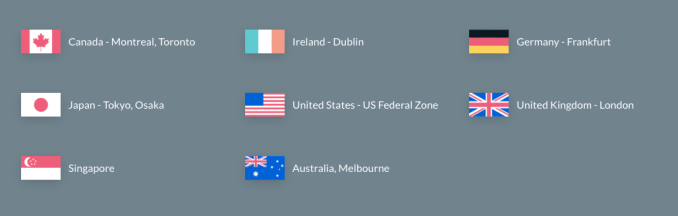
Current Box Zones. Photo: Box
Content will go to a defined default zone unless the admin creates rules specifying another location. In terms of data sovereignty, the file will always live in the country of record, even if an employee outside that country has access to it. From an end user perspective, they won’t know where the content lives if the administrators allow access to it.
This may not seem like a huge deal on its face, but from a content management standpoint, it presented some challenges. Patel says the company designed the product with this ability in mind from the start, but it took some development time to get there.
“When we launched Zones we knew we would [eventually require] multi-zone capability, and we had to make sure the architecture could handle that,” Patel explained. They did this by abstracting the architecture to separate the storage and business logic tiers. Creating this modular approach allowed them to increase the capabilities as they built out Zones.
It doesn’t hurt that this feature is being made available just days before the EU’s GDPR data privacy rules are going into effect. “Zones is not just for GDPR, but it does help customers meet their GDPR obligations,” Patel said.
Overall, Zones is part of Box’s strategy to provide content management services in the cloud and give customers, even regulated industries, the ability to control how that content is used. This expansion is one more step on that journey.
Powered by WPeMatico
Square, the company that provides payments and other business services to merchants, is today taking another step in its gradual expansion outside of the U.S. Stand — one of Square’s key pieces of hardware, turning an iPad into a point of sale system — is launching in the U.K.
It will sell for £64 (+VAT) and will be sold alongside existing products that Square offers in the U.K. — Square Reader, its Point of Sale app, Instant Deposit, Virtual Terminal and Cash app. (Square Register, the company’s all-in-one product for larger businesses that sells for $999, is not yet available outside the U.S.)
The move comes just over a year after Square launched in the U.K., its first market in Europe, and also on the heels of a big move from two of its biggest competitors: last week, PayPal said it would acquire iZettle, sometimes referred to as “the Square of Europe,” for $2.2 billion.
Those two developments underscore both the challenges and opportunities ahead for Square.
On the one hand, the company is tapping into a big market opportunity by creating services that cater to the often-overlooked small and medium business sector — and the Stand, which extends a tablet into a more interactive payment terminal, plays into that.
On the other hand, the consolidation underway between iZettle and PayPal points to how stronger competitors — PayPal’s market cap is nearly four times that of Square — going after the same business as Square, will put pressure on the company. (As a point of comparison, iZettle’s tablet stands range in price from £49 to £99.)
Square may be smaller, but it has picked up a lot of loyalty for its services and innovations. Square says that today the company has two million business customers using its products globally. It doesn’t break out numbers by geography or product. But given how many merchants use more than just a phone to take payments and run other sales software (a phone being the basic building block of Square’s original card payment processor), it was a much-requested feature.
“Square Stand was built to provide sellers with a unique and beautiful solution that makes taking in-person payments simple, elegant and fast,” said Jesse Dorogusker, Square’s hardware lead and designer of the Stand. “Sellers in the U.K. have been asking for a full countertop solution for their businesses since we first introduced Square.”
Despite its popularity and how it seemed to appear and take off amid a surge of smartphone and tablet adoption and use in the U.S., Square has taken a very deliberate route when it’s come to growing outside its home country, where payment methods, regulations and languages might all be different. Today, the company has operations in the United States, Canada, Japan, Australia and the U.K. It also has an office in Ireland but not active payments or other business.
Asked about where Square might like to go next, the company has remained mum.
“Nothing to share on that front,” a spokesperson said. “We are just getting started here in the U.K. and iterating fast to bring new services to market. Since we entered the U.K. market in 2017 we have continued to bring our U.K. sellers important products at a steady pace.”
Powered by WPeMatico
Consider that there are millions of Okta users out there using the service to sign into their company applications with a single set of credentials. Yet getting customers to work together using Okta authentication was an enormous task for developers. Okta wanted to simplify it, so they created a service they are calling it ‘Sign in with Okta.’
The new API allows developers to add a few lines code and give Okta customers the ability to sign into one another’s websites in a similar way that OAuth allows you to use your Google or Facebook credentials to sign onto consumer sites.
Frederic Kerrest, COO and co-founder at Okta, says the ‘Sign in with Okta’ uses an extension of OAuth called OpenID Connect, which his company has been supporting since 2016. He says the new service gives customers the ability to expand the use of their Okta credentials beyond their own set of internal applications to sign into customer and partner sites. This extends the Okta functionality and brand and helps to make it a kind of standard way of logging in (or that’s the hope).
When developers add this functionality, the user sees a “Sign in with Okta” button on the website or service they are accessing. They can then use their Okta login to get into these sites under whatever rules the site owner has defined.
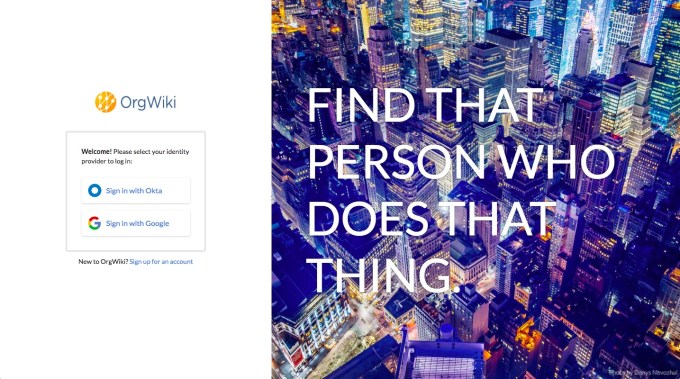
Site with ‘Sign in with Okta’ button. Photo: Okta
While Okta has provided APIs for developers prior to today, they didn’t provide a package like this that simplifies the process. This forced developers to use the SAML standard to make it work. While there’s nothing wrong with this approach, it can be time-consuming and put a lot of burden on developers to write software and connectors, while updating and maintaining them, Kerrest explained. This removes all of that complexity from the process.
This means that when two businesses are on Okta, they can trust one another because they do business together, and instead of setting up the SAML connection, a process that could take days, they can do it an hour with the Okta API tool, according to Kerrest.
“[Sign in with Okta] is a much easier way for customers or partners to seamlessly integrate into our environment. They could do it before, but we are ‘widgetizing’ it now,” he said.
Powered by WPeMatico

Excited to announce that this year’s The Europas Unconference & Awards is shaping up! Our half day Unconference kicks off on 3 July, 2018 at The Brewery in the heart of London’s “Tech City” area, followed by our startup awards dinner and fantastic party and celebration of European startups!
The event is run in partnership with TechCrunch, the official media partner. Attendees, nominees and winners will get deep discounts to TechCrunch Disrupt in Berlin, later this year.
The Europas Awards are based on voting by expert judges and the industry itself. But key to the daytime is all the speakers and invited guests. There’s no “off-limits speaker room” at The Europas, so attendees can mingle easily with VIPs and speakers.
What exactly is an Unconference? We’re dispensing with the lectures and going straight to the deep-dives, where you’ll get a front row seat with Europe’s leading investors, founders and thought leaders to discuss and debate the most urgent issues, challenges and opportunities. Up close and personal! And, crucially, a few feet away from handing over a business card. The Unconference is focused into zones including AI, Fintech, Mobility, Startups, Society, and Enterprise and Crypto / Blockchain.
We’ve confirmed 10 new speakers including:
Eileen Burbidge, Passion Capital
Carlos Eduardo Espinal, Seedcamp
Richard Muirhead, Fabric Ventures
Sitar Teli, Connect Ventures
Nancy Fechnay, Blockchain Technologist + Angel
George McDonaugh, KR1
Candice Lo, Blossom Capital
Scott Sage, Crane Venture Partners
Andrei Brasoveanu, Accel
Tina Baker, Jag Shaw Baker
We’d love for you to ask your friends to join us at The Europas – and we’ve got a special way to thank you for sharing.
Your friend will enjoy a 15% discount off the price of their ticket with your code, and you’ll get 15% off the price of YOUR ticket.
That’s right, we will refund you 15% off the cost of your ticket automatically when your friend purchases a Europas ticket.
So you can grab tickets here.
Public Voting is still humming along. Please remember to vote for your favourite startups!
Awards by category:
Hottest Media/Entertainment Startup
Hottest E-commerce/Retail Startup
Hottest Marketing/AdTech Startup
Hottest Enterprise, SaaS or B2B Startup
Hottest Platform Economy / Marketplace
Hottest Cyber Security Startup
Hottest Internet of Things Startup
Fastest Rising Startup Of The Year
Hottest GreenTech Startup of The Year
Best Angel/Seed Investor of the Year
Hottest VC Investor of the Year
Hottest Blockchain/Crypto Startup Founder(s)
Hottest Blockchain Protocol Project
Hottest Corporate Blockchain Project
Hottest Blockchain ICO (Europe)
Hottest Financial Crypto Project
Hottest Blockchain for Good Project
Hottest Blockchain Identity Project
Hall Of Fame Award – Awarded to a long-term player in Europe
The Europas Grand Prix Award (to be decided from winners)
The Awards celebrates the most forward thinking and innovative tech & blockchain startups across over some 30+ categories.
Startups can apply for an award or be nominated by anyone, including our judges. It is free to enter or be nominated.
Instead of thousands and thousands of people, think of a great summer event with 1,000 of the most interesting and useful people in the industry, including key investors and leading entrepreneurs.
• No secret VIP rooms, which means you get to interact with the Speakers
• Key Founders and investors speaking; featured attendees invited to just network
• Expert speeches, discussions, and Q&A directly from the main stage
• Intimate “breakout” sessions with key players on vertical topics
• The opportunity to meet almost everyone in those small groups, super-charging your networking
• Journalists from major tech titles, newspapers and business broadcasters
• A parallel Founders-only track geared towards fund-raising and hyper-networking
• A stunning awards dinner and party which honors both the hottest startups and the leading lights in the European startup scene
• All on one day to maximise your time in London. And it’s PROBABLY sunny!
That’s just the beginning. There’s more to come…
Interested in sponsoring the Europas or hosting a table at the awards? Or purchasing a table for 10 or 12 guest or a half table for 5 guests? Get in touch with:
Petra Johansson
Petra@theeuropas.com
Phone: +44 (0) 20 3239 9325
Powered by WPeMatico


