Enterprise
Auto Added by WPeMatico
Auto Added by WPeMatico

Microsoft unveiled the latest version of its HoloLens ‘mixed reality’ headset at MWC Barcelona today. The new HoloLens 2 features a significantly larger field of view, higher resolution and a device that’s more comfortable to wear. Indeed, Microsoft says the device is three times as comfortable to wear (though it’s unclear how Microsoft measured this).
Later this year, HoloLens 2 will be available in the United States, Japan, China, Germany, Canada, United Kingdom, Ireland, France, Australia and New Zealand for $3,500.
One of the knocks against the original HoloLens was its limited field of view. When whatever you wanted to look at was small and straight ahead of you, the effect was striking. But when you moved your head a little bit or looked at a larger object, it suddenly felt like you were looking through a stamp-sized screen. HoloLens 2 features a field of view that’s twice as large as the original.

“Kinect was the first intelligent device to enter our homes,” HoloLens chief Alex Kipman said in today’s keynote, looking back the the device’s history. “It drove us to create Microsoft HoloLens. […] Over the last few years, individual developers, large enterprises, brand new startup have been dreaming up beautiful things, helpful things.”
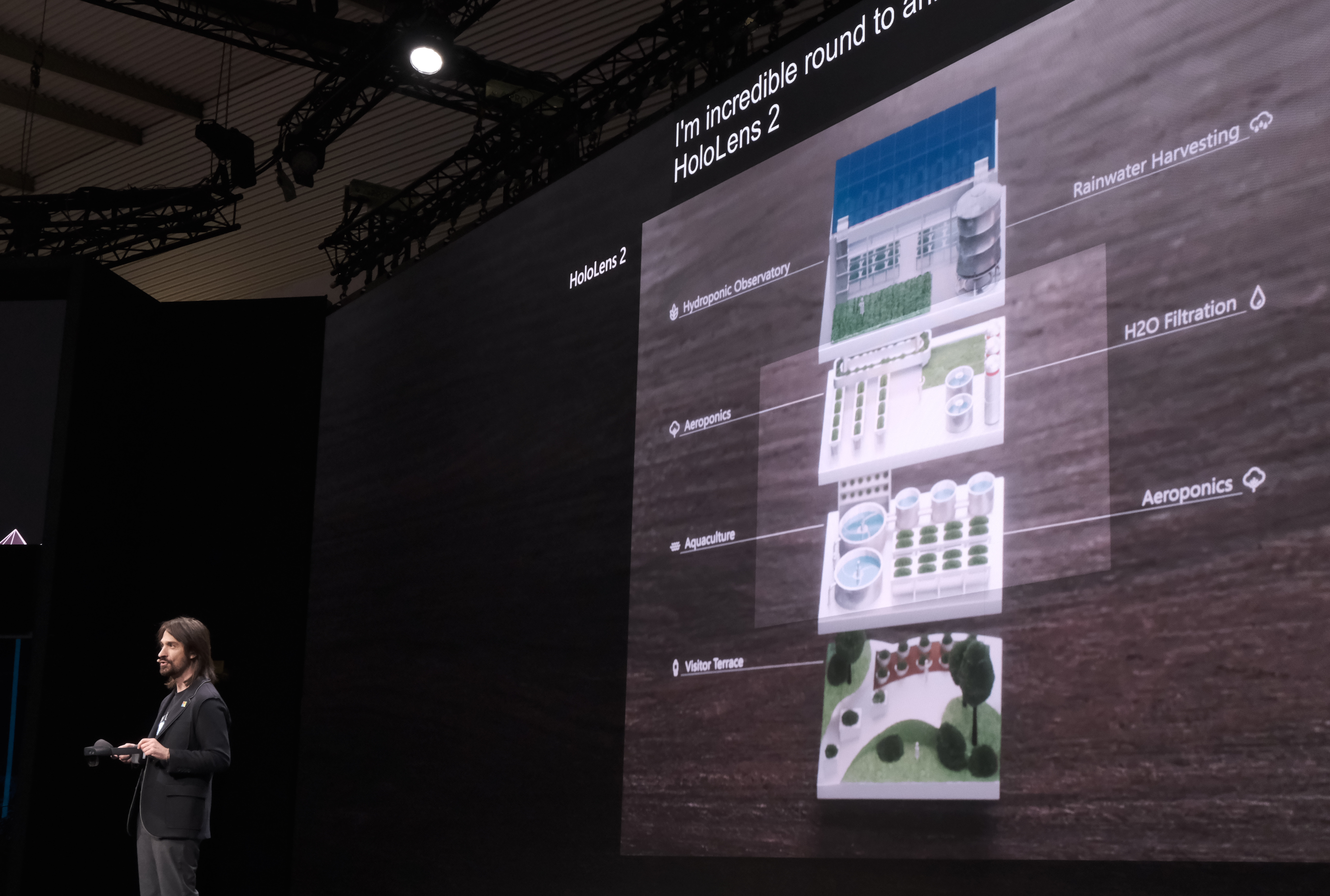
The HoloLens was always just as much about the software as the hardware, though. For HoloLens, Microsoft developed a special version of Windows, together with a new way of interacting with the AR objects through gestures like air tap and bloom. In this new version, the interaction is far more natural and lets you tap objects. The device also tracks your gaze more accurately to allow the software to adjust to where you are looking.

“HoloLens 2 adapts to you,” Kipman stressed. “HoloLens 2 evolves the interaction model by significantly advancing how people engage with holograms.”
In its demos, the company clearly emphasized how much faster and fluid the interaction with HoloLens applications becomes when you can use slides, for example, by simply grabbing the slider and moving it, or by tapping on a button with either a finger or two or with your full hand. Microsoft event built a virtual piano that you can play with ten fingers to show off how well the HoloLens can track movement. The company calls this ‘instinctual interaction.’
Microsoft first unveiled the HoloLens concept at a surprise event on its Redmond campus back in 2015. After a limited, invite-only release that started days after the end of MWC 2016, the device went on sale to everybody in August 2016. Four years is a long time between hardware releases, but the company clearly wanted to seed the market and give developer a chance to build the first set of HoloLens applications on a stable platform.
To support developers, Microsoft is also launching a number of Azure services for HoloLens today. These include spatial anchors and remote rendering to help developers stream high-polygon content to HoloLens.

It’s worth noting that Microsoft never positioned the device as consumer hardware. I may have shown off the occasional game, but its focus was always on business applications, with a bit of educational applications thrown in, too. That trend continued today. Microsoft showed off the ability to have multiple people collaborate around a single hologram, for example. That’s not new, of course, but goes to show how Microsoft is positioning this technology.
For these enterprises, Microsoft will also offer the ability to customize the device.
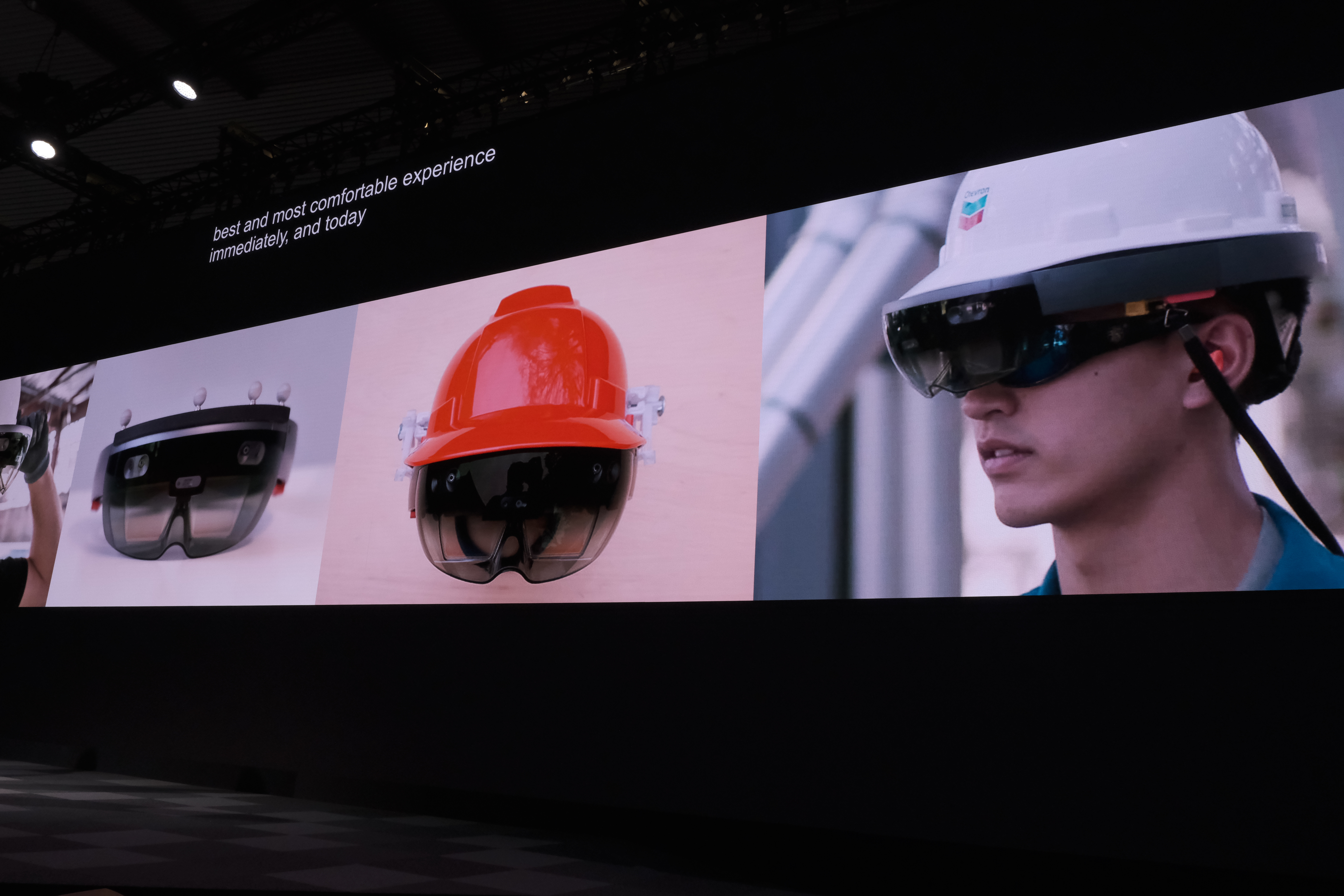
“When you change the way you see the world, you change the world you see,” Microsoft CEO Satya Nadella said, repeating a line from the company’s first HoloLens announcement four years ago. He noted that he believes that connecting the physical world with the virtual world will transform the way we will work.


Powered by WPeMatico
JFrog, the popular DevOps startup now valued at more than $1 billion after raising $165 million last October, is making a move to expand the tools and services it provides to developers on its software operations platform: it has acquired Shippable, a cloud-based continuous integration and delivery platform (CI/CD) that developers use to ship code and deliver app and microservices updates, and plans to integrate it into its Enterprise+ platform.
Terms of the deal — JFrog’s fifth acquisition — are not being disclosed, said Shlomi Ben Haim, JFrog’s co-founder and CEO, in an interview. From what I understand, though, it was in the ballpark of Shippable’s most recent valuation, which was $42.6 million back in 2014 when it raised $8 million, according to PitchBook data. (And that was the last time it raised money.)
Shippable employees are joining JFrog and plan to release the first integrations with Enterprise+ this coming summer, and a full integration by Q3 of this year.
Shippable, founded in 2013, made its name early on as a provider of a containerized continuous integration and delivery platform based on Docker containers, but as Kubernetes has overtaken Docker in containerized deployments, the startup had also shifted its focus beyond Docker containers.
The acquisition speaks to the consolidation that is afoot in the world of DevOps, where developers and organizations are looking for more end-to-end toolkits, not just to help develop, update and run their apps and microservices, but to provide security and more — or at least, makers of DevOps tools hope they will be, as they themselves look to grow their margins and business.
As more organizations run ever more of their operations as apps and microservices, DevOps have risen in prominence and are offered both toolkits from standalone businesses as well as those whose infrastructure is touched and used by DevOps tools. That means a company like JFrog has an expanding pool of competitors that include not just the likes of Docker, Sonatype and GitLab, but also AWS, Google Cloud Platform and Azure and “the Red Hats of the world,” in the words of Ben Haim.
For Shippable customers, the integration will give them access to security, binary management and other enterprise development tools.
“We’re thrilled to join the JFrog family and further the vision around Liquid Software,” said Avi Cavale, founder and CEO of Shippable, in a statement. “Shippable users and customers have long enjoyed our next-generation technology, but now will have access to leading security, binary management and other high-powered enterprise tools in the end-to-end JFrog Platform. This is truly exciting, as the combined forces of JFrog and Shippable can make full DevOps automation from code to production a reality.”
On the part of JFrog, the company will be using Shippable to provide a native CI/CD tool directly within JFrog.
“Before most of our users would use Jenkins, Circle CI and other CI/CD automation tools,” Ben Haim said. “But what you are starting to see in the wider market is a gradual consolidation of CI tools into code repository.”
He emphasized that this will not mean any changes for developers who are already happy using Jenkins or other integrations: just that it will now be offering a native solution that will be offered alongside these (presumably both with easier functionality and with competitive pricing).
JFrog today has 5,000 paying customers, up from 4,500 in October, including “most of the Fortune 500,” with marquee customers including the likes of Apple and Adobe, but also banks, healthcare organizations and insurance companies — “conservative businesses,” said Ben Haim, that are also now realizing the importance of using DevOps.
Powered by WPeMatico

Redis Labs, fresh off its latest funding round, today announced a change to how it licenses its Redis Modules. This may not sound like a big deal, but in the world of open-source projects, licensing is currently a big issue. That’s because organizations like Redis, MongoDB, Confluent and others have recently introduced new licenses that make it harder for their competitors to take their products and sell them as rebranded services without contributing back to the community (and most of these companies point directly at AWS as the main offender here).
“Some cloud providers have repeatedly taken advantage of successful opensource projects, without significant contributions to their communities,” the Redis Labs team writes today. “They repackage software that was not developed by them into competitive, proprietary service offerings and use their business leverage to reap substantial revenues from these open source projects.”
The point of these new licenses it to put a stop to this.
This is not the first time Redis Labs has changed how it licenses its Redis Modules (and I’m stressing the “Redis Modules” part here because this is only about modules from Redis Labs and does not have any bearing on how the Redis database project itself is licensed). Back in 2018, Redis Labs changed its license from AGPL to Apache 2 modified with Commons Clause. The “Commons Clause” is the part that places commercial restrictions on top of the license.
That created quite a stir, as Redis Labs co-founder and CEO Ofer Bengal told me a few days ago when we spoke about the company’s funding.
“When we came out with this new license, there were many different views,” he acknowledged. “Some people condemned that. But after the initial noise calmed down — and especially after some other companies came out with a similar concept — the community now understands that the original concept of open source has to be fixed because it isn’t suitable anymore to the modern era where cloud companies use their monopoly power to adopt any successful open source project without contributing anything to it.”
The way the code was licensed, though, created a bit of confusion, the company now says, because some users thought they were only bound by the terms of the Apache 2 license. Some terms in the Commons Clause, too, weren’t quite clear (including the meaning of “substantial,” for example).
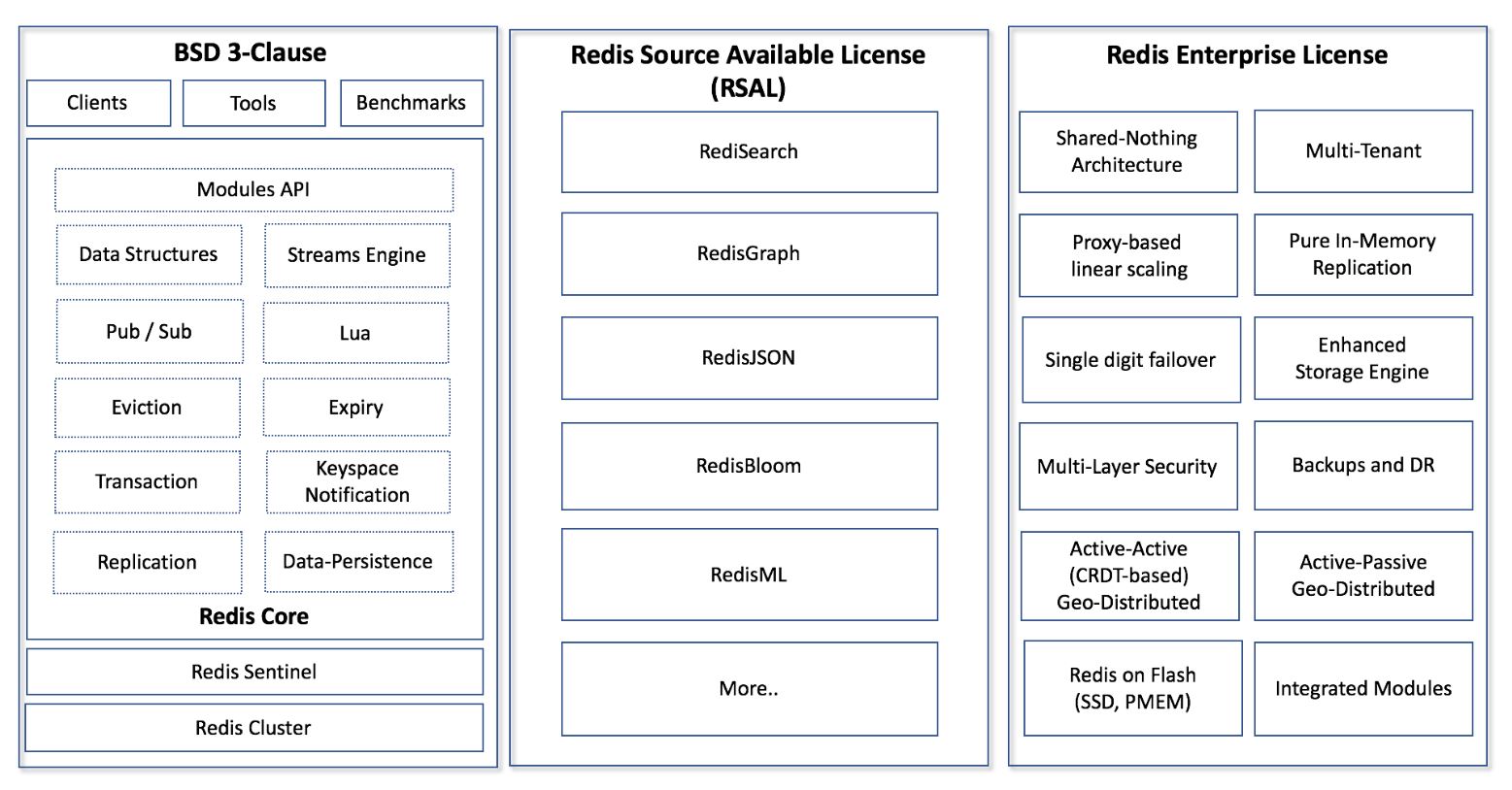
So today, Redis Labs is introducing the Redis Source Available License. This license, too, only applies to certain Redis Modules created by Redis Labs. Users can still get the code, modify it and integrate it into their applications — but that application can’t be a database product, caching engine, stream processing engine, search engine, indexing engine or ML/DL/AI serving engine.
By definition, an open-source license can’t have limitations. This new license does, so it’s technically not an open-source license. In practice, the company argues, it’s quite similar to other permissive open-source licenses, though, and shouldn’t really affect most developers who use the company’s modules (and these modules are RedisSearch, RedisGraph, RedisJSON, RedisML and RedisBloom).
This is surely not the last we’ve heard of this. Sooner or later, more projects will follow the same path. By then, we’ll likely see more standard licenses that address this issue so other companies won’t have to change multiple times. Ideally, though, we won’t need it because everybody will play nice — but since we’re not living in a utopia, that’s not likely to happen.
Powered by WPeMatico
Last year Microsoft introduced several mixed reality business solutions under the Dynamics 365 enterprise product umbrella. Today, the company announced it would be moving these to smartphones in the spring, starting with previews.
The company announced Remote Assist on HoloLens last year. This tool allows a technician working onsite to show a remote expert what they are seeing. The expert can then walk the less-experienced employee through the repair. This is great for those companies that have equipped their workforce with HoloLens for hands-free instruction, but not every company can afford the new equipment.
Starting in the spring, Microsoft is going to help with that by introducing Remote Assist for Android phones. Just about everyone has a phone with them, and those with Android devices will be able to take advantage of Remote Assist capabilities without investing in HoloLens. The company is also updating Remote Assist to include mobile annotations, group calling and deeper integration with Dynamics 365 for Field Service, along with improved accessibility features on the HoloLens app.
IPhone users shouldn’t feel left out though because the company announced a preview of Dynamics 365 Product Visualize for iPhone. This tool enables users to work with a customer to visualize what a customized product will look like as they work with them. Think about a furniture seller working with a customer in their homes to customize the color, fabrics and design in place in the room where they will place the furniture, or a car dealer offering different options such as color and wheel styles. Once a customer agrees to a configuration, the data gets saved to Dynamics 365 and shared in Microsoft Teams for greater collaboration across a group of employees working with a customer on a project.
Both of these features are part of the Dynamics 365 spring release and are going to be available in preview starting in April. They are part of a broader release that includes a variety of new artificial intelligence features such as customer service bots and a unified view of customer data across the Dynamics 365 family of products.
Powered by WPeMatico
Mixmax today introduced version 2.0 of its Gmail-based tool and plugin for Chrome that promises to make your daily communications chores a bit easier to handle.
With version 2.0, Mixmax gets an updated editor that better integrates with the current Gmail interface and that gets out of the way of popular extensions like Grammarly. That’s table stakes, of course, but I’ve tested it for a bit and the new version does indeed do a better job of integrating itself into the current Gmail interface and feels a bit faster, too.
What’s more interesting is that the service now features a better integration with LinkedIn . There’s both an integration with the LinkedIn Sales Navigator, LinkedIn’s tool for generating sales leads and contacting them, and LinkedIn’s messaging tools for sending InMail and connection requests — and sees info about a recipient’s LinkedIn profile, including the LinkedIn Icebreakers section — right from the Mixmax interface.
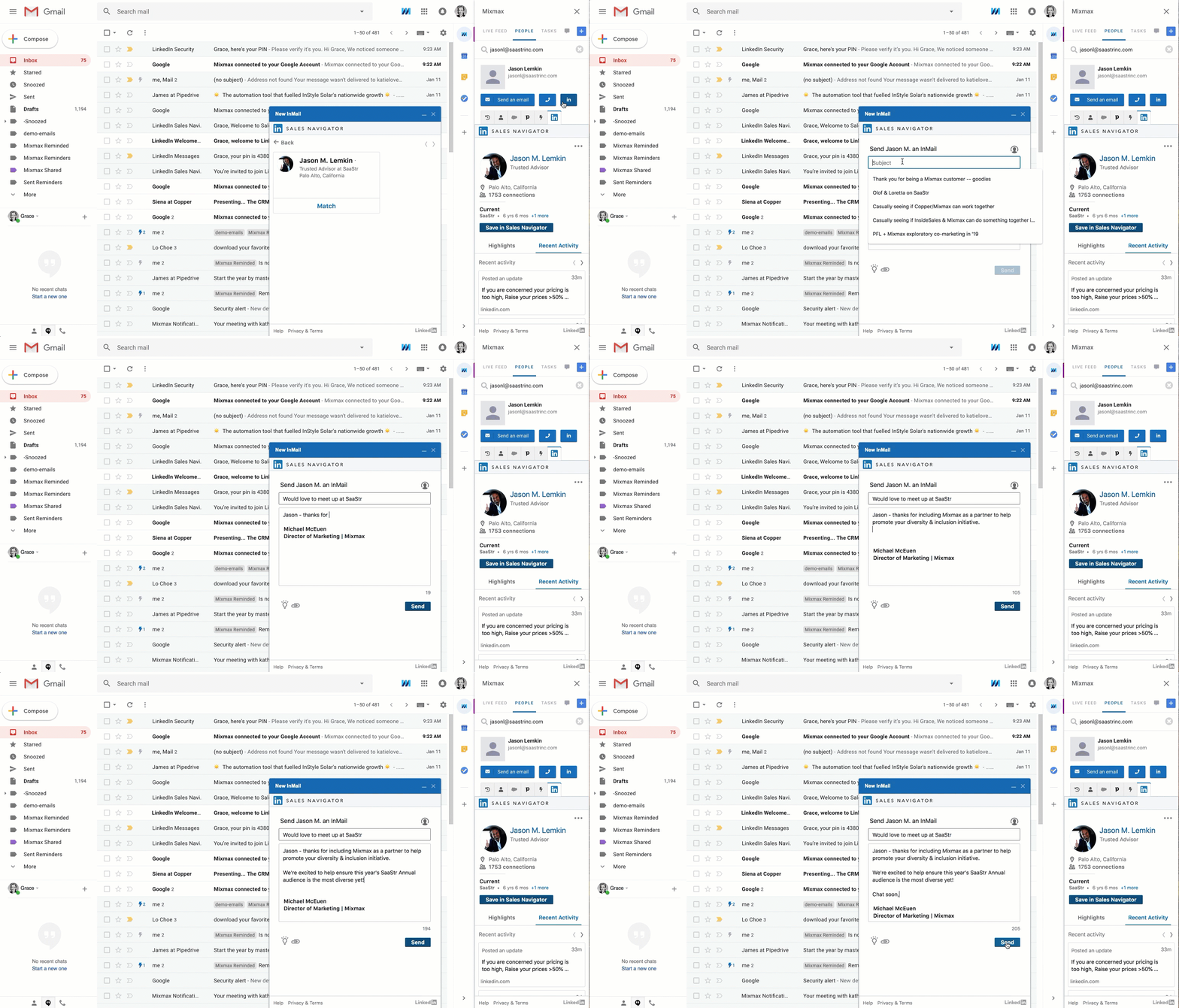
Together with its existing Salesforce integration, this should make the service even more interesting to sales people. And the Salesforce integration, too, is getting a bit of a new feature that can now automatically create a new contact in the CRM tool when a prospect’s email address — maybe from LinkedIn — isn’t in your database yet.
Also new in Mixmax 2.0 is something the company calls “Beast Mode.” Not my favorite name, I have to admit, but it’s an interesting task automation tool that focuses on helping customer-facing users prioritize and complete batches of tasks quickly and that extends the service’s current automation tools.
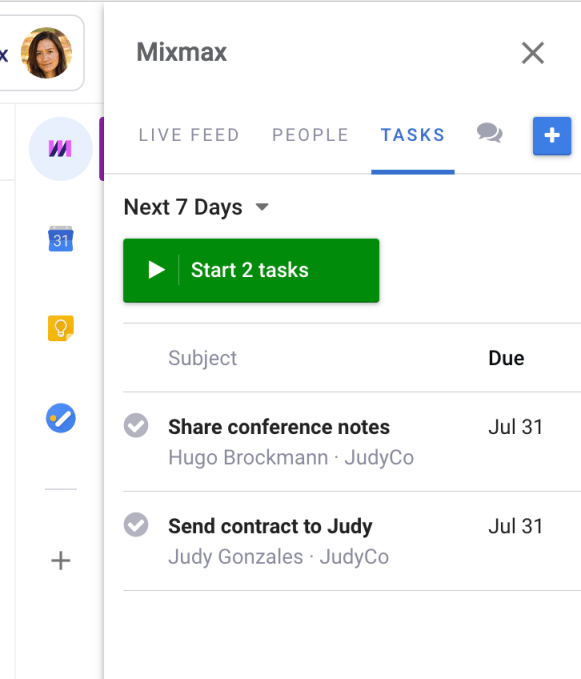 Finally, Mixmax now also features a Salesforce-linked dialer widget for making calls right from the Chrome extension.
“We’ve always been focused on helping business people communicate better, and everything we’re rolling out for Mixmax 2.0 only underscores that focus,” said Mixmax CEO and co-founder Olof Mathé. “Many of our users live in Gmail and our integration with LinkedIn’s Sales Navigator ensures users can conveniently make richer connections and seamlessly expand their networks as part of their email workflow.”
Whether you get these new features depends on how much you pay, though. Everybody, including free users, gets access to the refreshed interface. Beast Mode and the dialer are available with the enterprise plan, the company’s highest-level plan which doesn’t have a published price. The dialer is also available for an extra $20/user/month on the $49/month/user Growth plan. LinkedIn Sales Navigator support is available with the growth and enterprise plans.
Sadly, that means that if you are on the cheaper Starter and Small Business plans ($9/user/month and $24/user/month respectively), you won’t see any of these new features anytime soon.
Powered by WPeMatico
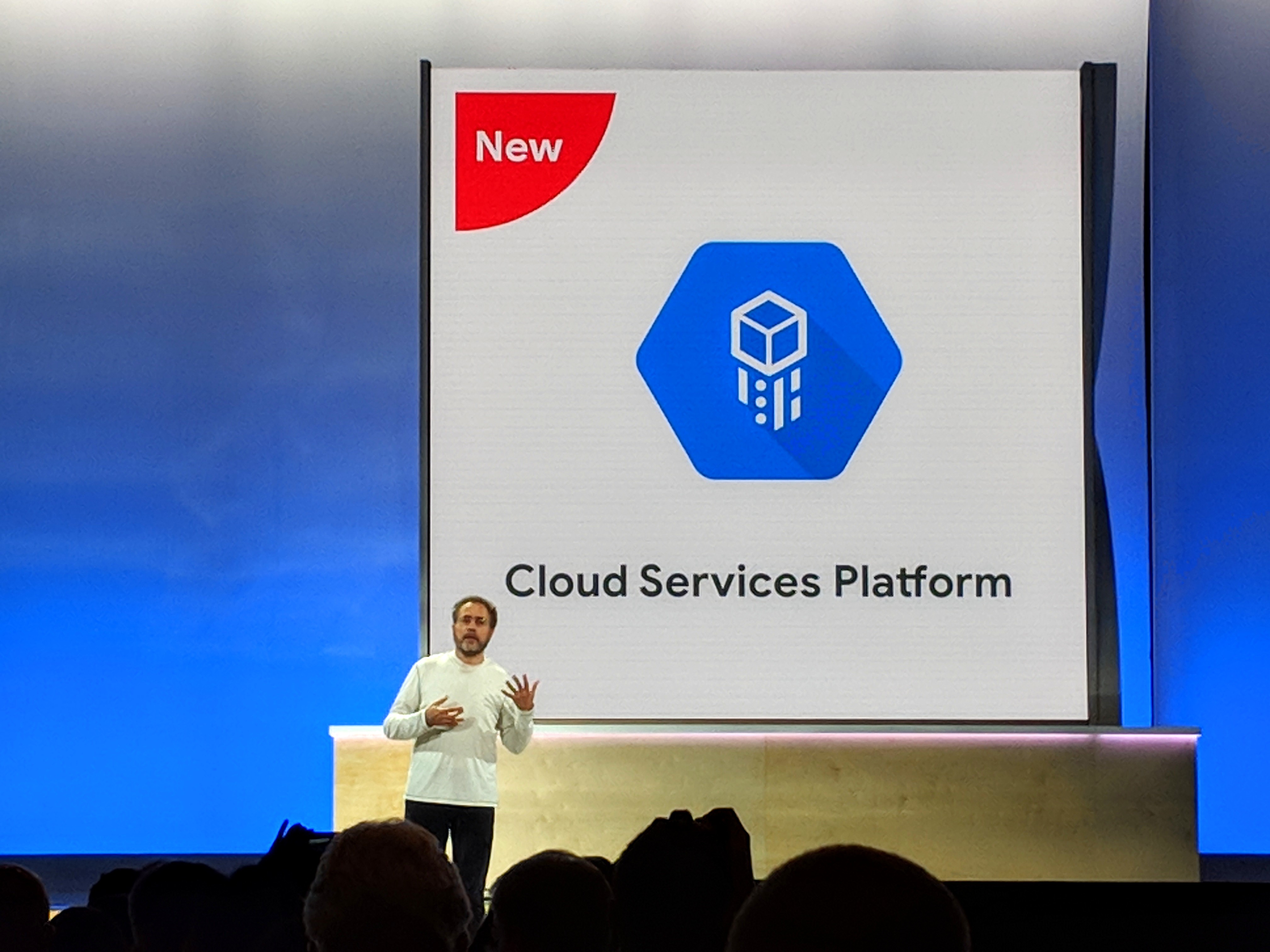
Last July, at its Cloud Next conference, Google announced the Cloud Services Platform, its first real foray into bringing its own cloud services into the enterprise data center as a managed service. Today, the Cloud Services Platform (CSP) is launching into beta.
It’s important to note that the CSP isn’t — at least for the time being — Google’s way of bringing all of its cloud-based developer services to the on-premises data center. In other words, this is a very different project from something like Microsoft’s Azure Stack. Instead, the focus is on the Google Kubernetes Engine, which allows enterprises to then run their applications in both their own data centers and on virtually any cloud platform that supports containers.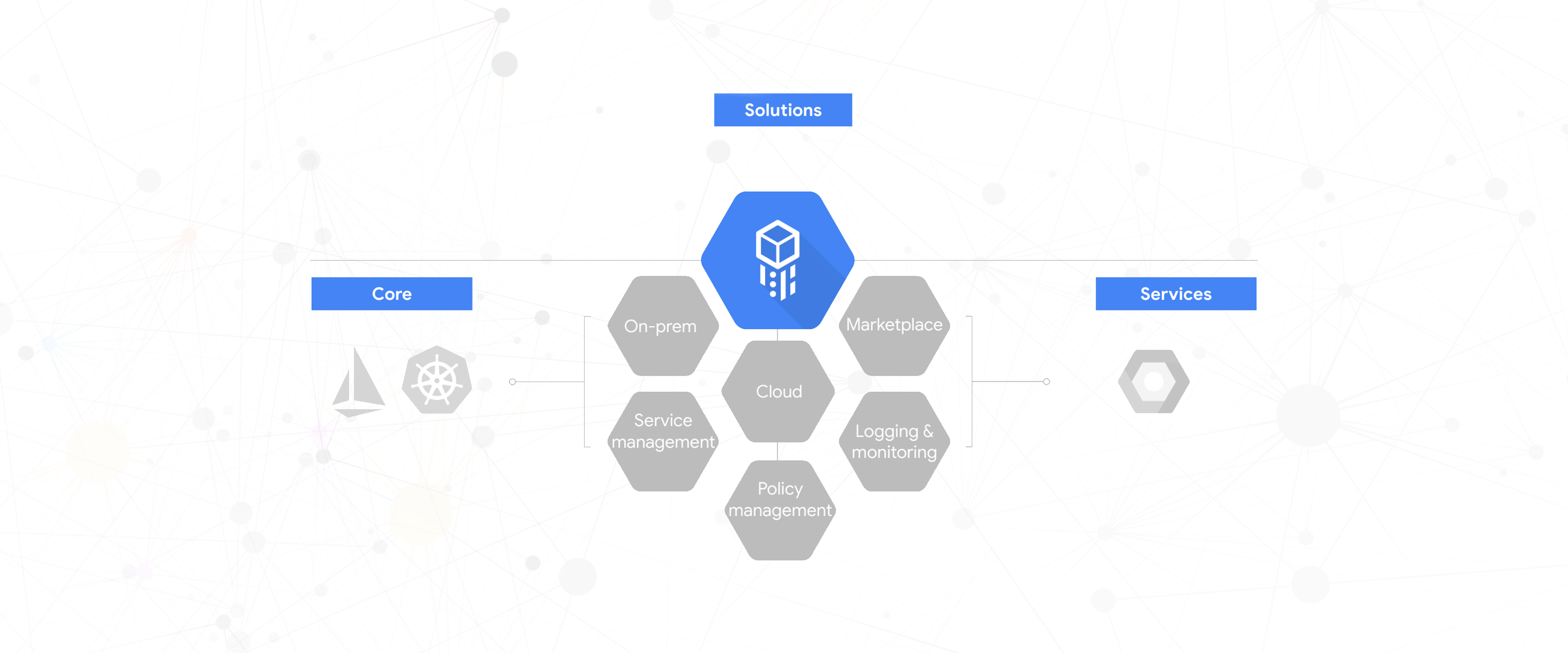 As Google Cloud engineering director Chen Goldberg told me, the idea here it to help enterprises innovate and modernize. “Clearly, everybody is very excited about cloud computing, on-demand compute and managed services, but customers have recognized that the move is not that easy,” she said and noted that the vast majority of enterprises are adopting a hybrid approach. And while containers are obviously still a very new technology, she feels good about this bet on the technology because most enterprises are already adopting containers and Kubernetes — and they are doing so at exactly the same time as they are adopting cloud and especially hybrid clouds.
It’s important to note that CSP is a managed platform. Google handles all of the heavy lifting like upgrades and security patches. And for enterprises that need an easy way to install some of the most popular applications, the platform also supports Kubernetes applications from the GCP Marketplace.
As for the tech itself, Goldberg stressed that this isn’t just about Kubernetes. The service also uses Istio, for example, the increasingly popular service mesh that makes it easier for enterprises to secure and control the flow of traffic and API calls between its applications.
With today’s release, Google is also launching its new CSP Config Management tool to help users create multi-cluster policies and set up and enforce access controls, resource quotas and more. CSP also integrates with Google’s Stackdriver Monitoring service and continuous delivery platforms.
“On-prem is not easy,” Goldberg said, and given that this is the first time the company is really supporting software in a data center that is not its own, that’s probably an understatement. But Google also decided that it didn’t want to force users into a specific set of hardware specifications like Azure Stack does, for example. Instead, CSP sits on top of VMware’s vSphere server virtualization platform, which most enterprises already use in their data centers anyway. That surely simplifies things, given that this is a very well-understood platform.
Powered by WPeMatico
For months, the drama has been steady in the Pentagon’s decade-long, $10 billion JEDI cloud contract procurement process. This week the plot thickened when the DOD reported that it has found new evidence of a possible conflict of interest, and has reopened its internal investigation into the matter.
“DOD can confirm that new information not previously provided to DOD has emerged related to potential conflicts of interest. As a result of this new information, DOD is continuing to investigate these potential conflicts,” Elissa Smith, Department of Defense spokesperson told TechCrunch.
It’s not clear what this new information is about, but The Wall Street Journal reported this week that senior federal judge Eric Bruggink of the U.S. Court of Federal Claims ordered that the lawsuit filed by Oracle in December would be put on hold to allow the DOD to investigate further.
From the start of the DOD RFP process, there have been complaints that the process itself was designed to favor Amazon, and that were possible conflicts of interest on the part of DOD personnel. The DOD’s position throughout has been that it is an open process and that an investigation found no bearing for the conflict charges. Something forced the department to rethink that position this week.
Oracle in particular has been a vocal critic of the process. Even before the RFP was officially opened, it was claiming that the process unfairly favored Amazon. In the court case, it made the conflict part clearer, claiming that an ex-Amazon employee named Deap Ubhi had influence over the process, a charge that Amazon denied when it joined the case to defend itself. Four weeks ago something changed when a single line in a court filing suggested that Ubhi’s involvement may have been more problematic than the DOD previously believed.
At the time, I wrote:
In the document, filed with the court on Wednesday, the government’s legal representatives sought to outline its legal arguments in the case. The line that attracted so much attention stated, “Now that Amazon has submitted a proposal, the contracting officer is considering whether Amazon’s re-hiring Mr. Ubhi creates an OCI that cannot be avoided, mitigated, or neutralized.” OCI stands for Organizational Conflict of Interest in DoD lingo.
And Pentagon spokesperson Heather Babb told TechCrunch:
During his employment with DDS, Mr. Deap Ubhi recused himself from work related to the JEDI contract. DOD has investigated this issue, and we have determined that Mr. Ubhi complied with all necessary laws and regulations.
Whether the new evidence that DOD has found is referring to Ubhi’s rehiring by Amazon or not is not clear at the moment, but it has clearly found new evidence it wants to explore in this case, and that has been enough to put the Oracle lawsuit on hold.
Oracle’s court case is the latest in a series of actions designed to protest the entire JEDI procurement process. The Washington Post reported last spring that co-CEO Safra Catz complained directly to the president. The company later filed a formal complaint with the Government Accountability Office (GAO), which it lost in November when the department’s investigation found no evidence of conflict. It finally made a federal case out of it when it filed suit in federal court in December, accusing the government of an unfair procurement process and a conflict on the part of Ubhi.
The cloud deal itself is what is at the root of this spectacle. It’s a 10-year contract worth up to $10 billion to handle the DOD’s cloud business — and it’s a winner-take-all proposition. There are three out clauses, which means it might never reach that number of years or dollars, but it is lucrative enough, and could possibly provide inroads for other government contracts, that every cloud company wants to win this.
The RFP process closed in October and the final decision on vendor selection is supposed to happen in April. It is unclear whether this latest development will delay that decision.
Powered by WPeMatico
For the longest time, Arm was basically synonymous with chip designs for smartphones and very low-end devices. But more recently, the company launched solutions for laptops, cars, high-powered IoT devices and even servers. Today, ahead of MWC 2019, the company is officially launching two new products for cloud and edge applications, the Neoverse N1 and E1. Arm unveiled the Neoverse brand a few months ago, but it’s only now that it is taking concrete form with the launch of these new products.
“We’ve always been anticipating that this market is going to shift as we move more towards this world of lots of really smart devices out at the endpoint — moving beyond even just what smartphones are capable of doing,” Drew Henry, Arms’ SVP and GM for Infrastructure, told me in an interview ahead of today’s announcement. “And when you start anticipating that, you realize that those devices out of those endpoints are going to start creating an awful lot of data and need an awful lot of compute to support that.”
To address these two problems, Arm decided to launch two products: one that focuses on compute speed and one that is all about throughput, especially in the context of 5G.
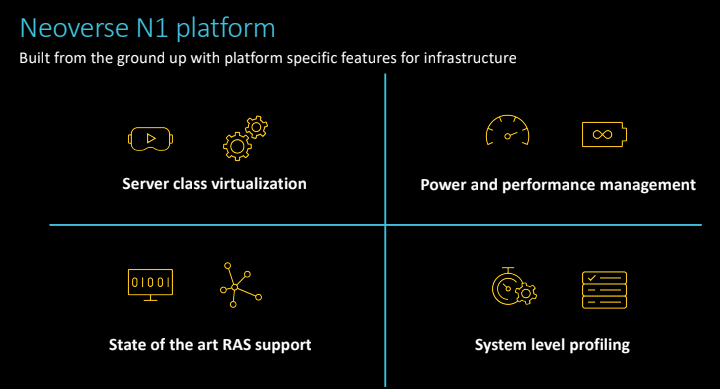
The Neoverse N1 platform is meant for infrastructure-class solutions that focus on raw compute speed. The chips should perform significantly better than previous Arm CPU generations meant for the data center and the company says that it saw speedups of 2.5x for Nginx and MemcacheD, for example. Chip manufacturers can optimize the 7nm platform for their needs, with core counts that can reach up to 128 cores (or as few as 4).
“This technology platform is designed for a lot of compute power that you could either put in the data center or stick out at the edge,” said Henry. “It’s very configurable for our customers so they can design how big or small they want those devices to be.”
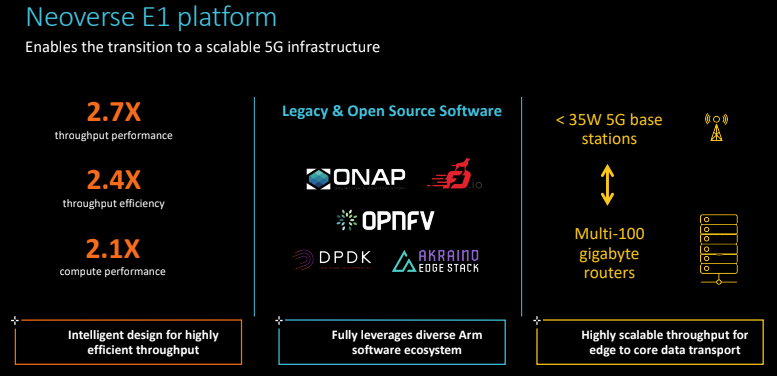
The E1 is also a 7nm platform, but with a stronger focus on edge computing use cases where you also need some compute power to maybe filter out data as it is generated, but where the focus is on moving that data quickly and efficiently. “The E1 is very highly efficient in terms of its ability to be able to move data through it while doing the right amount of compute as you move that data through,” explained Henry, who also stressed that the company made the decision to launch these two different platforms based on customer feedback.
There’s no point in launching these platforms without software support, though. A few years ago, that would have been a challenge because few commercial vendors supported their data center products on the Arm architecture. Today, many of the biggest open-source and proprietary projects and distributions run on Arm chips, including Red Hat Enterprise Linux, Ubuntu, Suse, VMware, MySQL, OpenStack, Docker, Microsoft .Net, DOK and OPNFV. “We have lots of support across the space,” said Henry. “And then as you go down to that tier of languages and libraries and compilers, that’s a very large investment area for us at Arm. One of our largest investments in engineering is in software and working with the software communities.”
And as Henry noted, AWS also recently launched its Arm-based servers — and that surely gave the industry a lot more confidence in the platform, given that the biggest cloud supplier is now backing it, too.
Powered by WPeMatico
Traditional industries like oil and gas and manufacturing often use equipment that was created in a time when remote access wasn’t a gleam in an engineer’s eye, and hackers had no way of connecting to them. Today, these devices require remote access, and some don’t have even rudimentary authentication. Xage, the startup that wants to make industrial infrastructure more secure, announced a new solution today to bring single sign-on and role-based control to even the oldest industrial devices.
Company CEO Duncan Greatwood says that some companies have adopted firewall technology, but if a hacker breaches the firewall, there often isn’t even a password to defend these kinds of devices. He adds that hackers have been increasingly targeting industrial infrastructure.
Xage has come up with a way to help these companies with its latest product called Xage Enforcement Point (XEP). This tool gives IT a way to control these devices with a single password, a kind of industrial password manager. Greatwood says that some companies have hundreds of passwords for various industrial tools. Sometimes, whether because of distance across a factory floor, or remoteness of location, workers would rather adjust these machines remotely when possible.
While operations wants to simplify this for workers with remote access, IT worries about security, and the tension can hold companies back, force them to make big firewall investments or, in some cases, implement these kinds of solutions without adequate protection.
XEP helps bring a level of protection to these pieces of equipment. “XEP is a relatively small piece of software that can run on a tiny credit-card size computer, and you simply insert it in front of the piece of equipment you want to protect,” Greatwood explained.
The rest of the Xage platform adds additional security. The company introduced fingerprinting last year, which gives unique identifiers to these pieces of equipment. If a hacker tries to spoof a piece of equipment, and the device lacks a known fingerprint, they can’t get on the system.
Xage also makes use of the blockchain and a rules engine to secure industrial systems. The customer can define rules and use the blockchain as an enforcement mechanism where each node in the chain carries the rules, and a certain number of nodes as defined by the customer must agree that the person, machine or application trying to gain access is a legitimate actor.
The platform taken as a whole provides several levels of protection in an effort to discourage hackers who are trying to breach these systems. Greatwood says that while companies don’t usually get rid of tools they already have, like firewalls, they may scale back their investment after buying the Xage solution.
Xage was founded at the end of 2017. It has raised $16 million to this point and has 30 employees. Greatwood didn’t want to discuss a specific number of customers, but did say they were making headway in oil and gas, renewable energy, utilities and manufacturing.
Powered by WPeMatico

Like virtually every big enterprise company, a few years ago, the German auto giant Daimler decided to invest in its own on-premises data centers. And while those aren’t going away anytime soon, the company today announced that it has successfully moved its on-premises big data platform to Microsoft’s Azure cloud. This new platform, which the company calls eXtollo, is Daimler’s first major service to run outside of its own data centers, though it’ll probably not be the last.
As Daimler’s head of its corporate center of excellence for advanced analytics and big data Guido Vetter told me, the company started getting interested in big data about five years ago. “We invested in technology — the classical way, on-premise — and got a couple of people on it. And we were investigating what we could do with data because data is transforming our whole business as well,” he said.
By 2016, the size of the organization had grown to the point where a more formal structure was needed to enable the company to handle its data at a global scale. At the time, the buzz phrase was “data lakes” and the company started building its own in order to build out its analytics capacities.

Electric lineup, Daimler AG
“Sooner or later, we hit the limits as it’s not our core business to run these big environments,” Vetter said. “Flexibility and scalability are what you need for AI and advanced analytics and our whole operations are not set up for that. Our backend operations are set up for keeping a plant running and keeping everything safe and secure.” But in this new world of enterprise IT, companies need to be able to be flexible and experiment — and, if necessary, throw out failed experiments quickly.
So about a year and a half ago, Vetter’s team started the eXtollo project to bring all the company’s activities around advanced analytics, big data and artificial intelligence into the Azure Cloud, and just over two weeks ago, the team shut down its last on-premises servers after slowly turning on its solutions in Microsoft’s data centers in Europe, the U.S. and Asia. All in all, the actual transition between the on-premises data centers and the Azure cloud took about nine months. That may not seem fast, but for an enterprise project like this, that’s about as fast as it gets (and for a while, it fed all new data into both its on-premises data lake and Azure).
If you work for a startup, then all of this probably doesn’t seem like a big deal, but for a more traditional enterprise like Daimler, even just giving up control over the physical hardware where your data resides was a major culture change and something that took quite a bit of convincing. In the end, the solution came down to encryption.
“We needed the means to secure the data in the Microsoft data center with our own means that ensure that only we have access to the raw data and work with the data,” explained Vetter. In the end, the company decided to use the Azure Key Vault to manage and rotate its encryption keys. Indeed, Vetter noted that knowing that the company had full control over its own data was what allowed this project to move forward.
Vetter tells me the company obviously looked at Microsoft’s competitors as well, but he noted that his team didn’t find a compelling offer from other vendors in terms of functionality and the security features that it needed.
Today, Daimler’s big data unit uses tools like HD Insights and Azure Databricks, which covers more than 90 percents of the company’s current use cases. In the future, Vetter also wants to make it easier for less experienced users to use self-service tools to launch AI and analytics services.
While cost is often a factor that counts against the cloud, because renting server capacity isn’t cheap, Vetter argues that this move will actually save the company money and that storage costs, especially, are going to be cheaper in the cloud than in its on-premises data center (and chances are that Daimler, given its size and prestige as a customer, isn’t exactly paying the same rack rate that others are paying for the Azure services).
As with so many big data AI projects, predictions are the focus of much of what Daimler is doing. That may mean looking at a car’s data and error code and helping the technician diagnose an issue or doing predictive maintenance on a commercial vehicle. Interestingly, the company isn’t currently bringing to the cloud any of its own IoT data from its plants. That’s all managed in the company’s on-premises data centers because it wants to avoid the risk of having to shut down a plant because its tools lost the connection to a data center, for example.
Powered by WPeMatico