
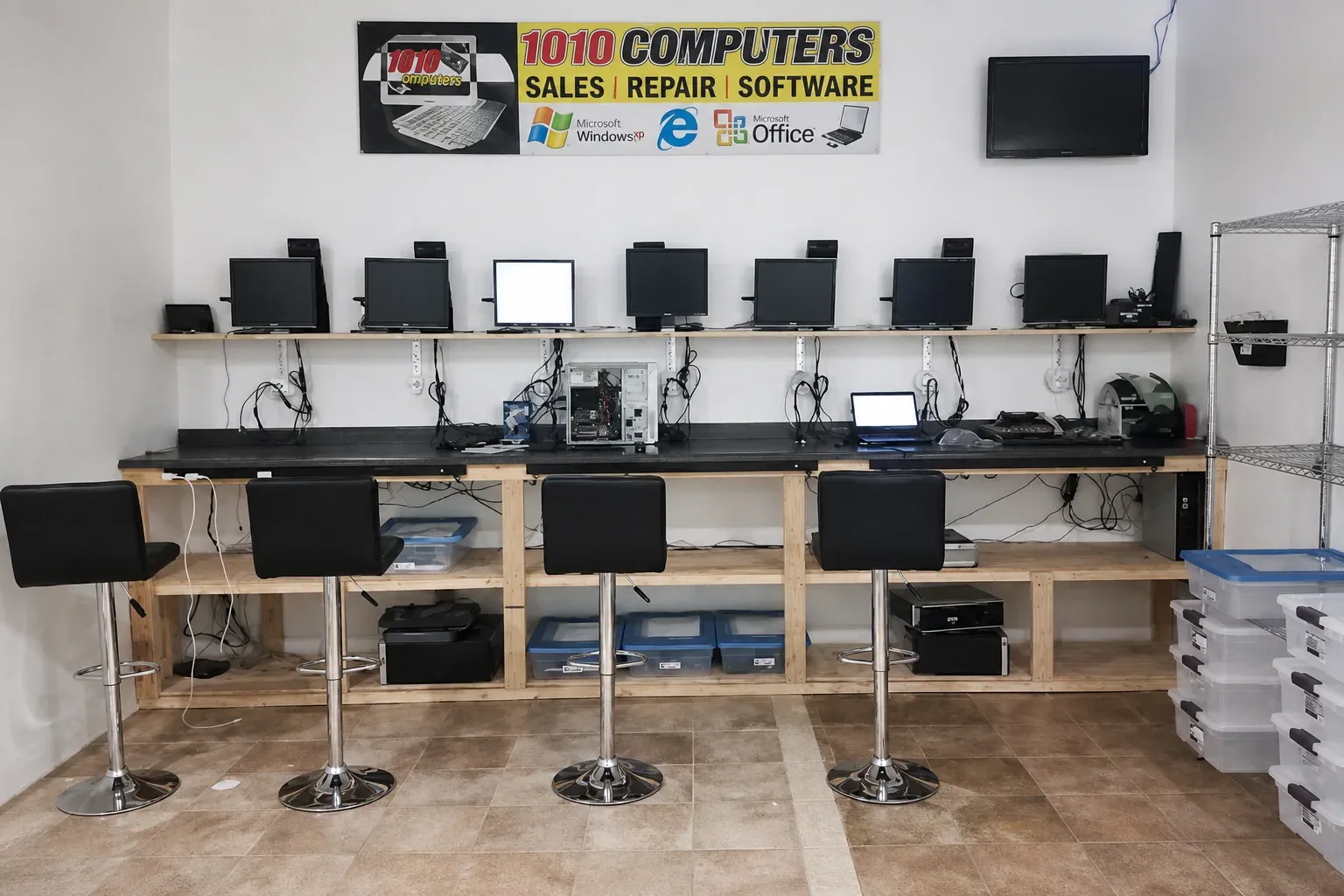
1010Computers | Computer Repair & IT Support

Motorola embraces the stylus life on its budget G series

Motorola’s long been a kind of quiet workhorse on the mobile scene. Aside from the occasional razzle-dazzle of a Moto Z or Razr, the Lenovo subsidiary mostly trades in budget handsets. The G line is probably the best example of the bunch. The devices aren’t flashy and the specs are often a year or two old, but you can’t really argue with the sub-$300 price point.

To its credit, however, the brand does a solid job introducing compelling features into the mix, even while keeping the cost down. This morning, at an event in Chicago, Motorola introduced two new entries into the line: the Moto G Power and Moto G Stylus, which will run $300 and $250, respectively.

The devices are similar in a number of ways, including the addition of a macro lens, borrowed from last year’s Motorola One Macro. It’s a curious addition — one that certainly sets the device apart from a million other multi-camera systems. How handy a macro lens will be on a phone is another question entirely, of course — though the company is convinced that users will appreciate the option.

Certainly it will help mix up the photos they do shoot, moving from your standard shots of people and landscapes to flowers and food, I suppose.

Both products also sport beefy batteries — a longtime and welcome staple of Motorola’s devices. There’s a beefy 4,000 mAh battery on the Stylus and even more massive 5,000 mAh on the Power. Those are listed at 19 and 27 hours, respectively. Less impressive is the Snapdragon 665 processor found on each. It’s a cost-cutting measure, honestly.

There are, after all, trade-offs to keeping budget phones budget — and Qualcomm’s decision to go all in on 5G for the 765 is no doubt going to sting some budget device makers. On the positive side of things, the headphone jack is still clinging on for dear life.

The biggest distinction factor between the two is, of course, in the name. Nearly a decade after Samsung proved that the world (or parts of it, at least) still wanted a stylus, the technology never really went mainstream. Sure, plenty of companies have tried it, but none found anywhere near the success of the S-Pen.

Motorola takes a cautious leap here with the inclusion of a stylus and the Moto Note app (which it tells me has cleared all of the legal hurdles in spite of sounding quite similar to an existing product). Perhaps there’s room for the tech at a far lower price point.

Another feature worth noting (as it were) was also inherited by the Motorola One line. The clever dedicated action camera allows users to shoot wide screen while holding the phone portrait mode. That way you can move the phone around with a single hand while shooting action scenes.

Both devices start shipping this spring.

Powered by WPeMatico

Carta debuts fund to invest in startups that tap into its platform

This morning Carta, a startup that helps private companies manage equity, announced it has created an investing vehicle called Carta Ventures. The well-funded unicorn wants to invest in young startups that it sees building off of its data-driven perspective into the world of private companies, helping to foster an ecosystem around its core products and services.

As TechCrunch has reported, the world of corporate venture capital has seen an enormous rise in the number of players active in the category, as cash-rich incumbents of all sizes deploy cash as a way to both keep an ear to the ground in their market and surrounding areas, and perhaps drive some cash-on-cash returns to boot. Companies like Slack have also compiled investing entities while private to put capital to work in companies that plug into their platform.

With all the activity in corporate venture capital, why do we care about Carta Ventures? Mostly because Carta itself is of growing importance in the expanding and increasingly crucial world of private companies, and the company has some pretty specific things it’s looking to invest in.

Why private companies matter

Carta works with private companies to help with certain valuation varietals, cap tables and reporting. It also offers tools and services for the venture class. This puts it squarely in the middle of the private market, which is in the midst of a long crescendo.

Investment into private companies is growing. The number of public companies is falling, and it’s taking longer for private companies to go public. The companies staying private are worth hundreds of billions of dollars. Hell, even The Economist dug into the private company boom, noting that “[i]nstitutional investors are rushing headlong into private markets, especially into venture capital, private equity and private debt.”

And Carta provides behind-the-scenes sinew and tissue to both the players (startups and other private companies) and their fuel (investors of all stripes). Efforts that sum to the startup working to expand the world of companies supporting those same firms through its new venture fund.

Carta wants to accelerate (and even instigate, as we’ll see) companies that add to its own platform, making investing and participating in the private markets a bit more limpid and simple — two things that the world of private capital and its constituent bets have never had in abundance.

Capital for whom?

To get a grip on who Carta wants to fund and why, TechCrunch caught up with James McGillicuddy, who heads up strategy for the company. Starting with the basics, the capital that Carta Ventures plans to invest will come out of Carta’s own accounts. McGillicuddy said that the entity will invest “balance sheet capital, with no outside structure,” meaning that the setup is “very much from the corporate ventures playbook.”

Standard so far, then. Next we wanted to know about how many general partners Carta Ventures would muster to go into the market. Instead of answering that directly, McGillicuddy discussed a number of existing internal staffers, and a collection of folks that he considers a “pretty good group of folks in the classical sense on the investment committee that will be able to help these entrepreneurs and guide them towards a business that we think should exist now that we [are] programmatically opening up access to the markets.”

Carta Ventures intends to write seed checks, according to a pre-release copy of a blog post shared with TechCrunch. McGillicuddy added that Carta Ventures’ “first priority is helping folks think through how to leverage our platform to build things that we think should exist, that we don’t have the expertise [in].”

As you can tell from McGillicuddy’s last two answers, there is intentionality afoot at Carta Ventures in terms of what it wants to see built.

In a blog post written by Carta CEO Henry Ward, three companies are mentioned: A startup focused on helping other companies come up with fair and market-fitting “total compensation” for employees including both cash and stock; a startup focused on “build[ing] analytic investment tools for venture as an asset class;” and one final startup focused on executing and publishing research on private companies.

I was curious why Carta wouldn’t just build this out itself, given how precise its anticipation of what it wants to be built. McGillicuddy said that the best people for all things that Carta wants to see aren’t inside its offices (true), and that even if some of those folks were already working for Carta, his company has “many other priorities and so many things to build.” 

Fair enough. But it indicates that Carta isn’t just building a corporate venture arm to go out and put money to work in companies that could later eat its lunch. Instead, it wants to put to use capital as a lever to power particular firms that could extend its reach.

What else?

Carta’s venture fund is willing to put money to work in idea-stage companies, provided that you’re doing stuff that it finds enticing (see above). And Carta is willing to put you up in its office and so forth. It’s there to help if you want it.

Why is all this happening? Carta isn’t public and probably isn’t profitable. How can it afford to have its own venture arm? This is how:


That was back in mid-2019 when it raised $300 million at a $1.7 billion valuation.

When the private capital markets are wiling to throw that much money at you, why not put it to work funding smaller companies who may profit off of your private company platform?1

  1. If you say “private companies” four times fast, you have to accept a check from Carta Ventures. It’s the rule.

Powered by WPeMatico

Instagram prototypes letting IGTV creators monetize with ads

Instagram may finally let IGTV video makers earn money 18 months after launching the longer-form content hub. Instagram confirms to TechCrunch that it has internally prototyped an Instagram Partner Program that would let creators earn money by showing advertisements along with their videos. By giving creators a sustainable and hands-off way to generate earnings from IGTV, they might be inspired to bring more high-quality content to the destination.

The program could potentially work similarly to Facebook Watch, where video producers earn a 55 percent cut of revenue from “Ad Breaks” inserted into the middle of their content. There’s no word on what the revenue split would be for IGTV, but since Facebook tends to run all its ads across all its apps via the same buying interfaces, it might stick with the 55 percent approach that lets its say creators get the majority of cash earned.

Previously, Instagram only worked with a limited set of celebrities, paying “to offset small production costs” for IGTV content Bloomberg reported, but not offering a way to earn a profit. That left creators to look to sponsored content or product placement to generate cash, or to try to push their followers to platforms like YouTube where they could earn a reliable cut of ads.

A lack of monetization may have contributed to the absence of great content on IGTV. Many of the videos on the Popular page are low-grade rips of YouTube content or TV, or are clickbait teasers. That has led to mediocre view counts — only 7 million of Instagram’s billion-plus users downloading the standalone IGTV app — and Instagram dropping the homescreen button for opening IGTV.

That’s all disappointing considering TIkTok is blowing up on the back of more purposeful, storyboarded mobile video entertainment. Instagram has been looking at other ways to boost the quality of content users see, including today’s launch of unfollow suggestions.

But today, reverse engineering master and perennial TechCrunch tipster Jane Manchun Wong tipped us off to the IGTV monetization prototype she dug out of the code of Instagram’s Android app. She tells TechCrunch she first saw signs of the program a week and ago and was then able to generate screenshots of the unreleased feature. It shows an “Instagram Partner Program” with “Monetization Tools.” This seems to be different from the old “Partner Program” for business tool developers.

Users who are deemed “Eligible” according to criteria we don’t have info about could choose to “Monetize Your IGTV Videos.” The screen explains that, “You can earn money by runing short ads on your IGTV videos. When you monetize on IGTV, you agree to follow the Partner Program Monetization Policies.”

It’s not clear IGTV’s monetization policies would be different, but on Facebook they require that users:

  • Follow all its normal Community Standards about decency.
  • Share authentic content without misinformation, false news, clickbait, or sensationalism.
  • Share original content they made themselves.
  • Avoid restricted content categories including debated social issues, tragedy or conflict, objectionable activity, sexual or suggestive activity, strong language, explicit content, misleading medical information, and politics and government.

Instagram confirmed to TechCrunch the authenticity of the prototype it’s been working on and provided the following statement (that it later tweeted): “We continue to explore ways to help creators monetize with IGTV. We don’t have more details to share now, but we will as they develop further.”

Given the company is confirming this as a prototype rather than a feature being beta tested, there are no public mentions. There’s no Instagram Help Center information published about it, and Instagram might not be testing the program externally yet. There’s still a chance Instagram could change directions and never launch the monetization program or alter it entirely before any eventual launch.

Update: Instagram CEO Adam Mosseri has commented on the new feature, replying to me here:

It’s no secret that we’ve been exploring this. We focused first on making sure the product had legs — else there would be little to monetize in the first place. IGTV is still in its early days, but it’s growing and so we’re exploring more ways to make it sustainable for creators.

— Adam Mosseri (@mosseri) February 7, 2020

Mosseri’s argument is that monetization hadn’t started sooner because Instagram wanted to ensure there was enough content to monetize. But Instagram had the money and scale to experiment much sooner, and it could have attracted that content to monetize by dangling payment.

IGTV has improved with time as more influencers and publishers get the hang of vertical mid-length video. However, there remains a fair amount of low-quality, unoriginal, overly captioned, meme-style videos promoted on its “Popular” page, at least for me.

The slow march of creator compensation

Creator monetization has been a slow-going evolution on many of the major social networks. While YouTube was early to the space with ads, Twitter, Facebook and Snapchat are now testing an array of ways for influencers to earn money. Those include ad splits, subscriptions to exclusive content, tipping, connections to brands for sponsorship, merchandise sales and more.

Bloomberg’s Sarah Frier and Nico Grant reported this week that Instagram brought in $20 billion in revenue during 2019. It gets to keep that revenue since it currently doesn’t split any with creators. That contrasts with YouTube, which says it took in $15.1 billion in 2019 revenue this week in the first time it’s revealed the stat, though it has to pay out a substantial portion to creators. With Instagram now running ads in feed, Explore, and Stories, only IGTV and Direct remain as major surfaces lacking ads.

Social apps are wising up and realizing that if they want to keep their creators from straying to competitors and bringing fans with them, it needs to offer ways for people to turn their passion for creating content into a profession. IGTV spent a year and a half trying to get video makers to volunteer for free, and the result wasn’t entertaining. Now Instagram seems ready to share the proceeds if they can bring in viewers together.

Powered by WPeMatico

Rideshare startup HopSkipDrive raises $22M to focus on school transportation

It’s no secret that it’s hard to make the economics work at rideshare companies. That may explain the success to date of HopSkipDrive, a six-year-old, L.A.-based company that pairs drivers with both families but also, crucially, school districts. Specifically, the now 100-plus person company has deals in place with school districts in 13 markets across eight states where it works with more than 7,000 contractors.

All contractors, says cofounder and CEO Joanna McFarland, must have at least five years of childcare experience before they are allowed to drive for the startup.

Interestingly, McFarland says the school systems’ most burning need is to ensure the safe arrival of both homeless and foster children, whose numbers in the U.S. have reached an astonishing 2.5 million and 440,000, respectively. On the heels of a brand-new funding round, we asked her what’s going on and why.

TC: You’re just announcing $22 million in new venture backing, congratulations. I wonder if your story was harder to tell investors than it might have been a year ago, when they were more bullish on car-share companies.

JM: We’ve never considered ourselves comparable to Uber or Lyft. We’re really caregivers on wheels, providing a very different service. We work with families, but we also contract with school districts and counties, and that has a strong path to profitability. We can predict supply and demand; we’re [enjoying] contracted revenue. It’s very different.

TC: How do you describe the market opportunity?

JM: U.S school districts spend $25 billion a year on transportation, yet only one-third of kids take a bus to school, so it’s expensive and inefficient and meanwhile districts are being asked to do more with less.

Particularly challenging for them are children with specialized needs or homeless children who are moving around a lot but have the same right to get to school. It’s hard to re-route school buses, so we help schools with alternative transportation. Once we’ve contracted with them, we’re available, including to pick up a student who might be in foster care and moved to a new place at 10:30 at night. We can still pick them up the next morning.

TC: There are thousands of homeless children attending San Francisco schools. Are you serving other markets where housing prices are forcing more families on to the streets? 

JM: Unfortunately, there’s a large and growing population in a lot of places. Districts might not even know how many students are homeless or in foster care because their situations can change so significantly throughout the year. It might start with 500 students at the beginning of the year and end with 1,000. Because it fluctuates so much, it puts a ton of demand on these transportation directors to figure it out.

We’re partnered with L.A. County, for example, and it has the largest child welfare system in the country, with 88 districts and between 20,000 and 30,000 kids in foster care at any one time. It’s not a great statistic for L.A., but it’s the reality.

TC: And it’s one driver, one child?

JM: Sometimes there will be two or three kids. We can do carpools. If there are group homes, we’ll take them to their different schools.

TC: What do your contracts look like then with these school districts?

JM: We dictate the ride price, then it’s really on as as-needed basis. They pay for what they need. We talk with them about their needs last year and this year and that does help us tremendously with supply and demand.

TC: How much of your business is coming from school partnerships versus from families that hire your company to take their kids to soccer games?

JM: Our business for families is growing organically, there’s such a need for it, but 70 percent of our revenue comes from [school districts].

TC: Your drivers are 1099 workers, so presumably they are working for other ride-share or other gig-economy companies? How busy can you keep them?

JM: They are contractors. Because they must have five years of caregiving experience and because of the vetting we do, 90 percent of them are female,  and they love what they do because they’re driving in communities where their kids grew up and they’re tied to the mission of what we’re doing.

We have some overlap with other gig companies, but with [HopSkipDrive] there’s safety on both sides of the platform, meaning they are driving kids, they aren’t driving late at night, they aren’t driving anyone who is drunk. They also have control over where they drive and when, based on personal preferences. They can choose some rides before school so they can take care of an elderly relative or grandchildren. They can see rides that are available up to a week in advance and select which ones they want depending on their schedule. Many are semi-retired and not looking for full-time income.

TC: How can parents be certain their kids are safe?

JM: We have a dual authentication process so drivers confirm a code word with the child and another piece of information that the child will know. Parents can track the rides in real time. We also have tech that monitors rides and can detect anomalies and provide support as needed. For example, they know via GPS and sensors if a driver is hitting traffic or has stopped owing to a flat tire and can react proactively, whether it is to send another car (in the case of a flat tire) or let the school and parents know that the child will be late. We designed the whole system for when a passenger may not have a phone.

TC: Why start this company?

JM: I started in finance then went into product management, working for tech companies. But as I was working, I was also growing my family, and I couldn’t get my son to karate at 3 o’clock. It was so frustrating. I didn’t need a nanny; I just needed to get him to karate.

All the moms I knew had their own version of this transportation story. [At a school function,] I suggested we put out money in a pot and hire a driver, and another mom said, ‘How do we do that?’ She’s one of my cofounders.

Pictured above from left to right: HopSkipDrive cofounders Carolyn Yashari Becher. Joanna McFarland, and Janelle McGlothlin

Powered by WPeMatico

Twitter-backed ShareChat eyes fantasy sports in India

The growing market of fantasy sports in India may soon have a new and odd entrant: ShareChat .

The local social networking app, which in August last year raised $100 million in a financing round led by Twitter, has developed a fantasy sports app and has been quietly testing it for six months, two sources familiar with the matter told TechCrunch.

ShareChat’s fantasy sports app, called Jeet11, allows betting on cricket and football matches and has already amassed more than 120,000 registered users, the sources said. The app, or its website, does not disclose its association with ShareChat.

A ShareChat spokesperson confirmed the existence of the app and said the startup was testing the product.

Jeet11 is not available for download on the Google Play Store due to the Android maker’s guidelines on betting apps, so ShareChat has been distributing it through Xiaomi’s GetApps app store and the Jeet11 website, and has been promoting it on Instagram. It is also available as a web app.

Fantasy sports, a quite popular business in many markets, has gained some traction in India in recent years. Dream11, backed by gaming giant Tencent, claimed to have more than 65 million users early last year. It has raised about $100 million to date and is already valued north of $1 billion.

Bangalore-based MPL, which counts Sequoia Capital India as an investor and has raised more than $40 million, appointed Virat Kohli, the captain of the Indian cricket team, as its brand ambassador last year.

In the last two years, scores of startups have emerged to grab a slice of the market, and the vast majority of them are focused on cricket. Cricket is the most popular sport in India, just ask Disney’s Hotstar, which claimed to have more than 100 million daily active users during the cricket season last year.

Or ask Facebook, which unsuccessfully bid $600 million to secure streaming rights of the IPL cricket tournament. It has since grabbed rights to some cricket content and appointed the Hotstar chief as its India head.

So it comes as no surprise that many sports betting apps have signed cricketers as their brand ambassador. Hala-Play has roped in Hardik Pandya and Krunal Pandya, while Chennai-based Fantain Sports has appointed Suresh Raina.

But despite the growing popularity of fantasy sports apps, where users pick players and bet real money on their performances, the niche is still sketchy in many markets that consider it betting. In fact, Twitter itself restricts promotion of fantasy sports services in many markets across the world.

In India, too, several states, including Assam, Arunachal Pradesh, Odisha, Sikkim and Telangana, have banned fantasy sports betting. Jeet11 currently requires users to confirm that they don’t live in any of the restricted states before signing up for the service.

“It doesn’t help matters either that the fantasy sports business’ attempts at legitimacy involve trying to be seen as video games — a cursory glance at a speakers panel for any Indian video game developer event is evidence of this — rather than riding on its own merits,” said Rishi Alwani, a long-time analyst of Indian gaming market and publisher of news outlet the Mako Reactor.

An executive who works at one of the top fantasy sports startups in India, speaking on the condition of anonymity, said that despite handing out cash rewards to thousands of users each day, it is still challenging to retain customers after the conclusion of any popular cricket tournament. “And that’s after you have somehow convinced them to visit your website or download the app,” he said.

For ShareChat, which has been exploring ways to monetize its 60 million-plus users and posted a loss of about $58 million on no revenue in the financial year ending March 31, that’s anything but music to the ears. In recent months, the startup, which serves users in more than a dozen local languages, has been experimenting with ads.

Powered by WPeMatico

Shrunken unicorn Fair cancels car leasing to Uber drivers

When Fair laid off 40% of its staff in October, CEO Scott Painter promised it wasn’t shuttering leasing services to on-demand fleets. But just one week later, Painter was removed as CEO and replaced in the interim with Adam Hieber, a CFA from Fair investor SoftBank. Today, according to two sources, Fair announced at an all-hands meeting that it would end its Fair Go program that helped Uber drivers lease cars. The program will cease in April. Uber now confirms the news to TechCrunch, and now Fair has directly confirmed the news to us as well.

“Due to an unexpected increase in insurance premiums that would have significantly raised prices for Fair’s rideshare drivers, we will wind down our weekly rideshare service over the coming months,” a spokesperson said. “We are working to minimize the disruption for Fair’s rideshare drivers, including notifying these customers of the status of their subscription in the coming weeks. We are working closely with Uber and exploring options with third parties to provide alternative customer mobility options to ensure a seamless transition for them, as well as continuity in Uber’s vehicle supply. We are thankful for our loyal Fair rideshare drivers and are disappointed we can no longer operate the business in a cost-effective way for our customers.”

Formerly valued at $1.2 billion after raising over $2 billion in equity and debt financing from SoftBank and Lightspeed, Fair laid off 40% of its staff in October. It had bought Uber’s XChange leasing program in early 2018. The deal lets drivers lease an Uber-eligible car with subscriptions to roadside assistance and maintenance for as low as $130 per week with a $500 start fee.

But Uber had sold the leasing program because it was unprofitable and adding to its losses at a tough time for the rideshare giant. As additional fees stacked up, Fair didn’t fare much better operating it.

A source tells us Fair Go was profitable. It was an important focus for the company as it retooled its subscription services for traditional drivers. Another source says at one point Fair Go was adding about 250 to 300 car leases per day and had thousands of active leases.

But Fair Go was facing higher insurance rates from carriers, which make sense since Uber drivers can be on the road far, far longer than traditional car owners.

Rather than trying to pass those fees along to drivers — many of whom are already cash-strapped — Fair told employees it would cease to lease to Uber drivers. That’s a respectable choice, since it could have pushed Uber drivers into debt if they didn’t fully comprehend what their total costs would be.

Attempts to reach Fair for comment were complicated by many of its in-house PR team being hit with October’s layoffs. An agency representative provided the statement above after publishing time.

An Uber spokesperson confirmed the shut down of Fair Go and their partnership, telling TechCrunch that “Unlocking options for vehicle access so drivers can earn with Uber remains a top priority. We’re thankful for Fair’s collaboration, and their contributions to our vehicle rental program. We’re continuing to invest in rental partnerships, and building more flexibility beyond hourly, weekly, and monthly options available today.” 

Uber tells me it remains committed to offering rental options to drivers through partnerships with Hertz, Avis, ZipCar and Getaround, and they may be able to work with Uber drivers formerly leasing from Fair.

Painter kept a role as chairman of Fair.com when he stepped away from the CEO position at the end of October — a change we are still confirming is in place today. At the time of the layoffs in October, he maintained that the action was proactive, and not in response to SoftBank pressure.

“SoftBank is a big shareholder and supporting my focus, and that is the reality right now,” Painter said at the time. “Leaning on us is not the term,” he added in response to our questions of whether SoftBank pressured it to make these changes. “They are supporting us — there is a big difference,” he stressed.

The CEO change one week later, and today’s news about Fair Go, points to a different unfolding of events that speaks to the pressure SoftBank itself is under.

The news is the latest low point for the SoftBank portfolio in the wake of the WeWork implosion. That’s caused potential repeat LPs for SoftBank’s massive Vision Fund to tighten their purse strings and other late stage investors to focus on sustainable unit economics. Late-stage startups have been left scrambling to cut their burn rates, often through layoffs.

SoftBank’s portfolio, which may have trouble raising on good terms after what many saw as inflated valuations propped up by the megafund, has been hit the hardest. This week TechCrunch broke the news that Flexport was laying off 3% of staff, or 50 employees.

Other SoftBank-funded company layoffs include Zume Pizza (80% of staff laid off), Wag (80%), Getaround (25%), Rappi (6%), and Oyo (5%). There may be more to come: activist investor Elliott Management, which now owns more than $2.5 billion of SoftBank shares, has reportedly been in talks with the company over a range of issues including better corporate governance and more transparency and management around investments.

Updated with confirmation from Fair, and a correction that Uber will continue offering car rentals through partners but not leasing as we originally printed.

Powered by WPeMatico

Netflix begins streaming in AV1 on Android

Netflix announced this week that it has started to stream titles in AV1 on Android in what could significantly help the two-year-old media codec gain wider adoption.

The world’s biggest streaming giant said on Wednesday that by switching from Google’s VP9 — which it previously used on Android — to AV1, its compression efficiency has gone up by 20%.

At the moment, only “select titles” are available to stream in AV1 for subscribers “who wish to reduce their cellular data usage by enabling the ‘Save Data’ feature,” the American firm said.

Netflix hasn’t shared much about the benefit AV1 will provide to customers, but the new media codec’s acceptance nonetheless sends a message by itself.

Tech giants, including Google, have spent years developing and improving media codecs as consumption of data skyrocketed and low-cost devices began to sell like hotcakes. But they just can’t seem to settle on one media codec and universally support it.

Think of Safari and YouTube, for instance. You can’t stream YouTube videos in 4K resolution on Safari, because Apple’s browser does not support Google’s VP9. And Google does not support HEVC for 4K videos on YouTube.

AV1 is supposed to be the savior media codec that gets universal support. It’s royalty-free and it works atop of open-source dav1d decoder that has been built by VideoLAN, best known for its widely popular media player VLC and FFmpeg communities. It is sponsored by the Alliance for Open Media.

Who are the members of Alliance for Open Media? Nearly all the big guys: Apple, Google, Amazon, Netflix, Nvidia, ARM, Facebook, Microsoft, Mozilla, Samsung and Tencent, among others.

But that’s not to say there aren’t roadblocks in the adoption of AV1. Compared to HEVC — the format that AV1 is supposed to replace in popularity — encoding in AV1 was noticeably slower a year ago, as per some benchmark tests.

Adoption of AV1 by various browsers, according to analytics firm StatCounter. Safari is yet to support it.

Netflix’s announcement suggests that things have improved. The streaming giant said its goal is to support AV1 on all of its platforms. “In the spirit of making AV1 widely available, we are sponsoring an open-source effort to optimize 10-bit performance further and make these gains available to all,” it said in a blog post.

Powered by WPeMatico

AllVoices raises $3 million to build a platform for anonymous harassment and bias reporting

As the national conversation pushes companies to reexamine the HR processes suppressing sexual harassment and bias reporting, tech startups are looking to find a way to smooth out the process and encourage communication.

LA-based AllVoices is building an encrypted communications platform for offices that allows employees to anonymously send complaints to their human resources department that can then follow-up and track the cases in an easy-to-use dashboard. CEO Claire Schmidt tells TechCrunch that her company has just closed a $3 million seed round with funding from Crosscut, Greycroft, Halogen Ventures, Vitalize VC and others.

CEO Claire Schmidt

Schmidt, most recently a VP at 20th Century Fox, started AllVoices after finding inspiration in Susan Fowler’s Uber blog post to create a platform that allowed employees at companies to anonymously offer feedback and file reports about internal toxicity. Schmidt says existing processes used for reporting can leave victims of harassment hesitant to come forward and fearful of the risk of damaging their career paths.

“We’re using this really outdated process, we’re basically telling people, ‘Okay, just come in and tell someone in HR, and hope for the best,’ ” Schmidt told TechCrunch in an interview. “And to me that seemed especially unfair to the most vulnerable people in any given work environment because they’re junior, they don’t have as much job security — they’re viewed as more expendable.”

Employees at companies that use AllVoices can log into a mobile app and anonymously submit reports and receive text notifications when they’ve gotten a response from the company, a streamlined process that Schmidt hopes can encourage people to “report in real time.” HR people don’t see names or any other identifying information and AllVoices doesn’t know the name of the employee either, with all communications being encrypted.

“We do encrypt all of our data in storage, in backup, in transit, at rest — at every level,” Schmidt says.

Sixty days after a complaint is made, AllVoices sends a notification to the employee asking whether they were aware of any action being taken by the company and how satisfied they were with it. The startup then aggregates that data and provides it back to the company so they can get a clearer sense of their own responsiveness.

AllVoices isn’t the only startup tackling this issue; in 2018 we profiled Spot, which is also building an anonymous reporting platform. AllVoices’ platform goes beyond streamlining processes for sexual harassment; the startup has modules for general feedback, ethics and compliance issues, culture problems, diversity and inclusion concerns and harassment and bias complaints.

The startup has also aimed to make a free version of its product so that employees at companies that haven’t integrated AllVoices can still make anonymous complaints by entering in an email for someone in their HR department. Schmidt hopes that the free service will serve their broader mission and help them onboard new customers.

AllVoices says they now have nearly 50 companies using the platform, including Instacart, GoPro, Wieden+Kennedy, The Wing and FabFitFun.

Powered by WPeMatico

Instagram gives unfollow suggestions in new ‘following categories’

Instagram will now show you who you interact with least frequently in case you want to unfollow them. In an effort to help you keep your feed clean and relevant, today Instagram is launching “following categories” that divides the list of who you follow into batches, including “most seen in feed” and “least interacted with.” That way if someone annoying or boring is overwhelming your feed, or there’s someone whose content you’ve proven to not be interested in, you can easily remove them. Time to axe those courtesy and pity follows.

“Instagram is really about bringing you closer to the people and things you care about — but we know that over time, your interests and relationships can evolve and change,” a spokesperson tells me. “Whether you graduate, move to a new city, or become obsessed with a new interest and find a community, we want to make it easier to manage the accounts you follow on Instagram so that they best represent your current connections and interests.”

To access the feature, go to your profile, then “following,” then you’ll see the categories you can explore. You’re also able to sort who you follow by earliest to latest and vice versa, in case you want to clear out your earliest adds or make sure you actually care about the latest people you followed.

By increasing the density of high-quality posts in your feed and Stories by getting you to unfollow irrelevant accounts, Instagram could boost ad views. You’ll come across fewer lame posts that might make you close the app so you instead keep scrolling and fast-forwarding while racking up ad impressions. Instagram reportedly hit $20 billion in 2019 revenue according to Bloomberg.

I’ve been asking Twitter to build unfollow suggestions since 2013, but Instagram beat them to it. Even with filtered feeds, the algorithms can get things wrong and show too much of people you don’t care about.

Following back or adding someone who asks has become part of the modern-day social contract. It can be rude and cause drama to refuse, so people just bloat their following list. Manually sorting through, trying to remember who people are and if you see them too often or constantly ignore them can be a slow and emotionally draining chore. With Instagram now 10 years old, Twitter 14 and Facebook 16, we’ve had a long time to accidentally screw up our social graph.

Perhaps unfollow suggestions took this long because no app wants to overtly shame specific people. But Instagram’s approach via clear, quantifiable categories is just vague enough that you probably won’t screenshot them and show the friends it said to nix. With that sensitivity, Instagram has pulled off the rare feat of improving the user experience while simultaneously benefiting its revenue engine.

Powered by WPeMatico

Registration is now open for Disrupt SF 2020

Time to mark September 14-16 on your calendar for the startup extravaganza that is TechCrunch’s Disrupt San Francisco 2020. Registration for our flagship, 10,000-person event is officially open, and pass prices will never be lower. Super early-bird passes are now available, and if you reserve your seat today, you can save up to $1,800.

There are many different pass types to make Disrupt SF as accessible as possible for every budget. We have passes designed for founders and investors, and if you don’t fit in either of those buckets, the Innovator pass is the one for you. Or if you’re a founder ready to exhibit on the show floor, grab a Startup Alley Exhibitor Package.

As always, we’ll feature big names speaking from the Disrupt Stage. Last year, attendees heard from Evan Spiegel (Snap), Sebastian Thrun (Kitty Hawk), Aaron Levie (Box), Shan-Lyn Ma (Zola), Jess Lee (Sequoia), Bob van Dijk (Naspers), Chris Dixon (a16z) and Cyan Banister (Founders Fund) — to name just a few. Even tech-savvy celebrities like Ang Lee, Will Smith and Stephen Curry (SC30 Inc./Golden State Warriors) felt the thrill of speaking at Disrupt.

We’re building our agenda now, and we can’t wait to tell you about the speakers who will rock your world, so keep checking back.

This year, we’re doubling down and expanding programming on the Extra Crunch Stage. We’re talking essential how-to content designed to help early-stage startup founders succeed — nuts-and-bolts information from people who know their slice of the startup scene inside-out. They’ll take the Extra Crunch Stage to share their hard-won insights with you and take your questions.

We’ll divulge this year’s speakers and presenters over the coming weeks and months, but these examples of Extra Crunch sessions from Disrupt SF 2019 will give you a sense of the topics and experts you can expect:

  • How to Evaluate Talent and Make Decisions with Ray Dalio (Bridgewater Associates)
  • How to get into Y Combinator with Ali Rowghani and Michael Seibel (Y Combinator)
  • How to Build a Subscription Product with Alexandra Friedman (LOLA), Eurie Kim (Forerunner Ventures) and Sandra Oh Lin (KiwiCo)

What else can you expect? The Startup Battlefield pitch competition with its $100,000 prize, workshops, Q&A sessions and hundreds of early-stage startups and sponsors exhibiting in Startup Alley. Plus, we’re adding some new networking events and revamping our CrunchMatch networking platform — we’ll reveal more details soon.

Disrupt San Francisco 2020 takes place on September 14-16 at Moscone West. Registration is now open, and this is your chance to score the best price on passes. Buy your super early-bird passes now and get ready to Disrupt!

Is your company interested in sponsoring or exhibiting at Disrupt San Francisco 2020? Contact our sponsorship sales team by filling out this form.

Powered by WPeMatico