
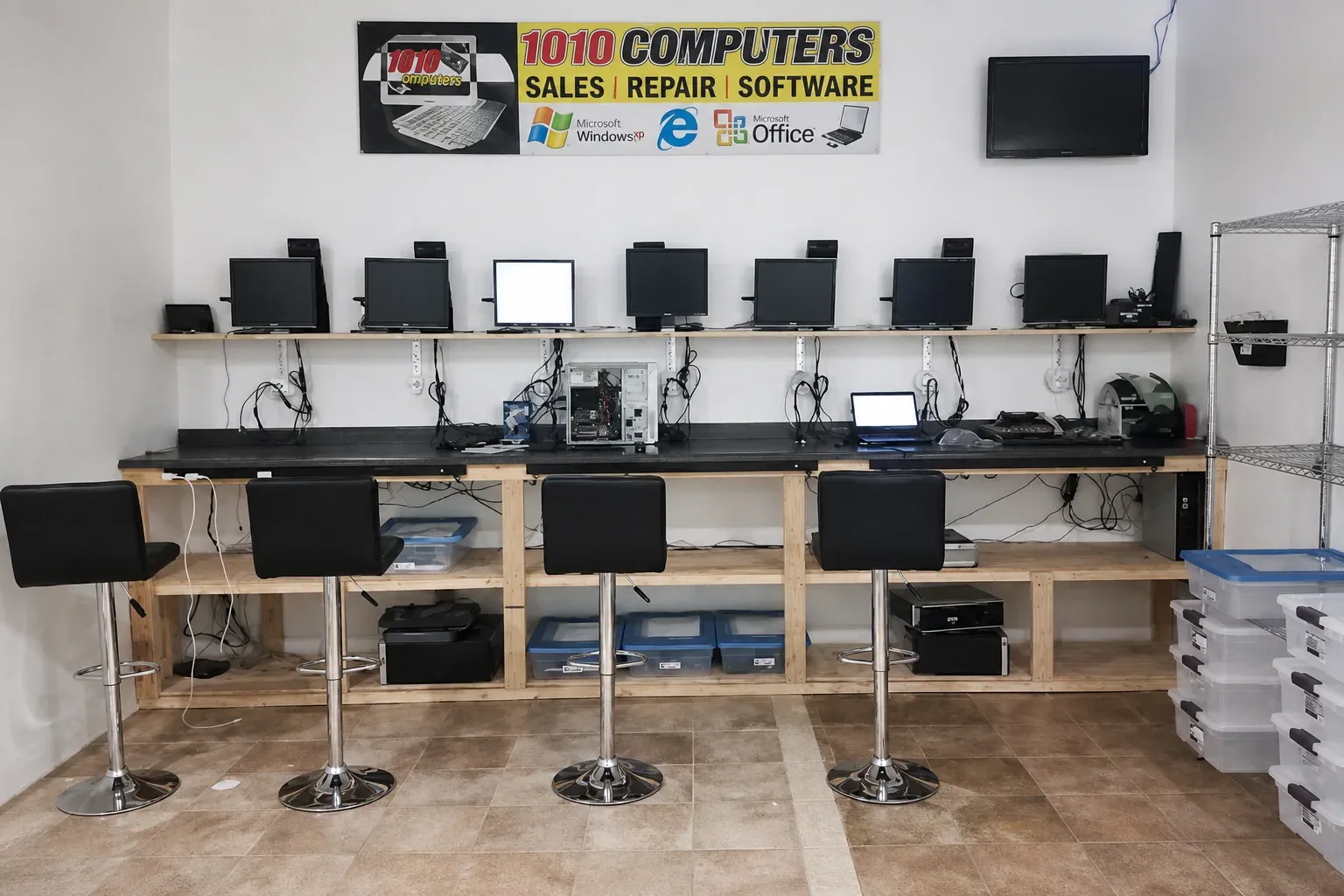
1010Computers | Computer Repair & IT Support

After $479M round on $12.4B valuation, Snowflake CEO says IPO is next step

Snowflake, the cloud-based data warehouse company, doesn’t tend to do small rounds. On Friday night word leaked out about its latest mega round. This one was for $479 million on a $12.4 billion valuation. That’s triple the company’s previous $3.9 billion valuation from October 2018, and CEO Frank Slootman suggested that the company’s next finance event is likely an IPO.

Dragoneer Investment Group led the round along with new investor Salesforce Ventures. Existing Snowflake investors Altimeter Capital, ICONIQ Capital, Madrona Venture Group, Redpoint Ventures, Sequoia, and Sutter Hill Ventures also participated. The new round brings the total raised to over $1.4 billion, according to PitchBook data.

All of this investment begs the question when this company goes public. As you might expect, Slootman is keeping his cards close to the vest, but he acknowledges that is the next logical step for his organization, even if he is not feeling pressure to make that move right now.

“I think the earliest that we could actually pull that trigger is probably early- to mid-summer timeframe. But whether we do that or not is a totally different question because we’re not in a hurry, and we’re not getting pressure from investors,” he said.

He grants that the pressure is about allowing employees to get their equity out of the company, which can only happen once the company goes public. “The only reason that there’s always a sense of pressure around this is because it’s important for employees, and I’m not minimizing that at all. That’s a legitimate thing. So, you know, it’s certainly a possibility in 2020 but it’s also a possibility the year thereafter. I don’t see it happening any later than that,” he said.

The company’s most recent round prior to this was $450 million in October 2018. Slootman says that he absolutely didn’t need the money, but the capital was there, and the chance to forge a relationship with Salesforce also was key in their thinking in taking this funding.

“At a high level, the relationship is really about allowing Salesforce data to be easily accessed inside Snowflake. Not that it’s impossible to do that today because there are lots of tools that will help you do that, but this relationship is about making that seamless and frictionless, which we find is really important,” Slootman said.

Snowflake now has relationships with AWS, Microsoft Azure and Google Cloud Platform, and has a broad content strategy to have as much quality data (like Salesforce) on the platform. Slootman says that this helps induce a network effect, while helping move data easily between major cloud platforms, a big concern as more companies adopt a multiple cloud vendor strategy.

“One of the key distinguishing architectural aspects of Snowflake is that once you’re on our platform, it’s extremely easy to exchange data with other Snowflake users. That’s one of the key architectural underpinnings. So content strategy induces network effect which in turn causes more people, more data to land on the platform, and that serves our business model,” he said.

Slootman says investors want to be part of his company because it’s solving some real data interchange pain points in the cloud market, and the company’s growth shows that in spite of its size, that continues to attract new customers at high rate.

“We just closed off our previous fiscal year which ended last Friday, and our revenue grew at 174%. For the scale that we are, this by far the fastest growing company out there…So, that’s not your average asset,” he said.

The company has 3400 active customers, which he defines as customers who were actively using the platform in the last month. He says that they have added 500 new customers alone in the last quarter.

Powered by WPeMatico

‘A city where you can pilot almost anything and figure out if it’s going to work’

Scott Bade
Contributor

Scott Bade is a former speechwriter for Mike Bloomberg and co-author of “More Human: Designing a World Where People Come First.”

As founding executive director of Tech:NYC, Julie Samuels is one of the state’s most prominent advocates for the tech sector, both in Albany and at City Hall.

Samuels, a lawyer by training, came to New York after serving as executive director of Engine, a San Francisco organization on which Tech:NYC is modeled. In an interview with TechCrunch, Samuels spoke about several issues, including her rationale for why, despite the controversy over Amazon’s decision not to build its second headquarters in Queens, the area is well-positioned for the next wave of tech innovation.

TechCrunch: What is the need for organizations like Tech:NYC and Engine?

Julie Samuels: As the tech industry matures, it is incredibly important that there are organizations [that] represent these companies politically, civically, making sure they have a seat at the table with so many public policy debates. There is no shortage of public policy debates surrounding technology.

It is also incredibly important that there are organizations who are talking from the viewpoint of smaller companies and startups. There are a lot of organizations that represent the biggest and most well-known companies, including Tech:NYC. But [we] also have hundreds of members who are small and growing startups. We think that diversity of the ecosystem is what really sets the technology sector apart and it is something we want to foster and celebrate.

Who are your members, then?

Powered by WPeMatico

Facebook has acquired Scape Technologies, the London-based computer vision startup

Scape Technologies, the London-based computer vision startup working on location accuracy beyond the capabilities of GPS, has been acquired by Facebook, according to a regulatory filing.

Full terms of the deal remain as yet unknown, although a Companies House update reveals that Facebook Inc. now has majority control of the company (more than 75%). However by looking at other filings, including a recent share issue, I understand the price could be about $40 million.

Further filings show that Scape’s previous venture capital representatives have resigned from the Scape board and are replaced by two Facebook executives.

Scape’s backers included Entrepreneur First (EF) — the startup is an alumni of the company builder program — along with LocalGlobe, Mosaic Ventures, and Fly Ventures.

Noteworthy is that EF and Fly Ventures have both already had a joint exit to Facebook of sorts, when Bloomsbury AI was acqui-hired by the social networking behemoth (a story that I also broke).

Founded in 2017, Scape Technologies was developing a “Visual Positioning Service” based on computer vision which lets developers build apps that require location accuracy far beyond the capabilities of GPS alone.

The technology initially targeted augmented reality apps, but also had the potential to be used to power applications in mobility, logistics and robotics. More broadly, Scape wanted to enable any machine equipped with a camera to understand its surroundings.

Scape CEO and co-founder Edward Miller previously described Scape’s “Vision Engine” as a large-scale mapping pipeline that creates 3D maps from ordinary images and video. Camera devices can then query the Vision Engine using the startup’s “Visual Positioning Service” API to determine their exact location with far greater precision than GPS can ever provide. The Visual Positioning Service was made available to select developers via Scape’s SDK.

Meanwhile the acquisition by Facebook, no matter what form it takes, looks like a good fit given the U.S. company’s investment in next generation platforms, including VR and AR. It is also another — perhaps, worrying — example of U.S. tech companies hoovering up U.K. machine learning and AI talent early.

Update: A Facebook spokesperson provided the following statement: “We acquire smaller tech companies from time to time. We don’t always discuss our plans.”

Powered by WPeMatico

3 unicorn takeaways from the Casper and One Medical IPOs

With Casper’s public offering earlier this week, we’ve closed the book on the first two venture-backed IPOs of note in 2020. Casper, joined by One Medical, carried over $870 million of private capital, venture and otherwise, across the finish line.

Even though each IPO featured an unprofitable tech-enabled business that had posted sub-30% growth and gross margins under 50% (far more, in the case of One Medical), they wound up miles apart in terms of their market reception and resulting valuation, measured in revenue multiples terms.

So what can we learn from the two IPOs as we look ahead to other unicorn debuts in 2020? A great number of things that help set the stage for the rest of 2020’s IPO class. Let’s discuss three observations that stick out the most.

Tech-enabled businesses can secure high-flying valuations in public offerings

The surprise of the year so far has been the public market’s reaction to One Medical’s IPO. The company, today worth $3.13 billion, is trading at 11.3x times the top end of its 2019 revenue projections (the company has yet to close the books on its Q4 accounting).

Powered by WPeMatico

Our.News fights misinformation with a ‘nutrition label’ for news stories

A startup called Our.News is working to make its users smarter consumers of the news.

In other words, it’s confronting some big, seemingly intractable problems. For one thing, there’s a tremendous amount of disinformation online — as Our.News founder and CEO Richard Zack put it, “Unfortunately, you have thousands of people all over the world who intentionally make it hard for people to know what’s true.

At the same time, many people don’t trust the media and don’t trust fact-checkers. (Also, facts don’t actually change people’s minds.)

All of this adds up to an environment where no one is quite sure what to believe, or they simply accept the stories that reinforce their existing beliefs.

“You can’t fight misinformation by telling people what’s true, because they don’t believe it,” Zack said. His solution? Something that he described as a “nutrition label for news.” “It doesn’t tell you it’s good or bad, it doesn’t say buy it or don’t buy it, it leaves the buying decision in the hands of the consumers.”

In some ways, the approach is similar to NewsGuard, which rates online news sources. In fact, Zack said, “We really support NewsGuard and what they’re doing.” Still, he suggested that evaluating publishers isn’t enough, which is why Our.News provides labels for individual articles — he compared it to “trying to choose between Lucky Charms and Cheerios,” where it’s not enough to know that both cereals are manufactured by General Mills.

To put it another way, you don’t want to just accept what a publisher tells you. Even the best publisher can make mistakes, so you also want to understand what claims they’re making, what their sources are and whether those claims have been vetted by independent fact checkers.

Our.News screenshot

An Our.News label is accessible through Firefox and Chrome browser extensions, as well as an iOS app. The label includes publisher descriptions from Freedom Forum, along with bias ratings from AllSides; information about an article’s sources, author and editor; fact-checking information from sources like PolitiFact, Snopes and FactCheck.org; labels like “clickbait” or “satire”; and user ratings and reviews.

Zack said Our.News has created around 600,000 labels to date, generating about 5,000 new ones every day. Of course, there’s still a good chance that the article you’re reading won’t have a label, but if that’s the case, Our.News might still be able to show you publisher information, and users can also click a button to add the article into the system.

“We’ve intentionally combined objective facts [about the article] with subjective views,” Zack added. “We think that’s the solution … If you go purely subjective, then it’s just a popularity contest. If it’s just objective, then who’s the determiner of truth? We’re mixing the two together, condensing it all into the nutrition label, so news consumers can more quickly make their own decision.”

He also acknowledged that different users will treat the labels in different ways. Some, for example, may still not trust the fact-checkers, but even then, Zack argued there’s still value in giving them a way to provide feedback to publishers in a way that’s more structured than a regular comments section.

He also noted that user ratings will be weighted based on their interaction with the label — if you skip the publisher information, skip the sources and skip the fact-checking, then your rating won’t be worth as much as someone else who carefully considered all of that information.

In addition to its current, consumer-focused distribution, Our.News just launched a way for publishers and other businesses to incorporate its labels. Zack said this could be used by “news publishers, content aggregators, social networks, anywhere that’s displaying articles.” (This is also how he plans to make money.)

The hope is that Our.News partners can use these labels to make readers more comfortable trusting their content, and to collect feedback from those readers. There will be some degree of customization available, but Zack emphasized that publishers won’t be able to change the actual content of the labels.

Powered by WPeMatico

AssoConnect is a service that helps you manage your nonprofit organization

Meet AssoConnect, a French startup that is building a software-as-a-service application to give you all the tools you need to manage your nonprofit organization (association in French).

The company just raised a $7.7 million (€7 million) funding round with XAnge and ISAI leading the round. Various business angels, such as Nicolas Macquin, Rodolphe Carle, Michaël Benabou, Thibaud Elzière and Phil Tesler are also participating in today’s funding round.

Many nonprofit organizations use tools and services that aren’t really designed for this type of organization. Some manage members in an Excel spreadsheet, waste a ton of time with accounting tasks and leave money on the table by making it hard to accept donations and memberships.

AssoConnect combines multiple services in its web interface. First, it lets you centralize information about your members in a single database. It acts as a light CRM, and you can create multiple groups of members depending on what they do in the organization.

Second, AssoConnect handles memberships and donations directly. You can create a form that interacts directly with your database to help new users join your organization. You also can create a donation module that can automatically generate tax forms. And you can create an online store if you’re selling goods.

If you don’t have a website already, you can use AssoConnect’s template-based website builder. You also can create events and email your members from AssoConnect using Mailgun.

Finally, the startup tries to generate accurate accounting reports based on donations, membership fees, ticket sales, etc. That’s why it makes sense to centralize everything through AssoConnect.

The service offers a free tier for organizations with 30 members or fewer. But you’ll have to pay a monthly subscription fee if you have higher needs. It’s a tough sell, given that nonprofit organizations usually don’t have a ton of money to spend on tools and services.

But the company has managed to convince 10,000 French organizations to switch to AssoConnect so far. Up next, AssoConnect wants to hire 80 people in 2020 and launch its service in the U.S.

Powered by WPeMatico

What to expect when pitching European VCs

Russ Heddleston
Contributor

Russ is the cofounder and CEO of DocSend. He was previously a product manager at Facebook, where he arrived via the acquisition of his startup Pursuit.com, and has held roles at Dropbox, Greystripe, and Trulia. Follow him here: @rheddleston and @docsend

Fundraising is the single most important thing you can do for your business, but I know very few founders who enjoy the process.

It’s inherently stressful: you’re running out of capital, which is why you’re trying to get more of it. There’s also no clear roadmap to getting funding and almost every company goes through the process differently. I’ve talked a lot about what makes a successful early-stage pitch deck and what you can expect when you’re trying to close a funding round. But do those same best practices still apply when you’re fundraising outside of the United States?

Before we continue, the research project that we’ve completed is opt-in, and we don’t look at anyone’s data without their express permission. We take privacy very seriously, but we also work with an amazing group of founders who are willing to pass on what they’ve learned to the next generation of founders going through the process. If you want to be included in our next round of research, you can find the survey links at the bottom of this blog post.

So what can you expect while sending your pitch deck out to European VCs?

Have a 9-12 month runway

When DocSend conducted this study previously, we found that the average length of a Series seed or pre-seed was about 11-15 weeks. In fact, according to our research, if you’re in the United States and you’re sending your pitch deck to investors, you can expect about 50 percent of your views to come in just the first nine days. You’ll also hit 75 percent of your visits in just over a month, which is very much in line with the 11-15 week average window.

However, when we look outside of the U.S., the numbers change dramatically.

Sending out your pitch deck in Europe, you can expect to wait over two weeks (15 days) for the first 50 percent of your visits. And you’ll likely wait nearly two months (53 days) for 75 percent of your visits. There are a lot of reasons for the discrepancies. It could be that your potential investors are more spread out. We also don’t see the same level of urgency in EU funding rounds as we often see in the U.S. No matter the reason, you’re going to want to have enough runway to survive the fundraising gauntlet in your region. While I usually recommend having at least six months in the bank, you may want to look at having 9-12 months of runway so you’re not desperate by the end of your fundraising round.

However, your round speed will most likely vary depending on the type of company you are. There has been a trend in recent years of U.S. investors looking to make deals with European startups. We also know American investors are looking for 100x companies to make solid returns for their funds. There are only so many 100x-type companies in the U.S you can invest in, but Europe is an emerging market. But American VCs have a different pace and rounds for hot startups can last weeks, not months. So if you think you have a unicorn in the making (and are comfortable with a more aggressive growth plan and the burn rate that goes with it), you can use U.S. investors to help create a sense of urgency. But even if that’s your plan, I would still recommend having a healthy runway to get you through in case the round doesn’t go as you expect.

VCs are likely to spend more time on your deck — you should too

A clear indicator of VC interest is the amount of time they spend reading your deck before they request a meeting. Knowing how long they spend reading your deck and what pages they stop on (which isn’t necessarily a good thing) can help you gauge VC interest.

We’ve seen an interesting trend in Europe over the last few years. The average amount of time VCs are spending reading a deck has increased and not by a small amount. We’ve seen an increase of more than 20 seconds between 2018 and now, even while the length of the standard fundraising deck has stayed stable. It’s still within the industry average (both in and outside of the U.S.) of 19-20 pages. With page length staying stable, that extra time on a deck means VCs are willing to spend more time assessing an investment.

If you know your slides will be scrutinized, make sure you have content in each of the key sections VCs expect to see in your deck. Be very clear with the goal for each page and don’t include too much information. If your page is describing the problem your company is solving, you don’t need to add in your market size and the traction you’ve already gotten. Remember, the pitch deck is just there to get you the meeting; you don’t need to include every detail about your business. Your goal is to build an understandable narrative that will make a VC want to know more.

You could face more competition for European VCs’ attention

Investments are heating up outside of the U.S.

With fund sizes increasing, especially in the earlier rounds, there’s more money being invested. But with the continual focus on unicorns, that money is being concentrated in fewer companies. In fact, in the U.S., we’ve seen the number of decks with six or more views drop by nearly a full percentage point from 2018 to 2019. But the trend is the opposite in Europe. The number of pitch decks that are being viewed six or more times is actually on the rise.

We’ve also seen the number of pitch decks being viewed only once drop outside of the U.S. by 1.2 percent. This could be due to several factors. The number of VC firms in Europe viewing decks has grown by 56 percent on our platform in the last year. In the U.S., it’s only grown by 35 percent since 2018. Having more active VCs means there are more opportunities to pitch your company. But with a decrease in pitch decks that aren’t getting any action, it could be that the quality of startups is increasing, so VCs are saturated with opportunities. With well over 250 accelerators in Europe, it isn’t hard to imagine that with more and more resources available, startups are further along when looking for that initial investment than they were just a few years ago.

Takeaways

Raising a funding round is completely different in Europe than it is in the U.S.

Investors in Europe aren’t in a rush to view your deck, but when they do, they will likely spend more time reading it through and considering it. Combine that with the fact that the number of highly-viewed decks is increasing, and you have the makings for a long and potentially arduous round pitching to VCs who have multiple good investments on offer.

If your business will support a more aggressive growth plan and investment, it may be worth it to court outside investment. But if you’d like to play it safe, aiming for a U.S. VC may be a waste of time.

Powered by WPeMatico

Attempt to fold Motorola’s Razr 100,000 times doesn’t go great

The Galaxy Fold felt like an omen for a burgeoning category. The fascinating and promising product was plagued by broken review units that forced Samsung to go back to the drawing board with a reinforced model. But even that version ultimately ran into issues, as I can personally attest.

No doubt other companies readying their own devices took the opportunity to reconsider their strategy. Huawei, for one, very publicly noted that it would push back the release of the promising Mate X, just to be on the safe side. Perhaps it was the compelling form factor coupled with an assumed abundance of caution, but many no doubt expected the Razr’s arrival to be different.

Like clockwork, CNET was on the scene for the Razr’s arrival with the same folding machine it used to stress test the Galaxy Fold. While that device made it a bit over 100,000 folds, The Motorola Razr fell significantly short in testing this week. The original headline “Motorola Razr fails to reach 100,000 folds in our test” doesn’t quite capture how short the device fell. The hinge started going wonky in a little over 27,000 folds. That’s just under four hours into the video — a pretty big gulf compared to the 14-hour marathon for the Fold.

Certainly one test shouldn’t be regarded as the end-all, be-all. The truth is, however, that in spite of the product currently being available for sale, there aren’t many review units out there. Of course, that seems reason enough to approach with caution, as it would with any first-gen product and new form factor. Those who did purchase the foldable have already taken to Twitter to complain about a loud hinge sound. Again, not a deal breaker, perhaps, but also not great.

This is the sound of the hinge on the Razr folding. It doesn’t sound good. The hinge also feels flimsy and cheap for a $1500 phone. The rep at this store said she was afraid to use it. pic.twitter.com/dCXZNlCF0P

— Max Weinbach (@MaxWinebach) February 2, 2020

I suspect the device will come with warnings about treating it with an abundance of caution, similar to the paperwork that started shipping with the Fold. But while the device is more affordable than the Fold, it’s still $1,500 — a big price to pay for something you need to hold with kid gloves. Follow this space to see how things play out in the coming weeks, but after a good deal of excitement following the original unveil, this probably isn’t the kind of press Motorola was banking on.

Meantime, can I interest you in a nice, $300 Moto G?

Powered by WPeMatico

New Early Stage speakers to tackle growth marketing, media strategy and M&A

In a little less than three months, TechCrunch will bring its Early Stage event to SF for the very first time. Early Stage is meant to bring together more than 50 experts across startup core competencies, from funding to marketing to operation.

Today, I’m pleased to announce another four experts being added to the agenda. We’re thrilled to be joined by Priti Youssef Choksi, Brooke Hammerling, Ethan Smith and Susan Su.


Priti Youssef Choksi

Choksi is a partner on the Norwest Venture Partners consumer internet team. Before joining Norwest, she spent nine years in executive roles at Facebook around corporate and business development, leading the company’s M&A efforts. Before Facebook, Choksi spent six years at Google in strategic partnership roles. She was one of the people responsible for setting up the search partnerships with Apple and Mozilla, with top-line revenue from these deals growing from $0 to $4 billion on her watch.

How To Get Your Company Acquired, Not Sold

Learn how to think about M&A as a possible exit opportunity from a former Facebook corporate development executive turned investor. Understand what acquirers are looking for and what questions you should be asking. Create optionality for yourself as you build and grow your company.


Brooke Hammerling

Brooke Hammerling is the founder of The New New Thing, a strategic communications advisory that works with founders to shape the brand narrative. She also founded Brew Media Relations, which was acquired by Freuds in 2016 for a reported $15 million. She has 20 years of experience in the communications field, with a focus on authenticity and relationships at the core of her business. Brands she’s worked with include Live Nation, Framebridge, Refinery 29, Sonos, Splice, GroupMe, Eko and Oracle.

How To Tell The Story Between The Stories

The news never sleeps. Hear from communications veteran Brooke Hammerling, founder of Brew PR and The New New Thing, about how to build a narrative that isn’t driven by press releases and announcements.


Ethan Smith

Ethan Smith is the founder and CEO of Graphite, an SEO and growth marketing agency based out of San Francisco. He’s served as a strategic advisor to Ticketmaster, MasterClass, Thumbtack and Honey. Before Graphite, Smith held several executive roles in product management and marketing, and has been tapped by organizations like VenturebBeat, MarketWatch and INC to speak and write about SEO and growth marketing.

How To Build A High-Performance SEO Engine

Hear from Ethan Smith, who has worked with brands like MasterClass, Ticketmaster and Thumbtack, as he shares some of the most effective modern SEO strategies. Starting with a deep understanding of the user and their intent, the most successful modern SEO strategies focus on building a data-driven approach to drive user experience, content and conversion to ultimately beat the competition.


Susan Su

Susan Su is a startup growth advisor and EIR at Sound Ventures. Su has led startup growth at Stripe, served as an in-house growth advisor at 500 startups and led the growth marketing as a founding team member at Reforge. After a career that spanned both product and marketing, Su has combined the two to take advantage of the rise of scaled distribution platforms.

Minimum Viable Email

Love it or hate it, email is here to stay. But understanding where it fits into the conversion funnel, and how to maximize its impact, can be arduous. Learn from Sound Ventures advisor and EIR Susan Su how to optimize open rates, deliverability, unsubscribes and conversions for consumer and enterprise products alike.


There will be about 50+ breakout sessions at the show, and attendees will have an opportunity to attend at least seven. The sessions will cover all the core topics confronting early-stage founders — up through Series A — as they build a company, from raising capital to building a team to growth. Each breakout session will be led by notables in the startup world on par with the folks we’ve announced today.

Don’t worry about missing a breakout session, because transcripts from each will be available to show attendees. And most of the folks leading the breakout sessions have agreed to hang at the show for at least half the day and participate in CrunchMatch, TechCrunch’s great app to connect founders and investors based on shared interests.

Here’s the fine print. Each of the 50+ breakout sessions is limited to around 100 attendees. We expect a lot more attendees, of course, so signups for each session are on a first-come, first-serve basis. Buy your ticket today and you can sign up for the breakouts we are announcing today. Pass holders will also receive 24-hour advance notice before we announce the next batch. (And yes, you can “drop” a breakout session in favor of a new one, in the event there is a schedule conflict.)

We’re absolutely thrilled for this event, and we hope you are, too. Buy a pass to Early Stage SF 2020 right here!

Interested in sponsoring Early Stage? Hit us up here.

Powered by WPeMatico

Why is One Medical worth more than Casper?

Hello and welcome back to Equity, TechCrunch’s venture capital-focused podcast, where we unpack the numbers behind the headlines.

This week was something fun. First, we were back as a group in the San Francisco studio, which is always fun. Even better, we had NEA’s Rick Yang on hand to chat with Danny and Alex about the week. Yang, as old-school Equity listeners will recall, was on the show back in 2017. (Equity turns three soon, which is somewhat amazing.)

All that aside, let’s talk about what we talked about. As always, we kicked off with three rounds:

After that we chugged through a mountain of news. First up, the confirmation of a story that we mentioned on the show before, namely the existence of a new venture fund (angel pool, perhaps) from the CEO of email startup Superhuman Rahul Vora and Eventjoy founder Todd Goldberg. The $7 million vehicle is going to cut pre-seed sized checks ($75,000 to $200,000), which should make it a popular pit stop for pre-revenue companies.

What next? Well, Casper of course. The company’s IPO pricing and debut was this week, something that we’ve had something to say about. That, and the latest from One Medical’s strong post-IPO performance, and the news that Asana has filed privately to go public in a direct listing.

That last item was of particular interest, as the company hasn’t raised as much cash as other companies that we’ve seen direct list, the Spotifys and Slacks of the world. So has it raised capital that we haven’t heard about, or has it simply not spent the capital it has raised? If it had spent the money, then wouldn’t it want to raise some like with a traditional IPO? Mysteries! Riddles that will be solved when we get to see the damn filing.

Oh, and Spotify continues to pour money into podcasting. Which everyone ’round the table thought was pretty smart.

Equity drops every Friday at 6:00 am PT, so subscribe to us on Apple PodcastsOvercastSpotify and all the casts.

Powered by WPeMatico