Recent Funding
Auto Added by WPeMatico
Auto Added by WPeMatico
Fully autonomous cars may (or may not) be just around the corner, but in the meantime, a startup that’s building in-car apps to help human drivers pass the time when behind the wheel has raised a round of funding.
Drivetime — which makes voice-based trivia quizzes, games and interactive stories that people can play while driving — has raised $11 million in funding led by Makers Fund (a prolific investor in gaming startups), with participation from Amazon (via the Alexa Fund) and Google (via its Assistant investment program).
The startup today has eight “channels” on its platform consisting of games and stories that you can access either within a limited free-to-play tier or via a paid subscription ($9.99 a month or $99.99 a year). The plan is to use the funding to continue expanding that catalog, as well as investing in deeper integrations with its new big-name strategic investors, who themselves have longstanding and deep interests in bringing more voice services and content to the in-car experience.
Co-founder and CEO Niko Vuori told TechCrunch that his ultimate ambition is for Drivetime to become “the Sirius XM of interactive content” for cars, with hundreds of different channels of content.
In keeping with those plans, along with the funding, Drivetime is today announcing a key content deal.
It has teamed up with the long-running, popular game show Jeopardy to build a trivia channel for the platform, which lets drivers test their own skills and also play against other drivers and people they know. The Jeopardy channel will source content from the TV show’s trove of IP and come with another familiar detail: it will be narrated by Alex Trebek, with a new quiz getting published every weekday for premium users.
That social element of the Jeopardy game is not a coincidence. The San Francisco-based startup is founded by Zynga alums, with Vuori and his co-founders Justin Cooper and Cory Johnson also working together at another startup called Rocket Games since leaving the social games giant and exiting that to gaming giant Penn National for up to $170 million. That track record goes some way to explaining the strong list of investors in the new startup.
“Social and interactive formats are the next frontier in audio entertainment,” said Makers Fund founding partner Jay Chi, in a statement. “Niko, Justin Cooper and Cory Johnson, with a decade-long history of working together and a proven track record in building new platforms, is the best team to bring this idea to life.”
“Gaming and entertainment are among customers’ favorite use cases for Alexa, and we think those categories will only grow in popularity as Alexa is integrated into more vehicles,” said Paul Bernard, director of the Alexa Fund at Amazon, in a separate statement. “Drivetime stands out for its focus on voice-first games in the car, and we’re excited to work with them to broaden the Alexa Auto experience and help customers make the most of their time behind the wheel.”
In addition to the three investors in this latest round, prior to this Drivetime had raised about $4 million from backers that include Felicis Ventures, Fuel Capital, Webb Investment Network (Maynard Webb’s fund) and Access Ventures.
Vuori declined to say how many installs or active users the app has today — although from the looks of it on AppAnnie, it’s seeing decent if not blockbuster success on iOS and Android so far.
Instead, the company prefers to focus on another stat, its addressable market, which it says is 110 million drivers in North America alone.
Meanwhile, adding a Jeopardy channel is building on what has worked best so far. The most popular category at the moment is trivia, with Tunetime (a “name that tune” game) coming in second and storytelling a third.
Drivetime’s premise is an interesting one. Drivers are a captive audience, but one that has up to now had a relatively limited amount of entertainment created for it, focusing mainly on music and spoken word.
However, the rise of voice-based interfaces and interactivity using natural language — spurred by the rise of personal assistant apps and in-home hubs like Amazon’s Echo — have opened a new opportunity, developing interactive, voice-based content for drivers to engage with more proactively.
You might think that this sounds like a recipe for a car accident. Won’t a driver get too distracted trying to remember the fourth president of the United States, or who was known as the father of the Constitution? (Hint: It’s the same guy.)
Vuori claims it’s actually the reverse: Having an interactive game that requires the driver to speak out loud can focus him or her and keep the driver more alert.
“We are double-dipping in safety,” he said. “On the one hand, we embody the safety aspects of Alertness Maintaining Tasks (AMTs). But we also act as a preventative, meaning that while players engage with Drivetime, they are not engaging with anything else.”
While the content today may serve as a way of keeping drivers from doing things they shouldn’t be doing while in a car, there is another obvious opportunity that might come as drivers become less necessary and will need other things to occupy themselves.
Longer term, the Jeopardy deal could usher in other channels based on popular game shows. Sony Pictures Television Games, which owns the rights to it, also owns Wheel of Fortune and Who Wants to Be a Millionaire.
“We are thrilled to work with Sony Pictures Television Games to bring Jeopardy, the greatest game show on the planet, to an underserved audience that desperately needs interactive entertainment the most – the 110 million commuters in North America driving to and from work by themselves every day,” said Vuori said in a statement.
Interestingly, despite the growth of “skills” for Alexa or apps for Google Home and other home hubs, and the overall popularity of these as a way of interacting with apps and sourcing information, Vuori says that he hasn’t seen any competition emerge yet from other app developers to build voice-based entertainment for drivers in the way that Drivetime has.
That gives the company ample opportunity to continue picking up new users — and more deals with publishers and content companies looking for more mileage (sorry) for their legacy IP and new business.
“Drivetime is one of the early pioneers in creating safe, stimulating entertainment for drivers in the car,” Ilya Gelfenbeyn, founding lead of the Google Assistant Investments Program, noted in a statement. “More and more people are using their voice to stay productive on the road, asking the Google Assistant on Android and iOS phones to help send text messages, make calls and access entertainment hands free. We share Drivetime’s vision, and look forward to working with their team to make the daily commute more enjoyable.”
Powered by WPeMatico
French startup Spendesk has raised another $38.4 million in a Series B round, with existing investor Index Ventures leading the round. The company has raised $49.4 million (€45 million) over the years.
Spendesk is an all-in-one corporate expense and spend management service. It lets you track expenses across your company, empower your employees with a clear approval process and simplify your bookkeeping.
The service essentially works like Revolut or N26, but for corporate needs. After you sign up, you get your own Spendesk account with an IBAN. You can top up that account and define different sets of policies.
For instance, you can set payment limits depending on everyone’s job and define who’s in charge of approving expensive payments. After that, everyone can generate virtual cards for online payments and get a physical card for business travel.
When you’re on the road, you can pay directly using Spendesk just like any corporate card. If you have to pay in cash or with another card, you can take a photo of the receipt from the Spendesk mobile app and get your money back.
Many Spendesk users also leverage the service for other use cases. For instance, you can define a marketing budget and let the marketing team spend it on Facebook or Google ads using a virtual card.
You also can track all your online subscriptions from the Spendesk interface to make sure that you don’t pay for similar tools. If you hire freelancers, you can upload all your invoices to the platform, export an XML with your outstanding invoices and import it to your banking portal.
Spendesk tries to be smarter than legacy expense solutions. For instance, the company tries to leverage optical character recognition (OCR) to match receipts with payments, autofill the VAT rate, etc.
With today’s funding round, the company plans to open offices in Berlin and London, add more currencies and develop new features. Over the past year, the company went from 20 employees to 120 employees. There are now 1,500 companies using Spendesk in Europe.
Powered by WPeMatico
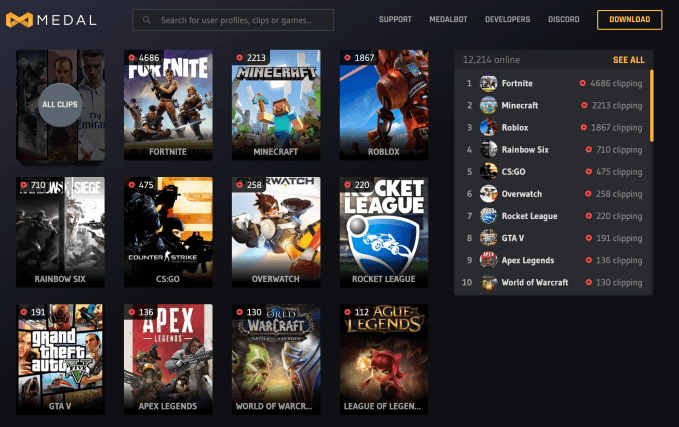
When Medal.tv first launched on the scene, the company was an upstart trying to be the social network for the gaming generation.
Since its debut in February, the clipping and messaging service for gamers has amassed 5 million total users with hundreds of thousands of daily active users. And now it has a $9 million new investment from firms, led by Horizons Ventures, the venture capital fund established by Hong Kong multi-billionaire Li Ka-shing.
“We’re seeing sharing of short-form video emerge as a means of self-expression and entertainment for the current generation. We believe Medal’s platform will be a foundation for interactive social experiences beyond what you can find in a game,” says Jonathan Tam, an investor with Horizons Ventures .
Medal sees potential both in its social network and in the ability for game developers to use the platform as a marketing and discovery tool for the gaming audience.
“Friends are the main driver of game discovery, and game developers benefit from shareable games as a result. Medal.tv is trying to enable that without the complexity of streaming,” says Matteo Vallone, the former head of Google Play games in Europe and an angel investor in Medal.
It’s a platform that saw investors willing to fork over as much as $20 million for the company, according to chief executive Pim de Witte. “There are still too many risks involved to take capital like that,” de Witte says.
Instead, the $9 million from Horizons, and previous investors like Makers Fund, will be used to steadily grow the business.
“At Medal, we believe the next big social platform will emerge in gaming, perhaps built on top of short-form content, partially as a result of gaming publishers trying to build their own isolated gaming stores and systems,” said de Witte, in a statement. “That drives social fragmentation in the market and brings out the need for platforms such as Medal and Discord, which unite gamers across games and platforms in a meaningful way.”
As digital gaming becomes the social medium of choice for a generation, new tools that allow consumers to share their virtual experiences will become increasingly common. This phenomenon will only accelerate as more events like the Marshmello concert in Fortnite become the norm.
“Medal has the exciting potential to enable a seamless social exchange of virtual experiences,” says Ryann Lai, an investor from Makers Fund.
Powered by WPeMatico
Getaround, a used car marketplace and winner of TechCrunch Disrupt New York Battlefield 2011, will enter the unicorn club with a roughly $200 million equity financing.
The deal values Getaround, founded in 2009, at $1.7 billion, according to an estimate provided by PitchBook. Getaround declined to comment, citing internal policy on “funding speculation.”
“Getaround and our investors work closely together on our growth strategy, and we’ll definitely plan to share more when we’re ready,” a spokesperson said in response to TechCrunch’s inquiry Thursday morning.
The news follows the company’s $300 million acquisition of Drivy, a Paris-headquartered car-sharing startup that operates in 170 European cities.
Getaround closed a Series D funding of $300 million last year, a round led by SoftBank with participation from Toyota Motor Corporation. Existing investors in the business, which allows its some 200,000 members to rent and unlock vehicles from their mobile phones at $5 per hour, include Menlo Ventures and SOSV.
Assuming an upcoming $200 million infusion, Getaround has raised more than $600 million in equity funding to date.
Whether SoftBank has participated in Getaround’s latest financing is unknown. The business is an active investor in the carsharing market, with investments in Chinese ride-hailing business Didi Chuxing, Uber and autonomous driving company Cruise. We’ve reached out to SoftBank for comment.
In conversation with TechCrunch last year, Getaround co-founder Sam Zaid emphasized SoftBank’s capabilities as a mobility investor: “What we really liked about [SoftBank] was they take a really long view on things,” he said. “So they were very good about thinking about the future of mobility, and we have a common kind of vision of every car becoming a shared car.”
Getaround was expected to expand into international markets with its previous fundraise. Indeed, the company has moved into France, Germany, Spain, Austria, Belgium and the U.K. where it operates under the brand “Drivy by Getaround,” and in Norway under the “Nabobil” brand.
The business initially launched its car-sharing service in 2011, relying on gig workers who can list their cars on the Getaround marketplace for $500 to $1,000 a month in payments, depending on how often their cars are rented.
Since Getaround entered the market, however, a number of competitors have entered the space with similar business models. Turo and Maven, for example, have both emerged to facilitate car rental with backing from top venture capital funds.
Powered by WPeMatico
Flat has raised one of Mexico’s largest pre-seed rounds to take the Opendoor real estate marketplace model across the Rio Grande.
The company snagged a $4.5 million pre-seed round to expand its business helping homeowners quickly sell their properties in Mexico. The round was led by ALLVP, an active early-stage fund in Mexico. California-based Liquid 2 Ventures (for which Hall of Fame quarterback Joe Montana is a GP), NextBillion and a few angels supported the round, as well.
At the time of writing, Flat’s raise is the largest pre-seed funding round for a Mexican startup aside from the scooter company, Grin, which was backed by Y Combinator and later went on to raise a $45 million Series A and consolidate with Brazil’s bike-sharing startup, Yellow.
While this ‘i-buying’ business model was initially pioneered by Opendoor in the U.S., the same need to efficiently sell property exists for consumers in other growing markets around the world. That’s why co-founders Victor Noguera and Bernardo Cordero founded Flat.
Bucking a trend that has seen many new Latin American founders hailing from Stanford University, Cordero and Noguera met at the University of California, Berkeley — just across the bay.
The founders estimate the total value of the 40 million homes in Mexico to be a $1.6 trillion total addressable market. They equate the value of homes sold per year to $25 billion. Let’s not forget the elephant in the room — SoftBank is undoubtedly eyeing Mexico with its $5 billion LatAm commitment.
Flat says it’s solving a few problems in the local home-buying market in Mexico. Firstly, anyone interested in selling their property lacks information about how much their home is actually worth. In the U.S., sellers can reference Zillow — but no such centralized database of real estate pricing information for the market of Mexico exists.

Then there’s the operational piece of transferring ownership of the property, which Flat says can take up to eight months and is a notarized process — making the overall experience incredibly illiquid.
Flat’s actual product is a marketplace focused on helping the seller sell quickly. Flat visits your home, takes measurements, documents how many bathrooms and bedrooms exist in the property and determines how much your home is worth. From there, they manage renovations and transfer ownership of the property. The seller is paid within 72 hours.
International expansion has been difficult for many startups operating in Latin America as every country has its own regulatory barriers. That’s why when it comes to growth, Flat says it’s more focused on growing out their product within other verticals of property management to only serve a Mexican market, rather than expand to other Spanish-language countries in the LatAm region.
Powered by WPeMatico
Novameat, a Spanish startup looking to accelerate the development of alternative proteins across the meat aisle, has gotten a boost in the form of new investment capital from the leading foodtech investment firm, New Crop Capital.
Founded by biomedical engineering expert Giuseppe Scionti, Novameat builds on Scionti’s decade of research as an assistant professor in bioengineering at the Polytechnic University of Catalonia, the University College of London, Chalmers University and Polytechnic University of Milan.
The company first came to fame with the production of the world’s first 3D-printed plant-based beefsteak in 2018 and will use the new funds from New Crop Capital to further develop its platform for accelerating the development of meats like steak, chicken breasts and other fibrous textured meat replacements.
The company has developed a new scaffolding technology that mimics the texture, appearance, nutritional and sensorial properties of fibrous meats like beefsteaks, chicken breasts and fish filets.
Scionti sees the technology as the next step in the development of plant-based and lab-cultured alternatives to traditional proteins. While many clean meat and plant-based food companies have managed to take ground meat replacements to market with similar taste and textural qualities to the real thing, steaks and cuts of muscle meat have proven harder to replicate.
Novameat potentially solves that problem.
“While I was researching on regenerating animal tissues through bioprinting technologies for biomedical and veterinary applications, I discovered a way to bio-hack the structure of the native 3D matrix of a variety of plant-based proteins to achieve a meaty texture,” said Scionti, in a statement.
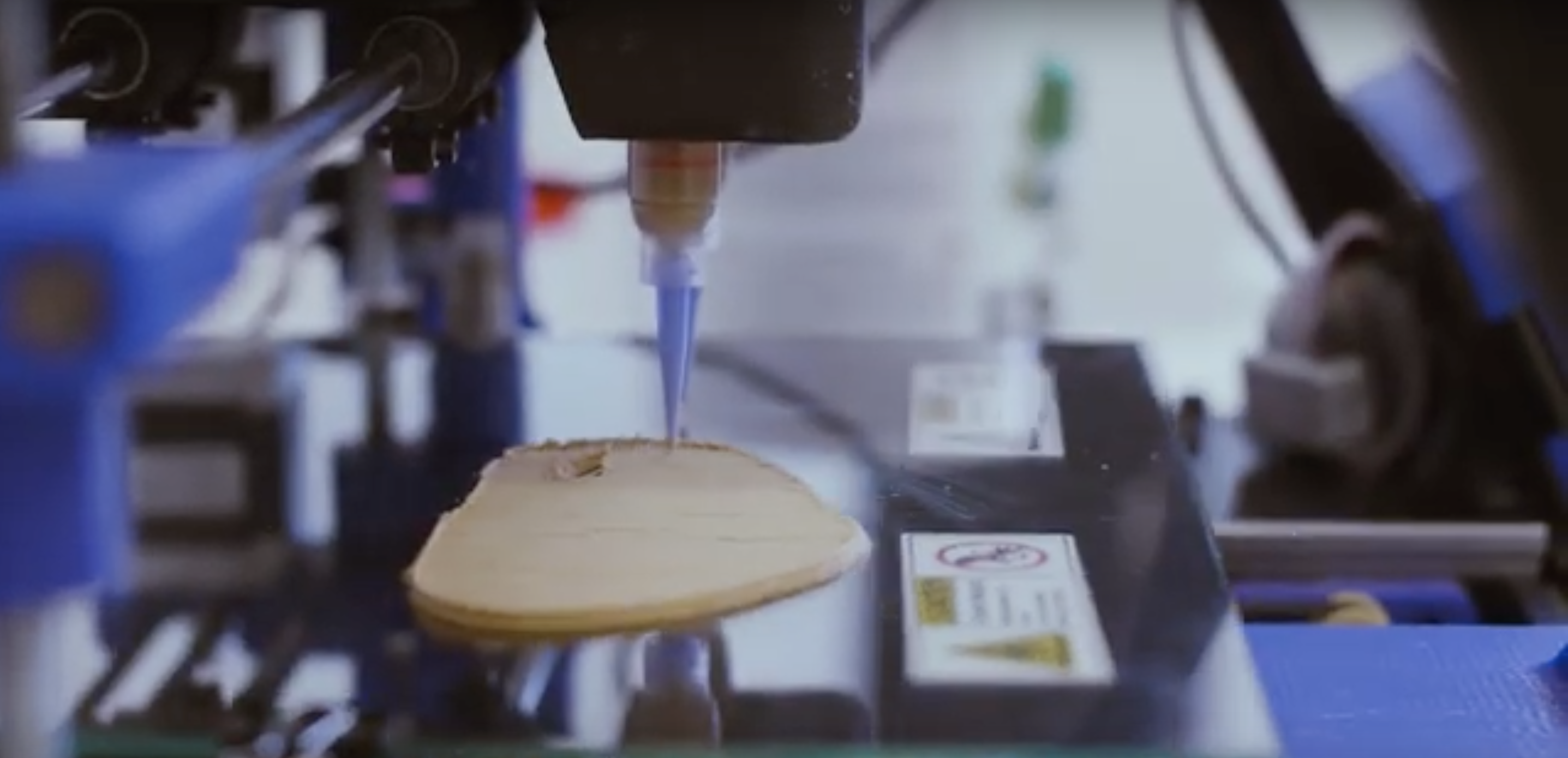
The core of Novameat’s technology is a customized printer that enables companies to create the kinds of fibrous tissues needed to make a steak. “We are providing the equipment, the machinery, under a licensing agreement to these companies,” says Scionti. “Plant-based meat manufacturers have access to something that creates the texture and taste of a steak.”
Traditional extrusion technologies are not capable of using the ingredients from Beyond Meat or Impossible Foods to print a steak, but Novameat’s founder argues that his technology can.
The technology was promising enough to attract the attention of New Crop Capital, arguably one of the most seasoned investors in the expanding market of meat replacement. The venture firm’s portfolio includes Memphis Meat, Beyond Meat, Kite Hill, Geltor, Good Dot, Aleph Farms, Supermeat, Mosa Meat, New Wave and Zero Egg.
“We think the global food supply chain is broken and we are focused on fixing one of those challenges, which is animal protein,” says New Crop Capital’s Dan Altschuler Malek. “We see that there is an opportunity to shift consumer behavior to reduce their consumption of animal protein products to products that are at the price point that people will pay.”
Novameat can help reduce costs, Malek thinks, because it speeds up the time to create meat substitutes.
Scionti says the company’s micro-extrusion technology enables companies to get a three-dimensional structure without having to go through an incubation period that can take a significant amount of time and increase costs.
“Novameat’s bioprinting-based technology provides a flexible and tunable method of producing plant-based meat, with the utility to create different textures from a wide variety of ingredients, all within a single piece of meat,” he said. “Low and high-moisture extruders are the primary method currently used to restructure plant proteins to create the texture of meat. While extrusion works well for some applications, this method may not be ideal for mimicking all types of animal meat. Alternative technologies like Novameat’s give plant-based meat manufacturers a wider array of tools to mimic all types of meat and seafood,” said Good Food Institute Director of Science and Technology David Welch, in a statement.
Powered by WPeMatico
Superside, a startup aiming to create a premium alternative to the existing crowdsourced design platforms, is announcing that it has raised $3.5 million in new funding.
It’s also adding new features like the ability to work on user interfaces, interaction design and motion graphics. Co-founder and CEO Fredrik Thomassen said this allows the company to offer “a full-service design solution.”
You may have heard about Superside under its old name Konsus . In a blog post, Thomassen explained the recent change in name and branding, writing, “We changed our name and look to align with what we had become: The world’s top team of international designers and creatives.”
He told me Superside was created to address his own frustrations after trying to use marketplaces like 99designs and Fiverr. He argued that there’s a problem with “adverse selection on those platforms.” In other words, “The best people … don’t remain, because they don’t have a career path — they’re fighting with other freelancers to get the jobs.”
Superside, on the other hand, is picky about the designers it works with — it claims to select 100 designers from the more than 50,000 applications it receives each year. But if they are accepted, they’re guaranteed full-time work.
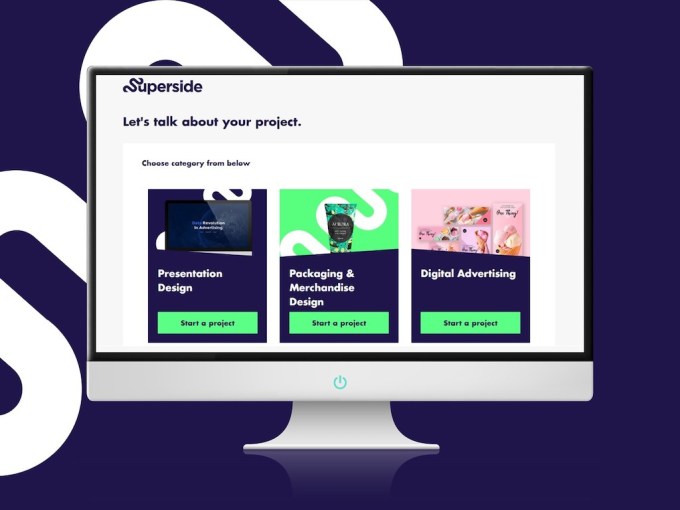
Thomassen said the platform is built for large enterprises that have their own design and marketing teams but still need additional support. Customers include Uber, LinkedIn, L’Oreal, Cisco, Santander, Amazon, Walmart Tiffany & Co. Hewlett Packard and Airbus
In addition to choosing good designers, Superside also built a broader project management platform.
“We’re basically automating everything: Finding people, screening people, on-boarding, on-the-job learning, invoicing of customers, project management, all of the nitty gritty,” Thomassen said. “The only thing not automated is design — that’s where the human element and the creativity come in.”
Plus, Thomassen said Superside can turn around a standard piece of artwork in 12 hours: “Nobody else can do what we’re doing in terms of speed.”
The new funding comes from Freestyle Capital, with participation from High Alpha Ventures, Y Combinator and Alliance Ventures.
“We’re very much a mission-driven company,” Thomassen added. “For me, the reason to go to work in the morning is to help build an online labor market and create equal economic opportunity for everyone in the world.”
Powered by WPeMatico
It turns out GDPR was just the tip of the privacy iceberg. With California’s privacy law coming on line January 1st and dozens more in various stages of development, it’s clear that governments are taking privacy seriously, which means companies have to as well. New York startup BigID, which has been developing a privacy platform for the last several years, finds itself in a good position to help. Today, the company announced a $50 million Series C.
The round was led by Bessemer Venture Partners with help from SAP.io Fund, Comcast Ventures, Boldstart Ventures, Scale Venture Partners and ClearSky. New investor Salesforce Ventures also participated. Today’s investment brings the total raised to more than $96 million, according to Crunchbase.
In addition to the funding, the company is also announcing the formation of a platform of sorts, which will offer a set of privacy services for customers. It includes data discovery, classification and correlation. “We’ve separated the product into some constituent parts. While it’s still sold as a broad-based solution, it’s much more of a platform now in the sense that there’s a core set of capabilities that we heard over and over that customers want,” CEO and co-founder Dimitri Sirota told TechCrunch.
He says that these capabilities really enable customers to see connections in the data across a set of disparate data sources. “There are a lot of products that do the request part, but there’s nobody that’s able to look across your entire data landscape, the hundreds of petabytes, and pick out the data in Salesforce, Workday, AWS, mainframe, and all these places you could have data on [an individual], and show how it’s all tied together,” Sirota explained.
It’s interesting to see the mix of strategic investors and traditional venture capitalists that are investing in the company. The strategics in particular see the privacy landscape as well as anyone, and Sirota says it’s a case of privacy mattering more than ever and his company providing the means to navigate the changing landscape. “Consumers care about privacy, which means legislators care about it, which ultimately means companies have to care about it,” he said. He added, “Strategics, whether they are companies that collect personal data or those that sell to those companies, therefore have an interest in BigID .”
The company has been growing fast and raising money quickly to help it scale to meet demand. Starting in January 2018, it raised $14 million. Just six months later, it raised another $30 million and you can tack on today’s $50 million. Sirota says having money in the bank and seeing these investments helps give enterprise customers confidence that the company is in this for the long haul.
Sirota wouldn’t give an exact valuation, only saying that while the company is not a unicorn, the valuation was a “robust number.” He says the plan now it to keep expanding the platform, and there will be announcements coming soon around partnerships, customers and new capabilities.
Sirota will be appearing at TechCrunch Sessions: Enterprise on September 5th at 11 am on the panel “Cracking the Code: From Startup to Scaleup in Enterprise Software.”
Powered by WPeMatico

An eight-month-old startup in India that wants to improve the user experience of credit card holders in the nation has received the backing of at least two major investors.
Pune-based FPL Technologies said Thursday it has raised $4.5 million from Matrix Partners India, Sequoia Capital India and others in its maiden financing round.
In an interview with TechCrunch earlier this week, Anurag Sinha, co-founder and CEO of FPL Technologies, said the startup aims to build a full-stack solution to reimagine how people in India get their first credit card and engage with it.
Even as hundreds of millions of people in India today are securing loans from organized financial lenders, most of them are unable to get a credit card. Fewer than 25 million people in the country today have a credit card, according to industry estimates. And even those who have a credit card are not exactly pleased with the experience.
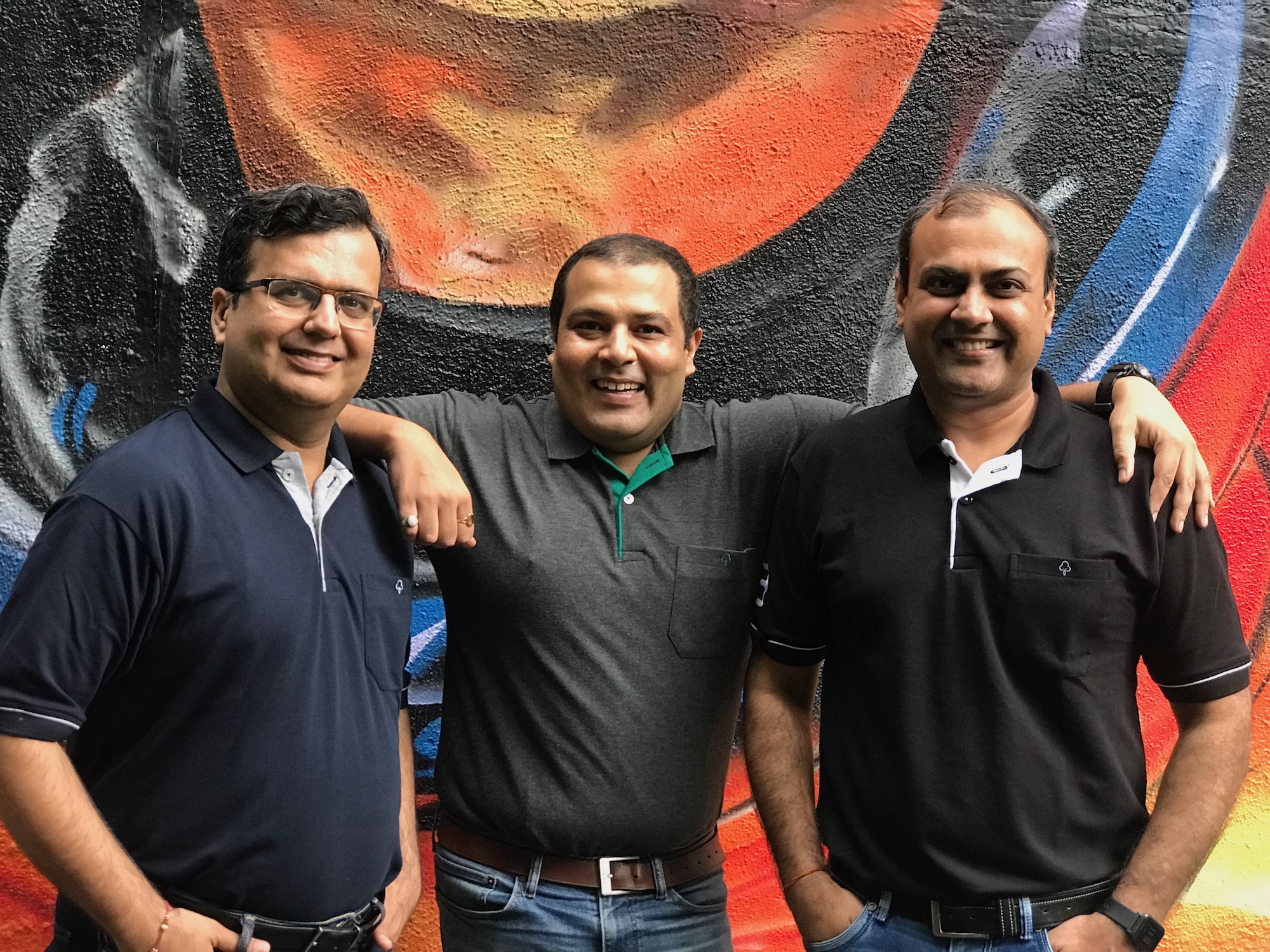
Vibhav, Anurag, Rupesh, co-founders of FPL Technologies, pose for a picture
Much of the blame goes to banks and other credit card issuing firms that are largely relying on archaic technology to operate their plastic card business.
Sinha, an industry veteran, said through his startup he aims to address a wide range of pain points of credit card holders, such as in-person meeting or telephonic interaction with bank representatives for getting a credit card, having to talk to someone to get basic support and not being able to mask the card’s identity when shopping online.
The startup, which employs about 20 people, aims to build the mobile credit card service in the next couple of months, but in the meantime, it is offering an app called OneScore to help users check their credit score and learn how to improve it. Sinha said OneScore, unlike most of its rivals, doesn’t sell the data of customers to third-party agencies.
The app was launched two months ago and has already amassed more than 100,000 users, Sinha said. These users would get the first dibs on the startup’s mobile credit card, he said.
In a statement, Shailesh Lakhani, managing director of Sequoia Capital India, said, “When they presented a plan to modernize credit cards in India it immediately resonated with the Sequoia India team. It’s a delight to partner with them as they work on developing more flexible, affordable and easier to use financial products for Indian consumers.”
In recent months, a handful of startups in India have started to explore ways to expand the reach of credit cards in the nation and incentivize users to become more responsible with how they engage with it. Bangalore-based SlicePay offers a payment card with a pre-approved credit line for students, gig-workers, freelancers and startup employees. CRED, a startup by industry veteran Kunal Shah, recently raised $120 million to motivate users to improve their financial behavior.
Powered by WPeMatico
There’s an arms race in retail to produce better coffee, and one startup, Bellwether Coffee, thinks it has the solution for retailers to sell the very best beans.
The business, headquartered in Berkeley, is today announcing a $40 million Series B financing led by DBL Partners and SolarCity co-founders Peter and Lyndon Rive. The round brings its total funding to $56 million, including a $10 million Series A last summer.
The hardware and software business manufactures tech-enabled zero-emission commercial coffee roasters designed to sit in cafes, grocery stores, on college campuses and any other place people buy coffee. Purchase of a roaster, which are sold for $75,000 or leased for $1,000 per month, comes with access to an online marketplace for coffee beans. The goal is to give coffee shops the power to roast their own beans, forgoing the middle men that have historically sold wholesale pre-roasted beans at a premium to cafes around the world.
“We want to create this connected coffee experience from the farm in Ethiopia all the way to the roaster at the cafe and the customer,” Bellwether chief executive officer Nathan Gilliland tells TechCrunch.
With roughly 140 customers, Bellwether plans to expand manufacturing capabilities and grow its customer-facing team with the infusion of venture capital funding. After growing revenues 6x in 2019, the startup is also unlocking its global ambitions, with launches in Southeast Asia and Europe scheduled for next year.
Gilliland credits the company’s growth to a larger movement at play: The “premiumization of coffee,” in which consumers are in search of higher quality cups of joe.
“You saw it happen with wine, you saw it in craft beer,” he said. “You were drinking Bud Light and now you’re drinking craft beer. You see it in higher-end grocery stores pushing out these products; it’s the premiumization of the category.”
“Thirty years ago, everyone drank Folgers, then Starbucks changed how everyone thought about coffee in the 80s, then Blue Bottle took it to the next step and that’s the backdrop,” he added.
Bellwether was founded in 2013 by Ricardo Lopez. The company is also backed by FusionX, Congruent Ventures, Coffee Bell, Tandem Capital, Spindrift Equities, XN Ventures, Balius Partners and Hardware Club.
Powered by WPeMatico