Enterprise
Auto Added by WPeMatico
Auto Added by WPeMatico
Independent restaurants don’t typically have the luxury to create their own online food ordering and delivery capabilities or negotiate for lower rates from legacy ordering platforms like the large restaurant chains do.
Here’s where Owner.com comes in. The Palo Alto-based company provides a free online ordering, delivery and marketing platform for independent restaurants that puts them on similar playing fields with the big guys. And unlike the legacy food delivery services, Owner.com restaurants own their customer data and can automate marketing campaigns.
Adam Guild is the company’s 21-year-old co-founder and CEO, a high school dropout and a Thiel Fellow, who originally started by assisting his mother’s dog grooming business that was having difficulties attracting customers. After stepping in with some online marketing methods, her business grew, and is now looking to expand into multiple locations. Guild then wanted to work with a bigger group of people and stumbled across restaurants while helping some clients create online landing pages.
With consumer demand shifting to primarily online ordering and delivery over the past 18 months, online ordering revenue is expected to double from $248 billion in 2020 to $449 billion by 2025. Ordering platforms like Doordash, Uber Eats and Grubhub control 80% of orders and typically charge between 20% and 30% per order to restaurants and additional fees to consumers.
In contrast, Owner.com is free for restaurants and charges customers a 5% convenience fee when they order from the website. Guild explained that larger restaurant chains have the buying power to negotiate lower rates, while independent restaurants do not. With the inability to keep up, some 110,000 restaurants in the U.S. closed in 2020.
Guild initially bootstrapped his company, working with large restaurant chains, like P.F. Chang’s, drive in-store orders. Then the global pandemic hit. He ended up losing all of his revenue and had to let all of his employees go but one. To add to his bad luck, he was then rejected from Y Combinator and other accelerator programs.
“For the first three days, I was depressed,” Guild told TechCrunch. “I had spent two years building a company and now it was dead. In the same way we were disrupted, I began to think there was no better position to be in than a scrappy startup. I didn’t know what the next business would look like, so I started cold-calling restaurant owners, asking how I can be helpful and what type of technology they were looking for. Many of them told me that online ordering sucked, but if they didn’t solve it soon, they would go out of business.”
One pivot and a year later with co-founder Dean Bloembergen, Owner.com closed on $10.7 million in seed funding led by SaaStr Fund, with participation from Redpoint Ventures and Day One Ventures, as well as a group of individual investors including Naval Ravikant, CNBC’s The Profit host Marcus Lemonis, The Kitchen Restaurant Group’s Kimbal Musk, DoNotPay founder Joshua Browder, Figma founder Dylan Field, The Chainsmokers and independent restaurant owners and customers of Owner.com.
Jason Lemkin, founder of SaaStr Fund, said restaurant SaaS was a space in which his firm was interested in investing, but thought it was a bit boring — there were already quite a few vendors in the space, like Toast and Grubhub, and most were just technology solutions. However, when he heard that Owner.com was a break-out company from the monotony, he said he had to take a look.
“The ability to own the customer relationship is that ultimate differentiation,” Lemkin said. “Their ultimate goal is to provide a robust technology platform to increase margins, have people order more and come back often.”
Meanwhile, Guild intends to use the new funding to continue product development and add new features like landing pages, the ability to make reservations and native apps for white-label service.
Since the launch last year, the company has reached a seven-figure run-rate and over 105% monthly revenue retention across over 700 restaurant locations, Guild said. To date, Owner.com has transacted over $18 million and helped its restaurant customers avoid paying $3 million to online order platform fees annually.
“It’s all about empowering the 40% of the restaurant industry that is run by people who started off in entry-level positions, and over the years, worked their way up to own the ‘American Dream,’ ” he added.
Powered by WPeMatico
For more than a year now, Zoom has been on a mission to transform from an application into a platform. To that end it made three announcements last year: Zoom Apps development tools, the Zoom Apps marketplace and a $100 million development fund to invest in some of the more promising startups building tools on top of their platform. Today, at the closing bell, the company announced it has made its first round of investments.
Ross Mayfield, product lead for Zoom Apps and integrations, spoke to TechCrunch about the round of investments. “We’re in the process of creating this ecosystem. We felt it important, particularly to focus on the seed stage and A stage of partnering with entrepreneurs to create great things on this platform. And I think what you see in the first batch of more than a dozen investments is representative of something that’s going to be a significant ongoing undertaking,” he explained.
He said while they aren’t announcing exact investment amounts, they are writing checks for between $250,000 and $2.5 million. They are teaming with other investment partners, rather than leading the rounds, but that doesn’t mean they aren’t working with these startups using internal resources for advice and executive backing, beyond the money.
“Every one of these investments has an executive or senior sponsor within the company. So there’s another person inside that knows the lay of the land, can help them advance and spend more personal time with them,” Mayfield said.
The company is also running several Zoom chat channels for the startups receiving investments to learn from one another and the Zoom Apps team. “We have a shared chat channel between the startup and my team. We have a channel called Announcements and a channel called Help, and another one that the startups created called Community,” he said.
Every week they use these channels to hold a developer office hour, a business office hour (which Mayfield runs) and a community hour, where the startups can gather and talk amongst themselves about whatever they want.
Among the specific categories receiving funding are collaboration and productivity, community and charity, DE&I and PeopleOps, and gaming and entertainment. In the collaboration and productivity category, Warmly is a sales tool that provides background and information about each person participating in the meeting ahead of time, while allowing the meeting organizer to create customized Zoom backgrounds for each event.
Another is Fathom, which alleviates the need to take notes during a meeting, but it’s more than recording and transcription. “It gives you this really simple interface where you can just tag moments. And then, as a result you have this transcript of the video recording, and you can click on those tagged moments as highlights, and then share a clip of the meeting highlights to Salesforce, Slack and other tools,” Mayfield said.
Pledge enables individuals or organizations to request and collect donations inside a Zoom meeting instantly, and Canvas is a hiring and interview tool that helps companies build diverse teams with data that helps them set and meet DEI goals.
These and the other companies represent the first tranche of investments from this fund, and Mayfield says the company intends to continue looking for startups using the Zoom platform to build their startup or integrate with Zoom.
He says that every company starts as a feature, then becomes a product and then aspires to be a line of products. The trick is getting there. The goal of the investment program and the entire set of Zoom Apps tools is about helping these companies take the first step.
“The art of being an entrepreneur is working with that risk in the absence of resources and pushing at the frontier of what you know.” Zoom is trying to be a role model, a mentor and an investor on that journey.
Powered by WPeMatico
When you hear the word, “enterprise” and you immediately think software instead of Star Trek, you’re going to love this post — and the SaaS and Enterprise-focused knowledge waiting for you at TechCrunch Disrupt 2021 on September 21-23.
We’ve packed a veritable boatload of Grade A prime programming into three full days of Disrupt. Prepare to hear and learn from an endless parade of tech icons, visionaries, movers, shakers and unicorn makers. We’re talking more than 80 scheduled offerings, folks.
Join your people: Buy your pass today and get ready to hear from the leading voices across the startup spectrum.
Where were we? Ah, yes — we’re here to help save you a bit of time by spotlighting just some of the sessions focused on enterprise software and SaaS. Plus, we’ll have a dedicated Disrupt Desk session where industry experts, like Emergence Capital’s Carlotta (Lotti) Siniscalco, and TechCrunch editors, will break it down with deep-analysis, insight and likely a laugh or two.
Check out the Disrupt agenda for exact days and times, and then plan your daily schedule in advance.
Dozens have tried to reinvent the calendar, and dozens have failed. Tope Awotona built Calendly not as a way to reinvent the wheel, but to add a layer of simplicity to the chaos of human communication and time management. And boy did it work! The once-bootstrapped company is now worth more than $3 billion, serving individuals and enterprises alike. Hear from the founder and CEO on how he got Calendly off the ground, why he decided to finally take institutional investment and how the company has changed as it grows.
Slack and Salesforce are two of the biggest names in tech. The communication tool (born from one of the odder pivots in tech history) is commonplace across organizations from almost every industry. It’s an unstoppable force. The sales CRM behemoth is used all over the world by sales teams small and large. An immovable object. In December of 2020, the pair announced a $27.7 billion merger. Hear from Slack co-founder and CEO Stewart Butterfield and Salesforce President and COO Bret Taylor about the future of the combined entity, why the deal made sense and what it’s like to write down that many 0’s.
Small business is a critical engine of job creation, economic growth and innovation, and a driver in our efforts to recover from a global pandemic. Fifteen years ago, a New Zealand start-up called Xero was founded with the purpose of making life better for small businesses and their advisors. Xero achieved this by shifting accounting practices to the cloud and providing an open set of APIs, which has enabled more than 1,000 application partners to build affordable tech solutions connected to the Xero platform. Xero CEO Steve Vamos will discuss how Xero is revolutionizing the way small businesses do business by using the cloud and its platform to connect real-time data with bespoke business solutions that help small business owners be more successful. Steve will speak to a number of key initiatives that will change the game for startups and entrepreneurs who want to innovate and collaborate on the Xero platform, and he will explain how Xero’s vision extends beyond just technology to galvanizing a global community of support and purpose to help small businesses everywhere. Presented by Xero.
Spurred by digital transformation and the recent shift to remote work, the enterprise software industry has gone from strength-to-strength, and competition for deals and valuations are at all-time highs. While investor appetite for enterprise software may be strong, it doesn’t mean that all tech businesses make worthy investments. In this panel, hear from Michael Fosnaugh and Monti Saroya, co-heads of Vista’s flagship investment strategy, and a selection of Vista CEOs on the hallmarks of best-in-class software companies and trends driving the industry. Presented by Vista Equity Partners.
Implementing sustainability initiatives to achieve net-zero carbon emissions in the data center is a vital challenge. Join Bertrand Martin, Sentry Software’s co-founder and CEO, as he presents Hardware Sentry Exporter for Prometheus. Measure the power consumption and temperature of more than 250 platforms with this unique pure-software solution. Report CO₂ emissions, electricity usage and costs of applications and services in Grafana. Reduce the carbon footprint of your data center with intelligent optimization of ambient temperature. Presented by Sentry Software.
TechCrunch Disrupt 2021 takes place on September 21-23. Buy your pass today and learn about the latest trends and developments in SaaS and enterprise software — and so much more.
Is your company interested in sponsoring or exhibiting at Disrupt 2021? We have just a few spots left — so contact our sponsorship sales team asap by filling out this form.
Powered by WPeMatico
Fifteen years ago this week on August 25, 2006, AWS turned on the very first beta instance of EC2, its cloud-based virtual computers. Today cloud computing, and more specifically infrastructure as a service, is a staple of how businesses use computing, but at that moment it wasn’t a well known or widely understood concept.
The EC in EC2 stands for Elastic Compute, and that name was chosen deliberately. The idea was to provide as much compute power as you needed to do a job, then shut it down when you no longer needed it — making it flexible like an elastic band. The launch of EC2 in beta was preceded by the beta release of S3 storage six months earlier, and both services marked the starting point in AWS’ cloud infrastructure journey.
You really can’t overstate what Amazon was able to accomplish with these moves. It was able to anticipate an entirely different way of computing and create a market and a substantial side business in the process. It took vision to recognize what was coming and the courage to forge ahead and invest the resources necessary to make it happen, something that every business could learn from.
The AWS origin story is complex, but it was about bringing the IT power of the Amazon business to others. Amazon at the time was not the business it is today, but it was still rather substantial and still had to deal with massive fluctuations in traffic such as Black Friday when its website would be flooded with traffic for a short but sustained period of time. While the goal of an e-commerce site, and indeed every business, is attracting as many customers as possible, keeping the site up under such stress takes some doing and Amazon was learning how to do that well.
Those lessons and a desire to bring the company’s internal development processes under control would eventually lead to what we know today as Amazon Web Services, and that side business would help fuel a whole generation of startups. We spoke to Dave Brown, who is VP of EC2 today, and who helped build the first versions of the tech, to find out how this technological shift went down.
The genesis of the idea behind AWS started in the 2000 timeframe when the company began looking at creating a set of services to simplify how they produced software internally. Eventually, they developed a set of foundational services — compute, storage and database — that every developer could tap into.
But the idea of selling that set of services really began to take shape at an executive offsite at Jeff Bezos’ house in 2003. A 2016 TechCrunch article on the origins AWS described how that started to come together:
As the team worked, Jassy recalled, they realized they had also become quite good at running infrastructure services like compute, storage and database (due to those previously articulated internal requirements). What’s more, they had become highly skilled at running reliable, scalable, cost-effective data centers out of need. As a low-margin business like Amazon, they had to be as lean and efficient as possible.
They realized that those skills and abilities could translate into a side business that would eventually become AWS. It would take a while to put these initial ideas into action, but by December 2004, they had opened an engineering office in South Africa to begin building what would become EC2. As Brown explains it, the company was looking to expand outside of Seattle at the time, and Chris Pinkham, who was director in those days, hailed from South Africa and wanted to return home.
Powered by WPeMatico
Linux is set for a big release this Sunday August 29, setting the stage for enterprise and cloud applications for months to come. The 5.14 kernel update will include security and performance improvements.
A particular area of interest for both enterprise and cloud users is always security and to that end, Linux 5.14 will help with several new capabilities. Mike McGrath, vice president, Linux Engineering at Red Hat told TechCrunch that the kernel update includes a feature known as core scheduling, which is intended to help mitigate processor-level vulnerabilities like Spectre and Meltdown, which first surfaced in 2018. One of the ways that Linux users have had to mitigate those vulnerabilities is by disabling hyper-threading on CPUs and therefore taking a performance hit.
“More specifically, the feature helps to split trusted and untrusted tasks so that they don’t share a core, limiting the overall threat surface while keeping cloud-scale performance relatively unchanged,” McGrath explained.
Another area of security innovation in Linux 5.14 is a feature that has been in development for over a year and a half that will help to protect system memory in a better way than before. Attacks against Linux and other operating systems often target memory as a primary attack surface to exploit. With the new kernel, there is a capability known as memfd_secret () that will enable an application running on a Linux system to create a memory range that is inaccessible to anyone else, including the kernel.
“This means cryptographic keys, sensitive data and other secrets can be stored there to limit exposure to other users or system activities,” McGrath said.
At the heart of the open source Linux operating system that powers much of the cloud and enterprise application delivery is what is known as the Linux kernel. The kernel is the component that provides the core functionality for system operations.
The Linux 5.14 kernel release has gone through seven release candidates over the last two months and benefits from the contributions of 1,650 different developers. Those that contribute to Linux kernel development include individual contributors, as well as large vendors like Intel, AMD, IBM, Oracle and Samsung. One of the largest contributors to any given Linux kernel release is IBM’s Red Hat business unit. IBM acquired Red Hat for $34 billion in a deal that closed in 2019.
“As with pretty much every kernel release, we see some very innovative capabilities in 5.14,” McGrath said.
While Linux 5.14 will be out soon, it often takes time until it is adopted inside of enterprise releases. McGrath said that Linux 5.14 will first appear in Red Hat’s Fedora community Linux distribution and will be a part of the future Red Hat Enterprise Linux 9 release. Gerald Pfeifer, CTO for enterprise Linux vendor SUSE, told TechCrunch that his company’s openSUSE Tumbleweed community release will likely include the Linux 5.14 kernel within “days” of the official release. On the enterprise side, he noted that SUSE Linux Enterprise 15 SP4, due next spring, is scheduled to come with the 5.14 kernel.
The new Linux update follows a major milestone for the open source operating system, as it was 30 years ago this past Wednesday that creator Linus Torvalds (pictured above) first publicly announced the effort. Over that time Linux has gone from being a hobbyist effort to powering the infrastructure of the internet.
McGrath commented that Linux is already the backbone for the modern cloud and Red Hat is also excited about how Linux will be the backbone for edge computing — not just within telecommunications, but broadly across all industries, from manufacturing and healthcare to entertainment and service providers, in the years to come.
The longevity and continued importance of Linux for the next 30 years is assured in Pfeifer’s view. He noted that over the decades Linux and open source have opened up unprecedented potential for innovation, coupled with openness and independence.
“Will Linux, the kernel, still be the leader in 30 years? I don’t know. Will it be relevant? Absolutely,” he said. “Many of the approaches we have created and developed will still be pillars of technological progress 30 years from now. Of that I am certain.”
Powered by WPeMatico
Since 2017, Microsoft has offered its Office suite to Chromebook users via the Google Play store, but that is set to come to an end in a few short weeks.
As of September 18, Microsoft is discontinuing support for Office (which includes Word, Excel, PowerPoint, OneNote and Outlook) on Chromebook. Microsoft is not, however, abandoning the popular mobile device altogether. Instead of an app that is downloaded, Microsoft is encouraging users to go to the web instead.
“In an effort to provide the most optimized experience for Chromebook customers, Microsoft apps (Office and Outlook) will be transitioned to web experiences (Office.com and Outlook.com) on September 18, 2021,” Microsoft wrote in a statement emailed to TechCrunch.
Microsoft’s statement also noted that “this transition brings Chromebook customers access to additional and premium features.”
The Microsoft web experience will serve to transition its base of Chromebook users to the Microsoft 365 service, which provides more Office templates and generally more functionality than what the app-based approach provides. The web approach is also more optimized for larger screens than the app.
In terms of how Microsoft wants Chromebook users to get access to Office and Outlook, the plan is for customers to, “…sign in with their personal Microsoft Account or account associated with their Microsoft 365 subscription,” according to the statement. Microsoft has also provided online documentation to show users how to run Office on a Chromebook.
Chromebooks run on Google’s Chrome OS, which is a Linux-based operating system. Chromebooks also enable Android apps to run, as Android is also Linux based, with apps downloaded from Google Play. It’s important to note that while support for Chromebooks is going away, Microsoft is not abandoning other Android-based mobile devices, such as tablets and smartphones.
For those Chromebook users that have already downloaded the Microsoft Office apps, the apps will continue to function after September 18, though they will not receive any support or future updates.
Powered by WPeMatico
Stonehenge Technology Labs wants consumer packaged goods companies to gain meaningful use from all of the data they collect. It announced $2 million in seed funding for its STOPWATCH commerce enhancement software.
The round was led by Irish Angels, with participation from Bread and Butter Ventures, Gaingels, Angeles Investors, Bonfire Ventures and Red Tail Venture Capital.
CEO Meagan Kinmonth Bowman founded the Arkansas-based company in 2019 after working at Hallmark, where she was tasked with the digital transformation of the company.
“This was not a consequence of them not being good marketers or connected to mom, but they didn’t have the technology to connect their back end with retailers like Amazon, Walmart or Hobby Lobby,” she told TechCrunch. “There are so many smart people building products to connect with consumers. The challenge is the big guys are doing things the same way and not thinking like the 13-year-olds on social media that are actually winning the space.”
Kinmonth Bowman and her team recognized that there was a missing middle layer connecting the world of dotcom with brick and mortar. If the middle layer could be applied to the enterprise resource plans and integrate public and private data feeds, a company could be just as profitable online as it could be in traditional retail, she said.
Stonehenge’s answer to that is STOPWATCH, which takes in over 100 million rows of data per workspace per day, analyzes the data points, adds real-time alerts and provides the right data to the right people at the right time.
Dan Rossignol, a B2B SaaS investor, said the CPG world is also about consumerizing our life, and the global pandemic showed that even at home, people could have a productive day and business. Rossignol likes to invest in underestimated founders and saw in Stonehenge a company that is getting CPGs out from underneath antiquated technologies.
“What Meagan and her team are doing is really interesting,” he added. “At this stage, it is all about the people, and the ability to bet on doing something larger.”
Kinmonth Bowman said she had the opportunity to base the company in Silicon Valley, but chose Bentonville, Arkansas instead to be closer to the more than 1,000 CPG companies based there that she felt were the prime customer base for STOPWATCH.
The platform was originally created as a subsidiary of a consulting company, but in 2018, one of their clients told them they just wanted the software rather than also paying for the consulting piece. The business was split, and Stonehenge went underground for eight months to make a software product specifically for the client.
Kinmonth Bowman admits the technology itself is not that sexy — it is using exact transfer loads to extract data from hundreds of systems into a “lake house,” and then siloing it by retailer and other factors and then presenting the data in different ways. For example, the CEO will want different metrics than product teams.
Over the past year, the company has doubled its revenue and also doubled the amount of contracts. It already counts multiple Fortune 100 companies and emerging brands as some of its early users and plans to use the new funding to hire a sales team and go after some strategic relationships.
Stonehenge is also working on putting together a diverse workforce that mimics the users of the software, Kinmonth Bowman said. One of the challenges has been to get unique talent to move to Arkansas, but she said it is one she is eager to take on.
Meanwhile, Brett Brohl, managing partner at Bread and Butter Ventures, said the Stonehenge team “is just crazy enough, smart and driven” to build something great.
“All of the biggest companies have been around for a long time, but not a lot of large organizations have done a good job digitizing their businesses,” he said. “Even pre-COVID, they were building fill-in-the-blank digital transformations, but COVID accelerated technology and hit a lot of companies in the face. That was made more obvious to end consumers, which puts more pressure on companies to understand the need, which is good for STOPWATCH. It went from paper to Excel spreadsheets to the next cloud modification. The time is right for the next leap and how to use data.”
Powered by WPeMatico
As Synder’s two co-founders Michael Astreiko and Ilya Kisel wrap up their time at Y Combinator, they also announced their seed round of $2 million from TMT Investments.
Though the round was acquired before going into the accelerator program, the Belarus-based pair wanted to wait to publicly share the milestone. As they focus their sights on their next journey of growth and expansion, the new funding will go toward attracting more clients, visibility and sales.
The company bills itself as an easy accounting platform for e-commerce businesses. It was originally founded as CloudBusiness in 2016 and developed accounting automation and management of business finances for small and mid-size businesses.
Astreiko and Kisel started Synder, in 2018 and a year later focused on the company full-time to develop an easy way for commerce companies to shift to omnichannel sales, something Astreiko told TechCrunch can be “a huge pain” due to the complexity of different payment systems and high fees.
“There are a lot of solutions on the market, but you still have to have special knowledge to operate within accounting or commerce,” Kisel said. “For us, the simplicity means that it is worth it if you can have access in several clicks to consolidated inventory, profits and liabilities. Small businesses sometimes are not sharing this information due to competition, but if something is working and easy, they will definitely share it.”
Synder does the heavy lifting for companies by connecting sales channels like Amazon, Shopify, eBay and Etsy into one platform that users can manage with one-click operations. It also created a way to help the accounting stream so that all of the different payment methods can still be used, Kisel said.
The company is already working with 4,000 clients, and will now be fast-tracking their expansion, but will need the right people on board to help the company grow, Astreiko said.
Igor Shoifot, a partner at TMT Investments, said he will join Synder’s board after the company graduates from YC. He likes the simplicity of what the company is doing.
“Often the best solutions are economical, succinct and elegant — you can be onboarded in 10 minutes,” he added. “There is really nobody that really provides a similar solution that was that easy or didn’t require downloading or installing something. I also like their focus on growth, the fact they have no burn and they are making money.”
Synder’s business model is a subscription SaaS model that starts off as a free trial, and users can purchase additional services inside the platform to fit small and large companies.
Its more than 15 employees are spread around Europe, and the company just started hiring in the areas of marketing and sales in the U.S.
Powered by WPeMatico
Embedded fintech company Zeal secured $13 million in Series A funding to continue developing its platform for building individualized payroll products.
Spark Capital led the Series A, with participation from Commerce Ventures and a group of individual investors, including Marqeta CEO Jason Gardner and CRO Omri Dahan, Robinhood founder Vlad Tenev, UltimateSoftware executives Mitch Dauerman and Bob Manne and Namely founder Matt Straz. The latest round now gives the company $14.6 million in total funding, which includes a $1.6 million seed round in 2020, CEO Kirti Shenoy told TechCrunch.
The Bay Area company’s origin was as Puzzl, a payment processing startup for the gig economy, founded in 2018 by Shenoy and CTO Pranab Krishnan. It was part of Y Combinator’s 2019 cohort. The pair had to pivot the company after needing to move some of its thousands of 1099 contractors to W2 employee status.
They went looking for payroll processors that could handle high volumes of payroll automatically, like ADP or Paycor, but found they didn’t match some of the capabilities Shenoy and Krishnan wanted, including to pay workers daily and customize earning components.
To ensure other companies didn’t run into the same problem, they decided to build a payroll API that enables their customers to build their own payroll products, even being able to pay their workers everyday. Traditionally, companies would layer together antiquated third-party payroll tools and spend millions of dollars on consulting fees. Zeal’s API tool modernizes the payroll process and takes on the payroll liability while managing the back-end payment logistics, Shenoy said.
Currently, enterprises use Zeal to pay large volumes of workers and keep payment data on their own native systems, while software platforms that sell business-to-business services use Zeal to build their own payroll product to sell to their customers.
“Our mission is to touch every American paycheck with our tax and payment technology, ensuring that American employees are paid correctly and efficiently,” Krishnan said.
And that is a complex goal: there are 200 million American employees, over $8.8 trillion of payroll is processed annually in the U.S. and the country’s 11,000 tax jurisdictions produce over 25,000 income tax code changes a year.
Meanwhile, Shenoy cited IRS data that showed more than 40% of small and medium businesses pay at least one payroll penalty per year. That was one of the drivers for Zeal’s latest product, the Abacus gross-to-net calculator, which payroll companies can use to ensure they are compliant in paying their income taxes.
The co-founders intend to use the new funding to build out their team and strengthen compliance measures to ensure its track record with enterprises.
“We are starting to win more enterprise deals and moving millions of dollars each day,” Shenoy said. “This has been a legacy space for so long, so companies want to work with a provider to move fast.”
Shenoy predicts that more companies will shift to hyper-customized experiences in the next five to 10 years. Whereas the default was a company like ADP, companies will want to control their own data and build products so their customers can do everything payroll-related from one platform.
As part of the investment, Spark Capital’s partner Natalie Sandman has joined Zeal’s board of directors. The firm previously invested in other embedded fintech companies like Affirm and Marqeta, and she thinks there are new experiences in the sector that APIs can unlock.
Sandman felt the payroll-building pain points herself when she worked at Zenefits. At the time, the company was trying to do the same thing, but there were no APIs to connect with. There were all of these spreadsheets to transfer data, but one wrong deduction would trickle down and cause a tax penalty.
Shenoy and Krishnan are both “customer-obsessed,” she said, and are balancing speed with thoughtfulness when it comes to understanding how their customers want to build payroll products.
She is seeing a macro shift to audience-driven human resources where bringing new employees online will mean embedding them into products that will be more valuable versus the traditional spreadsheet.
“To me, it is a no-brainer that APIs provide flexibility in the way wages and deductions need to be made,” Sandman said. “You can lose trust in your employer. Payroll is at the deepest trust point and where you want transparency and a robust solution to solve that need.”
Powered by WPeMatico
If you haven’t noticed yet, the hiring market is a hot one — and getting more complicated as enterprise talent acquisition leaders face technology gaps while assessing candidates. This leads to difficulty in determining compensation.
Enter Compa. The offer management platform provides “deal desk” software for recruiters to more easily manage their compensation strategies to create and communicate offers that are easy to understand and are unbiased.
Charlie Franklin, co-founder and CEO of Compa, told TechCrunch it was frustrating to lose a candidate at the compensation stage, so the company created its software to reduce the challenge of relying on crowdsourcing data or surveys to compare pay.
“Recruiters often lack the data and tools to figure out how much to pay people and communicate that effectively,” Franklin told TechCrunch. “We see talent acquisitions teams like a sales team. If you think of it from that perspective, they need to close a candidate, but to ask the recruiter to operate off of a spreadsheet slows that process down.”
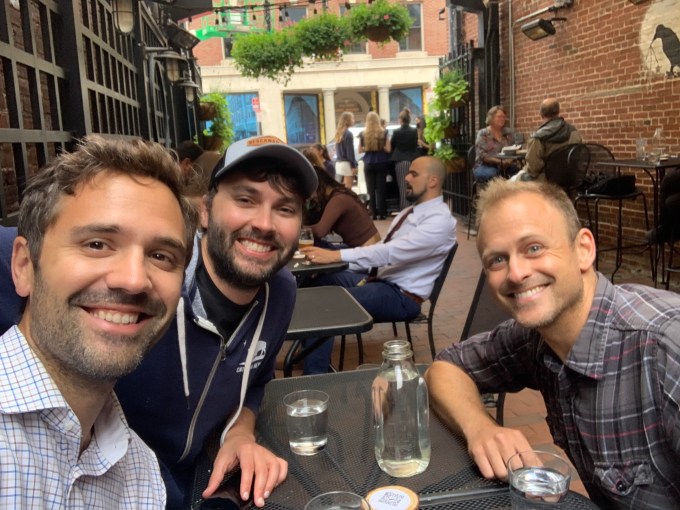
Compa co-founders, from left, Charlie Franklin, Joe Malandruccolo and Taylor Cone. Image Credits: Compa
With Compa, recruiters can input pay expectations and compare recent offers and collaborate with other team members and hiring managers to reach pay consensus quicker. The software automates all of the market intelligence in real time and provides insights about compensation across similar industries and organizations.
The company, based in both California and Massachusetts, emerged from stealth Thursday with $3.9 million in seed funding led by Base10 Partners. Participation in the round also came from Crosscut Ventures and Acadian Ventures, as well as a group of strategic angel investors including 2.12 Angels, Oyster HR CEO Tony Jamous and Scout RFP co-founders Stan Garber and Alex Yakubovich.
Jamison Hill, partner at Base10 Partners, said via email his firm was doing research in the ESG “megatrend,” particularly looking for startups focused on compensation management, when it came across Compa.
He was attracted to the founders’ “clarity and conviction” on the company’s vision, their understanding of the pay gap in the market, how Compa’s solution would “create a new wave of smarter, more-data driven recruiting teams” and how it was enabling employers to use compensation and a positive offer management approach to differentiate itself from competitors.
“They deeply understand the nuances that come with enterprise-level HR teams and bring that expertise to every aspect of Compa’s product offering, which is why we believe Compa can emerge as a leader in this trend and chose to partner with this very special team,” Hill added.
Franklin, who previously led human resources M&A at Workday, founded Compa last year with Joe Malandruccolo, who was on the engineering side at Facebook and Oculus, and Taylor Cone, who has done innovation consulting for organizations like Stanford University.
The company was bootstrapped prior to going after the seed round and will use the capital to expand the team and create additional products that fit into its mission of “making compensation fair and competitive for everyone,” Franklin said.
Going forward, he adds that job offers and compensation need to catch up to how quickly the world is changing. As more people work remotely and companies want to attract a diverse workforce, compensation will be an important factor.
“This is a long-term trend we are seeing in HR — compensation becoming more transparent — not just a spreadsheet shared internally, but a transition from secretive to open and accountable, Franklin said. “Technology is catching up to that, and we have the ability to produce outcomes that drive differences in pay.”
Powered by WPeMatico