Enterprise
Auto Added by WPeMatico
Auto Added by WPeMatico
Salesforce has always been a company that is looking ahead to the next big technology, whether that was mobile, social, internet of things or artificial intelligence. In an interview with Business Insider’s Julie Bort at the end of March, Salesforce co-founders Marc Benioff and Parker Harris talked about a range of subjects including how the company came to be working on one of the next hot technologies, a blockchain product.
Benioff told a story of being at the World Economic Forum in Switzerland where a bit of serendipity led him to start thinking about blockchain and how it could be used as part of the Salesforce family of products.
As it turned out, there was a crypto conference going on at the same time as the WEF and the two worlds collided at a Salesforce event at the Intercontinental Hotel. While there, one of the crypto conference attendees engaged Benioff in a conversation and it was the start of something.
“I had been thinking a lot about what is Salesforce’s strategy around blockchain, and what is Salesforce’s strategies around cryptocurrencies and how will we relate to all of these things,” Benioff said. He is actually a big believer in the power of serendipity, and he said just by having that conversation, it started him down the road to thinking more seriously about Salesforce’s role in this developing technology.
He said the more he thought about it, the more he believed that Salesforce could make use of Blockchain. Then suddenly something clicked for him and he saw a way to put blockchain and cryptocurrencies to work in Salesforce. “That’s kind of how it works and I hope by Dreamforce we will have a blockchain and cryptocurrency solution.”
Benioff is clearly a visionary and says a lot of that comes from simply paying attention as he did when he talked to this person in Davos, and recognizing an opportunity to expand Salesforce in a meaningful way. “A lot [these ideas] comes from paying attention, listening. There’s new ideas coming all the time,” he said. He recognizes that there are more ideas out there than they can possibly execute, but part of his job is understanding which ones are the most important for Salesforce customers.
Blockchain is the electronic ledger used to track Bitcoin or other digital currencies, but it also has a more general business role. As an irrefutable and immutable record, it can track just about anything of value.
Dreamforce is Salesforce’s enormous annual customer conference. It will be held this year from September 25-28 in San Francisco, and if it all works as planned, they could be announcing a blockchain product this year.
__
Check out the whole interview between Salesforce founders Parker Harris and Marc Benioff and Julie Bort from Business Insider:
Powered by WPeMatico
The growth of Windows has slowed as Microsoft’s mobile platform goals have faded and the PC market matured. As a result, Microsoft has had to seek new revenue outside of its operating system.
In 2017, as part of that effort to grow, Microsoft announced a new subscription product called Microsoft 365, bringing together Windows, the company’s cloud-centered productivity suite Office 365 and enterprise tooling into a single package.
The introduction of Microsoft 365 presaged the company’s re-organization which, to quote CNBC, “rebuilt the company around the cloud instead of Windows.” This seems reasonable; if Windows isn’t going to return to growth, other services have to keep adding top line revenue. Microsoft’s evolution to a cloud-powered, services-focused company is therefore set to continue.
In the pursuit of new, non-Windows top line, Microsoft wagered that it could expand its “commercial cloud” revenue to a $20 billion run rate by the end of its fiscal 2018. It beat the goal, reaching the $20 billion mark far ahead of the calendar-equivalent date of mid-Summer of this year.
One of those products, Teams, is a component to Office 365 and part of what Microsoft CEO Satya Nadella called a “growth opportunity” that is “a lot bigger than anything [his company has] achieved.”
Today we’re going to explore Microsoft’s current actions in one part of the cloud productivity space through the lens of Teams.
Microsoft’s Teams product is a communications tool often compared to Slack . TechCrunch, for example, recently called the software service “Microsoft’s Slack competitor.” ComputerWorld, in a news item earlier this year, wrote that “Microsoft turn[ed] up [the] heat on Slack” when it announced new Teams features.
It goes on and on, allowing us to comfortably hold up Microsoft Teams as Redmond’s answer to Slack, a company famous for its quick growth, impressive mind share and its independent status from any major tech company. That last fact remains true despite rumored acquisition interest from Microsoft itself, along with pretty much every big company in the sector you can name.
To see Microsoft invest in its own tool that competes with Slack isn’t surprising. There is a large market for the product, and Redmond is loath to let any rival service cut in on its productivity revenue.
Therefore, if there is a hot productivity tool in the market and Microsoft isn’t going to buy it, it might as well build one of its own. Unsurprisingly, the company has been hard at work doing just that.
Joining a big company when you are a comparatively small company can be arduous.
News that Teams could release a free version made headlines. Teams also picked up guest access in February, its introduction of Cortana integration made it into mainstream tech publications and this week Microsoft announced new “retention policies” for Teams.
All that and Microsoft bought Teams a friend this year in the form of Chalkup, a collaboration company focused on the education world.
In short, Teams is adding new features while building its org chart and expanding access. All good things, certainly. However, it was not too long ago Microsoft spent quite a lot of money to buy a different, distinct collaboration tool. What happened to it?
Microsoft bought Yammer in 2012 for $1.2 billion, building out what TechCrunch called, at the time, its “Social Enterprise Strategy.” And while the Yammer-Microsoft deal was “great news” for the company and its investors, it also marked the beginning of the “tough part” for the newly acquired startup.
Joining a big company when you are a comparatively small company can be arduous. And if you do so when the larger company is undergoing a massive change in leadership (Microsoft hired a new CEO two years after the Yammer deal) and a business model change-up (Microsoft bought Nokia in 2014, also two years after the Yammer deal, before closing that strategic idea out years later), it’s probably even harder to integrate.
Externally, that difficulty showed. Following the Microsoft deal, Yammer search volume grew before stagnating and later slipping. The product was eventually switched on for free for Office 365 customers in early 2016, four years after it was purchased. Office 365 itself launched a half-decade before, making the moment a bit long in the works.
But all that is the past, and, notably, Microsoft is putting more emphasis on Yammer today than it has in recent years. That may feel odd, given what we just went over concerning Teams.
To dig into that, Crunchbase News got Microsoft’s Seth Patton on the phone, who explained the company’s thinking. According to the 15-year company veteran who now works on Office 365, Microsoft has two separate views for Teams and Yammer. Teams is built for what Patton calls inner-loop communication: stuff for teams, smaller companies and the like; Yammer, in contrast, is better for outer-loop communication: less tactical decisions and more company-wide communications.
The split between Slack and Teams products and the Yammers and Convos of the world isn’t hokum or mere corporate-speak. I’ve worked in newsrooms that used the mix of tools to allow for simple direct messaging between individuals (Slack) and team-wide threaded communications (Yammer). It takes a little getting used to, but it can flow well if you need that level of inter-party discussion.
Even more interesting than the fact that Yammer is not dead is that Microsoft is actively investing in it. According to Patton, Microsoft’s chiefs “doubled down” on Yammer while Teams was being brought into the market in late 2016. This gave Yammer about a year of redoubled investment and attention.
Taking all that together, Microsoft is investing in two communications products at the same time, both of which are baked into its productivity suite. So why the huge push now?
You are no doubt familiar with Slack’s growth arc. It’s been a nearly chronic narrative in tech for the past few years. And I don’t mean that in a pejorative sense. (I’m as guilty as anyone else.)
But, in case you have a life, here are some highlights: Slack reached ARR of $50 million in December of 2015. In October of 2016, Slack hit the $100 million ARR mark. Then the company bested $200 million last September. That’s darn quick, and investors took notice, showering the company with cash and ever-rising valuations.
One way to get acquired, after all, is to stick out by worrying the biggest companies in the market through growth.
Fueling Slack’s continued growth is a push into the realm of bigger companies. The firm launched Slack Enterprise Grid last January, bringing enterprise-grade management tools to Slack’s product. With Enterprise Grid, Slack can keep going after bigger accounts. (To that point, IBM has more than 200,000 active users on Slack that use Enterprise Grid.)
That quick growth has made Slack an acquisition target. One way to get acquired, after all, is to stick out by worrying the biggest companies in the market through growth. It’s just hard as heck to do, as incumbent revenue numbers are so large that, well, you have to grow fast to become interesting.
As we know, Slack has rebuffed acquisition offers. As a result, we’re seeing Microsoft, the dominant player in the world of productivity, attempt to slow down Slack in an effort to not lose future users and future dollars. Hell, even Google is in on the race. Its Slack competitor launched for early users in February. Facebook is also tinkering around the edges. It’s fun to watch.
But productivity is Microsoft’s cash cow. For Google, it’s a big side project, but nothing compared to its advertising revenue. That puts Microsoft and Slack more up against one another in the enterprise chat fight.
(In mid-March, Microsoft announced that 200,000 organizations now use Teams, up from 125,000 in September of 2017. That’s 60 percent growth in a half-year or so — a quick growth pace, too.)
What we’ll learn over the next few years is if Microsoft’s enormous enterprise channel can be leveraged enough to slow Slack’s growth, or if Slack’s momentum can actually capture a piece of the productivity market and hold onto it.
It’s a startup against a platform company, a classic enough battle. But with big tech bigger, richer and more powerful than ever, it’s a more relevant business case than we might think at first blush. More when one draws blood or Slack goes public.
Powered by WPeMatico
As more and more spending moves online — whether that’s shopping or subscribing to services like Netflix and Spotify — there’s increasing demand for tools that allow those companies, especially smaller ones, to start getting paid.
Stripe has made its name by providing developers with a simpler way to start charging customers and handling transactions, but today they hope to take another step by launching a billing product for online businesses. That’ll allow them to handle subscription recurring revenue, as well as invoicing, within the Stripe platform and get everything all in the same place. The goal was to replace a previously hand-built setup, whether using analog methods for invoicing or painstakingly putting together a set of subscription tools, and make that experience as seamless as charging for products on Stripe.
“These large enterprise companies have the resources to build internal recurring billing in house,” Tara Seshan, PM on the billing product, said. “Even then they would tell us what challenge it would be. What we did was took a step back and think about, how should this work, how can we make billing tools that are only available to enterprises be available to everyone. That meant something really flexible and really easy to implement. If you’re [running a small operation], you should have the same subscription tools as Spotify. What we have here is a set of building blocks so you get the speed and flexibility you need.”
Indeed, a lot of the Internet has slowly but surely shifted to a subscription model. There’s even a good chance that even the phone you have in your pocket is paid for in an annual subscription to amortize the big ticket price of that product over the course of several months. Larger companies have had these tools in place, but it’s a traditional very startup-y problem to just not have the resources to build them even by cobbling together online payments tools in order to get these running. Startups often have a long list of priorities, and they need to start generating revenue immediately if they want to continue growing.
This launch is, in part, a response to customers demanding a billing product that gets all these invoices and subscription expenses into a single spot. Stripe at its heart is an enterprise company, which means it has to keep close tabs on the needs of its customers while still balancing the needs to continue creating new products that small businesses didn’t realize would actually solve those problems in an elegant way. That’s especially true when it comes to Internet-oriented businesses, which are often changing their business models over time, Seshan said.
“Unlike something like Instagram or Facebook, where you’re doing analytics A/B testing voodoo to figure out what you should build, with Stripe, our businesses know what they want,” Seshan said. “They have clear requests, so we’re much more inclined to listen to our users as opposed to sitting in an ivory tower coming up with a strategy. As they look to add new products, that applies to the startup selling fast and iterating to the large tech companies about to launch a new subscription line or about to add a “for work” side of their product. What we saw often was that billing was the limiting factor to getting a product to market.”
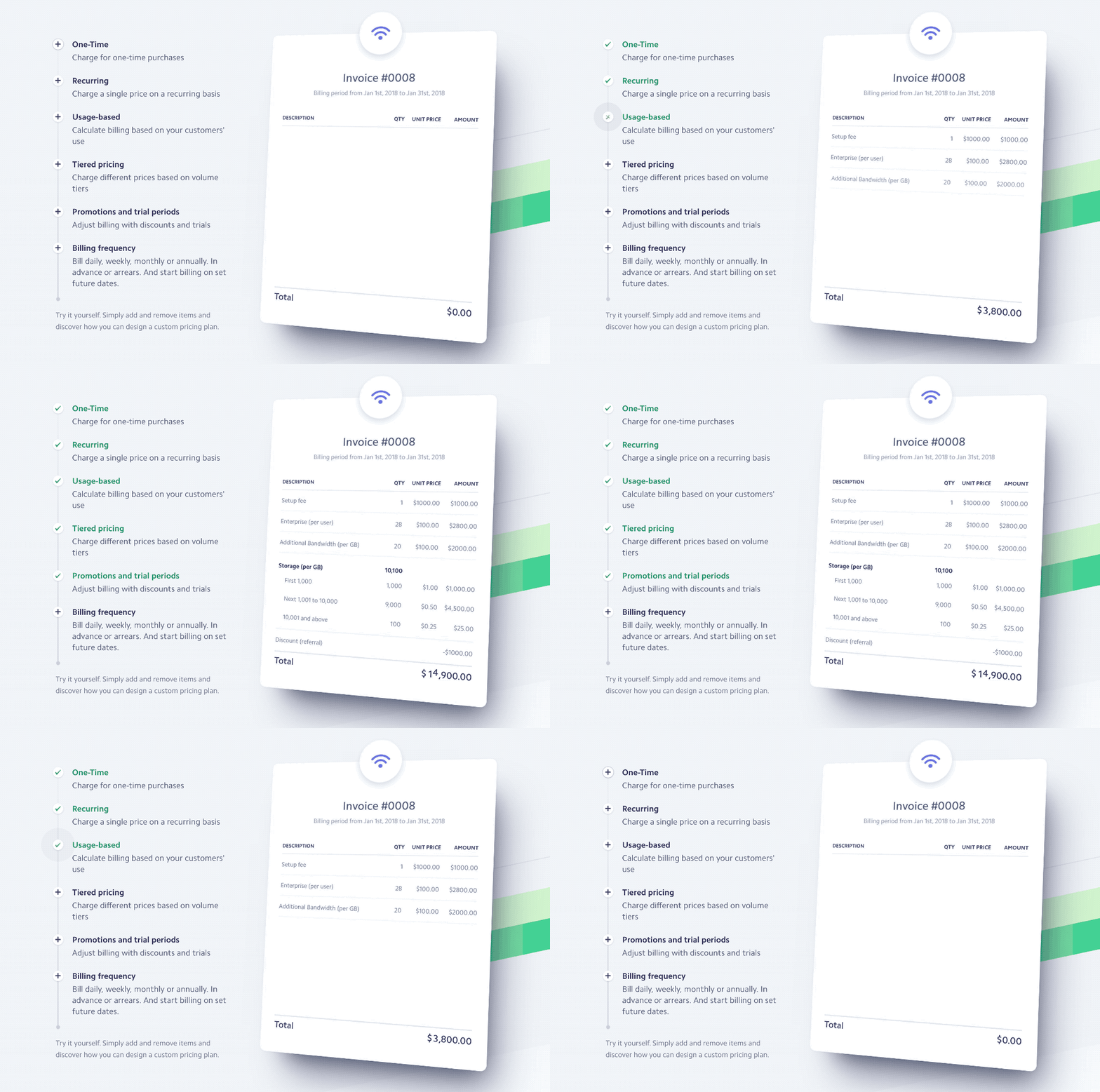
In addition to all this, Stripe looks to apply the machine learning tools it’s created for things like fraud prevention into a new area of expertise. One example of this is figuring out when to intelligently retry a recurring billing charge, which may fail for any number of reasons. Stripe tries to get around problems like lost credit cards or anything along those lines to try to keep the experience as seamless as possible. Seshan said Stripe businesses that implement billing see a 10% increase in revenue — which, for flipping a switch, is pretty substantial.
As companies get bigger and bigger, they will also likely graduate beyond just a simple subscription. An enterprise software company, for example, will probably have to start targeting larger customers that have a salesforce and a different approach for implementing new technology. That means getting invoice-level revenue, which has different implementation requirements than just normal subscription billing. In that case, it’s not like the CIO of a Fortune 100 company can just put a credit card number into a billing service, as those require more robust research and a partnership in place.
While this is a tool that’s a natural fit for something like Stripe, it’s certainly one that’s created a substantial business opportunity. Last month, Zuora — an enterprise subscription services company — filed to go public amid a fresh wave of enterprise IPOs that included Dropbox and Zscaler (and also, to a certain extent, Salesforce’s big acquisition of Mulesoft). Zuora’s subscription services revenue continues to grow, showing that Stripe will certainly have competition here, but also that there’s a large market opportunity.
“We want to think about Stripe as growing the economic infrastructure to increase the GDP of the Internet,” Seshan said. “What we noticed is, we invested in marketplaces in the past, but we’re investing in the next wave of software-as-a-service businesses. We want to power that next trend, and it’s gonna accelerate in the year ahead. We’re really thrilled to power that with billing and subscriptions and we want to make that available to companies with all sizes.”
Powered by WPeMatico
Google Cloud is launching a new feature today that will give its users a new way to monitor and optimize how their data flows between their servers in the Google Cloud and other Google Services, on-premises deployments and virtually any other internet endpoint. As the name implies, VPC Flow Logs are meant for businesses that already use Google’s Virtual Private Cloud features to isolate their resources from other users.
VPC Flow Logs monitors and logs all the network flows (both UDP and TCP) that are sent from and received by the virtual machines inside a VPC, including traffic between Google Cloud regions. All of that data can be exported to Stackdriver Logging or BigQuery, if you want to keep it in the Google Cloud, or you can use Cloud Pub/Sub to export it to other real-time analytics or security platforms. The data updates every five seconds and Google promises that using this service has no impact on the performance of your deployed applications.
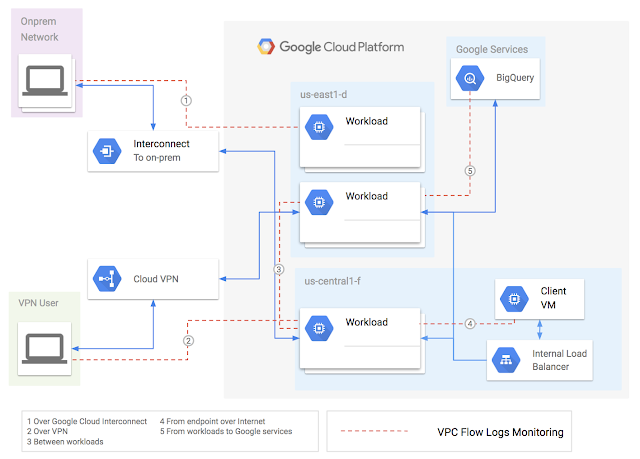
As the company notes in today’s announcement, this will allow network operators to get far more insight into the details of how the Google network performs and to troubleshoot issues if they arise. In addition, it will allow them to optimize their network usage and costs by giving them more information about their global traffic.
All of this data is also quite useful for performing forensics when it looks like somebody may have gotten into your network, too. If that’s your main use case, though, you probably want to export your data to a specialized security information and event management (SIEM) platform from vendors like Splunk or ArcSight.
Powered by WPeMatico

Procurement isn’t the most exciting topic in the world, but for large businesses, it’s an area where inefficiencies can quickly affect the bottom line. Simply getting a complete view of all of the products and services that a company buys is a challenge in itself, though, which in turn makes it hard to find savings, ensure compliance with company policy or government regulations or detect potential fraud. Suplari wants to change this by bringing its AI systems to bear on this problem.
The company today announced that it has raised a $10.3 million Series A round led by Shasta Ventures. Existing investors Madrona Ventures and Amplify Partners also joined this round, as well as new investors Two Sigma Ventures and Workday Ventures.
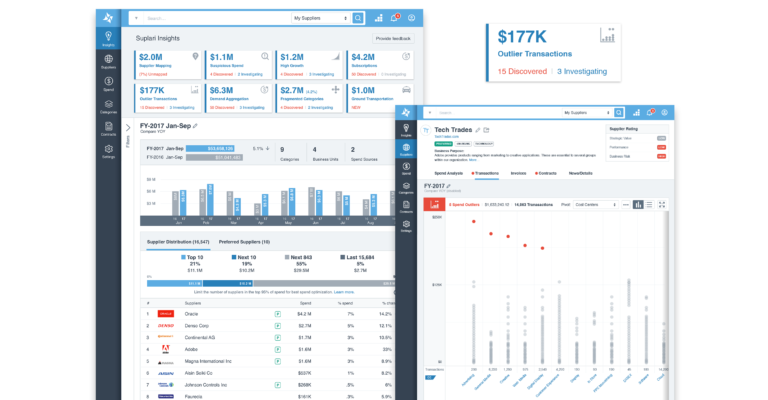
“Suplari uses advanced artificial intelligence on top of existing enterprise systems to proactively uncover the highest-value opportunities to pursue and empower the CFO or Chief Procurement Officer to unlock savings and profit that can be invested in growth, innovation, and their people,” said Suplari CEO and co-founder Nikesh Parekh in today’s announcement.
The company’s cloud-based service allows businesses to analyze all of their procurement data across platforms and formats. This data can include contracts, purchasing data, product usage information and data from corporate credit card accounts.
A number of Fortune 1000 customers have already signed up for the service and Supplari argues that it has helped its customers save software licensing fees by 33 percent and consolidate $200 million in professional service and temporary labor suppliers.
Powered by WPeMatico
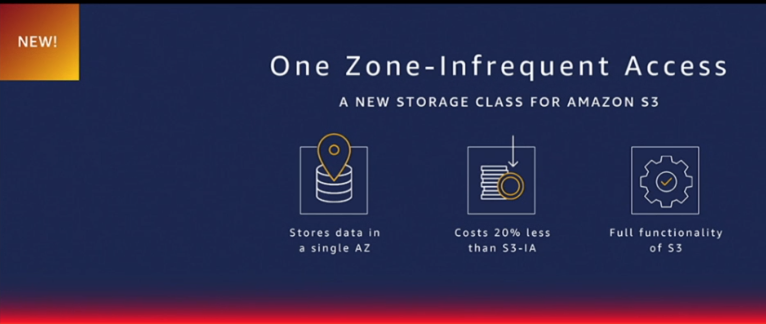
AWS’ S3 storage service today launched a cheaper option for keeping data in the cloud — as long as developers are willing to give up a few 9s of availability in return for saving up to 20 percent compared to the standard S3 price for applications that need infrequent access. The name for this new S3 tier: S3 One Zone-Infrequent Access.
S3 was among the first services AWS offered. Over the years, the company added a few additional tiers to the standard storage service. There’s the S3 Standard tier with the promise of 99.999999999 percent durability and 99.99 percent availability and S3 Standard-Infrequent Access with the same durability promise and 99.9 percent availability. There’s also Glacier for cold storage.
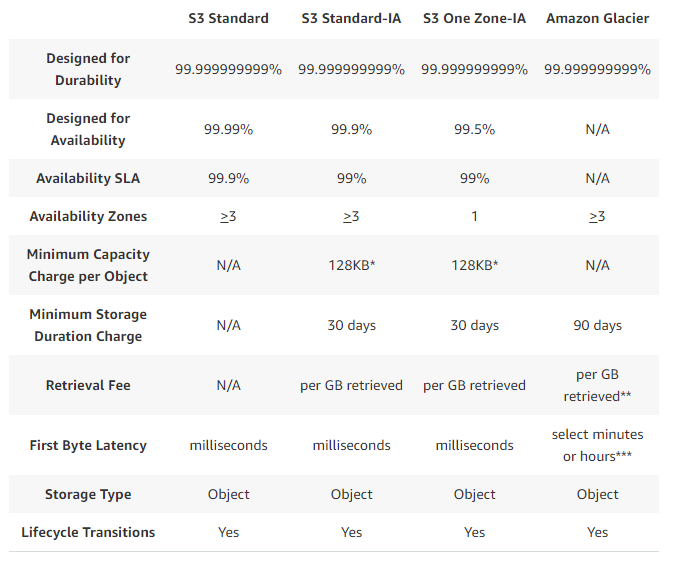
Data stored in the Standard and Standard-Infrequent access tiers is replicated across three or more availability zones. As the name implies, the main difference between those and the One Zone-Infrequent Access tier is that with this cheaper option, all the data sits in only one availability zone. It’s still replicated across different machines, but if that zone goes down (or is destroyed), you can’t access your data.
Because of this, AWS only promises 99.5 percent availability and only offers a 99 percent SLA. In terms of features and durability, though, there’s no difference between this tier and the other S3 tiers.
As Amazon CTO Werner Vogels noted in a keynote at the AWS Summit in San Francisco today, it’s the replication across availability zones that defines the storage cost. In his view, this new service should be used for data that is infrequently accessed but can be replicated.
An availability of 99.5 percent does mean that you should expect to experience a day or two per year where you can’t access your data, though. For some applications, that’s perfectly acceptable, and Vogels noted that he expects AWS customers to use this for secondary backup copies or for storing media files that can be replicated.
Powered by WPeMatico
One of the joys of cloud computing is handing over your data to the cloud vendor and letting them handle the heavy lifting. Up until now that has meant they updated the software or scaled the hardware for you. Today, AWS took that to another level when it announced Amazon DynamoDB Continuous Backups and Point-In-Time Recovery (PITR).
With this new service, the company lets you simply enable the new backup tool, and the backup happens automatically. Amazon takes care of the rest, providing a continuous backup of all the data in your DynamoDB database.
But it doesn’t stop there, it lets the backup system act as a recording of sorts. You can rewind your data set to any point in time in the backup to any time with “per second granularity” up to 35 days in the past. What’s more, you can access the tool from the AWS Management Console, an API call or via the AWS Command Line Interface (CLI).

Screenshot: Amazon
“We built this feature to protect against accidental writes or deletes. If a developer runs a script against production instead of staging or if someone fat-fingers a DeleteItem call, PITR has you covered. We also built it for the scenarios you can’t normally predict,” Amazon’s Randall Hunt wrote in the blog post announcing the new feature.
If you’re concerned about the 35 day limit, you needn’t be as the system is an adjunct to your regular on-demand backups, which you can keep for as long as you need.
Amazon’s Chief Technology Officer, Werner Vogels, who introduced the new service at the Amazon Summit in San Francisco today, said it doesn’t matter how much data you have. Even with a terabyte of data, you can make use of this service. “This is a truly powerful mechanism here,” Vogels said.
The new service is available in various regions today. You can learn about regional availability and pricing options here.
Powered by WPeMatico
Former Twitter product lead April Underwood is getting another promotion this morning, now rising to the role of chief product officer of what aims to be the dead-simple employee communications platform Slack, according to Fortune.
Underwood previously served as director of product at Twitter, where she worked for five years before joining Slack as its head of platform. Shortly after that Underwood was promoted to the company’s VP of product, and will now serve as the company’s first chief product officer. These kinds of promotions imply some additional responsibility — especially as Slack looks to diversify and pitch itself as a more robust product than just a messenger — but also another point of maturation for Slack. The company hired its first chief financial officer, Allen Shim, in February this year.
Slack is one of those companies that faces a tense push-and-pull as it looks to get into larger and larger enterprises, which all have niche needs. The company is a darling in Silicon Valley thanks to its very simple interface, but with companies with thousands (or, eventually, tens of thousands of employees) just a tool with groups and direct messages could easily become unwieldy. That’s why Slack has invested in a variety of tools, including rolling out threaded messaging a little more than a year ago. Slack is likely one of those companies that gets hundreds of feature requests a year for larger businesses that have niche use cases, but it still has to demonstrate that it’s a simple product without hitting feature creep status.
Underwood getting more authority over that evolution (of which she was already a huge part, including the development of threaded messages) is another signal that the company is looking to tap her consumer background at Twitter to create some kind of middle ground between feeling like a satisfying consumer product while still operating as an enterprise tool. Slack is increasingly looking to apply machine learning to help employees get to answers right away, and it still has to take the same kind of care in rolling out new features that satisfy the needs of larger organizations without sacrificing that simplicity that made it a darling in the first place.
Slack most recently hit a $5.1 billion valuation in a recent investment round, and said it had around 6 million daily active users in September last year. That might be small-ish compared to the size and scale of Twitter, but as something geared toward internal communications at companies, that level of engagement in the workplace is going to increasingly be a selling point for the company as it looks to grow into that valuation.
Powered by WPeMatico
Over the last several years, Zendesk has been making the transition from a company that caters mostly to small businesses to one with larger enterprise customers — and their revenue reflects that. The company announced it has crossed the $.5 billion annual run rate since its last earning report in February. It also announced a new enterprise content management product specifically geared for large customer service organizations.
The company was just shy of the goal after its most recent earnings report (pdf) with $123.4 million for the quarter. They say they have since passed that goal, but have not announced it until now, based on revenue that closed March 31, 2018. The company is projecting between $555 and $565 million in revenue for fiscal 2018, according to its last earnings report. When you consider that when the company went public in 2014, it was at $100 million in annual revenue, reaching a half billion dollars in 4 years is significant.
Zendesk reports that 40 percent of its revenue now comes from larger enterprise customers, which they define as 100 seats or more. The company is predicting it will cross the $1 billion run rate by some time in 2020.
“When we IPOed, our run rate was $100 million. We had great momentum, but we were seen as SMB scaling to mid market. To reach a half a billion dollars shows momentum for building up enterprise market and enterprise products,” Adrian McDermott, Zendesk’s president of products told TechCrunch.
As for the new product, it’s called Guide Enterprise and it’s designed to provide those larger customer service organizations with a knowledge base and a content management platform for editorial planning and review. The idea is to empower customer service reps to write up solutions to problems they encounter and build up that knowledge base as part of the natural act of doing their jobs.
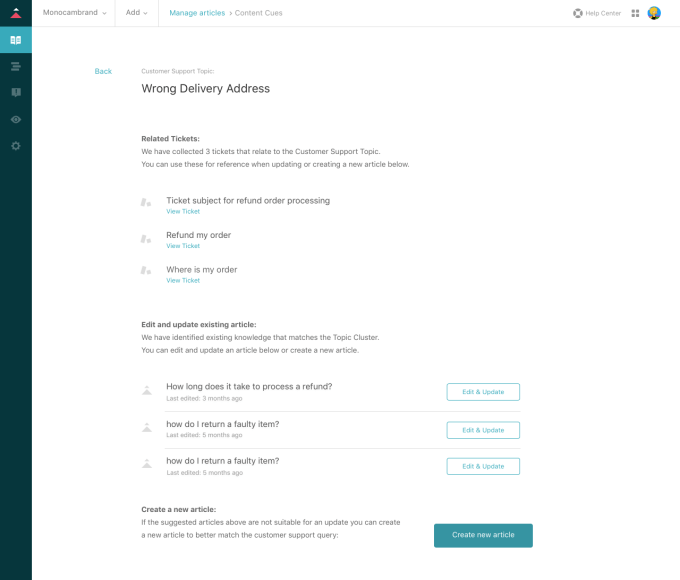
Zendesk Guide Enterprise. Photo: Zendesk
That gives organizations a couple of advantages. First of all, the reps can find their fellow employees’ notes and not have to reinvent the wheel every time, and the notes and articles they write can pass through editorial review and become part of the permanent knowledge base.
When customers hit the site or app, they can access solutions to common problems before having to talk to a human. The platform also includes reminders to check the content regularly so the knowledge base stays fresh and stale content is removed.
Finally, the company is applying AI to the problem. The artificial intelligence component can review the corpus of information currently available in the entire knowledge base and identify gaps in content that the company might want to add, allowing for proactive content creation.
The content management idea isn’t new to Zendesk. McDermott says they shipped the first content management product years ago, but what’s different is that this is geared to larger organizations and that the AI piece allows for some automation of this process. “The new workflow brings rich AI concepts like content analytics into the publishing flow,” he said.
Powered by WPeMatico
When Stackery’s founders were still at New Relic in 2014, they recognized there was an opportunity to provide instrumentation for the emerging serverless tech market. They left the company after New Relic’s IPO and founded Stackery with the goal of providing a governance and management layer for serverless architecture.
The company had a couple of big announcements today starting with their $5.5 million round, which they are calling a “seed plus” — and a new tool for tracking serverless performance called the Health Metrics Dashboard.
Let’s start with the funding round. Why the Seed Plus designation? Company co-founder and CEO Nathan Taggart says they could have done an A round, but the designation was a reflection of the reality of where their potential market is today. “From our perspective, there was an appetite for an A, but the Seed Plus represents the current stage of the market,” he said. That stage is still emerging as companies begin to see the benefits of the serverless approach.
HWVP led the round. Voyager Capital, Pipeline Capital Partners, and Founders’ Co-op also participated. Today’s investment brings the total raised to $7.3 million since the company was founded in 2016.
Serverless computing like AWS Lambda or Azure Functions is a bit of a misnomer. There is a server underlying the program, but instead of maintaining a dedicated server for your particular application, you only pay when there is a trigger event. Like cloud computing that came before, developers love it because it saves them a ton of time configuring (or begging) for resources for their applications.
But as with traditional cloud computing — serverless is actually a cloud service — developers can easily access it. If you think back to the Consumerization of IT phenomenon that began around 2011, it was this ability to procure cloud services so easily that resulted in a loss of control inside organizations.
As back then, companies want the advantages of serverless technology, but they also want to know how much they are paying, who’s using it and that it’s secure and in compliance with all the rules of the organization. That’s where Stackery comes in.
As for the new Health Metrics Dashboard, that’s an extension of this vision, one that fits in quite well with the monitoring roots of the founders. Serverless often involves containers, which can encompass many functions. When something goes wrong it’s hard to trace what the root cause was.

Stackery Health Metrics Dashboard. Photo: Stackery
“We are showing architecture-wide throughput and performance at each resource point and [developers] can figure out where there are bottlenecks, performance problems or failure.
The company launched in 2016. It is based in Portland, Oregon and currently has 9 employees, of which five are engineers. They plan to bring on three more by the end of the year.
Powered by WPeMatico