
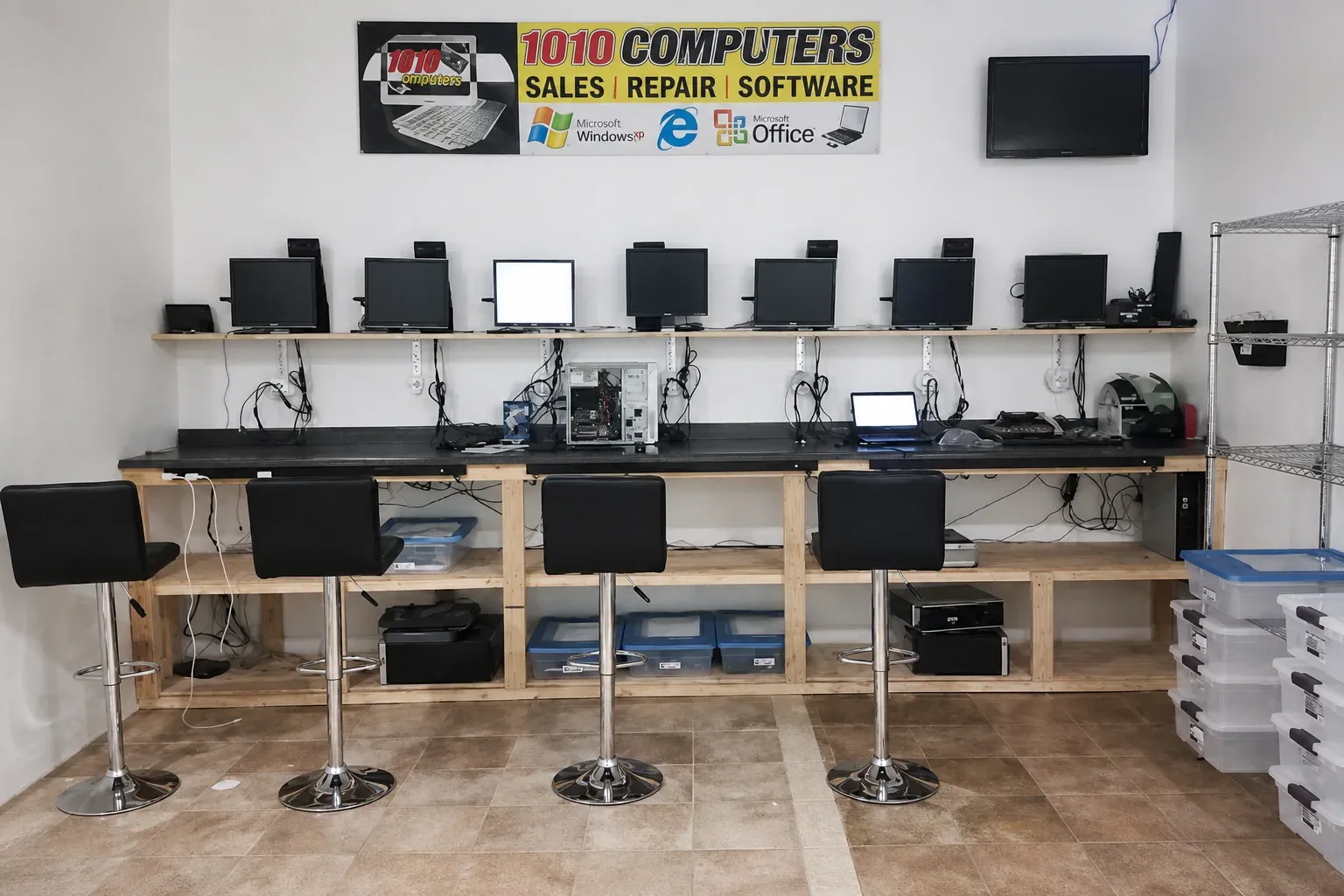
1010Computers | Computer Repair & IT Support

Flutterwave and Ventures Platform CEOs will join us at Startup Battlefield Africa

Startup Battlefield is returning to Africa this December. TechCrunch will be hitting Lagos, Nigeria, bringing with it our Battlefield competition and a day’s worth of panel discussions, focused on topics facing the city’s startup scene.

Iyin “E” Aboyeji

We’ve already announced a pair of speakers for the event and and are excited to add a couple more to the list, bringing with them expertise on topics like VC funding and blockchain technology.

Iyin “E” Aboyeji is the Founder and CEO of Flutterwave, a payment solution designed to transfer funds between Africa and abroad. The Lagos-based startup serves as a payment gateway for a number of high profile companies including Uber, TransferWise, booking.com and tuition platform, Flywire.

In July of this year, Flutterwave rasied a $10 million Series A led by Greycroft Partners and Green Visor Capital.

Other investors include Y Combinator, Omidyar Network, Social Capital, CRE Venture Capital and HOF Capital. Aboyeji will join us to discuss the potential of blockchain tech in Africa’s burgeoning startup scenes.

Kola Aina

Kola Aina is the CEO and founder of Ventures Platform, a Lagos-based VC firm focused on Africa. VP is among the largest accelerator/seed stage funders in the space with an eye toward solving local issues. In addition to serving as a Partner at the fund, Aina is also a mentor at World Bank Group and Google’s Launchpad Accelerator.

We’ve got plenty more speakers to announce in the coming weeks. You can grab your tickets to the event here.

Powered by WPeMatico

Nintendo’s Reggie Fils-Aime on Wii U ‘stumbles’ and balancing nostalgia with reinvention

Nintendo is nearing its 130th birthday, and the company is once again in the midst of major changes as it embraces mobile platforms and online services. But Nintendo of America’s president Reggie Fils-Aime says that should come as no surprise: “We reinvent ourselves every five or 10 years. We have to. It’s in our DNA.”

In an interview at the GeekWire Summit in Seattle, Fils-Aime talked, in his immaculately Nintendo-promotional manner, about the company’s ups and downs over the last decade and what it took to get the Switch out the door.

“We focus on giving consumers experiences that they haven’t even thought of,” he explained. Anyone who has followed Nintendo for a few years certainly wouldn’t disagree — remember the vitality sensor? “By going down this path you create doubters. And we’ll be the first to admit that there will always be stumbles along the way.”

“The Wii had sold a hundred million units globally; the Wii U did not have that same level of success,” he admitted. That’s something of an understatement; the Wii U is widely considered something of a boondoggle, interesting but confusing and hugely outgunned by the competition when it came to what was valued by the rapidly growing mainstream gaming world.

“But in the words of one of our presidents — this is [Hiroshi] Yamauchi — when you’re doing well, don’t be excited by that high-flying performance, and when you’re doing poorly, don’t be sad. Always have an even keel,” he said. Not exactly catchy, but it is good business advice. The focus should be on the horizon.

And that’s where it was, despite the painfully low sales numbers and lack of third-party support. As he tells it, they just plowed ahead with new lessons under their belt.

“If we had not had the Wii U, we would not have the Switch,” he said seriously. “What we heard from customers was that the proposition of a tablet on which they could experience gameplay, coupled with the ability to play games on the TV, is really compelling. Users were telling us, ‘I want to play with this tablet, but when I get 30 feet away from the TV, it disconnects.’ The one point gamers all hate is the point where they have to put the controller down. So it was an important step for us to be able to deliver on this proposition.”

“When I first saw the embodiment of that system,” he recalled, “the hairs on the back of my neck raised up.” It was the same feeling, he said, that he had with the Wii Remote and the DS — both featuring technologies that people were highly skeptical of at first but proved versatile and compelling.

Touchscreens weren’t common when the DS came out, and motion controls weren’t common when the Wii came out, he noted. Both have since become mainstream — not entirely due to Nintendo’s success with them, of course, but it would be disingenuous to say that had nothing to do with it.

But while the company can rightly be said to be taking risks in some ways, in other ways it is uniquely stuck in the past. Its most successful franchises are well past a quarter of a century old.

As Fils-Aime sees it, however, this is exactly how it should be. Mario and Link are characters the way Mickey Mouse or even someone like Robin Hood are characters. New franchises like Splatoon can be established and cared for, but the traditional ones (though no one mentioned Metroid, predictably and unfortunately) should be recycled and brought to new platforms and generations.

Nowadays that includes mobile games, where Nintendo has been taking tentative steps in recent years.

Nintendo’s latest has been criticized for its unvarnished quest for players’ money.

“We see our mobile initiatives as a way to bring our intellectual properties and our gameplay experiences to a larger population than the tens or hundred million consumers that own a dedicated gaming system,” he said. “With Super Mario Run, we literally have hundreds of millions of consumers experiencing Mario, consumers in places where we don’t even distribute our gaming systems. Then maybe they buy that Super Mario t-shirt, they may eat that Super Mario cereal, they may buy a Nintendo Switch.” (Presumably imported.)

Here Fils-Aime’s comments rang a bit hollow, however. Nintendo’s mobile strategy has leaned hard on the “gacha” style game that massively incentivizes in-app purchases of virtual currencies and grinding levels to unlock new characters randomly in loot box style. This seems so far from Nintendo’s core mission of entertainment and so close to the current industry method of cash extraction that it’s hard to believe it’s what the company really wanted to create.

It does, as Fils-Aime said was the goal, allow them to be “effective” on platforms and marketplaces they don’t themselves own, and it does drive their “overall business agenda.” But it seems as though the company is still trying to figure out how to truly bring its games to mobile. Perhaps the upcoming Mario Kart game will be a better option, but it could very easily go the other way, as well.

Powered by WPeMatico

N26 is launching its bank in the UK

Nearly a year after German fintech startup N26 announced that it would launch its service in the U.K., the company is launching in the U.K. N26 is already quite popular in the Eurozone, with more than 1.5 million customers. In this new market, it will face tough competition from existing players, such as Revolut, Monzo, Starling and many others.

N26 is going to roll out its product in multiple phases. Some lucky few will be able to open an account right away. The startup will then go through its waiting list — 50,000 people already left their email addresses to express interest. After that, anybody will be able to download the app and sign up.

This might sound like a convoluted process, but N26 expects a full public launch in just a few weeks. So it should be quite quick if everything goes as planned.

So what can you expect exactly? British customers will get all the basic N26 stuff with one killer feature — U.K. account numbers and sort codes. This way, customers will be able to receive payments and share banking information with their utility providers just like they would with a regular Barclays or Lloyds account.

When you open an N26 account, you get a true bank account and a MasterCard. Basic accounts are free, and N26 has a proper banking license — your deposits up to €100,000 are guaranteed by the European deposit guarantee scheme. You can then send and receive money and pay with your card. Sending money to other N26 users is instantaneous (they call it MoneyBeam).

N26 recently launched Spaces, a new feature that lets you create sub accounts and put some money aside. It’s still limited, but the company plans to add more features.

Your MasterCard works like any other challenger bank. Every time you use it, you receive a push notification. You can set payment and withdrawal limits, lock your card if you lose it and reset your PIN code. N26 will also bring Black and Metal plans to the U.K.

How does it compare to Revolut?

Let’s be honest, the elephant in the room is Revolut . The company has hundreds of thousands (if not over a million) customers in the U.K. N26 lets you do many of the things you can already do with your Revolut account.

So let me point out a few differences. As I noted, N26 has a banking license and U.K. banking information. N26 cards work in Apple Pay and Google Pay.

When it comes to international payments, N26 lets you pay with your card anywhere in the world without any additional fee. The company uses MasterCard’s conversion rates. Revolut first converts the money with its forex feature and then lets you spend your money.

There are an infinite number of forum posts about the exchange rates you’ll get. Sometimes Revolut is cheaper, sometimes N26 is cheaper. It mostly depends on the day of the week (Revolut conversion rates are more expensive on the weekend) and the currency. Unless you plan to spend tens of thousands of GBP during your vacation, you won’t see a huge difference on your bank statement.

Revolut also has many more features than N26. You can insure your phone, buy bitcoins, buy travel insurance, create virtual cards and more. It’s clear that N26 and Revolut have two different styles.

Revolut has a bigger user base than N26. But it’s always been a bit hard to compare them, as N26 wasn’t available in the U.K. Of course, they will both say there are tens of millions of people relying on old banks — multiple challenger banks can grow at the same time if they capture market share from those aging players. Still, the battle between N26 and Revolut is on.

Powered by WPeMatico

Facebook tests Snap Map-style redesign of Nearby Friends

Helping friends meet up offline has been a massive missed opportunity for Facebook . Whether because the brand is too creepy or the politely opt-in 2015 rollout of its location sharing feature wasn’t creepy enough, Facebook Nearby Friends never quite took off. Only 103 of my 1,120 friends in San Francisco have it turned on.

It’s not the only one struggling with “The quest to cure loneliness.” Foursquare Swarm, Glympse, Apple’s Find My Friends and Google Maps’ real-time coordinate-sharing option have all failed to become a ubiquitous standard.

The redesigned map homescreen of Facebook Nearby Friends

But last year, Snapchat launched a different take on the idea based on its biggest acquisition ever, French app Zenly. With Snap Map, it wasn’t just about the utility of seeing a list of friends’ locations like on Facebook, but also splayed them out across maps that you could dive into to see their latest geo-tagged Stories. It was as much about fun and content as it was about actually hanging out with people in person.

Now Facebook is testing a significant redesign of Nearby Friends that looks a lot more like Snap Map. It replaces the list view of the neighborhoods and cities friends are in with a map that groups friends together by city. A “view list” button opens up the former homescreen, though in both views you still can only see a friend’s approximate location in a neighborhood or city, not their exact coordinates. Facebook confirms to TechCrunch that “We’re testing a new design for Nearby Friends, a tool people have used for the past four years to meet with their friends in person. People have complete control over whether to use Nearby Friends or not. They can turn it on in the Nearby Friends bookmark.”

That statement both subtly promotes Facebook’s opt-in privacy setting for Nearby Friends while urging people to actually go back and activate it. The screenshot was generated from the code of Facebook’s Android app by mobile researcher and frequent TechCrunch tipster Jane Manchun Wong. Interestingly, after TechCrunch’s inquiry, Wong tells me Facebook appears to have deactivated server-side the ability to access the map feature.

The reason this matters is that Facebook is desperate for engagement, especially amongst younger users who are slipping away from it to Snapchat and Instagram. If revamped with this map and other improvements, Nearby Friends could become a more popular utility that keeps people opening Facebook. Getting more people to share their real-time location could open new opportunities for local ad targeting. And Facebook could benefit from showing it unlocks meaningful offline connections given its recent brand troubles following election interference and calls that it’s the opposite of “time well spent.”

The existing design of Facebook Nearby Friends

Snap Map was smart, but it’s sadly buried behind an awkward pinch gesture from Snapchat’s homescreen, or inside the search bar where some users wouldn’t expect it. Internal Snapchat usage data scored by Taylor Lorenz for The Daily Beast revealed that Snap Map had sunk from a high of 35 million daily unique viewers after its June 2017 launch to just 19 million by that September — merely 11 percent of Snapchat’s users at the time. Users never seemed to cease on it as a method of browsing Snapchat’s geo-tagged content.

Unfortunately, none of these location apps have figured out that meeting up isn’t all about location. It’s about availability. It doesn’t matter if I see my best friend is at a coffee shop right away if they’re not actually available to hang out. They could be on date, having a business meeting or trying to get some work done. If I drop in just because I see they’re close by, it could be awkward. You’d have to first message them, but you can come off seeming desperate if they can’t or don’t want to meet up with you.

Location apps need an availability indicator similar to the green “online” dot used by many chat apps. You could toggle that on if you wanted to show you’re interested in some spontaneous friend time.

Facebook’s actually spent the last year trying to build this into Messenger in the form of “Your Emoji” status. It lets you pick an emoji like a martini, fork and knife or barbell that’s temporarily overlaid on your profile pic thumbnail to let people know you’re down for drinking, getting dinner or working out. The feature is yet to be widely tested, indicating that Facebook hasn’t quite cracked the nut of encouraging online meetups.

Ideally, Facebook would combine Nearby Friends and Your Emoji to help users share both approximately where they are and whether they want to hang out. The next step would be making it easy to watch a friend’s geo-tagged Facebook Story from wherever they are. And then, Facebook could further copy Snap Map by making public Stories and other location-based content accessible from the map so you could browse it for fun instead of the News Feed or Stories tray.

Still, making Nearby Friends work could require Facebook to rethink the privacy element. The friend graph has bloated to include family, co-workers, bosses and distant acquaintances with whom users might not want to share their real-time location. Finding a better way to let you share where you are with just your closest friends could make more people comfortable with the feature.

Facebook needs to rethink its entire product stack to embrace the high-definition cameras, big phone screens and fast network connections that make it easier to convey information through imagery than text. Visual communication is the future, and that goes far beyond Stories.

Powered by WPeMatico

Twitter launches a ‘Data Saver’ mode that makes its main app more like Twitter Lite

An updated version of the Twitter mobile app will allow users to gain more control over their data usage – similar to how the Twitter Lite app designed for emerging markets works. Now, instead of having to download a separate app in order to limit data consumption or manually adjust various settings, users will be able to turn on a new ‘Data Saver’ option available in Twitter’s Settings.

Until today, Twitter offered Data Saver in Twitter for Windows, Twitter Lite, and its mobile website. Some users may have also seen the Data Saver option on iOS or Android, as well as on Twitter’s desktop website, because of a test Twitter had underway.

That desktop web test had also included moving other elements and features around, like putting Trends underneath the “Who To Follow” suggestions, for example, or making “Night Mode” a more visible option.

But with the launch today, the Data Saver feature is broadly available to all iOS and Android users, a company spokesperson confirmed.

To take advantage of Data Saver, you’ll visit the Data Usage settings in the iOS or Android mobile app and toggle the option on or off. When enabled, images will load in lower quality and videos won’t autoplay. If you’re browsing Twitter and want to see an image appear in higher quality, you can tap on the three-top menu and pick “Load High Quality” to change the setting on that particular piece of content.

The updated version includes a few other tweaks as well, including a change to make it easier to manage who’s in your group chats, plus VoiceOver improvements in polls, and better labels for some types of Twitter ads, according to the app’s update text in the App Store.

For those who really need to conserve, however, Twitter Lite is still the better option. While Data Saver will consume less data when turned on, Twitter Lite takes up less space on your phone, too.

The new Twitter app is live now, but the features themselves may still be rolling out at this time.

Twitter tells us its @TwitterSupport account will tweet the news later today as Data Saver rolls out to everyone.

Powered by WPeMatico

The Google Assistant gets more visual

Google today is launching a major visual redesign of its Assistant experience on phones. While the original vision of the Assistant focused mostly on voice, half of all interactions with the Assistant actually include touch. So with this redesign, Google acknowledges that and brings more and larger visuals to the Assistant experience.

If you’ve used one of the recent crop of Assistant-enabled smart displays, then some of what’s new here may look familiar. You now get controls and sliders to manage your smart home devices, for example. Those include sliders to dim your lights and buttons to turn them on or off. There also are controls for managing the volume of your speakers. Update: Google tells me that update will roll out over the course of the next few weeks, with the iOS release depending on Apple’s app store review process.Even in cases where the Assistant already offered visual feedback — say when you ask for the weather — the team has now also redesigned those results and brought them more in line with what users are already seeing on smart displays from the likes of Lenovo and LG. On the phone, though, that experience still feels a bit more pared down than on those larger displays.

With this redesign, which is going live on both Android and in the iOS app today, Google is also bringing a little bit more of the much-missed Google Now experience back to the phone. While you could already bring up a list of upcoming appointments, commute info, recent orders and other information about your day from the Assistant, that feature was hidden behind a rather odd icon that many users surely ignored. Now, after you’ve long-pressed the home button on your Android phone, you can swipe up to get that same experience. I’m not sure that’s more discoverable than previously, but Google is saving you a tap.

In addition to the visual redesign of the Assistant, Google also today announced a number of new features for developers. Unsurprisingly, one part of this announcement focuses on allowing developers to build their own visual Assistant experiences. Google calls these “rich responses” and provides developers with a set of pre-made visual components that they can easily use to extend their Assistant actions. And because nothing is complete with GIFs, they can now use GIFs in their Assistant apps, too.

But in addition to these new options for creating more visual experiences, Google is also making it a bit easier for developers to take their users money.

While they could already sell physical goods through their Assistant actions, starting today, they’ll also be able to sell digital goods. Those can be one-time purchases for a new level in a game or recurring subscriptions. Headspace, which has long offered a very basic Assistant experience, now lets you sign up for subscriptions right from the Assistant on your phone, for example.

Selling digital goods directly in the Assistant is one thing, but that sale has to sync across different applications, too, so Google today is also launching a new sign-in service for the Assistant that allows developers to log in and link their accounts.

“In the past, account linking could be a frustrating experience for your users; having to manually type a username and password — or worse, create a new account — breaks the natural conversational flow,” the company explains. “With Google Sign-In, users can now create a new account with just a tap or confirmation through their voice. Most users can even link to their existing accounts with your service using their verified email address.”

Starbucks has already integrated this feature into its Assistant experience to give users access to their rewards account. Adding the new Sign-In for the Assistant has almost doubled its conversion rate.

Powered by WPeMatico

Iron Ox opens its first fully autonomous farm

For the last two and a half years, Iron Ox has been working on perfecting its agricultural robots to tend its indoor farms. After first testing its systems on a small scale, the company is opening its first fully autonomous production farm, with plans to start selling its produce soon.

The farm is currently growing a number of leafy greens, including romaine, butterhead and kale, in addition to basil, cilantro and chives. The robots tending these plants are Angus, a 1,000-pound machine that can lift and move the large hydroponic boxes in which the produce is growing, and Iron Ox’s robotic arm for harvesting the produce.

As Iron Ox co-founder and CEO Brandon Alexander told me, the current setup can produce about 26,000 plants per year and is equivalent to a one-acre outdoor farm — though this one is obviously indoors and far more densely packed.

Alexander noted that he and his co-founder Jon Binney decided to get into indoor farming after working at a number of other robotics companies — for Alexander, that includes a stint at Google X — where the focus was often more on building cool technologies and not on how those robots could be used. “We’d seen lots of novelty robotics stuff and wanted to avoid that,” he told me. And while the founding team considered getting into warehouse logistics or drones, they eventually settled on farming because, as Alexander tells it, they didn’t just want to build a good business but also one that would create social good.

Today, the majority of leafy greens (the kind of produce that Iron Ox focuses on) in the U.S. are grown in California and Arizona — especially during the winter months when it’s colder in the rest of the country. That means a romaine lettuce that’s sold on the East Coast in January has often traveled more than 2,000 miles to get there. “That’s why we switched to indoors,” Alexander said. “We can decentralize the farm.”

It also helps that an indoor hydroponic farm can achieve 30 times the yield of an outdoor farm over the course of a year, yet uses far less space.

To get to this point where Iron Ox can operate an autonomous farm, though, took plenty of work and engineering chops. The hardest challenge, Alexander told me, was to get the robotic arm to look at the plants through its stereo cameras and then plan the pickup operation to harvest the produce, which isn’t always uniform. And to run this operation autonomously, it obviously has to do so reliably.

Angus, the larger robot that picks up the 800-pound pallets the produce is grown in and brings them to the robotic arm, also took some time to get right. You don’t want to move those pallets too quickly, after all, or you’ll have plenty of water to mop up.

All of that, including the system that monitors the plants, their growth, the sensors that watch over them and the hydroponics system, is then controlled from a cloud-based service that tells the robots when it’s time to harvest and which operations to perform. The robots themselves, though, then perform those tasks autonomously.

One thing that came as something of a surprise to the team, though, was that running an indoor farm solely with LED lighting still results in electricity bills that are simply too expensive to make the operation profitable. So going forward, Iron Ox is actually betting on more traditional greenhouses that are augmented by high-efficiency LED lighting.

That means the team can’t build these autonomous farms right in the city, though, because you can’t exactly stack a number of greenhouses on top of each other. But as Alexander noted, even if you have to be 20 miles outside of the city, that’s still far better than shipping produce to a supermarket that is thousands of miles away.

As Alexander stressed, the team spent a lot of time talking to both farmers and chefs to figure out what they needed. Farmers, it turned out, were mostly complaining about their inability to find labor. And that’s no surprise. The labor shortage in the agricultural industry is starting to become a major issue for farmers, especially in states like California. As for the chefs, what they were mostly looking for was quality, of course, but also predictability and consistent quality.

The plan now is to start selling the produce from the first farm and then scale to more and larger locations over time. Iron Ox now has the money to do so, given that it has raised more than $5 million in total, including a $3 million round it announced earlier this year.

Powered by WPeMatico

Palo Alto Networks to acquire RedLock for $173 M to beef up cloud security

Palo Alto Networks launched in 2005 in the age of firewalls. As we all know by now, the enterprise expanded beyond the cozy confines of a firewall long ago and vendors like Palo Alto have moved to securing data in the cloud now too. To that end, the company announced its intent to pay $173 million for RedLock today, an early-stage startup that helps companies make sure their cloud instances are locked down and secure.

The cloud vendors take responsibility for securing their own infrastructure, and for the most part the major vendors have done a decent job. What they can’t do is save their customers from themselves and that’s where a company like RedLock comes in.

As we’ve seen time and again, data has been exposed in cloud storage services like Amazon S3, not through any fault of Amazon itself, but because a faulty configuration has left the data exposed to the open internet. RedLock watches configurations like this and warns companies when something looks amiss.

When the company emerged from stealth just a year ago, Varun Badhwar, company founder and CEO told TechCrunch that this is part of Amazon’s shared responsibility model. “They have diagrams where they have responsibility to secure physical infrastructure, but ultimately it’s the customer’s responsibility to secure the content, applications and firewall settings,” Badhwar told TechCrunch last year.

Badhwar speaking in a video interview about the acquisition says they have been focused on helping developers build cloud applications safely and securely, whether that’s Amazon Web Services, Microsoft Azure or Google Cloud Platform. “We think about [RedLock] as guardrails or as bumper lanes in a bowling alley and just not letting somebody get that gutter ball and from a security standpoint, just making sure we don’t deviate from the best practices,” he explained.

“We built a technology platform that’s entirely cloud-based and very quick time to value since customers can just turn it on through API’s, and we love to shine the light and show our customers how to safely move into public cloud,” he added.

The acquisition will also fit nicely with Evident.io, a cloud infrastructure security startup, the company acquired in March for $300 million. Badhwar believes that customers will benefit from Evident’s compliance capabilities being combined with Red Lock’s analytics capabilities to provide a more complete cloud security solution.

RedLock launched in 2015 and has raised $12 million. The $173 million purchase would appear to be a great return for the investors who put their faith in the startup.

Powered by WPeMatico

Balderton’s $145M ‘secondary’ fund will give shareholders in European scale-ups the chance to exit early

In what looks like a European first, the London-based early-stage venture capital firm Balderton Capital is announcing it has closed a new $145 million “secondary” fund dedicated to buying equity stakes from early shareholders in European-founded “high growth, scale-up” technology companies.

Dubbed “Balderton Liquidity I,” the new fund will invest in European growth-stage companies through the mechanism of purchasing shares from existing, early shareholders who want to liquidate some or all of their shares “pre-exit.”

“Balderton will take minority stakes, between regular fund-raising rounds, making it possible for early shareholders — including angels, seed funds, current and former founders and employees — to realise early returns, reinvest capital in the ecosystem, or reward founders and early employees,” explains the firm.

The move essentially formalises the secondary share dealing that already happens — typically as part of a Series C or other later rounds — which often sees founders take some money off the table so they can improve their own financial situation and won’t be tempted to sell their company too soon, but also gives early investors a way out so they can begin the cycle all over again. Otherwise it can literally take five to 10 years before a liquidity event happens, either via IPO or through a private acquisition, if it happens at all.

“The bigger picture is there are lots of shareholders who either want or need or have to take liquidity at some point,” Balderton partner Daniel Waterhouse tells me on a call. “Founders are one part of that… but I think the majority of this fund is more targeted at other shareholders — business angels, seed funds, maybe employees who left, founders who left — who want to reinvest their money, want to solve a personal financial issue, want to de-risk their personal balance sheets, etc. So we’re not obsessed with founders in this fund, we’re obsessed with many different types of early shareholders, which for many different reasons would like to get liquidity before the grand exit event.”

Waterhouse says that one of the big drivers for doing this now is that Balderton’s analysis suggests there is “a critical mass of interesting companies” that are in the growth stage: “businesses that have got a scalable commercial engine” and a proven commercial model. This critical mass has happened only over the last two years, which is why — unlike in Silicon Valley — we haven’t yet seen a fund of this kind launch in Europe.

“We think there’s now about 500 companies in Europe that have raised over $20 million. That doesn’t mean they are all great companies but it’s an interesting, crude data point in terms of the scale they’ve got to. As a consequence, within that 500 we expect there to be quite a lot of interesting companies for this fund to help and we obviously have a pretty good lens on the market. Through our early-stage investing, and working with companies from the early-stage through to exit, and then obviously staying in touch with companies we don’t necessarily invest in, we have a pretty good sense of that from a bottom up perspective on how many opportunities are out there.”

He explained that there are three aspects behind the secondary funding strategy. First is that by investing via secondary funding, more companies will gain access to the “Balderton platform,” which includes an extensive executive and CEO network and support with recruitment and marketing. Secondly, it is good for the ecosystem as it will not only help relieve financial pressure from founders so they can “shoot for the next growth point” but will also let business angels cash out and recycle their money by investing in new startups. Thirdly, and perhaps most importantly, Balderton thinks it represents a good investment opportunity for the firm and its LPs as secondary liquidity is “underserved as a market.”

(Separately, one London VC I spoke to said a dedicated secondary fund in Europe made sense except in one scenario: that European valuations see a price correction sometime in the future promoted by the current trajectory of available funding slowing down, which he believes will eventually happen. “Funds are 10 years so they just have to get out in time,” is how said VC framed it.)

To that end, Waterhouse says Balderton is looking to do around 15-20 investments out of the fund, but in some instances may start slowly and then buy more shares in the same company at an even later stage. It will be managed by Waterhouse with support from investment principal Laura Connell, who recently joined the VC firm.

Struggling to see many downsides to the new fund — which by virtue of being later-stage is less risky and will likely command a discount on secondary shares it does purchase — I ask if perhaps Balderton is being a little opportunistic in bringing a reasonably large amount of institutional capital to the secondary market.

“No, I don’t think so,” he replies. “What we’ve seen in our portfolio is [that] the point in time when someone is looking for liquidity isn’t set on the calendar alongside when companies do fund raising. In particular as a company gets more mature, the gap between fund raises can stretch out because the businesses are more close to profitability. And so it’s not deterministic. We want to just be there to help people who are actually looking to sell out of cycle in those points of time and at the moment have very little options. If someone wants to wait, they’ll wait.”

Finally, I was curious to know how it might feel the first time Balderton buys a substantial amount of secondary shares in a company that it previously turned its nose down at during the Series A stage. After pointing out that companies usually look very different at Series A compared to later on in their existence — and that Balderton can’t and doesn’t invest in every promising company — Waterhouse replies diplomatically: “Maybe we kick ourselves a bit, but we’re quite happy with the performance of our early funds and obviously we’ll be happy to add other new companies that are doing really well into the family.”

Powered by WPeMatico

Foursquare picks up $33 million Series F investment

Foursquare has today announced the partial close of a $33 million Series F financing, with $25 million already closed out and another $8 million inbound, according to the blog post.

The round was co-led by Simon Ventures and Naver Corp, with participation from Union Square Ventures, an existing investor.

Over the past four years, Foursquare has pivoted from a consumer-facing social application to an enterprise platform, giving brands, retailers and ad platforms a way to get accurate, location-based data about their customers and their conversion rates.

Foursquare CEO Jeff Glueck told TechCrunch that more than 90 percent of Foursquare’s revenue comes from the enterprise side of the business. Two of the company’s most popular products are Attribution and the Pilgrim SDK.

With Attribution, Foursquare allows retailers and publishers to effectively track the impact their media has on conversion at offline locations. Using a panel of 25 million, non-incentivized users, these brands and retailers can track their own impact, as well as make more informed campaign decisions using insights around foot traffic and visit history of certain demographics.

The Pilgrim SDK, on the other hand, allows brands and partners to deliver highly relevant notifications and other experiences to their own users by leveraging Foursquare’s troves of location data.

Foursquare customers include Tinder, AccuWeather, Spotify, Hilton and iHeartMedia, and that doesn’t include the long list of brands — Uber, Apple, Microsoft, Samsung and Twitter — whose platforms are powered by Foursquare location.

According to Glueck, one of Foursquare’s greatest advantages is that they can offer the same high-level capabilities as their competitors, such as Facebook and Google, while focusing solely on the value they’re delivering to partners.

“The success of Google or Facebook or Amazon makes them great companies but unreliable partners,” said Glueck. “The truth about these walled gardens is that they can change their terms and conditions on a whim. They’re not partner-oriented. They’re seeking domination. It’s important for an independent developer community to be able to partner with a company that has the same capabilities.”

Foursquare currently includes more than 100 million places in more than 150 countries on their platform, which powers apps that collectively serve more than 1 billion consumers.

This latest round, which increased the company’s valuation, brings Foursquare’s total funding to $240 million.

Powered by WPeMatico