Fundings & Exits
Auto Added by WPeMatico
Auto Added by WPeMatico
While you’ve probably spent a lot of today thinking about the COVID-19 pandemic, it’s worth remembering that other health issues aren’t going away — and that heart disease remains the leading cause of death in the United States.
Heartbeat Health is a startup working to improve the way that cardiovascular care is delivered, and it announced today that it has raised $8.2 million in Series A funding.
Dr. Jeffrey Wessler, the startup’s co-founder and CEO, is a cardiologist himself, and he told me that he “stepped off the academic cardiology path” about three years ago because he “saw some of the work being done in digital health space and became incredibly enamored of doing this for heart health.”
Wessler said that the delivery methods for cardiovascular care remain almost entirely unchanged. To a large extent that’s because the existing model works, but there’s still room to do better.
“As of the last seven or so years, we’re in a new era where we’ve figured out how to treat people well once they get sick,” he said. “But we’re doing a very bad job of keeping them healthy.”
To address that, Heartbeat Health has created what Wessler described as a “digital first” layer, allowing patients to talk with experts via telemedicine, who can then direct them to the appropriate provider — who might be a “preferred Heartbeat partner” or not — for in-person care.
This initial interaction can help patients avoid “a lot of inefficiencies,” he said, because it ensures they don’t get sent to the wrong place, and “kick[s] things off right with evidence-based, guideline-based testing, so that they’re not just falling into the individual practice habits of random doctors.”
In addition, Heartbeat Health tries to collect all of a patient’s relevant heart data (which might come from wearable consumer devices like an Apple Watch or Fitbit) in one place, and to track results about which treatments are most effective.
“Ultimately, we want to be the software, the technology powering it all, but we don’t want to leave any patient behind at the beginning,” Wessler said.
He added that the program works with most commercial insurance and is already involved in the care of 10,000 New York-area patients. And apparently it’s been embraced by the cardiologists, who Wessler said always tell him, “We’ve been waiting for that layer to come in and unify this incredibly fragmented system, as long as it works with us and not against us.”
The funding was led by .406 Ventures and Optum Ventures, with participation from Kindred Ventures, Lerer Hippeau, Designer Fund and Max Ventures.
Powered by WPeMatico
Hello and welcome back to our regular morning look at private companies, public markets and the gray space in between.
A few weeks ago, Uber and Lyft, kicking bags of the 2019 stock market and regularly cited as examples of venture-backed excess, were back to fighting form.
After encouraging Q3 2019 reports from both ride-hailing giants that included fresh profitability promises and timelines, Uber upped the ante by moving its profitability goal up when it reported Q4 results earlier this year. Shares of the famous company rallied. When Lyft failed to mimic the declaration in its own Q4 earnings report, it was dinged by investors. But from the time of their Q3 2019 earnings reports to recently, Uber and Lyft were coming back up for air.
Suddenly, it was perfectly reasonable to be optimistic about the two ride-hailing companies that had become more famous for their sticky losses than their growth potential; as the pair had matured from upstart to public company, their money-losing methods appeared increasingly permanent, making the Q3 2019 and Q4 2019 profit declarations investor balm.
But after the rally came the novel coronavirus and COVID-19. Since then, the two companies have lost huge amounts of ground. Their shares fell 9.8% (Uber) and 11.8% (Lyft) yesterday alone. In pre-market trading this morning, they are down even more. I wanted to get my head around what could be causing this, so let’s run through each company’s most recent profit forecasts, results, share price gains and losses, and what investors are telling the world through their recent selloff. (Hint: DoorDash’s IPO probably isn’t happening soon.)
Powered by WPeMatico
Unitary, a startup that’s developing AI to automate content moderation for “harmful content” so that humans don’t have to, has picked up £1.35 million in funding. The company is still in development mode but launched a trial of its technology in September.
Led by Rocket Internet’s GFC, the seed round also includes backing from Jane VC (the cold email-friendly firm backing female-led startups), SGH Capital, and a number of unnamed angel investors. Unitary had previously raised pre-seed funding from Entrepreneur First, as an alumnus of the company builder program.
“Every minute, over 500 hours of new video footage are uploaded to the internet, and the volume of disturbing, abusive and violent content that is put online is quite astonishing,” Unitary CEO and co-founder Sasha Haco, who previously worked with Stephen Hawking on black holes, tells me. “Currently, the safety of the internet relies on armies of human moderators who have to watch and take down inappropriate material. But humans cannot possibly keep up.”
Not only is the volume of content uploaded increasing, but the people employed to moderate the content on platforms like Facebook can suffer greatly. “Repeated exposure to such disturbing footage is leaving many moderators with PTSD,” says Haco. “Regulations are responding to this crisis and putting increasing pressure on platforms to deal with harmful content and protect our children from the worst of the internet. But currently, there is no adequate solution”.
Which, of course, is where Unitary wants to step in, with a stated mission to “make the internet a safer place” by automatically detecting harmful content. Its proprietary AI technology, which uses “state of the art” computer vision and graph-based techniques, claims to be able to recognise harmful content at the point of upload, including “interpreting context to tackle even the more nuanced videos,” explains Haco.
Meanwhile, although there are already several solutions offered to developers that can detect restricted content that is more obvious, such as explicit nudity or extreme violence (AWS, for example, has one such API), the Unitary CEO argues that none of these are remotely good enough to “truly displace human involvement”.
“These systems fail to understand more subtle behaviours or signs, especially on video,” she says. “While current AI can deal well with short video clips, longer videos still require humans in order to understand them. On top of this, it is often the context of the upload that makes all the difference to its meaning, and it is the ability to incorporate contextual understanding that is both extremely challenging and fundamental to moderation. We are tackling each of these core issues in order to achieve a technology that will, even in the near term, massively cut down on the level of human involvement required and one day achieve a much safer internet”.
Powered by WPeMatico
Augmented reality headset maker Magic Leap has struggled with the laws of physics and failed to get to market. Now it’s seeking an acquirer, but talks with Facebook and medical goods giant Johnson & Johnson led nowhere according to a new report from Bloomberg’s Ed Hammond.
After raising over $2 billion and being valued between $6 billion and $8 billion back when it still had momentum, Hammond writes that “Magic Leap could fetch more than $10 billion if it pursues a sale” according to his sources. That price seems ridiculous. It’s the kind of number a prideful company might strategically leak in hopes of drumming up acquisition interest, even at a lower price.

Startups have been getting their valuations chopped when they go public. The whole economy is hurting due to coronavirus. Augmented Reality seems less interesting than virtual reality with people avoiding public places. Getting people to strap used AR hardware to their face for demos seems like a tough sell for the forseeable future.
No one has proven a killer consumer use case for augmented reality eyewear that warrants an expensive and awkward-to-wear gadget. Our phones can already deliver plenty of AR’s value while letting you take selfies and do video chat that headsets can’t. My experiences with Magic Leap at Sundance Film Festival last year were laughably disappointing, with its clunky hardware, ghostly projections, and narrow field of view.
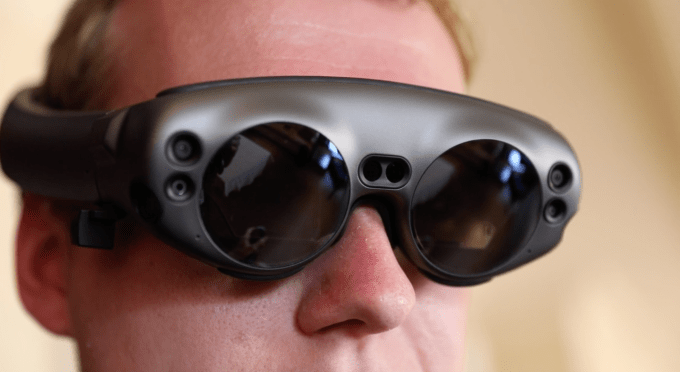
Apple and Facebook are throwing the enduring profits of iPhones and the News Feed into building a better consumer headset. Snapchat has built intermediary glasses since CEO Evan Spiegel thinks it will be a decade before AR headsets see mainstream adoption. AR rivals like Microsoft have better enterprise experience, connections, and distribution. Enterprise AR startup Daqri crashed and burned.
Magic Leap’s CEO said he wanted to sell 1 million of its $2300 headset in its first year, then projected it would sell 100,000 headsets, but only moved 6,000 in the first six months, according to a daming report from The Information’s Alex Heath. Alphabet CEO Sundar Pichai left Magic Leap’s board despite Google leading a $514 million funding round for the startup in 2014. Business Insider’s Steven Tweedie and Kevin Webb revealed CFO Scott Henry and SVP of creative strategy John Gaeta bailed in November. The company suffered dozens of layoffs. It lost a $500 million contract to Microsoft last year. The CEOs of Apple, Google, and Facebook visited Magic Leap headquarters in 2016 to explore an acquisition deal, but no offers emerged.
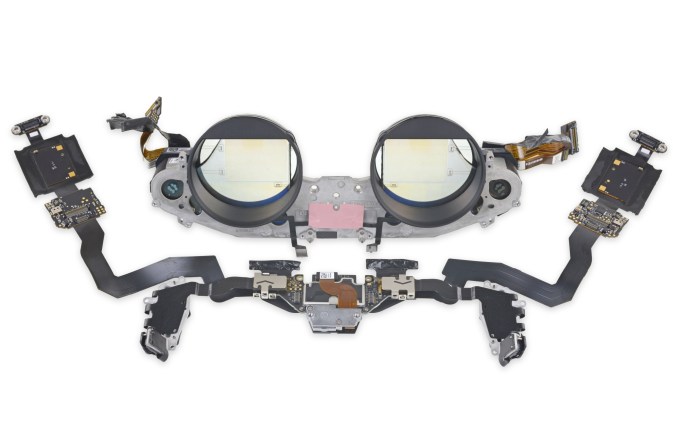
Is AR eyewear part of the future? Almost surely. And is this startup valuable? Certainly somewhat. But Magic Leap may prove to be too little too early for a company burning cash by the hundreds of millions in a market newly fixated on efficiency. A $10 billion price tag would require one of the world’s biggest corporations to believe Magic Leap has irreplicable talent and technology that will earn them a fortune in the somewhat distant future.
The fact that Facebook, which does not shy from tall acquisition prices, didn’t want to buy Magic Leap is telling. This isn’t a product with hundreds of millions of users or fast-ramping revenue. It’s a gamble on vision and timing that looks to be coming up snake eyes. It’s unclear when the startup would ever be able to deliver on its renderings of flying whales and living room dinosaurs in a form factor people actually want to wear.

One of Magic Leap’s early renderings of what it could supposedly do
With all their money and plenty of time before widespread demand for AR headsets materializes, potential acquirers could likely hire away the talent and make up the development time in cheaper ways than buying Magic Leap. If someone acquires them for too much, it feels like a write-off waiting to happen.
Powered by WPeMatico
Superpeer is giving YouTube creators and other experts a new way to make money.
The startup announced today that it has raised $2 million in pre-seed funding led by Eniac Ventures, with participation from angel investors including Steven Schlafman, Ankur Nagpal, Julia Lipton, Patrick Finnegan, Justin De Guzman, Chris Lu, Paul Yacoubian and Cheryl Sew Hoy. It also launched on ProductHunt.
The idea is that if you’re watching a video to learn how to paint, or how to code, or about whatever the topic might be, there’s a good chance you have follow-up questions — maybe a lot of them. Ditto if you follow someone on Twitter, or read their blog posts, to learn more about a specific subject.
Now you could try to submit a question or two via tweet or comment section, but you’re probably not going to get any in-depth interaction — and that’s if they respond. You could also try to schedule a “Can I pick your brain?”-type coffee meeting, but again, the odds aren’t in your favor, particularly when it comes to picking the brain of someone famous or highly in-demand.
With Superpeer, experts who are interested in sharing their knowledge can do so via remote, one-on-one video calls. They upload an intro video, the times that they want to be available for calls and how much they want to charge for their time. Then Superpeer handles the appointments (integrating directly with the expert’s calendar), the calls and the payments, adding a 15% fee on top.
So a YouTube creator could start adding a message at the end of their videos directing fans who want to learn more to their Superpeer page. And if you’re a founder who wants to talk to an experienced designer, executive coach, product manager, marketing/sales expert, VC or other founder, you could start with this list.
Of course, there might be some wariness on both sides, whether you’re an expert who doesn’t want to get stuck on the phone with someone creepy or annoying, or someone who doesn’t want to pay for a call that turns out to be a complete waste of time.
To address this, co-founder and CEO Devrim Yasar (who previously founded collaborative programming startup Koding) said the company has created a user rating system, as well as a way to ask for a refund if you feel that a call violated the terms of service — the calls will be recorded and stored for 48 hours for this purpose.
Superpeer launched in private beta two weeks ago, and Yasar said the startup already has more than 100 Superpeers signed up.
Powered by WPeMatico
Meet Alma, a French startup that helps you offer a new payment option for your expensive goods. Like Klarna, clients can choose to pay over three or four installments. But the comparison stops here, as Klarna isn’t available in France. Alma just raised a $14.1 million (€12.5 million) funding round.
Idinvest, ISAI and Picus Capital are investing in today’s funding round. Additionally, Alma has opened a $19.2 million (€17 million) credit line to finance merchant payments.
As a merchant, when you integrate Alma in your payment flow, your customers can choose Alma to make it less intimidating. Instead of getting charged when you pay, you can choose to buy now and pay over three or four installments. Merchants get paid instantly.
“We handle risk and cash advance in house,” co-founder and CEO Louis Chatriot told me. “When it comes to the risk of non-payment, we have implemented a series of verifications, filters and algorithms in order to detect fraud and high-risk profiles.”
The company creates multiple categories depending on your profile. It can ask for more information if Alma has some doubts, such as API access to your bank statement. Assessing risk is particularly difficult in France, as there’s no central credit scoring system.
Merchants can choose to pay the processing fees in full — 3.8% of the transaction for a payment in three intallments, 4.2% for a payment in four installments. But they also can share the processing fees with the end customer.
Alma is compatible with most e-commerce platforms, such as Shopify, Magento and Prestashop. Merchants can also offer Alma as a payment option in retail stores.
Over 1,000 merchants are using Alma already — the startup processes tens of millions of euros of transactions per year. Clients include Bobbies, Asphalte, Cowboy, Weebot, The Cool Republic and The Socialite Family.
With today’s funding round, the company wants to attract more merchants and launch two new payment options — pay later and a more traditional option to pay now. In addition to that, Alma currently redirects customers to its own checkout page. The startup wants to integrate its payment widget directly on e-commerce websites.
Powered by WPeMatico
Dell’s 2015 decision to buy EMC for $67 billion remains the largest pure tech deal in history, but a transaction of such magnitude created a mountain of debt for the Texas-based company and its primary backer, Silver Lake.
Dell would eventually take on close to $50 billion in debt. Years later, where are they in terms of paying that back, and has the deal paid for itself?
When EMC put itself up for sale, it was under pressure from activist investors Elliott Management to break up the company. In particular, Elliott reportedly wanted the company to sell one of its most valuable parts, VMware, which it believed would help boost EMC’s share price. (Elliott is currently turning the screws on Twitter and SoftBank.)
Whatever the reason, once the company went up for sale, Dell and private equity firm Silver Lake came ‘a callin with an offer EMC CEO Joe Tucci couldn’t refuse. The arrangement represented great returns for his shareholders, and Tucci got to exit on his terms, telling Elliott to take a hike (even if it was Elliott that got the ball rolling in the first place).
Dell eventually took itself public again in late 2018, probably to help raise some of the money it needed to pay off its debts. We are more than three years past the point where the Dell-EMC deal closed, so we decided to take a look back and see if Dell was wise to take on such debt or not.
Powered by WPeMatico
Hungry, a catering marketplace that connects businesses with independent chefs, announced this week that it has raised $20 million in Series B funding. Hungry tells me that the funding valued the company at more than $100 million (pre-money).
The investors were also pretty impressive: The round was led by Evolution VC Partners and former Whole Foods co-CEO Walter Robb, who’s joining the startup’s board. Kevin Hart, Jay-Z, Los Angeles Rams running back Todd Gurley, former Obama aide Reggie Love and Seattle Seahawks linebacker Bobby Wagner also participated.
CEO Jeff Grass said that he and his co-founders Eman Pahlavani (COO) and Shy Pahlevani (president) got the idea for the company while working at their previous startup LiveSafe.
“LiveSafe was in a food desert, where the best options were Subway and Ruby Tuesday,” Grass said. “We wanted more authentic food and we started thinking about, ‘Is there a better way that taps into local chefs?’ ”
That eventually led to Hungry, which has built up a network of independent chefs in Washington, D.C., Philadelphia, Boston, New York and Atlanta, providing catering to companies including Amazon, E-Trade, Microsoft and BCG. The chefs are all screened by Hungry, they cook out of “ghost kitchens” (commercial kitchens that aren’t attached to a restaurant) and then the food is delivered by the Hungry team.
“The food is produced at a much lower cost structure than at a restaurant with a retail location,” Grass said. “And yet you’re not sacrificing on quality. These are top chefs cooking their best dishes — you get higher than restaurant-quality food, but produced at a much lower cost.”
He added that this lower cost also allows the startup to be generous. Specifically, for every two meals sold, Hungry is supposed to donate one meal to end hunger in the U.S., and it has donated nearly 500,000 meals already.
As for the funding, Grass and his team will use it to expand into new markets — he hopes to be in 23 cities by the end of 2021.
Powered by WPeMatico
ChatableApps, a U.K. startup commercialising the work of auditory neural signal processing researcher Dr. Andy Simpson, has quietly picked up seed money from Mark Cuban. The company has built a smartphone app that provides hearing assistance by removing background noise in near real-time.
Alongside Simpson, the company’s co-founders are Brendan O’Driscoll, Aidan Sliney and George Boyle — the original team behind the music discovery app Soundwave (acquired by Spotify) — and later joined by CEO Giles Tongue, formerly of wearable tech startup NURVV, who has been tasked with taking the business forward.
“Dr Andy Simpson is our CSO [chief science officer] and inventor,” Tongue tells me. “He brings together the auditory neuroscience, auditory perception, neural signal processing and artificial Intelligence, is an AI maverick and contrarian thinker, and this unusual intersection are what has led to the creation of our proprietary ground up neuroscience-led AI. His prolific research had over 400 citations before he went into stealth mode.”
Since then, the team has been busy (although largely flying under the radar). Chatable’s hearing assistant app is available in the Play Store in open beta but is still considered “pre-launch.”
“We’re in a constant cycle of pre-clinical validation, which is going amazingly,” says Tongue. “We’ve heard ‘life changing,’ and had tears in the eyes… of early adopters.”
Chatable’s O’Driscoll says the company’s technology and approach is “completely unique” because it doesn’t use noise filtering or other DSP techniques. “It’s actually a deep learning neural net approach to speech and noise separation that doesn’t apply filters to the original audio but rather it listens and re-prints a brand new audio stream in near real-time which is a mimic of just the vocal components of the original audio,” he tells me.
Describing Chatable as a “click and go” universal hearing aid, O’Driscoll says the app has been engineered to work on any modern day £100 smartphone and with regular ear buds. “The app produces a clear and loud voice so is easy for the user to hear a conversation, and features two sliders, one to turn up volume, the other to control background noise,” he explains.
More broadly, Tongue believes the “global hearing epidemic” is the biggest health issue at scale that AI can solve, and that Chatable has an opportunity to help millions of people in a life changing way. According to the World Health Organisation there are 466 million people with disabling hearing loss. “I believe Chatable has the power to be the first app able to address a global health epidemic using an everyday smartphone,” he says.
Meanwhile, Chatable plans to generate revenue on a subscription basis, charging £9.99 per month. This is certainly designed to ensure the startup is sustainable and can continue to invest in its product for the long term. (For example, an iPhone version of the app is currently in private beta. However, I hope the price can be brought down over time so that it becomes truly affordable to everybody that needs it.)
Powered by WPeMatico