alex wilhelm
Auto Added by WPeMatico
Auto Added by WPeMatico

In 2010, Google’s autonomous vehicle project placed self-driving cars on Bay Area streets and freeways, but practical applications were thought to be at least a decade away.
The futurists were right on schedule: In 2020, Mountain View-based Nuro was testing its second-generation R2 robotic vehicle, the first to earn a federal exemption to operate an autonomous vehicle.
But before Nuro could even consider reaching product-market fit, its founders had to overcome technological challenges, win over regulators and strike partnerships with a range of consumer-facing companies.
“Neither JZ nor I think of ourselves as classic entrepreneurs or that starting a company is something we had to do in our lives,” says co-founder Dave Ferguson. “It was much more the result of soul searching and trying to figure out what is the biggest possible impact that we could have.”
Full Extra Crunch articles are only available to members.
Use discount code ECFriday to save 20% off a one- or two-year subscription.
Across four articles, reporter Mark Harris (The Guardian, Wired, MIT Technology Review) explores Nuro’s origins and operations, including the founders’ decision to focus on creating autonomous delivery vehicles instead of entering the passenger EV market.
I’ve lived inside the San Francisco Bay Area bubble for most of my adult life, so it’s interesting to see how people in Houston’s Woodland Heights neighborhood react to seeing Nuro’s R2 delivering pizza and prescriptions on a limited basis.
As one Redditor recently posted in r/houston: “With these self-driving cars, it’s only a matter of time before a country song is written about a guy’s truck leaving him.”
Part 1: How Google’s self-driving car project accidentally spawned its robotic delivery rival
Part 2: Why regulators love Nuro’s self-driving delivery vehicles
Part 3: How Nuro became the robotic face of Domino’s
Part 4: Here’s what the inevitable friendly neighborhood robot invasion looks like
Thanks very much for reading Extra Crunch!
Walter Thompson
Senior Editor, TechCrunch
@yourprotagonist

Image Credits: Peter Dazeley (opens in a new window) / Getty Images
Why bother to beat the competition when you can buy them outright?
“It used to be that if you were a fintech startup or, for lack of a better term, a digitally native financial services business, you might be eyeing an acquisition from an incumbent in the industry,” Ryan Lawler writes.
“But lately, fintech upstarts are the ones doing the acquiring.”

Image Credits: Jasmin Merdan (opens in a new window) / Getty Images
“With audiences spread out over so many platforms, reaching cult status requires some level of hacking,” Jenny Wang, a principal investor at Neo, writes in a guest column.
Covering everything from collecting user-generated content to launching splashy guerrilla marketing strategies that can take advantage of someone else’s events, she shares several growth tactics for startups, plus the metrics required to track their success.

Image Credits: ppengcreative / Getty Images
Salesforce announced last week that it plans to launch a video streaming service.
The industry analysts who enterprise reporter Ron Miller interviewed said the initiative has tremendous potential, but one noted that Salesforce will have to dig deep to compete in today’s crowded media landscape.
Salesforce hasn’t released details on the type of programming it plans to offer, but given its vast and diverse customer base, its options are many. Said Brent Leary of CRM Essentials:
“A customer could sponsor a show, advertise a show or possibly collaborate on a show. And have leads generated from the show [which could be] directly tied to the activity from those options and track ROI. And it’s all done on one platform. And the content lives on with ads living on with them.”

Image Credits: Ann Schwede (opens in a new window) / Getty Images
Karl Laughton, president and COO of Insightly, offers best practices for companies looking to make the move to a remote model.
“Employers are at a crucial crossroads when it comes to deciding where and how to let employers do their jobs,” he writes in a guest column. “There are those who will adopt the work-from-anywhere model and those who resist it.
“Those who resist it will likely struggle to keep employees.”

Image Credits: Getty Images under a Olivier Le Moal (opens in a new window) license.
YL Ventures’ Yoav Leitersdorf and Michael Cortez lay out a roadmap for founders of early-stage cybersecurity companies that are heading toward unicorn status.
“The early days of any young startup decide how successful it can be, which is why we’ve developed a focused, value-add program to support cybersecurity founders during this most critical stage and maximize their potential in building market-leading companies,” they write in a guest column.
“It’s never too early to think big, and, with the right support, launch the next industry titan.”

Image Credits: Nigel Sussman (opens in a new window)
Alex Wilhelm considers last week’s funding news from Carta, Chime and Discord and noodles on what the recent rounds mean for startups.
“Understanding why investors are so willing to buy minute stakes in dozens of private companies worth billions of dollars is key to grokking the crush of investment we see among younger technology startups.”
Powered by WPeMatico

The numbers don’t lie.
According to DocSend, the average pitch deck is reviewed for just three minutes. And if you think a senior VC is studying the presentation your team crafted for months as if it were a Fabergé egg — well, you might be disappointed.
Even if you are lucky enough to land a meeting, it’s more likely that a junior person went through your pitch and ran it up the chain.
“The biggest lie in venture capital is: ‘Yes, I read through your deck,’” says Evan Fisher, founder of Unicorn Capital and Minimal Capital.
“Because those words are immediately followed by, ‘ … but why don’t you run us through it from the beginning?’”
Full Extra Crunch articles are only available to members.
Use discount code ECFriday to save 20% off a one- or two-year subscription.
According to Fisher, the pro forma pitch deck is a thing of the past. Instead, the founders he’s worked with who made video pitches netted two to five times as many investor meetings as people who sent traditional pitch decks.
They also received up to five times more in terms of investor commitments from the first 20 meetings.
“Even if the only benefit was that other investment committee members heard the story direct from the founder, that alone would make your video pitch worth it,” says Fisher.
Thanks very much for reading Extra Crunch this week!
Walter Thompson
Senior Editor, TechCrunch
@yourprotagonist

Image Credits: TechCrunch
In an exclusive interview with Hardware Editor Brian Heater, Nothing Founder Carl Pei discussed the product and design principles underpinning Ear (1), a set of US$99/€99/£99 wireless earbuds that will hit the market later this month.
“We’re starting with smart devices,” said Pei. “Ear (1) is our is our first device. I think it has good potential to gain some traction.”
Despite Apple’s market share and the number of players already competing in the space, “we’ve just focused on being ourselves,” said Nothing’s founder, who also shared initial marketing plans and discussed the inherent tensions involved with manufacturing consumer hardware.
“Everything is a trade-off. Like if you pursue this design, that has a ton of implications. Battery life has ton of implications on size and on cost. The materials you use have implications on cost. Everything has an implication on timeline. It’s like 4D chess in terms of trade-offs.”

Image Credits: Nigel Sussman (opens in a new window)
Last week, just days after its U.S. IPO, cybersecurity regulators in China banned ride-hailing company Didi from onboarding new members.
Over the weekend, authorities called for Didi to be removed from several app stores due to “serious violations of laws and regulations in collecting and using personal information.”
The move suggests that China’s government “is willing to sacrifice business results for control,” writes Alex Wilhelm in this morning’s edition of The Exchange.
“For China-based companies hoping to list in the United States, the market likely just got much, much colder.”

Image Credits: Peter Dazeley (opens in a new window)/ Getty Images
Jasper Kuria, the managing partner of CRO consultancy The Conversion Wizards, walks through an A/B test showing how research-driven CRO (conversion rate optimization) techniques led to a 79% increase in conversion rates for China Expat Health, a lead-generation company.
“Using research-based CRO principles to optimize a landing page for PPC (pay per click) traffic produced a 79% conversion lift, dramatically reducing the cost per lead for the company,” Kuria writes.
“They could then afford to bid more per click, which increased their overall monthly leads. CRO can have this kind of transformative effect on your business.”
Powered by WPeMatico

Despite a recent history of uneven cash flow and moderate growth, SaaS customer experience management platform Sprinklr has filed to go public.
In today’s edition of The Exchange, Alex Wilhelm pores over the New York-based unicorn’s S-1 to better understand exactly what Sprinklr offers: “Marketing and comms software, with some machine learning built in.”
Despite 19% growth in revenue over the last fiscal year, its deficits increased during the same period. But with more than $250 million in cash available, “Sprinklr is not going public because it needs the money,” says Alex.
Since we were off yesterday for Memorial Day, today’s roundup is brief, but we’ll have much more to recap on Friday. Thanks very much for reading Extra Crunch!
Walter Thompson
Senior Editor, TechCrunch
@yourprotagonist
Full Extra Crunch articles are only available to members.
Use discount code ECFriday to save 20% off a one- or two-year subscription.

Image Credits: metamorworks / Getty Images
The changes brought by a global shift to remote work and schooling are myriad, but in the business realm, they have yielded a change in corporate behavior and consumer expectations — changes that showed up in a bushel of earnings reports last week.
Startups have told us for several quarters that their markets are picking up momentum as customers shake up buying behavior with a distinct advantage for companies helping users move into the digital realm.
Public company results are now confirming the startups’ perspective. The accelerating digital transformation is real, and we have the data to prove it.

Image Credits: Yann Maignan (opens in a new window) / Unsplash (opens in a new window)
In a recent episode of TechCrunch Equity, hosts Danny Crichton, Natasha Mascarenhas and Alex Wilhelm connected the dots between multiple funding rounds to sketch out three perspectives on the future of workplace meetings.
Each agreed that the traditional meeting is broken, so we gathered their perspectives about where the industry is heading and which aspects are ripe for disruption:
Powered by WPeMatico

Extra Crunch publishes a variety of article types, but how-tos are my favorite category.
For many entrepreneurs, the startup they are trying to get off the ground might be only the second entry on their resume. As a result, they don’t have much experience to draw from when it comes to basics like hiring, fundraising and growth marketing.
Last week, Natasha Mascarenhas interviewed experts who had some strategic advice for finding the right time to bring a product manager on board. This afternoon, we published a guest post by growth marketer Jessica Li with tips for “how nontechnical talent can build relationships with deep tech companies.”
We’ve also received great feedback on a recent guest post about bootstrapping options for SaaS founders written by a founder who’s actually done it.
Full Extra Crunch articles are only available to members.
Use discount code ECFriday to save 20% off a one- or two-year subscription.
If you have some startup-related “how” and “why” questions, please browse our Extra Crunch How To stories. They’re aimed squarely at early-stage founders and workers trying to solve long-term problems.
Thanks very much for reading Extra Crunch this week! I hope you have a relaxing weekend.
Walter Thompson
Senior Editor, TechCrunch
@yourprotagonist

Image Credits: Steve Jennings / Getty Images
As Roblox began to trade Wednesday, the company’s shares shot above its reference price of $45 per share. Roblox, a gaming company aimed at children, has had a tumultuous if exciting path to the public markets.
Seeing Roblox trade so very far above its direct listing reference price and final private valuation appears to undercut the argument that this sort of debut can sort out pricing issues inherent in more traditional IPOs.

Image Credits: Zastrozhnov (opens in a new window) / Getty Images
Trained on trillions of words, GPT-3 is a 175-billion parameter transformer model — the third of such models released by OpenAI.
GPT-3 is remarkable in its ability to generate human-like text and responses, able to return coherent and topical emails, tweets, trivia and much more. In 2021, this technology will power the launch of a thousand new startups and applications.

Image Credits: Nigel Sussman (opens in a new window)
We are in a period of all-time record investment for so-called mega-rounds, or investments of $100 million or more inside the fintech realm.
To date, Q1 2021 is ahead and is thus guaranteed to set a new record, having already bested the preceding all-time high. What’s going on?
Image Credits: Nigel Sussman (opens in a new window)
Global-e, an e-commerce platform that helps online sellers reach global consumers, filed to go public on Tuesday. Global-e’s business exploded amid the pandemic in 2020, and the company expects that the COVID-fueled shift to e-commerce will only lead to future growth.

Image Credits: Alistair Berg (opens in a new window) / Getty Images
Have you ever popped into a meeting because you overheard a snippet of a conversation and wanted to share your perspective?
That’s passive collaboration — low-friction ways to invite new ideas. But it’s only when we’re able to fully realize passive collaboration virtually that we’ll have unlocked the full potential of remote and hybrid work situations.

Image Credits: Bryce Durbin/TechCrunch
Dear Sophie:
I’m an entrepreneur who wants to expand my startup to the U.S. What are the benefits and drawbacks of various types of visas and green cards?
The ones I’ve heard the most about are the H-1B, O-1 and EB-1A.
— Intelligent in India

Image Credits: Sean Gladwell (opens in a new window) / Getty Images
Many investors will encourage CEOs to remain U.S.-centric this year and perhaps expand their product offering or move into new market segments. But 95% of the world’s population lives outside the U.S., making an expansion into Europe your best growth lever.

Image Credits: Bloomberg (opens in a new window)/ Getty Images
After Roblox debuted on Wednesday, Coupang followed, with shares shooting above the South Korean e-commerce giant’s IPO price range. Quick math shows Coupang is worth around $92 billion at the moment, a huge number that nearly zero companies will ever reach.

Image Credits: Francesco Carta Fotografo (opens in a new window) / Getty Images
Because product managers and founders often have overlapping skill sets, it can be tricky to find the right candidate.
While it’s different for every company, hiring a PM ensures companies aren’t “chasing the shiny object” but rather building the things that create enduring value for customers.

Image Credits: Alashi / Getty Images (Image has been modified)
AI isn’t confined to the tech sphere; machine learning is applicable across disciplines, from music and the “computational unfolding” of ancient letters to figuring out where EV charging stations need to be built.

Image Credits: Bryce Durbin / TechCrunch
The SEC filing offers a glimpse into the finances of how an edtech company, accelerated by the pandemic, performed over the past year.
It paints a picture of growth, albeit one that came at steep expense.
Image Credits: Nigel Sussman (opens in a new window)
Olo has a history of growth and profitability, making its impending pricing all the more interesting.
But are investors willing to pay more for profits? And, if so, how much?

Image Credits: Andrew Ferraro — Handout/Jaguar Racing / Getty Images
InMotion’s investment in Circulor, a company that monitors supply chains from raw material inputs to finished outputs with an eye toward sustainable sourcing, shows the firm’s dedication to backing companies across the mobility space broadly.

Image Credits: maxkabakov (opens in a new window) / Getty Images
Americans are bored, housebound and screened out, driving roughly 128 million Americans to use a voice assistant at least once a month.
This has created a golden opportunity for audio as consumers turn to podcasts, voice assistants and smart speakers.

Image Credits: Nigel Sussman (opens in a new window)
One of the first recurring features Alex Wilhelm established at Extra Crunch was the “$100M ARR Club,” ongoing coverage of startups that have reached scale.
“Forget a $1 billion valuation — $100 million in annual recurring revenue is the cool kids’ club,” he wrote in December 2019. Since then, he expanded it to cover companies that attained $50M ARR.
The concept is a useful lens for studying the market. I can say this with confidence because it’s been widely copied by other tech news outlets. But this morning, Alex surprised me — he’s shelving the ARR Club, at least for now.
“In the end it became a pre-IPO list that was fun but not entirely educational, by my reckoning,” he told me. “The $50M ARR club evolution was supposed to help shake loose more interesting operational details, but just didn’t.”
Before putting the format on hiatus, Alex’s last ARR Club roundup looks at in-office display and kiosk startup AppSpace, data backup unicorn Druva, and Synack, which makes security software.
From April 1-2, some of the most successful founders and VCs will explain how they build their businesses, raise money and manage their portfolios.
At TC Early Stage, we’ll cover topics like recruiting, sales, legal, PR, marketing and brand building. Each session includes ample time for audience questions and discussion.
Use discount code ECNEWSLETTER to take 20% off the cost of your TC Early Stage ticket!
Powered by WPeMatico
I’ve worked at TechCrunch for a little over a year, but this was one of the hardest weeks on the job so far.
Like many people, I’ve been distracted in recent days. As I write this, I have one eye on my keyboard and another on a TV that sporadically broadcasts election results from battleground states. Despite the background noise, I’m completely impressed with the TechCrunch staff; it takes a great deal of focus and energy to set aside the world’s top news story and concentrate on the work at hand.
Monday feels like a distant memory, so here’s an overview of top Extra Crunch stories from the last five days. These articles are only available to members, but you can use discount code ECFriday to save 20% off a one or two-year subscription. Details here.
Marketplaces created for B2B activity are surging in popularity. According to one report, transactions in these venues generated around $680 billion in 2018, but that figure is predicted to reach $3.6 trillion by 2024.
The COVID-19 pandemic is helping startups that innovate in areas like payments, financing, insurance and compliance.
Even so, according to Merritt Hummer, a partner at Bain Capital Ventures, “B2B marketplaces cannot simply remain stagnant, serving as simple transactional platforms.”
The startups that are first to market with innovative “adjacent services will emerge as winners in the next few years,” she advises.
For this morning’s edition of The Exchange, Alex Wilhelm interviewed three executives at cloud and SaaS companies to find out how well Q3 2020 has been treating them:
As one Twitter commenter noted, Alex doesn’t just talk to the best-known tech execs; he reaches out to a wide range of people, and it shows in the quality of his reporting.
New Regulation Crowdfunding guidelines the SEC released this week allow companies to directly raise up to $5 million each year from individual investors, an increase from the previous limit of $1.07 million.
“Life has gotten easier in other ways as well for founders pursuing this fundraising type and the platforms that seek to simplify it,” reports Lucas Matney, who interviewed Wefunder CEO Nicholas Tommarello.
Funding for seed-stage startups slumped 32% last quarter compared to 2019, so “the tide could be turning” for founders who were reluctant to raise from a giant pool of small dollars, Lucas found.
Reaching scale is paramount for software companies, so growth is a top priority.
In a guest post for Extra Crunch, Drift CEO David Cancel explains that too many SaaS and cloud companies waste time trying out a number of solutions before finding the right recipe.
“I can tell you that there absolutely is a repeatable process to building a successful SaaS business,” he says, “one that can reliably guide you to product-market fit and then help you quickly scale.”
Companies that hope to eliminate longstanding inequities in the workplace can’t just rely on doing what they think is right. Without a data-driven approach, subjective judgments and implicit bias tend to negate good intentions.
Many startups don’t hire full-time HR managers until they’ve reached scale, but this comprehensive post lays out several critical factors for creating — and maintaining — a fair pay model.
News broke this week that Airbnb plans to to raise approximately $3 billion in a public filing that would allow it to reach a valuation in the $30 billion range.
Our expert unicorn wrangler Alex Wilhelm says curious investors should ask themselves the following:
“People at the end of their career write memoirs,” Starling Bank founder Anne Boden told TechCrunch’s Steve O’Hear. “I’m at the beginning.”
In Boden’s new book, “Banking On It,” she shares the story of how (and why) she decided to found a challenger bank, eventually parting with colleagues who launched competitor Monzo.
“This is really putting down on paper where we are at the moment,” she said. “It’s been written over several years, and I’m hoping to use this to inspire a generation of entrepreneurs.”
Natasha Mascarenhas and Alex Wilhelm collaborated on Monday’s edition of The Exchange to report on how investors became less likely to fund female founders since the beginning of the COVID-19 pandemic.
Drawing on data from multiple sources, Alex and Natasha found that startups led by women and mixed-gender founding teams received 48% less VC funding in Q3 2020 than in Q2, even though overall funding bounced back.
“From fear in late Q1, to a middling Q2, to a boom in Q3,” they wrote. “It was an impressive comeback. For some.”
Natasha Mascarenhas has owned TechCrunch’s edtech beat since she came aboard at the start of 2020, just a few months before the pandemic led to widespread school closures.
She’s reported on countless funding rounds and interviewed founders and investors who are active in the space, but she recently spotted a new trend: “M&A activity is buzzier than usual.”
Alex Wilhelm shrugged off his Election Day distractions long enough to write a column that comprehensively examined fintech investment activity over the last quarter.
In Q3 2020, “60% of all capital raised by financial technology startups came from just 25 rounds worth $100 million or more,” he reports.
Are these mega-rounds funding “the next crop of unicorns?” It’s too early to say, but it’s clear that pandemic-fueled uncertainty is driving consumers into the arms of companies like Robinhood, Chime, Lemonade and Root.
In 1,316 words, Alex captures the state of play in insurtech, banking, wealth management and payments investing: “Now, we just want to see some ******* IPOs.”
Five years ago, Terri Burns was a product manager at Twitter. Today, she’s the first Black woman — and the youngest person — to be promoted to partner at Google Ventures.
In a Q&A with Natasha Mascarenhas, Burns talked about her plans for the new role, as well as her investment thesis.
“I don’t know what it actually means to build a sustainable business and venture is a really great way to sort of learn that,” said Burns.
Are founders and investors really leaving Silicon Valley for greener pastures? Now that investors are limited to virtual interactions, are they being more hands-on with their portfolio companies?
In an Extra Crunch Live chat hosted by Darrell Etherington, GV General Partner MG Siegler talked about how the pandemic is — and is not — shaping the way he does business.
“I do feel like things are operating in a pretty streamlined manner, or as much as they can be at this point,” he said.
“But, you know, there’s always going to be some more wildcards — like we’re a week away, today, from the U.S. election.”
Thank you very much for reading Extra Crunch; I hope you have a great weekend.
Powered by WPeMatico
India continues to crack down on Chinese apps, Microsoft launches a deepfake detector and Google offers a personalized news podcast. This is your Daily Crunch for September 2, 2020.
The big story: India bans PUBG and other Chinese apps
The Indian government continues its purge of apps created by or linked to Chinese companies. It already banned 59 Chinese apps back in June, including TikTok.
India’s IT Ministry justified the decision as “a targeted move to ensure safety, security, and sovereignty of Indian cyberspace.” The apps banned today include search engine Baidu, business collaboration suite WeChat Work, cloud storage service Tencent Weiyun and the game Rise of Kingdoms. But PUBG is the most popular, with more than 40 million monthly active users.
The tech giants
Microsoft launches a deepfake detector tool ahead of US election — The Video Authenticator tool will provide a confidence score that a given piece of media has been artificially manipulated.
Google’s personalized audio news feature, Your News Update, comes to Google Podcasts — That means you’ll be able to get a personalized podcast of the latest headlines.
Twitch launches Watch Parties to all creators worldwide — Twitch is doubling down on becoming more than just a place for live-streamed gaming videos.
Startups, funding and venture capital
Indonesian insurtech startup PasarPolis gets $54 million Series B from investors including LeapFrog and SBI — The startup’s goal is to reach people who have never purchased insurance before with products like inexpensive “micro-policies” that cover broken device screens.
XRobotics is keeping the dream of pizza robots alive — XRobotics’ offering resembles an industrial 3D printer, in terms of size and form factor.
India’s online learning platform Unacademy raises $150 million at $1.45 billion valuation — India has a new startup unicorn.
Advice and analysis from Extra Crunch
The IPO parade continues as Wish files, Bumble targets an eventual debut — Alex Wilhelm looks at the latest IPO news, including Bumble planning to go public at a $6 to $8 billion valuation.
3 ways COVID-19 has affected the property investment market — COVID-19 has stirred up the long-settled dust on real estate investing.
Deep Science: Dog detectors, Mars mappers and AI-scrambling sweaters — Devin Coldewey kicks off a new feature in which he gets you all caught up on the most recent research papers and scientific discoveries.
(Reminder: Extra Crunch is our subscription membership program, which aims to democratize information about startups. You can sign up here.)
Everything else
‘The Mandalorian’ launches its second season on Oct. 30 — The show finished shooting its second season right before the pandemic shut down production everywhere.
GM, Ford wrap up ventilator production and shift back to auto business — Both automakers said they’d completed their contracts with the Department of Health and Human Services.
The Daily Crunch is TechCrunch’s roundup of our biggest and most important stories. If you’d like to get this delivered to your inbox every day at around 3pm Pacific, you can subscribe here.

Powered by WPeMatico

Welcome back to Startups Weekly, a weekend newsletter that dives into the week’s noteworthy startups and venture capital news. Before I jump into today’s topic, let’s catch up a bit. Last week I wrote about the startups we lost in 2019. Before that, I noted the defining moments of VC in 2019.
Unfortunately, this will be my last newsletter, as I am leaving TechCrunch for a new opportunity. Don’t worry, Startups Weekly isn’t going anywhere. We’ll have a new writer taking over the weekly update soon enough; in the meantime, TechCrunch editor Henry Pickavet will be at the helm. You can still get in touch with me on Twitter @KateClarkTweets.
If you’re new here, you can subscribe to Startups Weekly here. Lots of good content will be coming your way in 2020.

TechCrunch reporter Manish Singh penned an interesting piece on the state of Indian startups this week: As Indian startups raise record capital, losses are widening (Extra Crunch membership required). In it, he claims the financial performance of India’s largest startups are cause for concern. Gems like Flipkart, BigBasket and Paytm have lost a collective $3 billion in the last year.
“What is especially troublesome for startups is that there is no clear path for how they would ever generate big profits,” he writes. “Silicon Valley companies, for instance, have entered and expanded into India in recent years, investing billions of dollars in local operations, but yet, India has yet to make any substantial contribution to their bottom lines. If that wasn’t challenging enough, many Indian startups compete directly with Silicon Valley giants, which while impressive, is an expensive endeavor.”
Manish’s story came one day after The New York Times published an in-depth report on Oyo, a tech-enabled budget hotel chain and rising star in the Indian tech community. The NYT wrote that Oyo offers unlicensed rooms and has bribed police officials to deter trouble, among other toxic practices.
Whether Oyo, backed by billions from the SoftBank Vision Fund, will become India’s WeWork is the real cause for concern. India’s startup ecosystem is likely to face a number of barriers as it grows to compete with the likes of Silicon Valley.
Follow Manish here or on Twitter for more of TechCrunch’s growing India coverage.
If you’ve still not subscribed to Extra Crunch, now is the time. Longtime TechCrunch reporter and editor Josh Constine is launching a new series to teach you how to pitch your startup. In it he will examine embargoes, exclusives, press kit visuals, interview questions and more. The first of many, How to find the right reporter to pitch your startup, is online now.
Subscribe to Extra Crunch here.

Another week, another new episode of TechCrunch’s venture capital-focused podcast, Equity. This week, we discussed a few of 2019’s largest scandals, Peloton’s strange holiday ad and the controversy over at the luggage startup Away. Listen here and be sure to subscribe, too.
For anyone wondering about changes at Equity following my departure from TechCrunch, the lovely Alex Wilhelm (founding Equity co-host) will keep the show alive and, soon enough, there will be a brand new co-host in my place. Please keep supporting the show and be sure to recommend it to all your podcast-adoring friends.
Powered by WPeMatico

Hello and welcome back to Startups Weekly, a weekend newsletter that dives into the week’s noteworthy startups and venture capital news. Before I jump into today’s topic, let’s catch up a bit. Last week, I wrote about Airbnb’s issues. Before that, I noted Uber’s new “money” team.
Remember, you can send me tips, suggestions and feedback to kate.clark@techcrunch.com or on Twitter @KateClarkTweets. If you’re new, you can subscribe to Startups Weekly here.
Three African fintech startups; OPay, PalmPay and East African trucking logistics company Lori Systems, closed large fundraises this year. On their own, the deals aren’t particularly notable, but together, they expose a new trend within the African startup ecosystem.
This year, those three companies brought in a total of $240 million in venture capital funding from 15 different Chinese investors, who’ve become increasingly active in Africa’s tech scene. TechCrunch reporter Jake Bright, who covers African tech, writes that 2019 marks “the year Chinese investors went all in on the continent’s startup scene” — particularly its fintech projects. Why?
“The continent’s 1.2 billion people represent the largest share of the world’s unbanked and underbanked population — which makes fintech Africa’s most promising digital sector,” Bright notes. “In previous years, the country’s interactions with African startups were relatively light compared to deal-making on infrastructure and commodities. Chinese actors investing heavily in African mobile consumer platforms lends to looking at new data-privacy and security issues for the continent.”
Active Chinese investors in Africa include Hillhouse Capital, Meituan-Dianping, GaoRong, Source Code Capital, SoftBank Ventures Asia, BAI, Redpoint, IDG Capital, Sequoia China, Crystal Stream Capital, GSR Ventures, Chinese mobile-phone maker Transsion and NetEase .
Here’s more of TechCrunch’s recent coverage of Africa startup activity:
It was a short week (Happy Thanksgiving, by the way). But here’s a quick look at the top deals of the last few days.

Last week, Facebook announced it was buying Beat Games, the game studio behind Beat Saber, a rhythm game that’s equal parts Fruit Ninja and Guitar Hero. Heard of the company? Maybe if you’re a gamer, but if you’re readying this newsletter because of your interest in VC, this company may not have come across your radar.
Why? It’s one of virtual reality’s biggest successes today, but it’s just an eight-person team with no funding.
“I’m really proud that we were able to build the company with this mindset of making decisions based on what is good for the game and not what is the most profitable thing,” Beat Games CEO told TechCrunch earlier this year. Read about Facebook’s acquisition here and an in-depth profile of the small team here.
If you like this newsletter, you will definitely enjoy Equity, which brings the content of this newsletter to life — in podcast form! Join myself and Equity co-host Alex Wilhelm every Friday for a quick breakdown of the week’s biggest news in venture capital and startups.
This week, we discussed Weekend Fund’s new vehicle, Cocoon’s new friend-tracking app and the unfortunate demise of a startup called Omni. You can listen here.
Equity drops every Friday at 6:00 am PT, so subscribe to us on Apple Podcasts, Overcast, Spotify and all the casts.
Powered by WPeMatico

Hello and welcome back to Startups Weekly, a weekend newsletter that dives into the week’s noteworthy startups and venture capital news. Before I jump into today’s topic, let’s catch up a bit. Last week, I wrote about Stripe’s grand plans. Before that, I noted Peloton’s secret weapons.
Remember, you can send me tips, suggestions and feedback to kate.clark@techcrunch.com or on Twitter @KateClarkTweets. If you don’t subscribe to Startups Weekly yet, you can do that here.
The best companies are built by people who have personally experienced the problem they’re attempting to solve. Lauren Jonas, the founder and chief executive officer of Part & Parcel, is intimately familiar with the struggles faced by the women she’s building for.
San Francisco-based Part & Parcel is a plus-sized clothing and shoe startup providing dimensional sizing to women across the U.S. The company operates a bit differently than your standard direct-to-consumer business by seeking to include the women who wear and evangelize the Part & Parcel designs by giving them a cut of their sales.
Here’s how it works: Ambassadors sign up to receive signature styles from Part & Parcel, which they then share and sell to women in their network. Ultimately, the sellers are eligible to receive up to 30% of the profit per sale. The out-of-the-box model, which might remind you somewhat of Mary Kay or Tupperware’s business strategy, is meant to encourage a sense of community and usher in a new era in which plus-sized women can facilitate other plus-sized women’s access to great clothes.

“I bought a brown men’s polyester suit and wore it to an interview,” Jonas, an early employee at Poshmark and the long-time author of the popular blog, ‘The Pear Shape,’ tells TechCrunch. “I was that kid wearing a men’s suit.”
Clothing tailored to plus-sized women has long been missing from the retail market. Increasingly, however, new brands are building thriving businesses by catering precisely to the historically forgotten demographic. Dia&Co., for example, raised another $70 million in venture capital funding last fall from Sequoia and USV. And Walmart recently acquired another brand in the space, ELOQUII, for an undisclosed amount. Part & Parcel, for its part, has raised $4 million in seed funding in a round led by Lightspeed Venture Partners’ Jeremy Liew.
The startup launched earlier this year in Anchorage, “a clothing desert,” and has since grown its network to include women in several other underserved markets. Given her own history struggling to find a fitted woman’s suit, Jonas launched her line with structured pieces, including suits and blouses — though the startup’s biggest success yet, she says, has been its boots, which come in three different calf width options.
“Seventy percent of women in this country are plus-sized,” Jonas said. “I’m bringing plus out of the dark corner of the department store.”

Image: Bryce Durbin / TechCrunch
TechCrunch’s Megan Rose Dickey published a highly anticipated deep dive on the state of sex tech this week. The piece provides new data on funding in sex tech and wellness companies, analysis on sex tech startup’s battle for public advertising and responses from industry leaders on how we can destigmatize sex with technology. Here’s a short passage from the story:
Cindy Gallop sees a market opportunity in every type of business obstacle she encounters. That’s why All The Sky will also seek to invest in startups that tackle the infrastructural tools needed to fuel sextech, like payments, hosting providers and e-commerce sites.
“I want to fund the sextech ecosystem to maintain and sustain a portfolio for All the Skies, to create a bloody huge sextech ecosystem and three, to monopolistically build out the ecosystem to be a multi-trillion-dollar market,” Gallop says.
I swung by Contrary Capital‘s Demo Day this week, in which a number of startups gave a 4- to 5-minute pitch. Next on my list is Alchemist‘s Demo Day in Menlo Park. The accelerator welcomes enterprise startups for a six-month program focused on early customer adoption, company development and mentorship.
Also on my radar is Females To The Front. The event began this week in Palm Springs and if I were based in SoCal, I would have swung by. Led by Amy Margolis, the event is said to be the largest gathering of female cannabis founders and funders to date. Here’s how the group describes the event: “Females to the Front Retreat will mix immersive and hands-on workshops, pitch training, investment deck preparation and business skill set education with investor meetings and plenty of shared meals, pool time, yoga, connections, rest and rejuvenation. Every workshop is built to directly engage attendees instead of powerpoint and panels. Be prepared to return home inspired, engaged and with so many more tools in your toolbox.”
For the record, I don’t advertise events in my newsletter just wanted to give props to this one because it’s a great development for the cannabis tech ecosystem.

We are just weeks away from our flagship conference, TechCrunch Disrupt San Francisco. We have dozens of amazing speakers lined up. In addition to taking in the great line-up of speakers, ticket holders can roam around Startup Alley to catch the more than 1,000 companies showcasing their products and technologies. And, of course, you’ll get the opportunity to watch the Startup Battlefield competition live. Past competitors include Dropbox, Cloudflare and Mint… You never know which future unicorn will compete next.
You can take a look at the full agenda here. And if you still need convincing, here’s five reasons to attend this year’s conference from our COO himself.
This week, the lovely Alex Wilhelm, editor-in-chief of Crunchbase News, and I gathered to discuss a number of topics including WeWork’s IPO and Uber’s attempts to bypass a new law meant to protect gig workers. Listen here.
Powered by WPeMatico
Hello and welcome back to Startups Weekly, a weekend newsletter that dives into the week’s noteworthy startups and venture capital news. Before I jump into today’s topic, let’s catch up a bit. Last week, I noted some challenges plaguing mental health tech startups. Before that, I wrote about Zoom and Superhuman’s PR disasters.
Remember, you can send me tips, suggestions and feedback to kate.clark@techcrunch.com or on Twitter @KateClarkTweets. If you don’t subscribe to Startups Weekly yet, you can do that here.
Anyway, onto the subject on everyone’s mind this week: SoftBank’s second Vision Fund.
Well into the evening on Thursday, SoftBank announced a target of $108 billion for the Vision Fund 2. Yes, you read that correctly, $108 billion. SoftBank indeed plans to raise even more capital for its sophomore vehicle than it did for the record-breaking debut vision fund of $98 billion, which was majority-backed by the government funds of Saudi Arabia and Abu Dhabi, as well as Apple, Foxconn and several other limited partners.
Its upcoming fund, to which SoftBank itself has committed $38 billion, has attracted investment from the National Investment Corporation of National Bank of Kazakhstan, Apple, Foxconn, Goldman Sachs, Microsoft and more. Microsoft, a new LP for SoftBank, reportedly hopped on board with the Japanese telecom giant as part of a grand scheme to convince the massive fund’s portfolio companies to transition to Microsoft Azure, the company’s cloud platform that competes with Amazon Web Services . Here’s more on that and some analysis from TechCrunch editor Jonathan Shieber.
News of the second Vision Fund comes as somewhat of a surprise. We’d heard SoftBank was having some trouble landing commitments for the effort. Why? Well, because SoftBank’s investments have included a wide-range of upstarts, including some uncertain bets. Brandless, a company into which SoftBank injected a lot of money, has struggled in recent months, for example. Wag is said to be going downhill fast. And WeWork, backed with billions from SoftBank, still has a lot to prove.
Here’s everything else we know about The Vision Fund 2:
On to other news…
WeWork is planning a September listing
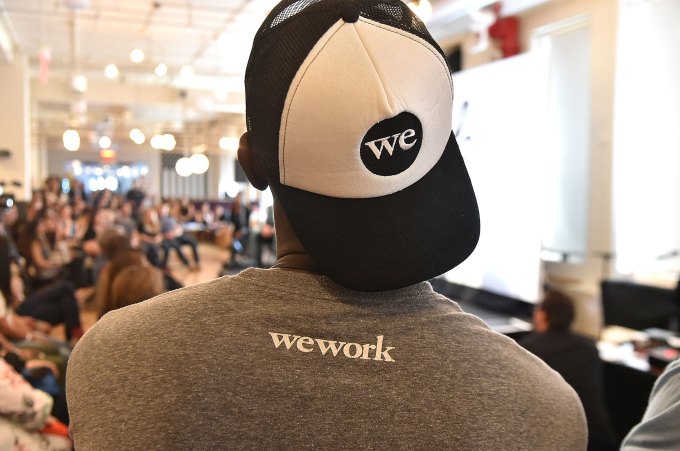
The company made headlines again this week after word slipped it was accelerating its IPO plans and targeting a September listing. We don’t know much about its IPO plans yet as we are still waiting on the co-working business to unveil its S-1 filing. Whether WeWork can match or exceed its current private market valuation of $47 billion is unlikely. I expect it will pull an Uber and struggle, for quite some time, to earn a market cap larger than what VCs imagined it was worth months earlier.
The consumer financial app made headlines twice this week. The first time because it raised a whopping $323 million at a $7.6 billion valuation. That is a whole lot of money for a business that just raised a similarly sized monster round one year ago. In fact, it left us wondering, why the hell is Robinhood worth $7.6 billion? Then, in a major security faux pas, the company revealed it has been storing user passwords in plaintext. So, go change your Robinhood password and don’t trust any business to value your security. Sigh.
Another day, another huge fintech round
While we’re on the subject on fintech, TechCrunch editor Danny Crichton noted this week the rise of mega-rounds in the fintech space. This week, it was personalized banking app MoneyLion, which raised $100 million at a near unicorn valuation. Last week, it was N26, which raised another $170 million on top of its $300 million round earlier this year. Brex raised another $100 million last month on top of its $125 million Series C from late last year. Meanwhile, companies like payments platform Stripe, savings and investment platform Raisin, traveler lender Uplift, mortgage backers Blend and Better and savings depositor Acorns have also raised massive new rounds this year. Naturally, VC investment in fintech is poised to reach record levels this year, according to PitchBook.
Arianna Huffington, the CEO of Thrive Global, stepped down from Uber’s board of directors this week, a team she had been apart of since 2016. She addressed the news in a tweet, explaining that there were no disagreements between her and the company, rather, she was busy and had other things to focus on. Fair. Benchmark’s Matt Cohler also stepped down from the board this week, which leads us to believe the ride-hailing giant’s advisors are in a period of transition. If you remember, Uber’s first employee and longtime board member Ryan Graves stepped down from the board in May, just after the company’s IPO.
Today I told my fellow @Uber board members that given @Thrive‘s growth, I will no longer be able to give my board duties the attention they deserve, so I will be stepping down. I look forward to watching Uber go from strength to strength! Here is the email I sent to the board: pic.twitter.com/sck0CPLwAV
— Arianna Huffington (@ariannahuff) July 24, 2019
Unity, now valued at $6B, raising up to $525M
Bird is raising a Sequoia-led Series D at $2.5B valuation
SMB payroll startup Gusto raises $200M Series D
Elon Musk’s Boring Company snags $120M
a16z values camping business HipCamp at $127M
An inside look at the startup behind Ashton Kutcher’s weird tweets
Dataplor raises $2M to digitize small businesses in Latin America
While we’re on the subject of amazing TechCrunch #content, it’s probably time for a reminder for all of you to sign up for Extra Crunch. For a low price, you can learn more about the startups and venture capital ecosystem through exclusive deep dives, Q&As, newsletters, resources and recommendations and fundamental startup how-to guides. Here are some of my current favorite EC posts:
If you enjoy this newsletter, be sure to check out TechCrunch’s venture-focused podcast, Equity. In this week’s episode, available here, Equity co-host Alex Wilhelm, TechCrunch editor Danny Crichton and I unpack Robinhood’s valuation and argue about scooter startups. Equity drops every Friday at 6:00 am PT, so subscribe to us on Apple Podcasts, Overcast and Spotify.
That’s all, folks.
Powered by WPeMatico