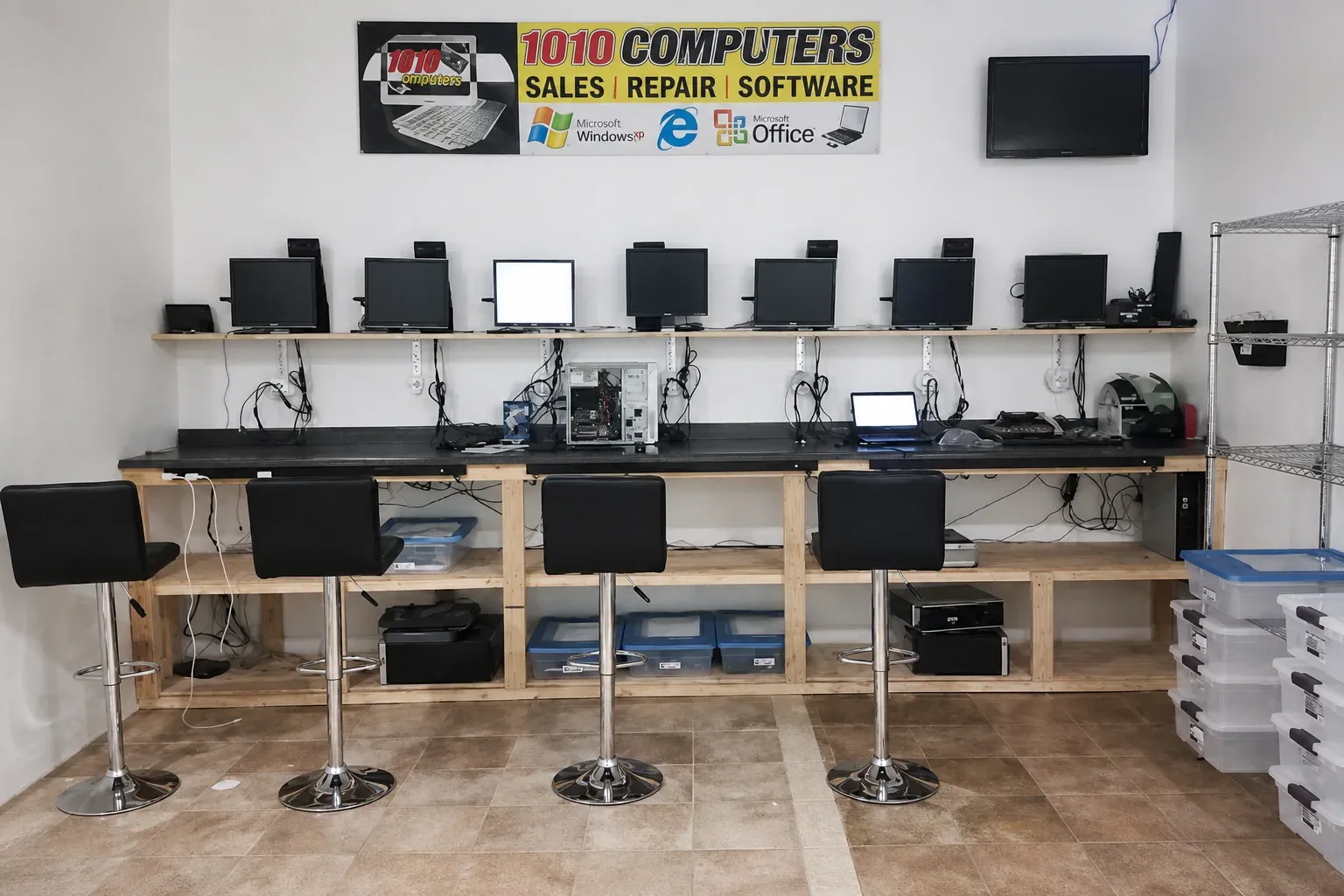
1010Computers | Computer Repair & IT Support

Superhuman founder seeks to raise debut venture fund

The founder of one of 2019’s most buzzworthy startups is putting on his VC hat.

Rahul Vohra, the creator of the $30/month subscription emailing service Superhuman, and Todd Goldberg, the founder of the marketing business Mailjoy, are circulating a pitch deck to potential limited partners, with plans to raise a $4 million debut angel fund, TechCrunch has learned.

Goldberg declined to comment. Vohra did not respond to a request for comment.

San Francisco-based Superhuman has raised millions in venture capital funding, attracting a $260 million valuation with a $33 million investment led by the respected firm Andreessen Horowitz earlier this year. Quickly, Superhuman developed a loyal fan base and inspired a new wave of startups building for the “prosumer.”

“Superhuman has become an aspirational brand and product that many SaaS companies want to emulate,” Vohra and Goldberg write in the deck, obtained by TechCrunch. “Founders of these companies seek out Rahul as an investor. This helps us get into the hottest rounds — even the closed ones.”

Vohra and Goldberg have been seeding startups for the past four years, according to the deck. Both men have completed the Y Combinator startup accelerator and funded other graduates of the program, including Tandem, which emerged from YC this summer with funding from a16z, Vohra and several others. One or both of the pair have also invested in Command E, a tool that enables instant cloud search; Mercury, a bank tailored to the needs of startups; and Sandbox VR, which is developing premium virtual reality experiences in retail locations.

Many of Vohra and Goldberg’s existing investments, such as Sandbox VR, Tandem and Mercury, are also a16z portfolio companies, as is Superhuman. We’re guessing Vohra has served as a sort of scout for the firm, bringing in attractive deals for a16z to lead, with room for him to nab a friendly allocation.

Vohra and Goldberg are hoping to collect capital from LPs to scale their investment activity. According to the deck, they will make 25 to 35 deals with check sizes ranging between $50,000 to $150,000. The fund will invest in the “prosumerization” of the enterprise, business infrastructure, health, fitness & wellness, “devsumer” & low-code/no-code, audio-first products, creator tools and “enterprization” of consumers.

Indeed, the deck is packed with buzzwords. The “prosumerization” of the enterprise is tech-speak for work products with nicer interfaces and more premium features. A “devsumer” tool is one that enables consumers to complete developer tasks on their own, i.e. without coding — devsumer products on the market include Airtable, Notion and Retool. Finally, the “enterprization” of consumers simply means the rise of business tools built for consumers first.

Vohra and Goldberg cite their experience as operators as one of their “unfair advantages,” along with their ability to secure large allocations (a decent piece of the pie) in startups, their YC network, relationships with other angels & funds and their ability to get pro rata access in later rounds.

Founders often search for established operators to join their cap tables for exactly these reasons. Someone like Vohra can help startups foster relationships with big-name venture capital backers and make critical introductions to their own rapidly growing pool of customers.

The rise of micro-funds led by networked entrepreneurs, including Niv Dror’s Shrug Capital or Brianne Kimmel’s new outfit, Work Life Ventures, for example, could pose a threat to existing institutional seed investors, who may not be as well-versed in specific sectors or able to offer as much time to potential founders. On the other hand, many micro-funds co-invest with or are backed by VCs, which means returns from the fund end up in the same pockets, in essence.

Deploying capital from a fund, however, is time consuming. How Vohra can balance building a Series B startup and investing in upwards of 35 businesses remains to be seen.

Though Superhuman was founded in 2014 — Vohra incorporated the business immediately after the LinkedIn acquisition of his previous startup, Rapportive — the company is essentially still in closed beta (those looking for access must be approved for the service in iOS’s TestFlight, where constant beta updates are delivered). Today, it’s popular in the Bay Area tech scene where the tagline “sent via Superhuman” has become a status symbol of sorts. But many are uncertain non-techies will be willing to shell out $30 per month for a luxury email tool.

With that said, Superhuman has a wait list of 180,000 people, according to The New York Times, which spoke to Vohra in June. With a large and growing valuation, an email tool with rave reviews and a set of loyal followers, Vohra will likely have no trouble navigating his way into Silicon Valley’s hottest deals.

Powered by WPeMatico

Microsoft acquires Mover to help with Microsoft 365 cloud migration

Microsoft wants to make it as easy as possible to migrate to Microsoft 365, and today the company announced it had purchased a Canadian startup called Mover to help. The companies did not reveal the acquisition price.

Microsoft 365 is the company’s bundle that includes Office 365, Microsoft Teams, security tools and workflow. The idea is to provide customers with a soup-to-nuts, cloud-based productivity package. Mover helps customers get files from another service into the Microsoft 365 cloud.

As Jeff Tepper wrote in a post on the Official Microsoft Blog announcing the acquisition, this is about helping customers get to the Microsoft cloud as quickly and smoothly as possible. “Today, Mover supports migration from over a dozen cloud service providers — including Box, Dropbox, Egnyte, and Google Drive — into OneDrive and SharePoint, enabling seamless file collaboration across Microsoft 365 apps and services, including the Office apps and Microsoft Teams,” Tepper wrote.

Tepper also points out that they will be gaining the expertise of the Mover team as it moves to Microsoft and helps add to the migration tools already in place.

Tony Byrne, founder and principal analyst at Real Story Group, says that moving files from one system to another like this can be extremely challenging regardless of how you do it, and the file transfer mechanism is only part of it. “The transition to 365 from an on-prem system or competing cloud supplier is never a migration, per se. It’s a rebuild, with a completely different UX, admin model, set of services and operational assumptions all built into the Microsoft cloud offering,” Byrne explained.

Mover is based in Edmonton, Canada. It was founded in 2012 and raised $1 million, according to Crunchbase data. It counts some big clients as customers, including AutoDesk, Symantec and BuzzFeed.

Powered by WPeMatico

YouTube founder secretly building sports fan game GreenPark

Chad Hurley is hunting for what comes after fantasy sports. He envisions a new way for fans to play by watching live and cheering for the athletes they love. Beyond a few scraps of info the YouTube co-founder would share and his new startup’s job listings revealed, we don’t know what Hurley’s game will feel like. But the company is called GreenPark Sports, and it’s launching in spring 2020.

“There is an absence of compelling, inclusive ways for large masses of sports fans to compete together,” Hurley tells me. “The idea of a ‘sports fan’ has evolved -0 it is now more a social behavior than ever before. We’re looking at a much bigger, inclusive way for all fans of sports and esports teams to play.”

GreenPark Sports Chad Hurley


Hurley already has an all-star team. One of GreenPark’s co-founders, Nick Swinmurn, helped start Zappos, while another, Ken Martin, created marketing agency BLITZ. Together they’ve raised an $8.5 million seed round led by SignalFire and joined by Sapphire Sports and Founders Fund. “With this team’s impeccable track record and vision for the future of fandom, this was an investment we had to make,” said Chris Farmer, founder and CEO of SignalFire .

It all comes down to allegiance — something Hurley, Swinmurn and Martin truly understand. Everyone is seeking ways to belong and emblems to represent them. In an age when many of our most prized possessions, from photographs to record collections, have been digitized, we lack tangible objects that center our individuality. Culture increasingly centers around landmark events, with what we’ve done mattering more than what we own.

GreenPark could seize upon this moment by helping us align our identities with a team. This instantly unlocks a like-minded community, a recurrent activity and a unified aesthetic. And when reality gets heavy, people can lose themselves by hitching their spirits to the scoreboard.

Rather than just tabulating results after the match like in fantasy sports, GreenPark wants to be entwined with the spectacle as it happens. “We’re going to be working with a mix of ways to visualize the live game — from unique gamecast-like data to highlight clips. The social viewing experience can be much more than just the straight live video,” Hurley explains.

GreenPark Sports Logo

He came up with GreenPark after selling assets of his video editing app Mixbit to BlueJeans a year ago. Hurley already had an interactive relationship with sports… though one that’s reserved for the rich: he’s part owner of the Golden State Warriors and Los Angeles Football Club. Meanwhile, Swinmurn co-founded the Burlingame Dragons Football Club affiliated with San Jose’s team, and is on the board of Denmark’s FC Helsingør.

Those experiences taught them the satisfaction that comes from a deeper sense of ownership or allegiance with a team. GreenPark will give an opportunity for anyone to turn fandom into its own sport. “We shared a love of sports and set out to look into opportunities around legalized sports betting in the U.S.,” Hurley tells me. But quickly they found “it was obvious the regulated space wouldn’t allow us to innovate as quickly as we wanted,” and they saw more opportunity amidst a younger mainstream audience.

“We’re not ready to disclose publicly the exact detailed gameplay yet,” Hurley says. But here’s what we could cobble together from around the web.

GreenPark Sports lets you “Destroy the other teams’ fans” to “climb the leaderboards,” its site says cryptically. According to job listings, it will pipe in live game data, starting with the NBA and expanding to other leagues, and offer cartoon characters with facial expressions and full-body gestures to let users live out the highs and lows of matches. Don’t expect trivia questions or player stat memorization. It almost sounds like a massively multiplayer online fan arena.

As with blockbuster games Fortnite or League of Legends, GreenPark is free-to-play. But a mention of virtual clothing hints at monetization, where you could spruce up avatars with digital team apparel. Hurley tells me, “We are in the perfect storm of the thirst for innovation at the traditional league level, the next level of maturing for esports, investment in sports betting and overall dire need to better understand today’s largest populace of sports fans — millennial / Gen Z.” The closed beta launches in the spring.

Screen Shot 2019 10 21 at 9.45.29 AM
There’s a massive hole to fill in the wake of the Draft Kings / FanDuel marketing surge a few years ago. Most apps in the space just carry scores or analysis, rather than community. “What’s amazing about being a fan of a team or player is the common bond you have with other fans,” Hurley explains, “where even if you don’t know the other fans of your team — you are all in it to win it — together.”

Publications like The Athletic have proven there are plenty of fans willing to pay to feel closer to their favorite teams. The most direct competitor for GreenPark might be Strafe, which lets you track and predict the winners of esports matches.

People already spend tons of time on building fictional worlds like Minecraft, and money outfitting their Fortnite avatar with the coolest clothes. If GreenPark can create a space for sports fans’ self-expression, it could create the online destination for legions of IRL enthusiasts that see who they root for as core to who they are.

Powered by WPeMatico

Apple’s control over the App Store is no longer sustainable

Last week, Apple caved to the Chinese government and pulled an app called HKmap.live that was being used by Hong Kong protestors to crowdsource the location of police forces.

While Apple CEO Tim Cook defended Apple’s stance, the move is a reminder that Apple is the only judge and jury regarding what’s acceptable in the App Store — but as mobile devices are integrated into more aspects of our lives, it’s getting harder to justify such tight control over their software.

The current state of the App Store is a great example of the risks of running a marketplace that becomes too big. It also shows that we can expect wide-ranging marketplace regulation in the near future.

The App Store as video game console

Before Apple introduced the App Store in 2008, companies could distribute third-party apps and web services without oversight; consumers could buy floppy disks, download software from the internet or connect to any website.

But with the App Store, Apple decided to control the user experience from approval to distribution. And it has been a massive economic success. There are more than 2.2 million apps in the App Store that have generated over 130 billion downloads.

In many ways, the iOS app ecosystem works more like a video game console than a computer — developers submit games and apps to the maker of the platform, which starts a review process to see if third-party content complies with guidelines. If so, developers may list their game or app on the platform.

The PlayStation 4 has been around for six years and Sony has approved 2,294 games in total, around 380 games per year. Due to the sheer size of the App Store, Apple has faced challenges that console manufacturers have never faced.

Review guidelines are poorly enforced

Apple has written the App Store Review Guidelines, a lengthy document intended to answer all questions about what’s acceptable — but those rules are not enforced consistently, and the App Store isn’t a level playing field, discrepancies I’ve pointed out in the past.

As an example: rule 4.3, titled “Spam:”

Don’t create multiple Bundle IDs of the same app. If your app has different versions for specific locations, sports teams, universities, etc., consider submitting a single app and provide the variations using in-app purchase. Also avoid piling on to a category that is already saturated; the App Store has enough fart, burp, flashlight, and Kama Sutra apps already. Spamming the store may lead to your removal from the Developer Program.

And yet, customers can find plenty of categories with app duplicates and companies trying to game the App Store. For example, I found 13 different VoIP apps released by four companies. Each company had multiple versions of the same app in order to pick different names, keywords and categories to optimize search results.

When I pointed this out to Apple, they removed most of the duplicates in less than 24 hours, but it can’t remain the single source of truth if it doesn’t enforce its own rules properly.

Similarly, as Under the Radar recently pointed out, some developers will always find ways to abuse the App Store. For instance, shady developers acquire apps with a lot of positive ratings, transfer those apps to their own developer account, push updates with expensive weekly recurring subscriptions and take advantage of Apple’s obscure process to cancel subscriptions.

Economic interests first

In its most recent earnings release, Apple reported that Greater China represented 17% of the company’s revenue. The company also manufactures the vast majority of its products in Chinese factories. Apple has a lot to lose in China.

That’s why Apple’s actions in China don’t reflect the company’s principles. Cupertino claims to care deeply about privacy, but it uploads iCloud user data to a state-owned mobile operator in China.

The company says that it cares deeply about privacy but uploads iCloud user data to a state-owned mobile operator in China

Apple first removed HKmap.live from the App Store, then authorized the app again before removing it one more time. The only thing that changed between the first second removal is that the Chinese government started openly criticizing Apple about that specific case.

Powered by WPeMatico

Veteran enterprise exec Bob Stutz is heading back to SAP

Bob Stutz has had a storied career with enterprise software companies, including stints at Siebel Systems, SAP, Microsoft and Salesforce. He announced on Facebook last week that he’s leaving his job as head of the Salesforce Marketing Cloud and heading back to SAP as president of customer experience.

Bob Stutz Facebook announcement

Bob Stutz Facebook announcement

Constellation Research founder and principal analyst Ray Wang says that Stutz has a reputation for taking companies to the next level. He helped put Microsoft CRM on the map (although it still had just 2.7% market share in 2018, according to Gartner) and he helped move the needle at Salesforce Marketing Cloud.

Bob Stutz

Bob Stutz, SAP’s new president of customer experience (Photo: Salesforce)

“Stutz was the reason Salesforce could grow in the Marketing Cloud and analytics areas. He fixed a lot of the fundamental architectural and development issues at Salesforce, and he did most of the big work in the first 12 months. He got the acquisitions going, as well,” Wang told TechCrunch. He added, “SAP has a big portfolio, from CallidusCloud to Hybris to Qualtrics, to put together. Bob is the guy you bring in to take a team to the next level.”

Brent Leary, who is a long-time CRM industry watcher, says the move makes a lot of sense for SAP. “Having Bob return to head up their Customer Experience business is a huge win for SAP. He’s been everywhere, and everywhere he’s been was better for it. And going back to SAP at this particular time may be his biggest challenge, but he’s the right person for this particular challenge,” Leary said.

Screenshot 2019 10 21 09.15.45

The move comes against the backdrop of lots of changes going on at the German software giant. Long-time CEO Bill McDermott recently announced he was stepping down, and that Jennifer Morgan and Christian Klein would be replacing him as co-CEOs. Earlier this year, the company saw a line of other long-time executives and board members head out the door, including SAP SuccessFactors COO Brigette McInnis-Day; Robert Enslin, president of its cloud business and a board member; CTO Björn Goerke; and Bernd Leukert, a member of the executive board.

Having Stutz on board could help stabilize the situation somewhat, as he brings more than 25 years of solid software company experience to bear on the company.

Powered by WPeMatico

Pixel 4 review: Google ups its camera game

Google’s first-party hardware has always been a drop in the bucket of global smartphone sales. Pixel devices have managed to crack the top five in the U.S. and Western Europe, but otherwise represent less than 1% of the overall market. It’s true, of course, that the company got a late start, largely watching on the sidelines as companies like Samsung and Huawei shipped millions of Android devices.

Earlier this year, Google admitted that it was feeling the squeeze of slowing smartphone sales along with the rest of the industry. During Alphabet’s Q1 earnings call, CEO Sundar Pichai noted that poor hardware numbers were a reflection of “pressure in the premium smartphone industry.”

Introduced at I/O, the Pixel 3a was an attempt to augment disappointing sales numbers with the introduction of a budget-tier device. With a starting price of $399, the device seemingly went over as intended. The 3a, coupled with more carrier partners, helped effectively double year over year growth for the line. Given all of this, it seems like a pretty safe bet that the six-month Pixel/Pixela cycle will continue, going forward.

Of course, the addition of a mid-range device adds more onus for the company to differentiate the flagship. With a starting price of $799, the Pixel 4 certainly isn’t expensive by modern flagship standards. But Google certainly needs to present enough distinguishing features to justify a $400 price gulf between devices — especially as the company disclosed software upgrades introduced on flagship devices will soon make their way onto their cheaper counterparts.

Indeed, the much-rumored and oft-leaked devices bring some key changes to the line. The company has finally given in and added a dual-camera setup to both premium models, along with an upgraded 90Hz display, face unlock, radar-based gestures and a whole bunch of additional software features.

The truth is that the Pixel has always occupied a strange place in the smartphone world. As the successor to Google’s Nexus partnerships, the product can be regarded as a showcase for Android’s most compelling features. But gone are the days of leading the pack with the latest version of the operating system. The fact that OnePlus devices already have Android 10 means Google’s going head to head against another reasonably price manufacturer of quality handsets.

google pixel 4 009

The Pixel line steps up a bit on the design side to distinguish the product from the “a” line. Google’s phones have never been as flashy as Samsung’s or Apple’s, and that’s still the case here, but a new dual-sided glass design (Gorilla Glass 5 on both), coupled with a metal band, does step up the premium feel a bit. The product is also a bit heavier and thicker than the 3, lending some heft to the device.

There are three colors now: black, white and a poppy “Oh So Orange,” which is available in limited quantities here in the U.S. The color power button continues to be a nice touch, lending a little character to the staid black and white devices. While the screen gets a nice update to 90Hz OLED, Google still has no interest in the world of notches or hole punches. Rather, it’s keeping pretty sizable bezels on the top and bottom.

The Pixel 4 gets a bit of a screen size boost from 5.5 to 5.7 inches, with an increase of a single pixel per inch, while the Pixel 4 XL stays put at 6.4 inches (with a PPI increase of 522 to 537). The dual front-facing camera has been ditched this time out, instead opting for the single eight megapixel, similar to what you’ll find on the 3a.

Storage hasn’t changed, with both 64 and 128GB options for both models; RAM has been bumped up to a default 6GB from 4GB last time out. The processor, too, is the latest and greatest from Qualcomm, bumping from a Snapdragon 845 to an 855. Interestingly, however, the batteries have actually been downgraded.

google pixel 4 013

The 4 and 4 XL sport a 2,800 and 3,700mAh, respectively. That should be augmented a bit by new battery-saving features introduced in Android 10, but even still, that’s not the direction you want to see these things going.

The camera is, in a word, great. Truth be told, I’ve been using it to shoot photos for the site since I got the phone last week. This Google Nest Mini review, Amazon Echo review and Virgin Galactic space suit news were all shot on the Pixel 4. The phone isn’t yet a “leave your DSLR at home” proposition, of course, but damn if it can’t take a fantastic photo in less than ideal and mixed light with minimal futzing around.

There’s no doubt that this represents a small but important shift in philosophy for Google. After multiple generations of suggesting that software solutions could do more than enough heavy lifting on image processing, the company’s finally bit the bullet and embraced a second camera. Sometimes forward progress means abandoning past stances. Remember when the company dug its heels in on keeping the headphone jack, only to drop it the following year?

google pixel 4 010

The addition of a second camera isn’t subtle, either. In fact, it’s hard to miss. Google’s adopted a familiar square configuration on the rear of the device. That’s just how phones look now, I suppose. Honestly, it’s fine once you conquer a bit of trypophobia, with a pair of lenses aligned horizontally and a sensor up top and flash on bottom — as one of last week’s presenters half joked, “we hope you’ll use it as a flash light.”

google pixel 4 008

That, of course, is a reference to the Pixel’s stellar low-light capabilities. It’s been a welcome feature, in an age where most smartphone users continue to overuse their flashes, completely throwing off the photo in the process. Perhaps the continued improvements will finally break that impulse in people — though I’m not really getting my hopes up on that front. Old habits, etc.

The 4 and 4 XL have the same camera set up, adopting the 12.2-megapixel (wide angle) lens from their predecessors and adding a 16-megapixel (telephoto) into the mix. I noted some excitement about the setup in my write-up. That’s not because the two-camera setup presents anything remarkable — certainly not in this area of three, four and five-camera flagships. It’s more about the groundwork that Google has laid out in the generations leading up to this device.

00100trPORTRAIT 00100 BURST20191016105119747 COVER 1

Essentially it comes down to this: Look at what the company has been able to accomplish using software and machine learning with a single camera setup. Now add a second telephoto camera into the mix. See, Super High Res Zoom is pretty impressive, all told. But if you really want a tighter shot without degrading the image in the process, optical zoom is still very much the way to go.

There’s a strong case to be made that the Pixel 4’s camera is the best in class. The pictures speak for themselves. The aforementioned TechCrunch shots were done with little or no manual adjustments or post-processing. Google offers on-screen adjustments, like the new dual-exposure control, which lets you manually adjust brightness and shadow brightness on the fly. Honestly, though, I find the best way to test these cameras is to use them the way most buyers will: by pointing and shooting.

The fact is that a majority of people who buy these handsets won’t be doing much fiddling with the settings. As such, it’s very much on handset makers to ensure that users get the best photograph by default, regardless of conditions. Once again, software is doing much of the heavy lifting. Super Res Zoom works well in tandem with the new lens, while Live HDR+ does a better job approximating how the image will ultimately look once fully processed. Portrait mode shots look great, and the device is capable of capturing them at variable depths, meaning you don’t have to stand a specific distance from the subject to take advantage of the well-done artificial bokeh.

Our video producer, Veanne, who is admittedly a far better photographer than I can ever hope to be, tested out the camera for the weekend. 

Although Veanne was mostly impressed by the Pixel 4’s camera and photo editing capabilities, here are three major gripes.

“Digital zoom is garbage.”

Google Pixel 4 digital zoom is garbage


“In low lighting situations, you lose ambiance. Saturday evening’s intimate, warmly lit dinner looked like a cafeteria meal.”

Pixel 4 camera sample


“Bright images in low lighting gives you the impression that the moving objects would be in focus as well. That is not the case.”

Other additions round out the experience, including “Frequent Faces,” which learns the faces of subjects you frequently photograph. Once again, the company is quick to point out that the feature is both off by default and all of the processing happens on the device. Turning it off also deletes all of the saved information. Social features have been improved, as well, with quick access to third-party platforms like Snapchat and Instagram.

Google keeps pushing out improvements to Lens, as well. This time out, language translation, document scanning and text copy and pasting can be performed with a quick tap. Currently the language translation is still a bit limited, with only support for English, Spanish, German, Hindi and Japanese. More will be “rolling out soon,” per the company.

google pixel 4 003

Gestures is a strange one. I’m far from the first to note that Google is far from the first to attempt the feature. The LG G8 ThinQ is probably the most recent prominent example of a company attempting to use gestures as a way to differentiate themselves. To date, I’ve not seen a good implementation of the technology — certainly not one I could ever see myself actually using day to day.

The truth is, no matter how interesting or innovative a feature is, people aren’t going to adopt it if it doesn’t work as advertised. LG’s implementation was a pretty big disappointment.

Simply put, the Pixel’s gestures are not that. They’re better in that, well, they work, pretty much as advertised. This is because the underlying technology is different. Rather than relying on cameras like other systems, the handset uses Project Soli, a long-promised system that utilizes a miniature radar chip to detect far more precise movement.

Soli does, indeed work, but the precision is going to vary a good deal from user to user. The thing is, simply detecting movement isn’t enough. Soli also needs to distinguish intention. That means the system is designed to weed out accidental gestures of the manner we’re likely making all the time around our phones. That means the system appears to be calibrated to bigger, intentional movements.

picka 2

That can be a little annoying for things like advancing tracks. I don’t think there are all that many instances where waving one’s hands across a device Obi-Wan Kenobi-style is really saving all that much time or effort versus touching a screen. If, however, Google was able to customize the experience to the individual over time using machine learning, it could be a legitimately handy feature.

That brings us to the next important point: functionality. So you’ve got this neat new piece of tiny radar that you’re sticking inside your phone. You say it’s low energy and more private than a camera. Awesome! So, how do you suggest I, you know, use it?

There are three key ways, at the moment:

  • Music playback
  • Alarm Silencing
  • Waving at Pokémon

The first two are reasonably useful. The primary use case I can think of are when, say, your phone is sitting in front of you at your desk. Like mine is, with me, right now. Swiping my hand left to right a few inches above the device advances the track. Right to left goes a track back. The movements need to be deliberate, from one end of the device to the other.

And then there’s the phenomenon of “Pokémon Wave Hello.” It’s not really correct to call the title a game, exactly. It’s little more than a way of showcasing Motion Sense — albeit an extremely delightful way.

You might have caught a glimpse of it at the keynote the other day. It came and went pretty quickly. Suddenly Pikachu was waving at the audience, appearing out of nowhere like so many wild Snorlaxes. Just as quickly, he was gone.

More than anything, it’s a showcase title for the technology. A series of five Pokémon, beginning with Pikachu, appear demanding you interact with them through a series of waves. It’s simple, it’s silly and you’ll finish the whole thing in about three minutes. That’s not really the point, though. Pokémon Wave Hello exists to:

  1. Get you used to gestures.
  2. Demonstrate functionality beyond simple features. Gaming, AR — down the road, these things could ultimately find fun and innovative ways to integrate Soli.

For now, however, use is extremely limited. There are some fun little bits, including dynamic wallpaper that reacts to movement. The screen also glows subtly when detecting you — a nice little touch (there’s a similar effect for Assistant, as well).

Perhaps most practical, however, is the fact that the phone can detect when you’re reaching for it and begin the unlocking process. That makes the already fast new Face Unlock feature ever faster. Google ditched the fingerprint reader this time around, opting for neither a physical sensor nor in-screen reader. Probably for the best on the latter front, given the pretty glaring security woes Samsung experienced last week when a British woman accidentally spoofed the reader with a $3 screen protector. Yeeesh.

There are some nice security precautions on here. Chief among them is the fact that the unlock is done entirely on-device. All of the info is saved and processed on the phone’s Titan M chip, meaning it doesn’t get sent up to the cloud. That both makes it a speedier process and means Google won’t be sharing your face data with its other services — a fact Google felt necessary to point out, for obvious reasons.

For a select few of us, at least, Recorder feels like a legitimate game changer. And its ease of use and efficacy should be leaving startups like Otter.ai quaking at its potential, especially if/when Google opts to bring it to other Android handsets and iOS.

I was initially unimpressed by the app upon trying it out at last week’s launch event. It struggles to isolate audio in noisy environments — likely as much of a hardware as software constraint. One on one and it’s far better, though attempting to, say, record audio from a computer can still use some work.

google pixel 4 004

Open the app and hit record and you’ll see a waveform pop up. The line is blue when detecting speech and gray when hearing other sounds. Tap the Transcript button and you’ll see the speech populate the page in real time. From there you can save it with a title and tag the location.

The app will automatically tag keywords and make everything else searchable for easy access. In its first version, it already completely blows Apple’s Voice Memos out of the water. There’s no comparison, really. It’s in a different league. Ditto for other apps I’ve used over the years, like Voice Record.

Speaking to the product, the recording was still a little hit or miss. It’s not perfect — no AI I’ve encountered is. But it’s pretty good. I’d certainly recommend going back over the text before doing anything with it. Like Otter and other voice apps, you can play back the audio as it highlights words, karaoke-style.

The text can be saved to Google Drive, but can’t be edited in app yet. Audio can be exported, but not as a combined file. The punctuation leaves something to be desired and Recorder is not yet able to distinguish individual voices. These are all things a number of standalone services offer, along with a web-based platform. That means that none of them are out of business yet, but if I was running any of them, I’d be pretty nervous right about now.

As someone who does interviews for a living, however, I’m pretty excited by the potential here. I can definitely see Recorder become one of my most used work apps, especially after some of the aforementioned kinks get ironed out in the next version. As for those who don’t do this for a living, usefulness is probably a bit limited, though there are plenty of other potential uses, like school lecturers.

google pixel 4 005

The Pixel continues to distinguish itself through software updates and camera features. There are nice additions throughout that set it apart from the six-month-old 3a, as well, including a more premium design and new 90Hz display. At $799, the price is definitely a vast improvement over competitors like Samsung and Apple, while retaining flagship specs.

The Pixel 4 doesn’t exactly address what Google wants the Pixel to be, going forward. The Pixel 3a was confirmation that users were looking for a far cheaper barrier of entry. The Pixel 4, on the other hand, is priced above OnePlus’s excellent devices. Nor is the product truly premium from a design perspective.

It’s unclear what the future will look like as Google works to address the shifting smartphone landscape. In the meantime, however, the future looks bright for camera imaging, and Google remains a driving force on that front.

Powered by WPeMatico

IPOs are the beginning, not the end

Earlier this month at TechCrunch Disrupt San Francisco, we sat down with Box’s Aaron Levie and PagerDuty’s Jennifer Tejada to discuss their respective companies’ paths to an IPO, the general IPO landscape and the pros and cons of going public. With a lot of recent IPOs faltering and increased pressure on startup valuations, now is as good a time as ever to think about the role IPOs play in a company’s lifespan.

“I think it’s really important to think of the IPOs, the beginning, not the end,” said Tejada. “We all live in Silicon Valley and that can be a little bit of an echo chamber and you talk about exits all the time. The IPO is an entrance, right? It is part of the beginning of a long journey for a durable company that you want to build a legacy around. And so, it is a moment — it’s the start of you really sharing a narrative backed by financial data to help people understand your current business, the potential for your business, the market that you’re in, etc. And I think we tend to talk about it like it’s the be-all end-all.”

That’s something Levie definitely agrees with. “I think we have too much of a fixation on the IPO moment versus just building durable business models and how do they end up translating into valuations. The valuation that you get at an IPO is due to variety factors.”

GettyImages 1178603646

SAN FRANCISCO, CALIFORNIA – OCTOBER 02: (L-R) PagerDuty CEO & Chairperson Jennifer Tejada, Box Co-Founder/Chairman & CEO Aaron Levie, and TechCrunch Writer Frederic Lardinois speak onstage during TechCrunch Disrupt San Francisco 2019 at Moscone Convention Center on October 02, 2019 in San Francisco, California. (Photo by Steve Jennings/Getty Images for TechCrunch)

It’s no secret that Box and PagerDuty had very different experiences as they got ready to go public. Box announced its S-1 only a few days before a major market crash back in 2014. PagerDuty, on the other hand, went public earlier this year, with solid financials and very little drama.

Tejada, in many ways, attributed that to the work she and her team did to get the company ready for this moment. “I get asked a lot by CEOs that are thinking about getting ready to go public, ‘you know, what was your playbook? How do you do this?’ And I think instead of thinking about what’s the playbook, you need to be intellectually honest about what your business looks like,” she said. In her view, CEOs need to focus on the leading indicators for their business — the ones they want the market to understand. But she also noted that the market needs to understand a company’s potential in the long run.

“You want to make sure that the market understands where you think the business can go and gets excited about it, but that they don’t over-rotate in their expectations, because dealing with really high expectations creates a lot of downstream difficulty.”

Powered by WPeMatico

MediaLab acquires messaging app Kik, expanding its app portfolio

Popular messaging app Kik is, indeed, “here to stay” following an acquisition by the Los Angeles-based multimedia holding company, MediaLab.

It echoes the same message from Kik’s chief executive Tim Livingston last week when he rebuffed earlier reports that the company would shut down amid an ongoing battle with the U.S. Securities and Exchange Commission. Livingston had tweeted that Kik had signed a letter-of-intent with a “great company,” but that it was “not a done deal.”

Now we know the the company: MediaLab. In a post on Kik’s blog on Friday the MediaLab said that it has “finalized an agreement” to acquire Kik Messenger.

Kik is one of those amazing places that brings us back to those early aspirations,” the blog post read. “Whether it be a passion for an obscure manga or your favorite football team, Kik has shown an incredible ability to provide a platform for new friendships to be forged through your mobile phone.”

MediaLab is a holding company that owns several other mobile properties, including anonymous social network Whisper and mixtape app DatPiff. In acquiring Kik, the holding company is expanding its mobile app portfolio.

MediaLab said it has “some ideas” for developing Kik going forwards, including making the app faster and reducing the amount of unwanted messages and spam bots. The company said it will introduce ads “over the coming weeks” in order to “cover our expenses” of running the platform.

Buying the Kik messaging platform adds another social media weapon to the arsenal for MediaLab and its chief executive, Michael Heyward .

Heyward was an early star of the budding Los Angeles startup community with the launch of the anonymous messaging service, Whisper nearly 8 years ago. At the time, the company was one of a clutch of anonymous apps — including Secret and YikYak — that raised tens of millions of dollars to offer online iterations of the confessional journal, the burn book, and the bathroom wall (respectively).

In 2017, TechCrunch reported that Whisper underwent significant layoffs to stave off collapse and put the company on a path to profitability.

At the time Whisper had roughly 20 million monthly active users across its app and website, which the company was looking to monetize through programmatic advertising, rather than brand-sponsored campaigns that had provided some of the company’s revenue in the past. Through widgets, the company had an additional 10 million viewers of its content per-month using various widgets and a reach of around 250 million through Facebook and other social networks on which it published posts.

People familiar with the company said at the time that it was seeing gross revenues of roughly $1 million and was going to hit $12.5 million in revenue for that calendar year. By 2018 that revenue was expected to top $30 million, according to sources at the time.

The flagship Whisper app let people post short bits of anonymous text and images that other folks could like or comment about. Heyward intended it to be a way for people to share more personal and intimate details —  to be a social network for confessions and support rather than harassment.

The idea caught on with investors and Whisper managed to raise $61 million from investors including Sequoia, Lightspeed Venture Partners, and Shasta Ventures . Whisper’s last round was a $36 million Series C back in 2014.

Fast forward to 2018 when Secret had been shut down for three years while YikYak also went bust — selling off its engineering team to Square for around $1 million. Whisper, meanwhile, seemingly set up MediaLab as a holding company for its app and additional assets that Heyward would look to roll up. The company filed registration documents in California in June 2018.

According to the filings, Susan Stone, a partner with the investment firm Sierra Wasatch Capital, is listed as a director for the company.

Heyward did not respond to a request for comment.

Zack Whittaker contributed reporting for this article. 

Powered by WPeMatico

The new iPhone is ugly

I’ll be the first to admit that I’m a bit old-fashioned when it comes to phones. Everyone scoffs at my iPhone SE, but the truth is it’s the best phone Apple ever made — a beautiful, well designed object in just about every way. But damn is the iPhone 11 Pro ugly. And so are the newest phones from Samsung and Google, while we’re at it.

Let’s just get right to why the new iPhones are ugly, front and back. And sideways. We can start with the notch. Obviously it’s not new, but I thought maybe this would be some kind of generational anomaly that we’d all look back and laugh at in a year or two. Apparently it’s sticking around.

I know a lot of people have justified the notch to themselves in various ways — it technically means more raw screen space, it accommodates the carrier and battery icons, it’s necessary for unlocking the phone with your face.

Yeah, but it’s ugly.

If they removed the notch, literally no one would want the version with the notch, because it’s so plainly and universally undesirable. If Apple’s engineers could figure out a way to have no notch, they’d have done it by now, but they can’t and I bet they are extremely frustrated by that. They try to hide it with the special notch-camouflaging wallpaper whenever they can, which is as much as saying, “hey, we hate looking at it too.”

nonotch

You can forget for a few seconds. But in the back of your mind you know it’s there. Everyone knows.

It’s a prominent, ugly compromise (among several) necessitated by a feature no one asked for and people can’t seem to figure out if they even like or not. Notches are horrible and any time you see one, it means a designer cried themselves to sleep. To be fair that probably happens quite a bit. I grew up around designers and they can be pretty sensitive, like me.

I’m not a big fan of the rounded screen corners for a couple reasons, but I’ll let that go because I envision a future where it doesn’t matter. You remember how in Battlestar Galactica the corners were clipped off all the paper? We’re on our way.

Having the screen extend to the very edge of the device on the other hand isn’t exactly ugly, but it’s ugly in spirit. The whole front of the phone is an interface now, which would be fine if it could tell when you were gripping the screen for leverage and not to do something with it. As it is, every side and corner has some kind of dedicated gesture that you have to be wary of activating. It’s so bad people have literally invented a thing that sticks out from the back of your phone so you can hold it that way. Popsockets wouldn’t be necessary if you could safely hold your phone the way you’d hold any other object that shape.


iphone 11 pro

The back is ugly now, too. Man, is that camera bump bad. Bump is really the wrong word. It looks like the iPhone design team took a field trip to a maritime history museum, saw the deep sea diving helmets, and thought, Boom. That’s what we need. Portholes. To make our phone look like it could descend to 4,000 fathoms. Those helmets are actually really cool looking when they’re big and made of strong, weathered brass. Not on a thin, fragile piece of electronics. Here it’s just a huge, chunky combination of soft squares and weirdly arranged circles — five of them! — that completely take over the otherwise featureless rear side of the phone.

The back of the SE is designed to mirror the front, with a corresponding top and bottom “bezel.” In the best looking SE (mine) the black top bezel almost completely hides the existence of the camera (unfortunately there’s a visible flash unit); it makes the object more like an unbroken solid, its picture-taking abilities more magical. The camera is completely flush with the surface of the back, which is itself completely flush except for texture changes.

The back of the iPhone 11 Pro has a broad plain, upon which sits the slightly higher plateau of the camera assembly. Above that rise the three different little camera volcanoes, and above each of those the little calderas of the lenses. And below them the sunken well of the microphone. Five different height levels, producing a dozen different heights and edges! Admittedly the elevations aren’t so high, but still.

hero gallery color story m6kjl7t4boqm large

If it was a dedicated camera or another device that by design needed and used peaks and valleys for grip or eyes-free navigation, that would be one thing. But the iPhone is meant to be smooth, beautiful, have a nice handfeel. With this topographic map of Hawaii on the back? Have fun cleaning out the grime from in between the volcanoes, then knocking the edge of the lens against a table as you slide the phone into your hand.

Plus it’s ugly.

The sides of the phones aren’t as bad as the front and back, but we’ve lost a lot since the days of the SE. The geometric simplicity of the + and – buttons, the hard chamfered edge that gave you a sure grip, the black belts that boldly divided the sides into two strips and two bows. And amazingly, due to being made of actual metal, the more drops an SE survives, the cooler it looks.

The sides of the new iPhones look like bumpers from cheap model cars. They look like elongated jelly beans, with smaller jelly beans stuck on that you’re supposed to touch. Gross.

That’s probably enough about Apple. They forgot about good design a long time ago, but the latest phones were too ugly not to call out.

Samsung has a lot of the same problems as Apple. Everyone has to have an “edge to edge” display now, and the Galaxy S10 is no exception. But it doesn’t really go to the edge, does it? There’s a little bezel on the top and bottom, but the bottom one is a little bigger. I suppose it reveals the depths of my neurosis to say so, but that would never stop bugging me if I had one. If it was a lot bigger, like HTC’s old “chins,” I’d take it as a deliberate design feature, but just a little bigger? That just means they couldn’t make one small enough.

sung 10

As for the display slipping over the edges, it’s cool looking in product photos, but I’ve never found it attractive in real life. What’s the point? And then from anywhere other than straight on, it makes it look more lopsided, or like you’re missing something on the far side.

Meanwhile it not only has bezels and sometime curves, but a hole punched out of the front. Oh my god!

Here’s the thing about a notch. When you realize as a phone designer that you’re going to have to take over a big piece of the front, you also look at what part of the screen it leaves untouched. In Apple’s case it’s the little horns on either side — great, you can at least put the status info there. There might have been a little bit left above the front camera and Face ID stuff, but what can you do with a handful of vertical pixels? Nothing. It’ll just be a distraction. Usually there was nothing interesting in the middle anyway. So you just cut it all out and go full notch.

Samsung on the other hand decided to put the camera in the top right, and keep a worthless little rind of screen all around it. What good is that part of the display now? It’s too small to show anything useful, yet the hole is too big to ignore while you’re watching full-screen content. If their aim was to make something smaller and yet even more disruptive than a notch, mission accomplished. It’s ugly on all the S10s, but the big wide notch-hole combo on the S10 5G 6.7″ phablet is the ugliest.

galaxy s10 camera

The decision to put all the rear cameras in a long window, like the press box at a hockey game, is a bold one. There’s really not much you can do to hide 3 giant lenses, a flash, and that other thing. Might as well put them front and center, set off with a black background and chrome rim straight out of 2009. Looks like something you’d get pointed at you at the airport. At least the scale matches the big wide “SAMSUNG” on the back. Bold — but ugly.

Google’s Pixel 4 isn’t as bad, but it’s got its share of ugly. I don’t need to spend too much time on it, though, because it’s a lot of the same, except in pumpkin orange for Halloween season. I like the color orange generally, but I’m not sure about this one. Looks like a seasonal special phone you pick up in a blister pack from the clearance shelf at Target, the week before Black Friday — two for $99, on some cut-rate MVNO. Maybe it’s better in person, but I’d be afraid some kid would take a bite out of my phone thinking it’s a creamsicle.

pixel 4

The lopsided bezels on the front are worse than the Samsung’s, but at least it looks deliberate. Like they wanted to imply their phone is smart so they gave it a really prominent forehead.


I will say that of the huge, ugly camera assemblies, the Pixel’s is the best. It’s more subtle, like being slapped in the face instead of kicked in the shins so hard you die. And the diamond pattern is more attractive for sure. Given the square (ish) base, I’m surprised someone on the team at Google had the rather unorthodox idea to rotate the cameras 45 degrees. Technically it produces more wasted space, but it looks better than four circles making a square inside a bigger, round square.

And it looks a hell of a lot better than three circles in a triangle, with two smaller circles just kind of hanging out there, inside a bigger, round square. That iPhone is ugly!

Powered by WPeMatico

HTC releases a cheaper blockchain phone

Whatever you might say about HTC (and believe me, there’s plenty to say), at least the company takes some fascinating chance. As newly minted CEO Yves Maitre admitted to me at Disrupt a couple of weeks back, the once mighty smartphone giant has lost the thread in recent years. But if nothing else, the Exodus project marks a glimpse at some potential smartphone future.

With this weekend’s launch of the Exodus 1s at Berlin’s Lightning conference, HTC aims to make it clear that the project is more than just a one-off. The new device lowers the barrier of entry to €219 (~$244). All said, not a bad price for those looking to dabble in the technology. Oh, and obviously it’s available in all of the various equivalent cryptocurrencies.

Exodus1s 6V 19Oct1

The specs are fittingly pretty dismal. There’s a Snapdragon 435, running Android 8.1. The screen is a 5.7 inch HD+, coupled with a decent 4GB of RAM and 64GB of storage. Oh, and there’s a microUSB port and, good news, a headphone jack. Honestly, it’s a pretty low-end device, all told.

The big difference here being the the inclusion of a hardware wallet and Bitcoin node access. “We gave users the ability to own their own keys, and now we’ve gone one step further to allow users to run their own full Bitcoin node,” HTC’s Phil Chen said in a release tied to the news. “We are providing the tools for access to universal basic finance; the tools to have a metaphorical Swiss bank in your pocket.”

Exodus1s PerRight 19Oct1

Maitre told me the other week he still believes mainstream use of blockchain on these devices is more than two or three years out. What the 1s provides, however, is an inexpensive way to see what the technology provides today. Interested parties in Europe, Taiwan, Saudi Arabia and the UAE can order it online starting today.

Powered by WPeMatico