1010Computers | Computer Repair & IT Support

US video game sales have record quarter as consumers stay at home

New numbers from NPD confirm what we’ve known for a while: The first quarter of 2020 was a very good one for gaming companies. The new report notes that sales hit a record $10.86 billion in the States between January and March of this year, marking a 9% increase over a year prior; $9.58 billion of that figure was from video game content.

The primary driver is, you guessed it, COVID-19. As stay at home orders have been enacted on the federal and state levels, people are coping with the ongoing daily horror that is life in 2020 by playing video games. Lots and lots of video games.

Here’s NPD’s Mat Piscatella further confirming our suspicions: “Video Games have brought comfort and connection to millions during this challenging time. As people have stayed at home more, they’ve utilized gaming not only as a diversion and an escape, but also as a means of staying connected with family and friends. Whether it was on console or mobile, PC or virtual reality, gaming experienced play and sales growth during the first quarter.”

According to NPD’s Q1 2020 Games Market Dynamics: U.S. report, overall total industry consumer spending on #videogaming in the U.S. reached a record $10.86 billion in the first quarter of 2020 (Jan. – Mar.), an increase of 9 percent compared to the same time period last year.

— NPD Games (@npdgames) May 15, 2020

That last bit is, in part, key to many consumers’ choice of game titles. As already noted by the firm, Animal Crossing: New Horizons had its own record-setting first quarter. That, in turn, helped drive Switch sales, in spite of Nintendo’s well-documented supply issues. The title arrived just in the nick of time for stay at home orders in the U.S., delivering a kind of front-facing social experience that much of the competition lacks. Also, turnips.

Matter of fact, the Switch’s success actually helped supplement losses of other platforms. Microsoft and Sony will no doubt make up gains at the end of the year with their next-gen consoles. For now, however, many consumers are likely holding out until their holiday arrives to invest in Xbox or PlayStation hardware, in spite of the pandemic. The U.S.’s soaring unemployment rate no doubt also had an impact on the industry’s bottom line.

Powered by WPeMatico

Forerunner Ventures’ Kirsten Green demystifies the COVID-19 consumer era

“In general, the consumer has proven to be more resilient than I would have thought,” said Kirsten Green, founder of Forerunner Ventures, which has investments in breakout D2C stars like Glossier, Hims and Bonobos.

She joined us for an Extra Crunch Live conversation to help us better understand buying habits in the COVID-19 era. With tens of millions out of work and uncertainty all around, people are spending less, but Green showed up with a healthy dose of optimism — while acknowledging that her worst-case scenario planning was wrong.

Her top-line advice for companies

Take a cautious approach, be prepared to make hard decisions, but be thoughtful about that. Don’t just make a knee jerk-reaction, which is “this is the apocalypse, we all need 36 months of runway, fire half your staff and go to the bunker.” I think the biggest opportunity for companies right now in many ways is to create value by demonstrating their flexibility.

Powered by WPeMatico

Investors cozy up to LA-based ettitude’s bamboo bedding and sleep wear with $1.6 million

Ettitude, the Los Angeles-based, direct-to-consumer startup making sustainable bedding and sleepwear from bamboo fibers, has raised a sustainably sized round that should keep the company going even in the face of an economic recession.

Co-founded by the Melbourne, Australia native Phoebe Yu and serial entrepreneur Kat Dey, ettitude sells high-end bamboo bedding made using a process she first heard about in her old job working as an exporter helping chain stores source textiles in China.

Sourced from a factory in Zhejiang, China, near Shanghai, the bamboo textiles are made using non-toxic solvents and a closed-loop system that reuses water for the process, according to Yu.

Yu started selling the cleanBamboo-branded bedding under the ettitude label in Melbourne first, but when she saw the orders begin to pick up from the U.S. she relocated and took her company with her.

Upon arrival, Yu realized she’d need a strong co-founder with experience in branding to help her navigate the massive market in the U.S. So Yu turned to AngelList, which is where she found Dey.

A serial entrepreneur with a background in retail, whose first company TryTheWorld was acquired by EarthBox in 2017, Dey was looking for her next project.

“Phoebe sent me a sample and I had the best night of sleep in my life,” Dey said. From then on the two co-founders began the long, hard slog of marketing their business. 

Sales are growing, according to the two women, and the company’s chances have certainly been improved by the capital infusion from Drumbeat Ventures and TA Ventures, a European female-founded fund focusing on technology innovation.

The $1.6 million financing will be used to boost sales and marketing as the company expands beyond bedding — with an average price of $178 for a queen-sized sheet set — and into sleepwear and other categories.

“Phoebe, Kat and their brand, ettitude, are as genuine a combination of passion, purpose, and proprietary product that I’ve seen in the marketplace in my 20 years,” said Drumbeat Ventures founder, Adam Burgoon, in a statement. “They are perfectly positioned to bring their mission of sustainability and comfort to a broader audience.”

Powered by WPeMatico

Forget sourdough, these sisters are launching a starter to create authentic Asian food

For immigrants in the United States, representation can feel complex, celebrated and oftentimes a mix of the two. And that’s exactly why sister duo Vanessa and Kim Pham launched Omsom, a seed-stage food startup that sells packaged “starters” to recreate authentic Asian dishes at home. The starter contains sauce, spices and aromatics, and the co-founders say consumers can make a dish in 30 minutes or less.

“As we were seeing Asian Americans claim their voices in media and in culture more broadly, we then would juxtapose it with walking down this ethnic aisle in the grocery store and see the way Asian flavors were being represented,” Vanessa told me.

The existence of the ethnic aisle itself has drawn criticism for “othering” cultures that have long been within the United States. It was enough to make Vanessa, who worked at Bain & Company, and Kim, who has spent time in venture at Frontline Ventures and Dorm Room Fund NYC, join forces to create Omsom.

“The ethnic aisle feels super outdated,” Vanessa said. “Flavors have been diluted, branding and design have been stereotypical in nature. How can you boil a cuisine down into one sad jar of sauce?”

The aisle, also named the international aisle, currently contains bottles of never-to-expire thai pastes. Walk a little farther and you’ll find microwavable containers of high-fat butter chicken. And there in the corner is a bottle that boils down one of the world’s most diverse cuisines simply: “curry sauce.”

While progress is pitiful in grocery store representation, the founders are optimistic that they can change that. Omsom, from the flavors to the meaning behind its name (it means rowdy in Vietnamese) to the cap table it has at the moment, is another story waiting to be told about immigrant culture. This is theirs.

Omsom launched today with an undisclosed amount of pre-seed money. The early-stage startup’s ownership group is 50% women of color, including Reshma Saujani, the founder of Girls Who Code, and Brita Rosenheim, a partner at Better Food Ventures. It also raised investment from Peter Livingston, the founder and partner at Unpopular Ventures, a fund dedicated to entrepreneurs who are aiming at unconventional niches.

Livingston said that he invested in Omsom despite not actually being a “food tech investor at all” because it covers an unconventional category.

“Venture capital as an industry is so homogeneous, is clustered in a handful of geographies, prefers to invest close to home, and tends to invest within a small number of the same themes,” Livingston said. “Historically, ethnic food essentials hasn’t really been a ‘VC category,’ which to me, smells like opportunity.”

Saujani said her investment is “betting on the team and a product designed for a vastly underserved market, and the current circumstances make consumer appetite for pantry staples even larger,” referring to COVID-19 forcing more people to cook from home since restaurants are closed.

Your mother’s dish

Recreating authentic dishes with “mom’s ingredients” is not an easy goal, so the Pham sisters focused heavily on sourcing and chef collaboration and spent over a year in research and development of the recipes.

The sisters teamed up with three chefs — Jimmy Ly of Madame Vo, Nicole Ponseca of Jeepney and Chat and Ohm Suansilphong of Fish Cheeks — to create the first line of products. The chefs will get a tiered royalty on sales depending on volume.

“We made sure our ingredients, 90% of them, are unique to Asian food products and sourced directly from Asia,” said Vanessa. “We bent over backwards to get just the right kind of chili.”

But beyond authenticity, the Pham sisters also had another misconception to overcome: the oily and processed reputation of Americanized international dishes, like your favorite Chinese orange chicken takeout or a creamy bowl of butter chicken.

These flagship dishes that are so often associated with those cultures are often multitudes unhealthier than what an immigrant family within, say, the Indian culture, might serve on a day to day basis. Omsom flips that by offering dishes that have no preservatives, no high-fructose corn syrup, and are shelf stable for up to a year. It’s “acceptable for users trying to be generally health conscious, in line with something you would find at Whole Foods.”

Now, the Pham sisters just need to see if they can deliver on the promise of providing uncompromising dishes amid a pandemic. They think it will be a welcomed change for people stuck at home and looking to experiment with cooking.

“We grew up south of Boston in a predominantly white suburb and there was a bit of shame associated with our food,” said Kim Pham . “But as I went through the process of stepping into myself as a woman of color, I started to use food as the first stop in engaging with my identity.”

“I moved away from home, I don’t speak Vietnamese as I used to, but I turned to food,” she continued. “Even if it was a bowl of pho.”

Kim and Vanessa Pham (from L to R)

Powered by WPeMatico

DigitalOcean raises $50M more from Access Industries and a16z

Earlier today, DigitalOcean announced that it raised $50 million more from prior investors Access Industries and Andreessen Horowitz. The capital comes after the SMB and developer-focused cloud infrastructure company raised nine-figures worth of debt back in February.

DigitalOcean is a large private company that generated revenue at a run rate of around $250 million towards the end of 2019. The company announced today that it has reached $300 million in annual recurring revenue, or ARR. (We recently added the company to our ARR club here.) That’s growth of around 20% in less than half a year, though we don’t know precisely when the company reached the $250 million mark, making it hard to calculate its true growth pace.

Critically, DigitalOcean is walking toward profitability while expanding.

DigitalOcean’s CEO Yancey Spruill told TechCrunch earlier this year that his firm would reach free cash flow positivity in the next few years, a timeline that appears to have moved up (more on that shortly). Provided that the cloud company can keep its growth pace up over the same time period, it could be well positioned for an IPO.

The new $50 million values the company at $1.15 billion, meaning it was worth $1.1 billion pre-money. DigitalOcean is not being valued like a SaaS startup today in revenue multiple terms, then, though its new valuation is still nearly double its old Series B valuation (a company spokesperson confirmed the numbers on that page).

New capital

TechCrunch wanted to know why the company raised equity capital so quickly after it had added debt to its books. The capital was surely welcome given the world’s economic condition, but the timing was worth digging into.

DigitalOcean was not “seeking additional funding,” according to Spruill, but after “reviewing our business performance and outlook with our investors at Access and a16z, they were interested in investing for our next phase of growth.” The company accepted, Spruill said.

Presumably, Digital Ocean’s quick revenue growth from a $250 million run rate to $300 million ARR played a part in the investment decision. For DigitalOcean, receiving a new, higher valuation and a monetary top-off from well-known investors may even provide a brand boost (see this article, especially in light of recent coverage the firm has attracted).

Regarding its plans for the new capital, Spruill told TechCrunch that DigitalOcean can now “better support the increase in demand we’ve seen from entrepreneurs and SMBs around the world as more businesses are transitioning to the cloud, particularly as a result of COVID.” Mark DigitalOcean down as one of the world’s companies that is seeing an uptick from the pandemic; most aren’t, but the firms that are appear to be using the moment to put more capital onto their balance sheets.

TechCrunch also wanted to know if the new capital opened new ground for the firm, or if its priorities for the new capital were similar to its preceding goals. The CEO told TechCrunch that his firm’s focus is the same, namely expanding its business.

“We remain committed to reaching $1 billion in revenue, achieving free cash flow profitability in the second half of this year and, ultimately, position DigitalOcean to be a public company,” Spruill said in an email.

That’s clear enough.

By that measure we can expect to see a DigitalOcean S-1 in the first half of 2021, if markets recover. So a16z and Access Industries (longtime investors in the company) could see a quick return for their most recent checks if current plans hold up.

The company’s release made note of “accelerating growth,” which TechCrunch wanted to know more about. How quickly is the company growing? Spruill didn’t share numbers to confirm or deny our rough math based on his firm’s public revenue milestones, but did tell TechCrunch that the company is “actively working on a number of initiatives to accelerate our revenue growth rate,” adding that these are internally dubbed “Grow Faster” initiatives.

Finally, TechCrunch was curious about the impact that COVID-19 is having on DigitalOcean. The company told us that it has “seen a modest increase in churn as a result of COVID-19,” but nothing too bad, saying that the change was “not significant” when “compared with recent trends immediately prior to the pandemic.”

On the positive side of the ledger, DigitalOcean said that its “sign up of new customers has been accelerating” and that it is seeing “increased business from some existing customers.” Adding that up for the SaaS kids: A little bit more churn, good new logo addition, and some upsell tailwinds. Overall that adds up to growth.

More when we have it, but now we’re at least set up to understand what the company does next.

Powered by WPeMatico

Ameelio wants to take on for-profit, prison-calling rackets after starting with free letters to inmates

Among the many problems with the prison system are enormous fees for things like video calls, which a handful of companies provide at grossly inflated rates. Ameelio hopes to step in and provide free communication options to inmates; its first product, sending paper letters, is being welcomed with open arms by those with incarcerated loved ones.

Born from the minds of Yale Law students, Ameelio is their attempt to make a difference in the short term while pushing for reform in the long term, said co-founder and CEO Uzoma Orchingwa.

“I was studying mass incarceration, and the policy solutions I was writing about were going to take a long time to happen,” Orchingwa said. “It’s going to be a long battle before we can make even little inroads. So I was thinking, what can I do in the interim while I work on the longer-term project of prison reform?”

He saw reports that inmates with regular communication with loved ones have better outcomes when released, but also that in many prisons, that communication was increasingly expensive and restricted. Some prisons have banned in-person meetings altogether — not surprising during a pandemic — leaving video calling at extortionate rates the only option for speaking face to face with a loved one.

Sometimes costing a dollar a minute, these fees add up quickly and, naturally, this impacts already vulnerable populations the most. Former FCC Commissioner Mignon Clyburn, for whom this was an issue of particular interest during her term, called the prison communication system “the clearest, most glaring type of market failure I’ve ever seen as a regulator.”

It’s worth noting that these private, expensive calling services weren’t always the norm, but were born fairly recently as the private prison industry has expanded and multiplied the ways it makes money off inmates. Some states ban the practice, but others have established relationships with the companies that provide these services — and a healthy kickback to the state and prison, of course.

This billion-dollar industry is dominated by two companies: Securus and Global Tel Link. The service they provide is fairly rudimentary compared with those we on the outside take for granted. Video and audio calls are scheduled, recorded, skimmed for keywords and kept available to authorities for a few months in case they’re needed.

At a time when video calls are being provided for free to billions around the world who have also been temporarily restricted from meeting in person, charging at all for it seems wrong — and charging a dollar a minute seems monstrous.

Ameelio’s crew of do-gooder law students and developers doesn’t think they can budge the private prison system overnight, so they’re starting with a different product, but one that also presents difficulties to families trying to communicate with inmates: letters.

Written mail is a common way to keep in contact with someone in prison, but there are a few obstacles that may prevent the less savvy from doing so. Ameelio facilitates this by providing an up-to-date list of correct addresses and conventions for writing to any of the thousands of criminal justice facilities around the country, as well as the correct way to look up and identify the inmate you’re trying to contact — rarely as simple as just putting their name at the top.

“The way prison addresses work, the inmate address is different from the physical address. So we scraped addresses and built a database for that, and built a way to find the different idiosyncrasies, like how many lines are necessary, what to put on each line, etc.,” said co-founder Gabe Saruhashi.

Once that’s sorted, you write your letter, attach a photo if you want, and it’s printed and sent (via direct-mail-as-a-service startup Lob). It’s easy to see how removing the friction and cost of printing, addressing and so on would lead to more frequent communication.
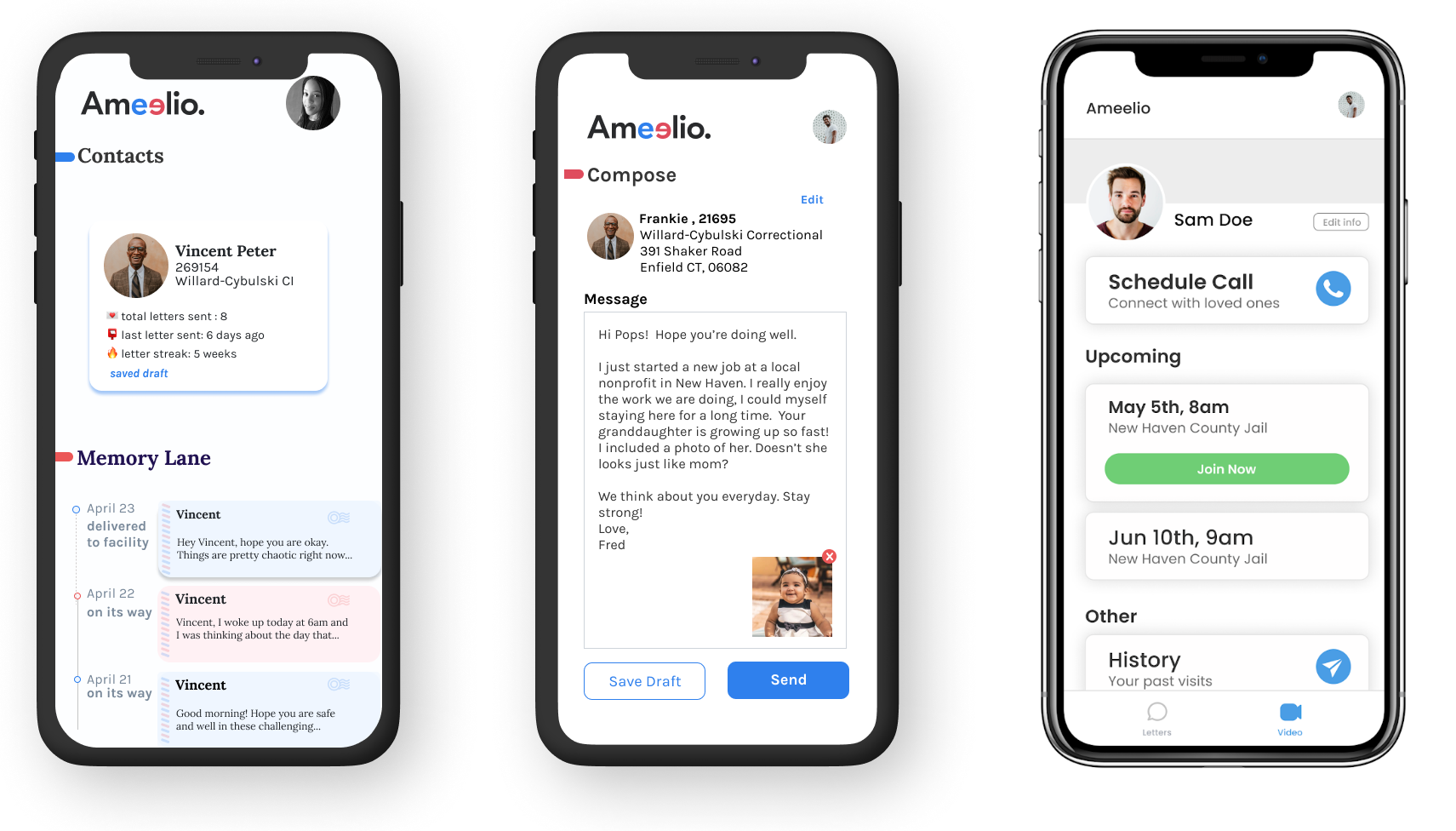
Since starting a couple months ago and spreading word of the service on Facebook groups and other informal means, they’ve already sent more than 4,000 letters. But while it’s nice for people to be able to send letters, Ameelio plans to cater to larger organizations that use mail at larger scales.

“The communications challenges that families have are the same challenges that criminal justice organizations and lawyers have when communicating with their clients,” explained Orchingwa. They have to manage the addresses, letter-writing and sending, and a network of people to check on recipients and other follow-up actions. “We’re talking to them, and a lot were very interested in the service we’re offering, so we’re going to roll out a version for organizations. We’re creating a business model in which these organizations, and some of them are well funded, can pay us back but also pay it forward and help keep it free for others.”
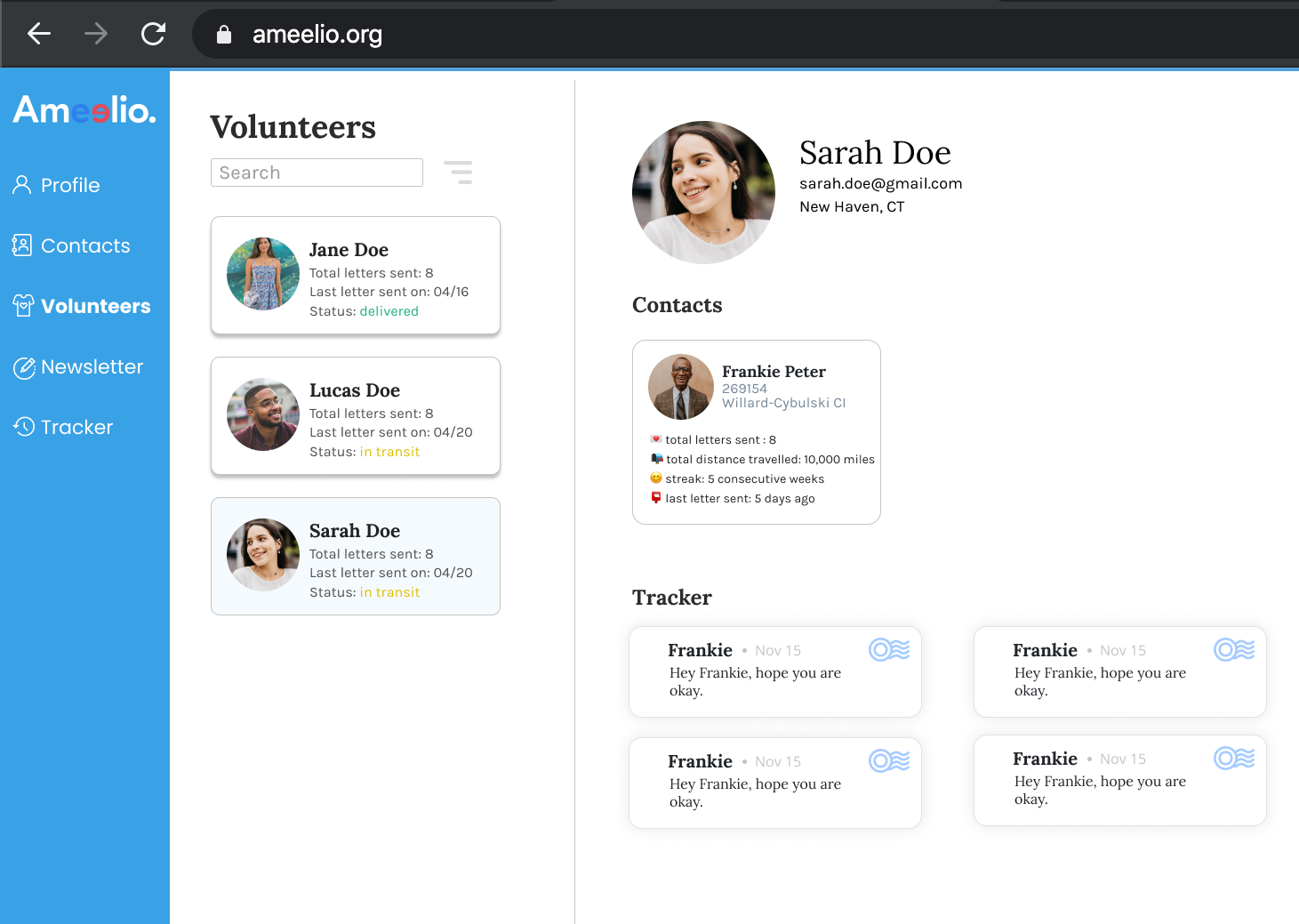
How an organization might use and track letter-writing campaigns

Sending letters is just the opening play for Ameelio, though, but it’s also a way to make the contacts they need and research the market. Outcry against the private calling systems has been constant, but the heterogeneous nature of prisons run under state policies means “we don’t have one system, we have 51 separate systems,” as Orchingwa put it. That and the fact that it makes a fair amount of money.

“There’s a lot of movement around getting Securus and Global Tel out,” he said. “But it would shift from families to the state paying, so they need to make back the money they were making from kickbacks.”

Some states have banned paid calls or never allowed them, but others are only changing their policies now in response to external pressure. It’s with these that Ameelio hopes to succeed first.

“We can start in states where there’s no strong relationship to these companies,” said Orchingwa. “You’re going to have state and county officials being asked by their constituents, ‘why are we using them when there’s a free alternative?’ ”

You may wonder whether it’s possible for a fresh young startup to build a video calling platform ready for deployment in such a short time. The team was quick to explain that the actual video call part of the product is something that, like sending letters, can be accomplished through a third party.

“The barrier right now is not at all the video infrastructure — enterprise and APIs will provide that. We already have an MVP of how that will look,” said Saruhashi. Even the hardware is pretty standard — just regular Android tablets stuck to the wall.

“The hard part is the dashboard for the [Department of Corrections],” Saruhashi continued. “They need a way to manage connections that are coming in, schedule conversations, get logs and review them when they’re done.”

But they’re also well into the development of that part, which ultimately is also only a medium-grade engineering challenge, already solved in many other contexts.

Currently the team is evaluating participation in a number of accelerators, and is already part of Mozilla’s Spring MVP Lab, the precursor to a larger incubator effort announced earlier today. “We love them,” said Mozilla’s Bart Decrem.

Right now the company is definitely early stage, with more plans than accomplishments, and they’re well aware that this is just the start — just as establishing better communications options is just the start for more comprehensive reform of the prison and justice system.

Powered by WPeMatico


Mozilla goes full incubator with ‘Fix The Internet’ startup lab and early-stage investments

After testing the waters this spring with its incubator-esque MVP Lab, Mozilla is doubling down on the effort with a formal program dangling $75,000 investments in front of early-stage companies. The focus on “a better society” and the company’s open-source clout should help differentiate it from the other options out there.

Spurred on by the success of a college hackathon using a whole four Apple Watches in February, Mozilla decided to try a more structured program in the spring. The first test batch of companies is underway, having started in April an 8-week program offering $2,500 per team member and $40,000 in prizes to give away at the end. Developers in a variety of domains were invited to apply, as long as they fit the themes of empowerment, privacy, decentralization, community and so on.

It drew the interest of some 1,500 people in 520 projects, and 25 were chosen to receive the full package and stipend during the development of their MVP. The rest were invited to an “Open Lab” with access to some of Mozilla’s resources.

One example of what they were looking for is Ameelio, a startup whose members are hoping to render paid video calls in prisons obsolete with a free system, and provide free letter delivery to inmates as well.

“The mission of this incubator is to catalyze a new generation of internet products and services where the people are in control of how the internet is used to shape society,” said Bart Decrem, a Mozilla veteran (think Firefox 1.0) and one of the principals at the Builders Studio. “And where business models should be sustainable and valuable, but do not need to squeeze every last dollar (or ounce of attention) from the user.”

“We think we are tapping into the energy in the student and professional ‘builder communities’ around wanting to work on ideas that matter. That clarion call really resonates,” he said. Not only that, but students with canceled internships are showing up in droves, it seems — mostly computer science, but design and other disciplines as well. There are no restrictions on applicants, like country of origin, previous funding, or anything like that.

The new incubator will be divided into three tiers.

First is the “Startup Studio,” which involves a $75,000 investment, “a post-money SAFE for 3.5% of the company when the SAFE converts (or we will participate in an already active funding round),” Decrem clarified.

Below that, as far as pecuniary commitment goes, is the “MVP Lab,” similar to the spring program but offering a total of $16,000 per team. And below that is the Open Lab again, but with 10 $10,000 prizes rather than a top 3.

There are no hard numbers on how many teams will make up the two subsidized tiers, but think 20-30 total as opposed to 50 or 100. Meanwhile, collaboration, cross-pollination and open-source code is encouraged, as you might expect in a Mozilla project. And the social good aspect is strong as well, as a sampling of the companies in the spring batch shows.

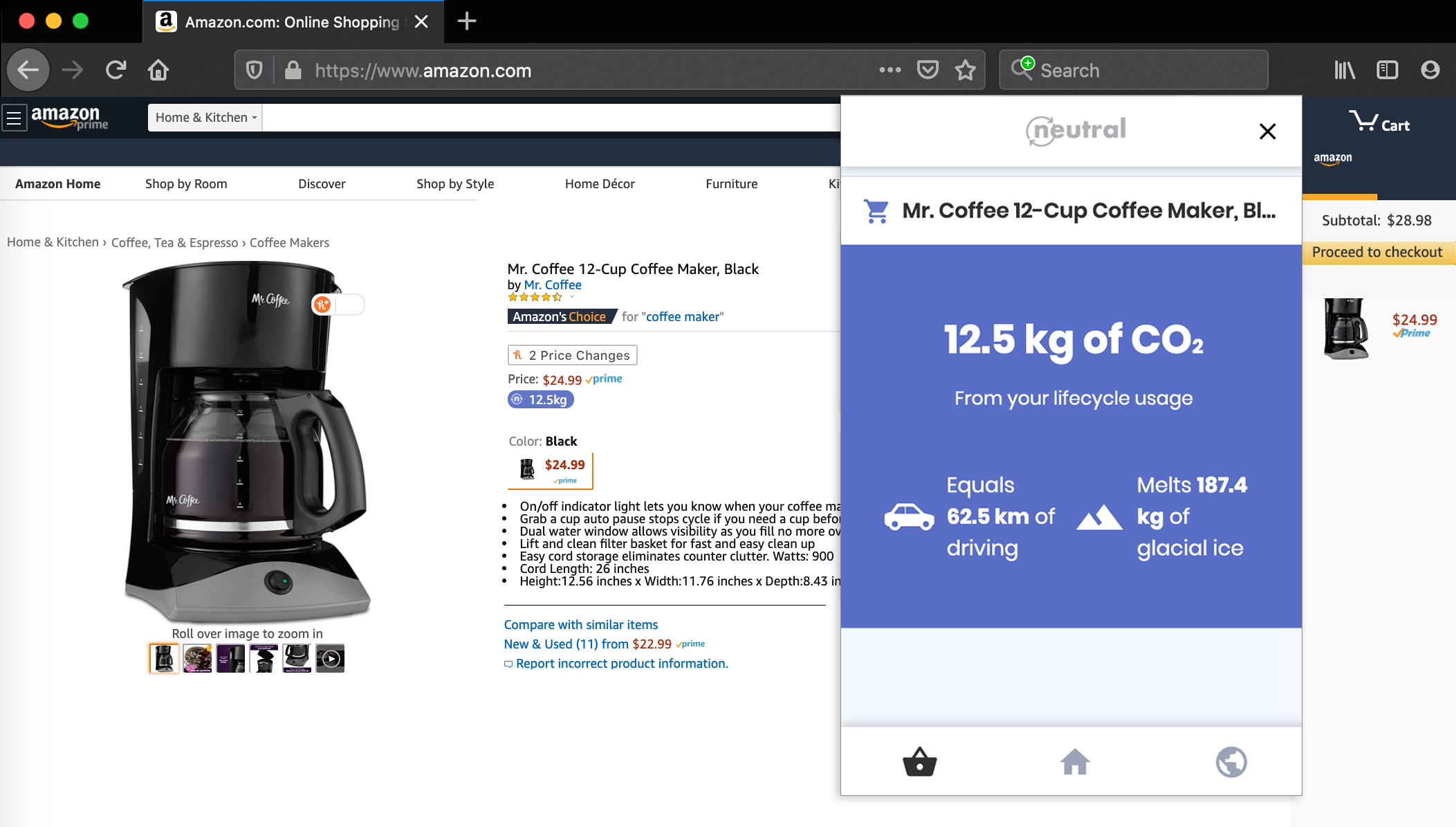
Neutral is a browser plugin that shows the carbon footprint of your Amazon purchases, adding some crucial guilt to transactions we forget are powered by footsore humans and gas-guzzling long-distance goods transport. Meething, Cabal and Oasis are taking on video conferencing, team chat and social feeds from a decentralized standpoint, using the miracles of modern internet architecture to accomplish with distributed systems what once took centralized servers.

This summer will see the program inaugurated, but it’s only “the beginning of a multiyear effort,” Decrem said.

Powered by WPeMatico

Parenting benefits company Cleo partners with UrbanSitter to address the US childcare crisis

Parenting benefits company Cleo is partnering with on-demand childcare service UrbanSitter to address a problem facing many parents today amid the pandemic: a lack of childcare, even as they’re required to return to work. With summer camps, daycares and schools shut down for the months ahead, parents who need to work outside the home (or even inside, but without distraction) no longer have options. Cleo’s new solution, Cleo Care, powered by UrbanSitter, aims to address this problem. The company is offering a package to employers that will help connect families with vetted caregivers via concierge support or, as an alternative, with family co-op options, depending on the parents’ preference.

The program will additionally include access to other Cleo support programs, like one-on-one coaching and age-appropriate programs focused on developmental milestones, delivered weekly.

The launch of the new product arrives at a time when the coronavirus outbreak has caused a childcare crisis in the U.S. Working parents have become homeschool teachers, on top of their already overwhelming number of duties. Parents fortunate enough to work from home, however, are continually interrupted by children’s needs, leading to longer working hours to accomplish tasks, and often mental and physical exhaustion.

Cleo surveyed its member base in April 2020, roughly 80% of whom are in the U.S., and found that more than 50% of respondents didn’t have any childcare options due to the pandemic’s impact. It also learned that 1 in 5 families (with two parents) were considering having one partner leave the workforce in order to manage the care of the children. Meanwhile, 37% were considering having family move in.

Among those who were working, more than half felt their productivity was 75% or less than usual. And 1 in 4 felt their productivity was less than 50% of baseline.

The problem is massive. In the U.S. alone, there are 30.5 million working families, based on Bureau of Labor Statistics.

The Cleo Care solution will be made available to U.S. employers this month to give parents more options, as well as help employers to bring their staff back to work, when the time comes.

Of course, there’s a variety of opinions about how and when the U.S. should re-open its economy. But the reality is that some parents will need to return to their jobs ahead of the re-opening of child care centers or summer camp programs, many of which have been canceled. In Facebook groups, parents are already trying to solve the problem for themselves by organizing with neighbors for childcare co-ops or by hiring teens or college students for daytime babysitting jobs.

But not everyone has these options. And employers can’t just direct staff to Facebook to find a caregiver.

Instead, the Cleo Care program will provide member parents with concierge support for finding vetted care providers from the UrbanSitter network. Or if the families would prefer to work with neighbors, the solution can also offer to match network members interested in co-op solutions.

These features are new to UrbanSitter, which has never before offered co-op matching and is making the new concierge service exclusive to Cleo Care.

“As working moms desperate for a solution to the crisis facing parents today, we were focused on developing a solution that didn’t just work for our members and enterprise clients, but also one that we’d use ourselves. After experimenting and trying everything from virtual care to scheduling shifts to looking for new caregivers ourselves, we realized the only solution that would work for families would require a new model of childcare designed for the unique issues COVID-19 has created,” said Cleo CEO Sarahjane Sacchetti.

Sacchetti, the former chief marketing officer of Collective Health, stepped in to lead Cleo after its original co-founder Shannon Spanhake was ousted following issues around company culture and a falsified resumé. Since then, Cleo has been expanding its business in the form of numerous partnerships, including those with Natalist, Milk Stork, Playfully, Dadi and others.

The solution will roll out in pilot testing with large U.S. employers to start, the company says. International employers will have access to its Cleo Kids coaching solution while Cleo looks for partnerships with care provider networks outside the U.S.

The employers will pay a combined monthly membership fee for access to Cleo Kids and UrbanSitter as well as one-time matching fees for co-op matching or care provider matching and placement, when used by a family. Cleo says it’s working with employers to explore models to cover some of the matching costs, which can be supported if an employer offers a dependent care FSA.

A sign-up form is here.

Image credits: Cleo

Powered by WPeMatico

Microsoft is acquiring Metaswitch Networks to expand its Azure 5G strategy

Just weeks after announcing a deal to acquire 5G specialist Affirmed Networks, Microsoft is making another acquisition to strengthen its cloud-based telecoms offering. It’s acquiring Metaswitch Networks, a U.K.-based provider of cloud-based communications products used by carriers and network providers (customers include the likes of BT in the U.K., Sprint and virtual network consortium RINA.

Terms of the deal were not disclosed in today’s announcement. Metaswitch’s investors included the PE firms Northgate and WRV, Francisco Partners and Sequoia, but it’s unclear how much it had raised nor its last valuation. (The company has been around since 1981.)

The deal speaks to a growing focus from tech companies leveraging cloud architectures and the adoption of new networking technologies — specifically 5G — to capitalise on a bigger role in becoming service providers both to carriers and to those who would like to build carrier-like services (potentially bypassing telcos in the process), through the offering of virtualised products delivered from its cloud.

It comes just one day after Rakuten, the Japanese e-commerce and streaming services giant, announced that it would be acquiring Innoeye, another specialist in cloud-based communications services. Others like Amazon have also been building up their offerings in AWS serving the same market.

Microsoft describes the Metaswitch portfolio of cloud-native services — which include 5G data, voice and unified communications (contact center) products — as “complementary” to Affirmed.

“Microsoft intends to leverage the talent and technology of these two organizations, extending the Azure platform to both deploy and grow these capabilities at scale in a way that is secure, efficient and creates a sustainable ecosystem,” the company said. 

The migration to 5G represents a window of opportunity to companies that provide services to carriers. The latter have long been saddled with expensive, ageing equipment and now have the potential to replace some or all of that with software-based services, delivered via the cloud, that can be more easily updated and modified with market demand. That is the hope, at least. The reality may be that many carriers sweat out their assets and upgrade in small increments, as operational expenditure still represents a big investment and cost.

Microsoft is all too aware of that reality and also of the prospect of appearing like a threat, not a saviour.

“We will continue to support hybrid and multi-cloud models to create a more diverse telecom ecosystem and spur faster innovation, an expanded set of unique offerings and greater opportunities for differentiation,” it notes. “We will continue to partner with existing suppliers, emerging innovators and network equipment partners to share roadmaps and explore expanded opportunities to work together, including in the areas of radio access networks (RAN), next-generation core, virtualized services, orchestration and operations support system/business support system (OSS/BSS) modernization. A future that is interoperable has never been more important to ensure the success of customers and partners.”

Indeed, Microsoft’s been providing services to, and selling its own IT through, carriers for years before this. These latest acquisitions, however, represent a growing focus on what role it can play in that enterprise vertical in the years to come.

Powered by WPeMatico

Extra Crunch Live: Join Revolution’s Steve Case and Clara Sieg on May 21 at 3pm ET/12pm PT

On May 21 at 3pm ET/12pm PT, we’re hosting an Extra Crunch Live session with Steve Case and Clara Sieg of Revolution.

This chat is the latest in our growing series featuring notable investors, entrepreneurs and technologists. Previously, TechCrunch editorial staff sat down (virtually, of course) with Cowboy Ventures’ Aileen Lee and Ted Wang, Sequoia’s Roelof Botha and Mark Cuban, to name a few.

There’s a lot to talk about with Case and Sieg, and Extra Crunch members are encouraged to come with their own set of questions to ask these renowned investors. Revolution is known for its wide range of investments, inside and out of the Valley, so we’re curious how the firm is addressing the COVID-19 crisis.

Steve Case was a co-founder of AOL and led the company as it became the internet giant of the ’90s — and did so outside of Silicon Valley. Because of this, he’s long been a champion of startups from other regions. Yet the firm still has a presence in Silicon Valley, and Clara Sieg has run that effort since 2012 after joining in 2010.

We’re curious how Case, Sieg and other partners are advising startups to weather this storm. With investments throughout the country, Revolution is in a unique position to have a holistic perspective on how the COVID-19 crisis is affecting startups.

Are they still funding startups right now? What metrics are they looking for? What regions of the country do they see less effected than others and which are hardest hit?

We have questions and we hope they have answers.

Extra Crunch members can ask their own questions directly in the Zoom Q&A. So come prepared! You can find the full information for the chat below. See you there!

Powered by WPeMatico