1010Computers | Computer Repair & IT Support

M17 sells its online dating assets to focus on live streaming

M17 Entertainment announced today that it has sold its online dating assets to focus on its core live-streaming business in Asia and other markets. Paktor Pte, which operates Paktor dating app and other services, was acquired by Kollective Ventures, a venture capital advisory firm. The value of the deal was undisclosed.

In its announcement, Taipei-based M17 said the sale will allow it to focus on expanding its live-streaming business in markets including Taiwan, Japan and Hong Kong.

Earlier this month, the company said it had raised a $26.5 million Series D that will be used for growth in Japan, where M17 claims a 60% share of the live-streaming market, and expansion into new places like the United States and the Middle East. Its live-streaming apps include 17LIVE (an English-language version is called Livit), Meme Live and live-streaming e-commerce platforms HandsUP and FBBuy.

In a statement, M17 CFO Shang Koo said, “As our Japan live-streaming business has skyrocketed, we found we were unable to devote the same level of internal resources to our dating business in Southeast Asia. Becoming independent will allow Paktor to control its own destiny as M17 focuses heavily on the future of its streaming services in our largest market, Japan.”

Paktor will operate independently of M17 after the sale, but Koo said, “we hope to continue working with Paktor on future business cooperation and will always value the synergy and teamwork between M17 and Paktor.”

M17 was formed in April 2017 when Paktor merged with 17 Media. A year later, M17 was supposed to go public, but cancelled its initial public offering on the New York Stock Exchange on the same day it was supposed to start trading, citing “issues related to the settlement” of shares that CEO Joseph Phua later explained in detail to Tech in Asia.

Powered by WPeMatico

Google highlights accessible locations with new Maps feature

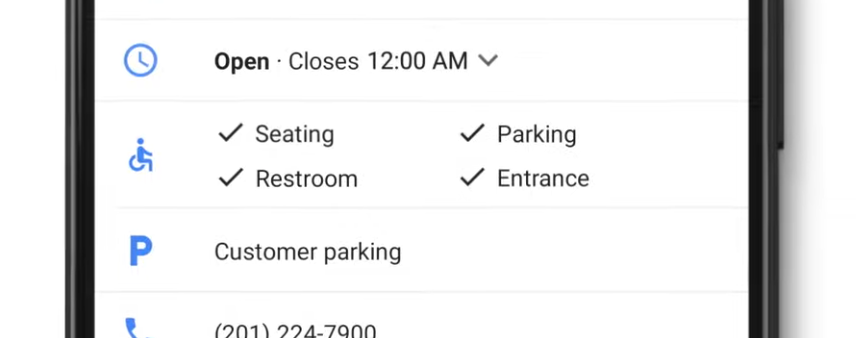
Google has announced a new, welcome and no doubt long-asked-for feature to its Maps app: wheelchair accessibility info. Businesses and points of interest featuring accessible entrances, bathrooms and other features will now be prominently marked as such.

Millions, of course, require such accommodations as ramps or automatic doors, from people with limited mobility to people with strollers or other conveyances. Google has been collecting information on locations’ accessibility for a couple years, and this new setting puts it front and center.

The company showed off the feature in a blog post for Global Accessibility Awareness Day. To turn it on, users can go to the “Settings” section of the Maps app, then “Accessibility settings,” then toggle on “Accessible places.”

This will cause any locations searched for or tapped on to display a small wheelchair icon if they have accessible facilities. Drilling down into the details where you find the address and hours will show exactly what’s available. Unfortunately it doesn’t indicate the location of those resources (helpful if someone is trying to figure out where to get dropped off, for instance), but knowing there’s an accessible entrance or restroom at all is a start.

The information isn’t automatically created or sourced from blueprints or anything — like so much on Google, it comes from you, the user. Any registered user can note the presence of accessible facilities the way they’d note things like in-store pickup or quick service. Just go to “About” in a location’s description and hit the “Describe this place” button at the bottom.

Powered by WPeMatico

Virtual events startup Run The World just nabbed $10.8 million from a16z and Founders Fund

Run The World, a year-old startup that’s based in Mountain View, Calif., and has small teams both in China and Taiwan, just nabbed $10.8 million in Series A funding co-led by earlier backer Andreessen Horowitz and new backer Founders Fund.

It’s easy to understand the firms’ interest in the company, whose platform features every functionality that a conference organizer might need in a time of a pandemic and even afterward, given that many outfits are rethinking more permanently how to produce events that include far-flung participants. Think video conferencing, ticketing, interactivity and networking.

We’d written about the startup a few months ago as it was launching with $4.3 million in seed funding led by Andreessen partner Connie Chan, who was joined by a slew of other seed-stage backers, including Pear Ventures, GSR Ventures and Unanimous Capital. Perhaps unsurprisingly given the current climate, Run The World has received a fair amount of traction since, according to co-founder and CEO Xiaoyin Qu, who’d previously led products for both Facebook and Instagram.

“Since we launched in February — and waived all set-up fees for events impacted by the coronavirus — we are receiving hundreds of inbound event requests each day,” Qu says. More specifically, she says the startup has doubled the size of its core team to 30 employees and enabled organizers from a wide variety of countries to oversee more than 2,000 events at this point.

Qu says that a lot of event planners who’ve used Zoom to run webinars are now choosing Run The World instead because of its focus on engagement and social features. For example, attendees to an event on the platform are invited to create a video profile akin to an Instagram Story that can help inform other attendees about who they are. It also organizes related “cocktail parties,” where it can match attendees for several minutes at a time, and attendees can choose who they want to follow up with afterward.

That heavy focus on social networking isn’t accidental. Qu met her co-founder, Xuan Jiang, at Facebook, where Jiang was a technical lead for Facebook events, ads and stories.

Of course, Run The World — which takes 25% of ticket sales in exchange for everything from the templates used, to ticket sales, to payment processing and streaming and so forth — still has very stiff competition in Zoom. The nine-year-old company has seen adoption by consumers soar since February, with 300 million daily meeting participants using the service as of April’s end.

Not only is it hard to overcome that kind of network effect, but Run The World is hardly alone in trying to steer event organizers its way. Earlier this week, for example, Bevy, an events software business co-founded by the founder of the events series Startup Grind, announced it has raised $15 million in Series B funding led by Accel. Other young online events platforms to similarly raise venture backing in recent months include London-based Hopin (whose recent round was also led by Accel, interestingly) and Paris-based Eventmaker.

Still, the fresh funding should help. While Run The World has grown “entirely organically through word of mouth” to date, says Qu, the startup plans to grow its team and will presumably start spending at least a bit on marketing.

It could well get a boost on this last front by its social media-savvy investors.

In addition to a16z and Founders Fund, numerous other backers in its Series A include Will Smith’s Dreamers VC and Kevin Hart’s Hartbeat Capital.

Powered by WPeMatico

Extra Crunch Live: Join Box CEO Aaron Levie May 28th at noon PT/3 pm ET/7 pm GMT

We’ve been on a roll with our Extra Crunch Live Series for Extra Crunch members, where we’re talking to some of the biggest names in Silicon Valley about business, investment and the startup community. Recent interviews include Kirsten Green from Forerunner Ventures, Charles Hudson from Precursor Ventures and investor Mark Cuban.

Next week, we’re pleased to welcome Box CEO Aaron Levie. He is a well-known advocate of digital transformation, often a years-long process that many companies have compressed into a few months because of the pandemic, as he has pointed out lately.

As the head of an enterprise SaaS company that started out to help users manage information online, he has a unique perspective on what’s happening in this period as companies move employees home and implement cloud services to ease the transition.

Levie started his company 15 years ago while still an undergrad in the proverbial dorm room and has matured from those early days into a public company executive, guiding his employees, customers and investors through the current crisis. This is not the first economic downturn he has faced as CEO at Box; when it was still an early-stage startup, he saw it through the 2008 financial crisis. Presumably, he’s taking the lessons he learned then and applying them now to a much more mature organization.

Please join TechCrunch writers Ron Miller and Jon Shieber as we chat with Levie about how he’s handling the COVID-19 crisis, moving employees offsite and what advice he has for companies that are accelerating their digital transformation. After he’s shared his wisdom for startups seeking survival strategies, we’ll discuss what life might look like for Box and other companies in a post-pandemic environment.

During the call, audience members are encouraged to ask questions. We’ll get to as many as we can, but you can only participate if you’re an Extra Crunch member, so please subscribe here.

Extra Crunch subscribers can find the Zoom link below (with YouTube to follow) as well as a calendar invite so you won’t miss this conversation.

Powered by WPeMatico

The Trash app’s new features can create AI-edited music videos and more

The team behind Trash, an app that uses artificial intelligence to edit your video footage, launched a number of new features this week that should make it more useful for anyone — but especially independent musicians.

I wrote about the startup last summer, when CEO Hannah Donovan told me that her work as Vine’s general manager convinced her that most people will never feel like they have the technical skills to edit a good-looking video.

That’s why she and her co-founder Genevieve Patterson (the startup’s chief scientist) created technology that can analyze multiple video clips, identifying the most interesting shots and stitching it all together into a fun video.

Since then, Trash brought on more creators before opening up to a general audience last fall. Donovan explained that while she’d expected users to create “hyper-polished influencer videos,” the opposite has been true.

“The content on Trash is very personal, very authentic, very real,” she said. “For lack of better words, it’s what you’d see in your [Snapchat or Instagram] Stories.”

Trash is giving users more capabilities this week with the launch of Styles. This allows them to identify the type of video they want to create — whether it’s a recap (vacation recaps are big right now), a narrative video or something more artsy. The results are tailored accordingly, and then the user still has the option to further tweak things, for example by moving clips around.Trash music video style

Image Credits: Okayceci for TrashThere’s also a style for music videos. Many Trash videos already combine videos and music, but Donovan said this style is specifically designed for independent musicians who may not have editing skills, but who still need to create music videos — especially as YouTube has become one of the main ways people discover new music.

“The music video is more important than it’s ever been,” she argued.

Trash can’t give those musicians professional, studio-quality footage, but currently, everyone — no matter how famous — is largely limited to shooting themselves at home on smartphones right now. And even after the pandemic, Donovan expects the trend to continue.

“You’re seeing that in commercial videos as well, incorporating elements like text messaging,” she said. “What we’re seeing now is just this huge blend where it doesn’t matter [and you can mix] real life and virtual life, this hyper-polished, big-budget stuff and a super DIY, shot-on-an-iPhone aesthetic.”

To check it out, you can watch a playlist of some of the initial music videos created on Trash. The startup has also launched Trash for Artists, where musicians can upload their songs to create music videos and promo videos, while also offering them up as a soundtrack for other Trash users.

In addition to launching the new features, Trash also graduated last week from Snap’s Yellow accelerator program. (Other investors include the National Science Foundation, Japan’s Digital Garage and Dream Machine, the fund created by former TechCrunch Editor Alexia Bonatsos.)

Powered by WPeMatico

12 VCs share their thoughts on enterprise startup trends and opportunities

Compared to other tech firms, enterprise companies have held up well during the pandemic.

If anything, the problems enterprises were facing prior to the economic downturn have become even more pronounced; if you were thinking about moving to the cloud or just dabbling in it, you’re probably accelerating that motion. If you were trying to move off of legacy systems, that has become even more imperative. And if you were attempting to modernize processes and workflows, whether engineer- and developer-related, or across other parts of the organization, chances are good that you are giving that a much closer look.

We won’t be locked down forever and employees will eventually return to offices, but it’s likely that many companies will take the lessons they learned during this era and put them to work inside their organizations. Startups are uniquely positioned to help companies solve these new modern kinds of problems, much more so than a legacy vendor (which could be itself trying to update its approach).

Venture capitalists certainly understand all of these dynamics and are always dutifully searching for startups that could help companies shift to a digital future more quickly.

We spoke to 12 of them to take their pulse and learn more about the trends that are exciting them, what they look for in an investment opportunity and which parts of the enterprise are ripe for startups to impact:

  • Max Gazor, CRV
  • Navin Chadda, Mayfield
  • Matt Murphy, Menlo Venture Capital
  • Soma Somasagar, Madrona Ventures
  • Jon Lehr, Work-Bench
  • Steve Herrod, General Catalyst
  • Jai Das, Sapphire Ventures
  • Max Gazor,  CRV
  • Ed Sim, Boldstart Ventures
  • Martin Cassado, Andreessen Horowitz
  • Vassant Natarajan, Accel
  • Dharmesh Thakker, Battery Ventures

Max Gazor, CRV

What trends are you most excited about in the enterprise from an investing perspective?

It’s abundantly clear that cloud software markets are bigger than most people anticipated. We continue to invest heavily there as we have been doing for the last decade.

Specifically, the most exciting trend right now in enterprise is low-code software development. I’m on the board of Airtable, where I led the Series A and co-led the Series B investments, so I see first hand how this will play out. We are heading toward a future where hundreds of millions of people will be empowered to compose software that fits their own needs. Imagine the productivity and transformation that will unlock in the world! It may be one of the largest market opportunities we have seen since cloud computing.

Powered by WPeMatico

6 CISOs share their game plans for a post-pandemic world

Oren Yunger
Contributor

Oren Yunger is an investor at GGV Capital, focused on enterprise IT infrastructure, development tools and cybersecurity. He was previously chief information security officer at a SaaS company and a public financial institution.

Like all business leaders, chief information security officers (CISOs) have shifted their roles quickly and dramatically during the COVID-19 pandemic, but many have had to fight fires they never expected.

Most importantly, they’ve had to ensure corporate networks remain secure even with 100% of employees suddenly working from home. Controllers are moving millions between corporate accounts from their living rooms, HR managers are sharing employees’ personal information from their kitchen tables and tens of millions of workers are accessing company data using personal laptops and phones.

This unprecedented situation reveals once and for all that security is not only about preventing breaches, but also about ensuring fundamental business continuity.

While it might take time, everyone agrees the pandemic will end. But how will the cybersecurity sector look in a post-COVID-19 world? What type of software will CISOs want to buy in the near future, and two years down the road?

To find out, I asked six of the world’s leading CISOs to share their experiences during the pandemic and their plans for the future, providing insights on how cybersecurity companies should develop and market their solutions to emerge stronger:

The security sector will experience challenges, but also opportunities

The good news is, many CISOs believe that cybersecurity will weather the economic storm better than other enterprise software sectors. That’s because security has become even more top of mind during the pandemic; with the vast majority of corporate employees now working remotely, a secure network has never been more paramount, said Rinki Sethi, CISO at Rubrik. “Many security teams are now focused on ensuring they have controls in place for a completely remote workforce, so endpoint and network security, as well as identity and access management, are more important than ever,” said Sethi. “Additionally, business continuity and disaster recovery planning are critical right now — the ability to respond to a security incident and have a robust plan to recover from it is top priority for most security teams, and will continue to be for a long time.”

That’s not to say all security companies will necessarily thrive during this current economic crisis. Adrian Ludwig, CISO at Atlassian, notes that an overall decline in IT budgets will impact security spending. But the silver lining is that some companies will be acquired. “I expect we will see consolidation in the cybersecurity markets, and that most new investments by IT departments will be in basic infrastructure to facilitate work-from-home,” said Ludwig. “Less well-capitalized cybersecurity companies may want to begin thinking about potential exit opportunities sooner rather than later.”

Powered by WPeMatico

Salesforce Commerce Cloud releases four quick-start pandemic business packs

As we move deeper into the pandemic, it’s clear that the way we conduct business is changing, maybe forever. That means that business has to change too — and fast. But if you’ve never conducted business digitally or only nominally, how do you suddenly transform on the fly?

Salesforce Commerce Cloud CEO Mike Micucci says that they were hearing from customers they needed help. Salesforce decided to build four packages of services very quickly for customers specifically designed to help conduct business during COVID-19. The company even has SI partners who will run everything for the first three months, so these businesses don’t have to do much of anything except turn the key (so to speak).

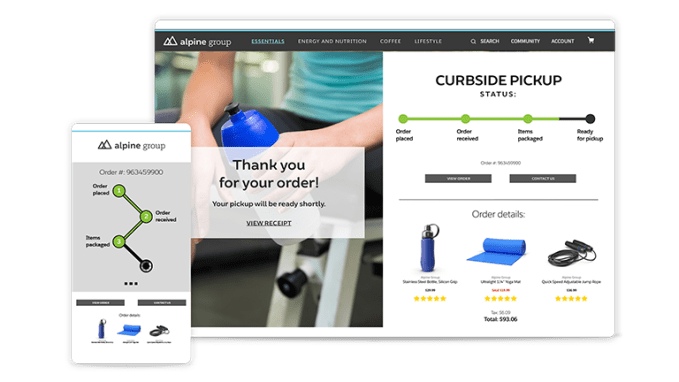
The four tools are part of the Salesforce Quick Start Commerce Solutions and include Quick Start Commerce for D2C Consumer and Essential Goods to get a site up running fast, Quick Start Commerce for Grocery and Food Service to help restaurants and grocery stores set up online curbside food purchasing systems, Quick Start Commerce for B2B for companies setting up business-to-business sites and Quick Start Commerce for Buy Online and Curbside Pickup, which enables non-food companies to move in-store inventories online, and arrange curbside pickup systems.

Quick Start Commerce for Buy Online and Curbside Pickup (Image Credit: Salesforce)

Micucci says that online commerce has been operating at a holiday kind of surge since we went into lockdown 10 weeks ago, and customers have been clamoring for help. He said that they responded initially with a series of materials on best practices for getting online quickly, but customers wanted something more concrete.

“We needed to bring the software to bear on this. So we designed these four quick-start packages. Essentially, the whole model was that we need to get you running in weeks, not months. The goal was literally [to get you up in] two weeks, and included software, obviously our cloud-based commerce and whatnot, but more importantly it included a package of services,” Micucci explained.

To build that package, it involved more than just Salesforce itself. It needed to get partners involved, too, to include payment, shipping, order management and other related kinds of tooling, depending on the package requirements.

Finally, they wanted to even remove the site management headaches from the customer, at least initially. Understanding that it would be difficult for businesses to train people internally to manage the system at this time, they got systems integrators involved to do it for them for the first three months. If the customer wants to take over sooner, they can, and if they want the SI to continue to manage the whole thing, that’s fine too.

As Salesforce itself moved out of the office and home, it was observing that online sales were spiking, and Micucci says after a couple of weeks of making sure the workforce was settled, he started hearing from customers about the problems they were having conducting business, and they went to work. The first of these packages came together in just a couple of weeks, including partners.

They got them out to customers for quick beta testing and refinement to the extent they could, but the guiding principle in producing these packages was speed over perfection. They realize the products will very likely require further refinement as they get out into the field, but they learned you can produce a package to meet a pressing customer need, and do it quickly, and that’s a lesson that will likely resonate even after this crisis is over.

Powered by WPeMatico

Couchbase raises $105M Series G funding round

Couchbase, the Santa Clara-based company behind the eponymous NoSQL cloud database service, today announced that it has raised a $105 million all-equity Series G round “to expand product development and global go-to-market capabilities.”

The oversubscribed round was led by GPI Capital, with participation from existing investors Accel, Sorenson Capital, North Bridge Venture Partners, Glynn Capital, Adams Street Partners and Mayfield. With this, the company has now raised a total of $251 million, according to Crunchbase.

Back in 2016, Couchbase raised a $30 million down round, which at the time was meant to be the company’s last round before an IPO. That IPO hasn’t materialized, but the company continues to grow, with 30% of the Fortune 100 now using its database. Couchbase also today announced that, over the course of the last fiscal year, it saw 70% total contract value growth, more than 50% new business growth and over 35% growth in average subscription deal size. In total, Couchbase said today, it is now seeing almost $100 million in committed annual recurring revenue.

“To be competitive today, enterprises must transform digitally, and use technology to get closer to their customers and improve the productivity of their workforces,” Couchbase President and CEO Matt Cain said in today’s announcement. “To do so, they require a cloud-native database built specifically to support modern web, mobile and IoT applications. Application developers and enterprise architects rely on Couchbase to enable agile application development on a platform that performs at scale, from the public cloud to the edge, and provides operational simplicity and reliability. More and more, the largest companies in the world truly run their businesses on Couchbase, architecting their most business-critical applications on our platform.”

The company is playing in a large but competitive market, with the likes of MongoDB, DataStax and all the major cloud vendors vying for similar customers in the NoSQL space. One feature that has always made Couchbase stand out is Couchbase Mobile, which extends the service to the cloud. Like some of its competitors, the company has also recently placed its bets on the Kubernetes container orchestration tools with, for example the launch of its Autonomous Operator for Kubernetes 2.0. More importantly, though, the company also introduced its fully managed Couchbase Cloud Database-as-a-Service in February, which allows businesses to run the database within their own virtual private cloud on public clouds like AWS and Microsoft Azure.

“We are excited to partner with Couchbase and view Couchbase Server’s highly performant, distributed architecture as purpose-built to support mission-critical use cases at scale,” said Alex Migon, a partner at GPI Capital and a new member of the company’s board of directors. “Couchbase has developed a truly enterprise-grade product, with leading support for cutting-edge application development and deployment needs. We are thrilled to contribute to the next stage of the company’s growth.”

The company tells me that it plans to use the new funding to continue its “accelerated trajectory with investment in each of their three core pillars: sustained differentiation, profitable growth, and world class teams.” Of course, Couchbase will also continue to build new features for its NoSQL server, mobile platform and Couchbase Cloud — in addition, the company will continue to expand geographically to serve its global customer operations.

Powered by WPeMatico

Scribd announces a perks program, giving its subscribers access to Pandora Plus, TuneIn Premium and more

E-book and audiobook subscription service Scribd has been actively embracing and experimenting with bundling over the past couple of years, creating joint offers with The New York Times and with Spotify and Hulu.

Today it announced a slightly different take on the idea with Scribd Perks. These perks give Scribd’s paying subscribers (the service costs $8.99 per month) access to a number of additional services at no extra change.

The initial lineup includes Pandora Plus (ad-free music and podcasts), TuneIn Premium (live sports, news, music and podcasts), Peak (brain training), CuriosityStream (documentaries and series), CONtv + Comics (movies and digital comics), FarFaria (illustrated children’s books that are read aloud) and MUBI (hand-picked films).

Many of these services are relatively niche — at least compared to Scribd’s previous bundling partners — but they all normally cost between $2.99 and $10.99 per month, so there are some real savings here. It’s an extra incentive for someone to sign up for Scribd, and for existing subscribers to stick around. Meanwhile, these partners presumably get new users and additional revenue.

In a statement, Scribd CEO Trip Adler said:

With millions of people around the world continuing to shelter in place, having access to different forms of enrichment is more important than ever before. We’re thrilled to be partnering with leading consumer brands to offer a more accessible way for consumers to easily stay informed, entertained, and connected. Scribd is designed to help people explore the world’s best content, and now, with the launch of our new Scribd Perks platform, there is even more premium content to discover.


Powered by WPeMatico