1010Computers | Computer Repair & IT Support

Lime raises $310 million Series D round led by Bain Capital Ventures and others

Lime just announced it has raised a $310 million Series D round. Led by Bain Capital Ventures, Andreessen Horowitz, Fidelity Ventures, GV and IVP, the round values Lime at $2.4 billion.

“This new investment demonstrates the fundamental strength of our business and the increasingly rapid adoption of Lime,” Lime CEO Toby Sun wrote in a blog post. “The new funds will give us the ability to expand into new markets, enhance our technology, strengthen the team and pilot new opportunities. We will also continue investing in two critical areas: rider safety and city collaboration.”

In May, Lime partnered with Segway to launch its next generation of electric scooters. These Segway-powered Lime scooters were designed to be safer, longer-lasting via battery power and more durable for what the sharing economy requires, Sun told TechCrunch last year.

But this partnership hasn’t been without its issues. In October, Lime recalled some of its scooters due to battery fire concerns. The next month, Lime put $3 million toward a new safety initiative called “Respect the Ride.” Safety, in general, is a major concern. In September, someone lost their life after a scooter accident.

This brings Lime’s total funding north of $800 million. Lime, which got its beginnings as a bike-share company, has deployed its scooters and bikes in more than 100 cities in the U.S. and 27 international cities. Since June, Lime has more than doubled the number of cities where it operates in the U.S. Lime has also partnered with Uber to offer Lime scooters within the Uber app.

Powered by WPeMatico

Google doubles down on its Asylo confidential computing framework

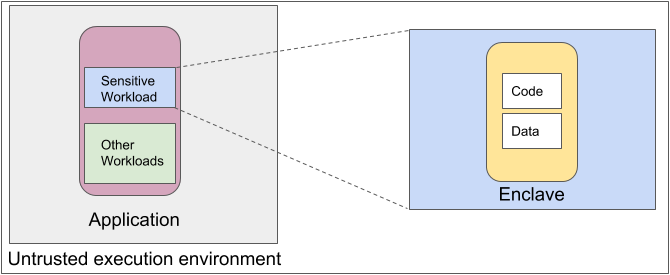
Last May, Google introduced Asylo, an open-source framework for confidential computing, a technique favored by many of the big cloud vendors because it allows you to set up trusted execution environments that are shielded from the rest of the (potentially untrusted) system. Workloads and their data basically sit in a trusted enclave that adds another layer of protection against network and operating system vulnerabilities.

That’s not a new concept, but, as Google argues, it has been hard to adopt. “Despite this promise, the adoption of this emerging technology has been hampered by dependence on specific hardware, complexity and the lack of an application development tool to run in confidential computing environments,” Google Cloud Engineering Director Jason Garms and Senior Product Manager Nelly Porter write in a blog post today. The promise of the Asylo framework, as you can probably guess, is to make confidential computing easy.

Asylo makes it easier to build applications that can run in these enclaves and can use various software- and hardware-based security back ends like Intel’s SGX and others. Once an app has been ported to support Asylo, you should also be able to take that code with you and run it on any other Asylo-supported enclave.

Right now, though, many of these technologies and practices around confidential computing remain in flux. Google notes there are no set design patterns for building applications that then use the Asylo API and run in these enclaves, for example.The different hardware manufacturers also don’t necessarily work together to ensure their technologies are interoperable.

“Together with the industry, we can work toward more transparent and interoperable services to support confidential computing apps, for example, making it easy to understand and verify attestation claims, inter-enclave communication protocols, and federated identity systems across enclaves,” write Garms and Porter.

And to do that, Google is launching its Confidential Computing Challenge (C3) today. The idea here is to have developers create novel use cases for confidential computing — or to advance the current state of the technologies. If you do that and win, you’ll get $15,000 in cash, $5,000 in Google Cloud Platform credits and an undisclosed hardware gift (a Pixelbook or Pixel phone, if I had to guess).

In addition, Google now also offers developers three hands-on labs that teach how to build apps using Asylo’s tools. Those are free for the first month if you use the code in Google’s blog post.

Powered by WPeMatico

Big companies are not becoming data-driven fast enough

I remember watching MIT professor Andrew McAfee years ago telling stories about the importance of data over gut feeling, whether it was predicting successful wines or making sound business decisions. We have been hearing about big data and data-driven decision making for so long, you would think it has become hardened into our largest organizations by now. As it turns out, new research by NewVantage Partners finds that most large companies are having problems implementing an organization-wide, data-driven strategy.

McAfee was fond of saying that before the data deluge we have today, the way most large organizations made decisions was via the HiPPO — the highest paid person’s opinion. Then he would chide the audience that this was not the proper way to run your business. Data, not gut feelings, even those based on experience, should drive important organizational decisions.

While companies haven’t failed to recognize McAfee’s advice, the NVP report suggests they are having problems implementing data-driven decision making across organizations. There are plenty of technological solutions out there today to help them, from startups all the way to the largest enterprise vendors, but the data (see, you always need to go back to the data) suggests that it’s not a technology problem, it’s a people problem.

Executives can have farsighted vision that their organizations need to be data-driven. They can acquire all of the latest solutions to bring data to the forefront, but unless they combine that with a broad cultural shift and a deep understanding of how to use that data inside business processes, they will continue to struggle.

The study’s authors, Randy Bean and Thomas H. Davenport, wrote about the people problem in their study’s executive summary. “We hear little about initiatives devoted to changing human attitudes and behaviors around data. Unless the focus shifts to these types of activities, we are likely to see the same problem areas in the future that we’ve observed year after year in this survey.”

The survey found that 72 percent of respondents have failed in this regard, reporting they haven’t been able to create a data-driven culture, whatever that means to individual respondents. Meanwhile, 69 percent reported they had failed to create a data-driven organization, although it would seem that these two metrics would be closely aligned.

Perhaps most discouraging of all is that the data is trending the wrong way. Over the last several years, the report’s authors say that those organizations calling themselves data-driven has actually dropped each year from 37.1 percent in 2017 to 32.4 percent in 2018 to 31.0 percent in the latest survey.

This matters on so many levels, but consider that as companies shift to artificial intelligence and machine learning, these technologies rely on abundant amounts of data to work effectively. What’s more, every organization, regardless of its size, is generating vast amounts of data, simply as part of being a digital business in the 21st century. They need to find a way to control this data to make better decisions and understand their customers better. It’s essential.

There is so much talk about innovation and disruption, and understanding and affecting company culture, but so much of all this is linked. You need to be more agile. You need to be more digital. You need to be transformational. You need to be all of these things — and data is at the center of all of it.

Data has been called the new oil often enough to be cliché, but these results reveal that the lesson is failing to get through. Companies need to be data-driven now, this instant. This isn’t something to be working toward at this point. This is something you need to be doing, unless your ultimate goal is to become irrelevant.

Powered by WPeMatico

Uber Freight co-founders and top dealmakers join logistics startup Turvo

Last year, Charlie Bergevin and Brian Cristol, co-founders of Uber’s trucking logistics business Uber Freight, heard Reid Hoffman say Turvo had some of the best technology he had ever seen. Frustrated with the direction Uber Freight had taken, they called up Turvo’s founder and chief executive officer Eric Gilmore.

It wasn’t long before offers were on the table and now they’ve joined Turvo full-time. Cristol as head of enterprise partnerships and Bergevin as an enterprise partnerships executive. Bin Chang, a founding engineer at Uber Freight, is joining Turvo, too, a move I’m told Cristol and Bergevin were unaware of until they’d already accepted roles at the venture-funded startup. Chang begins February 11.

“Brian and Charlie … have contributed so much to incubate this business and scale it to where we are today,” Uber Freight chief Lior Ron wrote in an internal email to employees shared with TechCrunch. “They were always on the forefront of exploration and innovation and were able to constantly push themselves, and all of us, to the next frontier.”

Cristol and Bergevin were Uber’s first B2B sales hires when they joined the ride-hailing firm in 2016. Tasked with finding product market fit for Uber’s final-mile businesses under the “Uber Everything” initiative, they began learning about the truckload transportation and logistics industry. That’s when they linked up with Curtis Chambers, Uber’s long-time director of engineering. Together, the trio pitched their idea for a logistics business unit within Uber to then CEO Travis Kalanick.

Turvo’s real-time logistics platformToday, Uber Freight has roughly 750 employees and $1 billion in revenue. While the loss of two of its key dealmakers, who established relationships with Uber Freight’s Fortune 1000 customers, is cause for concern, Cristol and Bergevin suggested the unit is a rocket ship waiting to take off. 

“Uber Freight has by far the biggest market size and is by far the newest and it was made from scratch,” Bergevin told TechCrunch in reference to other Uber-branded businesses. “Sure we had the brand but with Uber Eats we had drivers, too, this was starting from scratch.”

So why are they leaving? The pair told TechCrunch they simply don’t feel like they are solving enough of the key issues plaguing the industry, particularly legacy systems. Uber Freight, for its part, focuses on freight brokerage, optimizing for top-line revenue. The business automates the backend operations that exist in transportation and truckload brokerage today, aggregating trucking fleets via the Uber Freight app and connecting drivers with shippers.

Turvo, on the other hand, works across the supply chain. The company, which has raised a total of $88.6 million at a $435 million valuation, according to PitchBook, helps shippers, brokers and carriers work together in real time using a software interface on their desktops and mobile phones. Turvo emerged from stealth two years ago with a $25 million Series A led by Activant Capital, with participation from Felicis Ventures, Upside Partnership, Slow Ventures and more. In November, the startup closed a Series B funding of $60 million led by Mubadala Ventures.

“Turvo’s platform is providing this solution to legacy logistics platforms and really maximizing all parts of the supply chain, not just pieces of it, which we were accustomed to at Uber,” Cristol told TechCrunch. “We were excited about how Turvo was innovating around the nucleus of logistics.”

Cristol and Bergevin officially began work at Turvo last week.

Powered by WPeMatico

NYC launches partnership network, ‘The Grid,’ to help grow urban tech ecosystem

The New York City Economic Development Corporation (NYCEDC) and CIV:LAB — a nonprofit dedicated to connecting urban tech leaders — have announced the launch of The Grid, a member-based partnership network for New York’s urban tech community. The goal of the network is to link organizations, academia and local tech leaders in order to promote collaboration and the sharing of knowledge and resources.

In addition to connecting member companies and talent, The Grid will host various events, educational programs and co-innovation projects, while hopefully improving access to investors as well as pilot program opportunities. The Grid is launching with more than 70 member organizations — approved through an application and screening process — across various stages and sectors.

In recent years, the tech and startup scene in New York has notably ballooned — evolving from the Valley’s obscure younger sibling to one of the top cities for talent, entrepreneurship and venture capital investment. And while the city has seen countless startups, VCs, accelerators and other entrepreneurial resources set up shop within its borders, getting the right tools in place is only part of the battle.

New York wants to prove its initiatives are more than just “show-and-tell” projects and city officials believe that building a truly sustainable innovation economy is dependent on all its local resources working in conjunction, allowing entrepreneurship to permeate every arm of commerce. With an institutionalized network like The Grid, New York hopes it can further fuse its pockets of innovation into one well-oiled machine, consistently producing transformative ideas.

“The Grid represents a promising new way for NYCEDC to work across sectors to strengthen collaboration and innovation, first in New York City and hopefully soon in many more cities across the country and around the world,” said NYCEDC president and CEO James Patchett in a statement. “It signals that New York City is leading with a new approach to technology and startup culture, with a real focus on diversity, inclusion, equity, and community.”

As one of the largest and most industrially diverse cities in the world, New York has naturally placed a heightened focus on the growing sector of “urban tech” — which has been broadly categorized as innovation focused on improving city functionality, equality or ease of living. According to NYCEDC, the urban tech space has seen nearly $80 billion in VC investment since 2016, with nearly 10 percent going to New York-based beneficiaries.

The launch of The Grid is part of an expansion of NYCEDC’s larger UrbanTech NYC program, which has already helped establish the New York innovation hubs New LabUrban Future Lab and Company. Alongside the membership network and a new site for UrbanTech NYC, NYCEDC is also launching The Grid Academy, an adjacent academic group with the mission of creating applied R&D partnerships between local academic institutions and corporate sponsors. The expansion of UrbanTech NYC represents the latest of several initiatives NYCEDC is pursuing to develop the broader ecosystem, coming just months after the EDC announced the launch of Cyber NYC, a $30 million investment initiative focused on growing New York’s cybersecurity presence and infrastructure.

The group will be led by a steering committee that will guide decisions related to strategic priorities, funding, events and communications. Members of the committee include some of The Grid’s largest government and corporate members, including the Bronx Cooperative Development Initiative, the Downtown Brooklyn Partnership, Civic Hall, Company, New Lab, Urban Future Lab, Dreamit UrbanTech, URBAN-X, Urban.Us, Accenture, Samsung NEXT, Rentlogic, Smarter Grid Solutions, Civic Consulting USA and the World Economic Forum.

“Since its early days, innovation has been part of the DNA that is New York City,” said Jeff Merritt, head of IoT + Smart Cities at World Economic Forum. “Nowhere else in the world can you find an ecosystem that combines as many industries and nationalities. New York’s thriving urban technology community is a natural byproduct of what happens when you allow diversity, entrepreneurship and ambition to collide in one of the greatest cities in the world.” 

The Grid’s first meeting will be held on February 19th at Samsung NEXT’s New York HQ. Membership applications for The Grid are accepted on a rolling basis and can be found here on the UrbanTech NYC website.

Powered by WPeMatico

Meditation app Calm hits unicorn status with fresh $88 million funding

Calm, the meditation and wellness app that launched back in 2012, has today announced the close of an $88 million Series B financing with a valuation of $1 billion. (We have not been able to clarify whether the valuation was post- or pre-money.)

The funding was led by TPG Growth, with participation from CAA and existing investors Insight Venture Partners and Sound Ventures.

As meditation grows in popularity across the U.S. — the CDC says it tripled from 4.1 percent in 2012 to 14.2 percent in 2017 — Calm has capitalized on the craze by offering a suite of mindfulness and wellness tools, from guided meditation sessions to a product called “Sleep Stories,” via a subscription.

But Calm is also meeting stress where it lives. For example, the company invested $3 million in XPresSpa late in 2018. XPresSpa is a chain of quick spa stores found in airports. Meanwhile, Calm partnered with American Airlines to offer Calm content within AA’s in-flight entertainment system.

The growth of Calm is hard to deny. The company says that it has topped 40 million downloads worldwide, with more than one million paying subscribers. Calm also says that it quadrupled its revenue in 2018 — the company is now profitable — and is on track to do $150 million in annual revenue.

With the new financing, Calm’s total amount raised comes to $116 million.

Moreover, Calm’s valuation has soared from $250 million at the beginning of 2018, on the heels of a $27 million Series A, to now hit $1 billion.

Here’s what co-founder and co-CEO Michael Acton Smith had to say in a prepared statement:

We started as a meditation app, but have grown far beyond that. Our vision is to build one of the most valuable and meaningful brands of the 21st century. Health and wellness is a $4 trillion industry and we believe there is a big opportunity to build the leading company in this fast growing and important space.

Co-founder and co-CEO Alex Tew said that the funding will predominantly go toward international growth and increased investment in content.

Powered by WPeMatico

vArmour, a security startup focused on multi-cloud deployments, raises $44M

As more organizations move to cloud-based IT architectures, a startup that’s helping them secure that data in an efficient way has raised some capital. vArmour, which provides a platform to help manage security policies across disparate public and private cloud environments in one place, is announcing today that it has raised a growth round of $44 million.

The funding is being led by two VCs that specialise in investments into security startups, AllegisCyber and NightDragon.

CEO Tim Eades said that also participating are “two large software companies” as strategic investors that vArmour works with on a regular basis but asked not to be named. (You might consider that candidates might include some of the big security vendors in the market, as well as the big cloud services providers.) This Series E brings the total raised by vArmour to $127 million.

When asked, Eades said the company would not be disclosing its valuation. That lack of transparency is not uncommon among startups, but perhaps especially should be expected at a business that operated in stealth for the first several years of its life.

According to PitchBook, vArmour was valued at $420 million when it last raised money, a $41 million round in 2016. That would put the startup’s valuation at $464 million with this round, if everything is growing at a steady pace, or possibly more if investors are keen to tap into what appears to be a growing need.

That growing need might be summarised like this: We’re seeing a huge migration of IT to cloud-based services, with public cloud services set to grow 17.3 percent in 2019. A large part of those deployments — for companies typically larger than 1,000 people — are spread across multiple private and public clouds.

This, in turn, has opened a new front in the battle to secure data amid the rising threat of cybercrime. “We believe that hybrid cloud security is a market valued somewhere between $6 billion and $8 billion at the moment,” said Eades. Cybercrime has been estimated by McAfee to cost businesses $600 billion annually worldwide. Accenture is even more bullish on the impact; it puts the impact on companies at $5.2 trillion over the next five years.

The challenge for many organizations is that they store information and apps across multiple locations — between seven and eight data centers on average for, say, a typical bank, Eades said. And while that may help them hedge bets, save money and reach some efficiencies, that lack of cohesion also opens the door to security loopholes.

“Organizations are deploying multiple clouds for business agility and reduced cost, but the rapid adoption is making it a nightmare for security and IT pros to provide consistent security controls across cloud platforms,” said Bob Ackerman, founder and managing director at AllegisCyber, in a statement. “vArmour is already servicing this need with hundreds of customers, and we’re excited to help vArmour grow to the next stage of development.”

vArmour hasn’t developed a security service per se, but it is among the companies — Cisco and others are also competing with it — that are providing a platform to help manage security policies across these disparate locations. That could either mean working on knitting together different security services as delivered in distinct clouds, or taking a single security service and making sure it works the same policies across disparate locations, or a combination of both of those.

In other words, vArmour takes something that is somewhat messy — disparate security policies covering disparate containers and apps — and helps to hand it in a more cohesive and neat way by providing a single way to manage and provision compliance and policies across all of them.

This not only helps to manage the data but potentially can help halt a breach by letting an organization put a stop in place across multiple environments.

“From my experience, this is an important solution for the cloud security space,” said Dave DeWalt, founder of NightDragon, in a statement. “With security teams now having to manage a multitude of cloud estates and inundated with regulatory mandates, they need a simple solution that’s capable of continuous compliance. We haven’t seen anyone else do this as well as vArmour.”

Eades said that one big change for his company in the last couple of years has been that, as cloud services have grown in popularity, vArmour has been putting in place a self-service version of the main product, the vArmour Application Controller, to better target smaller organizations. It’s also been leaning heavily on channel partners (Telstra, which led its previous round, is one strategic of this kind) to help with the heavy lifting of sales.

vArmour isn’t disclosing revenues or how many customers it has at the moment, but Eades said that it’s been growing at 100 percent each year for the last two and has “way more than 100 customers,” ranging from hospitals and churches through to “8-10 of the largest service providers and over 25 financial institutions.”

At this rate, he said the plan will be to take the company public in the next couple of years.

Powered by WPeMatico

Retail technology platform Relex raises $200M from TCV

Amazon’s formidable presence in the world of retail stems partly from the fact that it’s just not a commerce giant, it’s also a tech company — building solutions and platforms in-house that make its processes, from figuring out what to sell, to how much to have on hand and how best to distribute it, more efficient and smarter than those of its competition. Now, one of the startups that is building retail technology to help those that are not Amazon compete better with it, has raised a significant round of funding to meet that challenge.

Relex — a company out of Finland that focuses on retail planning solutions by helping both brick-and-mortar as well as e-commerce companies make better forecasts of how products will sell using AI and machine learning, and in turn giving those retailers guidance on how and what should be stocked for purchasing — is today announcing that it has raised $200 million from TCV. The VC giant — which has backed iconic companies like Facebook, Airbnb, Netflix, Spotify and Splunk — last week announced a new $3 billion fund, and this is the first investment out of it that is being made public.

Relex is not disclosing its valuation, but from what I understand it’s a minority stake, which would put it at between $400 million and $500 million. The company has been around for a few years but has largely been very capital-efficient, raising only between $20 million and $30 million before this from Summit Partners, with much of that sum still in the bank.

That lack of song and dance around VC funding also helped keep the company relatively under the radar, even while it has quietly grown to work with customers like supermarkets Albertsons in the U.S., Morrisons in the U.K. and a host of others. Business today is mostly in North America and Europe, with the U.S. growing the fastest, CEO Mikko Kärkkäinen — who co-founded the company with Johanna Småros and Michael Falck — said in an interview.

While the company has already been growing at a steady clip — Kärkkäinen said sales have been expanding by 50 percent each year for a while now — the plan now will be to accelerate that.

Relex competes with management systems from SAP, JDA and Oracle, but Kärkkäinen said that these are largely “legacy” solutions, in that they do not take advantage of advances in areas like machine learning and cloud computing — both of which form the core of what Relex uses — to crunch more data more intelligently.

“Most retailers are not tech companies, and Relex is a clear leader among a lot of legacy players,” said TCV general partner John Doran, who led the deal.

Significantly, that’s an approach that the elephant in the room pioneered and has used to great effect, becoming one of the biggest companies in the world.

“Amazon has driven quite a lot of change in the industry,” Kärkkäinen said (he’s very typically Finnish and understated). “But we like to see ourselves as an antidote to Amazon.”

Brick-and-mortar stores are an obvious target for a company like Relex, given that shelf space and real estate are costs that these kinds of retailers have to grapple with more than online sellers. But in fact Kärkkäinen said that e-commerce companies (given that’s also where Amazon primarily operates too) have been an equal target and customer base. “For these, we might be the only solution they have purchased that has not been developed in-house.”

The funding will be used in two ways. First, to give the company’s sales a boost, especially in the U.S., where business is growing the fastest at the moment. And second, to develop more services on its current platform.

For example, the focus up to now has been on-demand forecasting, Kärkkäinen said, and how that effects prices and supply, but it would like to expand its coverage also to labor optimisation alongside that; in other words, how best to staff a business according to forecasts and demands.

Of course, while Amazon is the big competition for all retailers, they potentially also exist as a partner. The company regularly productizes its own in-house services, and it will be interesting to see how and if that translates to Amazon emerging as a competitor to Relex down the line.

Powered by WPeMatico

Uber competitor Chauffeur-Privé rebrands to Kapten

French company Chauffeur-Privé is going to expand aggressively over the next couple of years. That’s why the company is changing its name to Kapten — a name that sounds less French.

“We wanted to share with you a very important piece of news,” Kapten co-founder and CEO Yan Hascoet said in a press conference. “We changed our name while keeping the same positioning.”

Kapten is one of the leading ridesharing players in France and recently launched in Lisbon (2 million users in France, 80,000 users in Lisbon). The company is going to launch in Geneva next week and London in the coming weeks. By 2020, Kapten should be in 15 major cities.

Kapten within Intelligent Apps

As a reminder, Daimler AG acquired a majority stake in Chauffeur-Privé/Kapten back in December 2017. Daimler AG and BMW Group later merged their mobility service businesses into a single entity called Intelligent Apps.

Kapten confirmed that Intelligent Apps will become Jurbey. Intelligent Apps’ free-floating services, parking services, charging services and itinerary apps will merge to simplify the product offering.

But Intelligent Apps’ ridesharing services (Chauffeur-Privé, mytaxi, Clever Taxi and Beat) won’t merge for now.

“It seems obvious that there will be some consolidation in five years in one way or another,” Hascoet said. “But this is not on today’s agenda.”

Hascoet thinks that the ridesharing space is still extremely competitive and there’s room for growth. It seems smarter to keep multiple services for now to see how it plays out in the coming years. Kapten is thinking about integrating Intelligent Apps’ scooter service Hive in its app, though.


Update: Kapten co-founder and CEO Yan Hascoet sent us the following statement:

  • Daimler AG and BMW Group are merging their mobility service businesses into a single entity. After completion of the complex transaction on January 31, 2019, the new mobility services company, Daimler AG and the BMW Group, will present the next steps to be taken in the first quarter of 2019.
  • The goal is to jointly create a major player for seamless and intelligently connected mobility services. The 50-50 joint venture will bring together the following five services: a multimodal mobility platform, car sharing, ride hailing, parking, and charging. Ride hailing will be based on mytaxi, Kapten (Chauffeur Privé), Clever Taxi and Beat.
  • As a matter of principle, future brand names are neither confirmed nor commented on.

A new name and some new features

Kapten is also using today’s rebranding to launch an aggressive advertising campaign. The company will spend “millions of euros.”

There will be some tweaks to the service, as well. The minimum price is now €6 instead of €8 just like on Uber. Kapten will compensate that change by paying drivers the equivalent of an €8 ride for the time being. Eventually, Kapten wants drivers to generate as much revenue with €6 rides. In all cases, Kapten takes a 20 percent cut on each ride.

Drivers are also getting new features starting today. Free waiting time has been lowered from 5 minutes to 3 minutes, which should help drivers waste less time. There’s also a new feature to go back home and accept rides on the way.

The company also used this opportunity to share some numbers. Over the past 7 years, the company managed to attract 2 million clients and 200 companies who generated 20 million rides in total. In 2018 alone, Kapten handled 7.5 million rides with an average price of €17 to €18. It currently works with 22,000 drivers and 250 employees. Kapten will hire around 100 employees in 2019.

Kapten generated $54.9 million in revenue in 2016, $113 million in 2017 and $180.8 million in 2018 (€48.6 million, €100 million and €160 million respectively). Kapten wants to multiply its revenue by 5 by 2020.

In its announcement video, Kapten also differentiated its service from Uber by saying that they’ll keep paying taxes in local markets where they operate. The company wants to be the good guy; let’s see if that’s enough to capture some market share.

Powered by WPeMatico

Hatch, Rovio’s ‘Netflix for gaming,’ picks up NTT Docomo as a strategic investor

Rovio’s efforts to diversify beyond its Angry Birds franchise is getting a little investment boost today. The company announced that Japan’s NTT Docomo is taking a stake in Hatch, a Rovio subsidiary that describes itself as the “Netflix of gaming,” providing subscribers with a rotating mix of freemium games from a mix of publishers, with the option of paying a single monthly fee for a wider mix.

Docomo and Rovio are not discussing the size or value of the stake, but a spokesperson for Rovio told TechCrunch that prior to this deal, Hatch was 80 percent owned by Rovio and 20 percent by Hatch personnel. He didn’t specify who had sold shares to Docomo in this latest transaction.

The deal will cover not just investment to expand the Hatch platform and number of games on offer — currently the selection numbers more than 100 — but to bring Hatch specifically to the Japanese market.

This will include, starting next week (February 13), a soft launch of Hatch on Android devices in the country, as well as prominent placement of Hatch on Docomo’s Android TV service, sweetening the deal with three-month free trials of the Premium tier.

The Android TV offering is a key OTT play for Docomo. Known primarily as one of the country’s biggest mobile carriers (and, historically, a trailblazer in mobile services, setting the pace for how much was building in the world of mobile content globally in the earliest days of mobile phones), like other network service providers, Docomo has been hit hard by the huge wave of services that bypass carriers and strike billing deals directly with consumers.

Hatch will be one more feather in Docomo’s cap to try to lure more people to its service, which can be subscribed to and paid for by way of Docomo’s “d Account,” an iTunes-style platform that people can use regardless of which network carrier they contract with.

Like Netflix, Amazon and other OTT video streaming plays, the concept behind Hatch is to offer a mix of games from various publishers, as well as developing its own selection of games in-house that it hopes will be popular enough to help differentiate the service from the rest of the field.

That is critical, because Hatch and Rovio are not the only ones vying for the title of “Netflix for gaming.” Other formidable hopefuls include AmazonMicrosoft, Apple, Google and perhaps maybe even Netflix itself.

The current selection of games on Hatch include Monument Valley, Space Invaders Infinity Gene and Hitman GO, with a new game called Arkanoid Rising — “a bold new reimagining of the arcade classic produced in association with Japanese gaming legends TAITO” — coming in the spring, which will be “the first Hatch Original exclusive to the platform.”

Down the line, there also will be collaborations to develop esports events and more titles, Rovio said.

The move is a natural one for Hatch, given gaming culture and how strong it is in Japan.

“Japan is the world’s third largest games market and where the video games industry as we know it was born. In this extremely competitive market we couldn’t be happier to work with a partner like Docomo to help take our vision of cloud gaming mainstream,” says Juhani Honkala, Hatch founder and CEO, in a statement. “Docomo’s leading contributions to 5G technology and infrastructure and commitment to amazing new 5G-enabled services make the company an ideal strategic partner in Japan, and we look forward to a long and fruitful collaboration.”

“We are excited to work together with Hatch, a great example of the new type of consumer services, which can bring out its potential towards the 5G era,” added Takanori Ashikawa, director, Consumer Business Department of Docomo, in a separate statement. “Hatch’s vision for cloud gaming changes the way people play and discover games, and our shared goal to enrich the everyday lives of our customers makes Hatch an excellent strategic partner for the long term.”

Since its lacklustre public debut in September 2017, Rovio has been facing a lot of growth challenges, in part because of strong competition in the gaming industry and the company’s over-reliance on a nearly 10-year-old franchise amid a bigger industry shift to new tastes in games — marked by the rise of streamed, multiplayer titles like Fortnite.

But while overall profits have continued to decline at the company, sales of some titles have actually grown, with Angry Birds 2 — now almost three years old — surprisingly seeing a surge of growth in 2018.

In that context, a different focus by way of Hatch, with a little financial help from NTT Docomo, could be the bet that helps catapult Rovio to a new level of the gaming playing field.

Powered by WPeMatico